
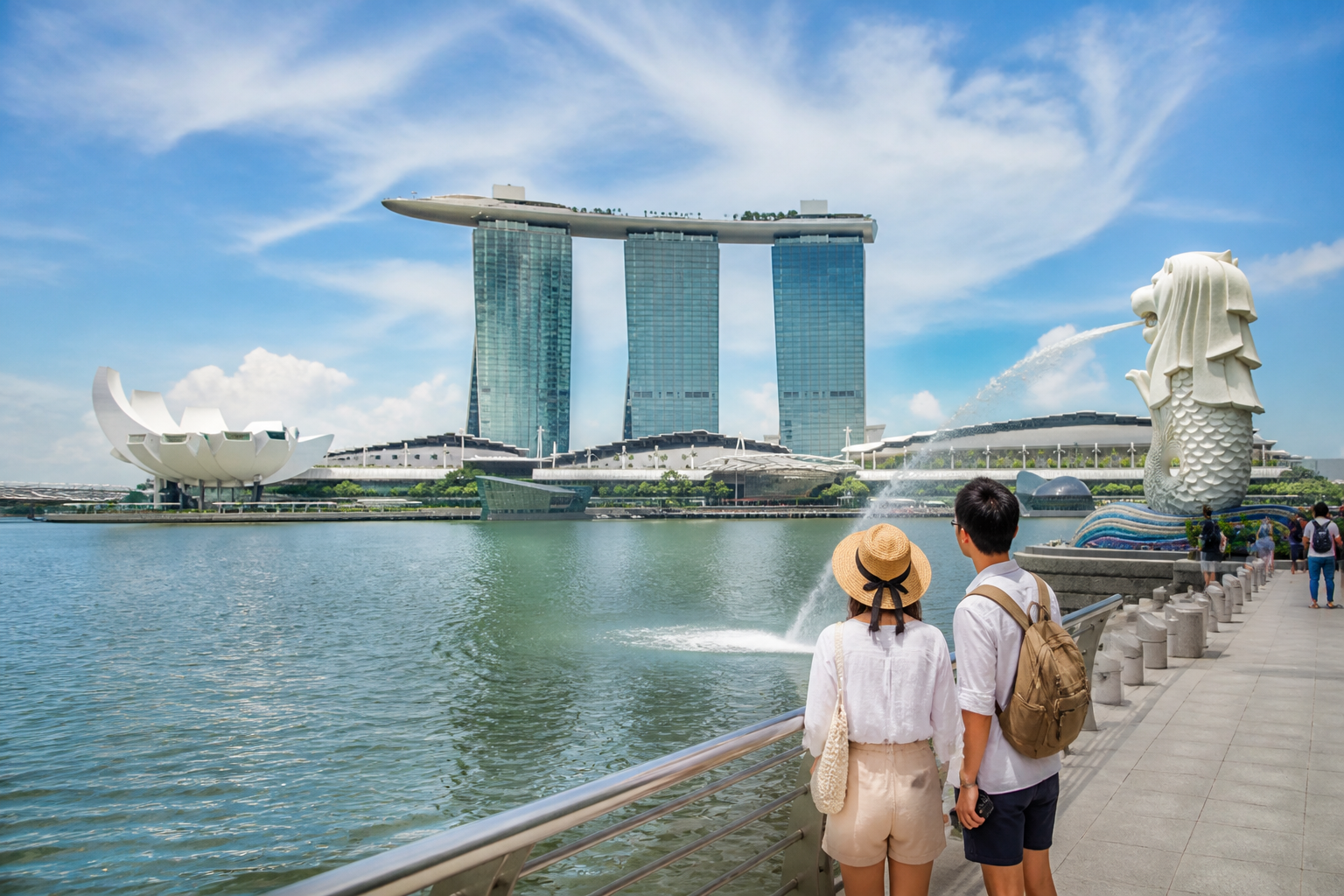
# Singapore Beyond the Stopover: My Favorite Corners, Hawker Meals, and Honest Travel Tips
A recent Skyscanner report says **89% of Singapore tourists plan to travel more in 2027**, and I can see why. Singapore is the kind of place that makes you curious about the rest of Southeast Asia. You can spend the morning eating kaya toast, the afternoon in a rainforest garden, and the evening watching the city lights from a rooftop bar—all without needing a car.
It is polished and efficient, but it doesn’t feel sterile when you know where to look. The best parts are often found in the hawker centers, old shop-house streets, neighborhood cafés, and small parks between the major attractions.
## The Vibe & When to Go
Singapore is warm, humid, and lively throughout the year. Temperatures usually sit around **25–32°C**, and short rainstorms can arrive with very little warning. I’ve had completely sunny mornings turn into heavy afternoon rain, so I now carry a small umbrella or buy one from a convenience store when needed.
The **northeast monsoon, generally from December to March**, can bring wetter days, while **June to September** is often a little brighter but still hot. April and May can feel especially humid. There is no truly cold season, so pack light clothes, comfortable sandals or walking shoes, and something modest for temples and air-conditioned malls.
Singapore is a great choice right now if you want a city break that is easy to organize but still gives you plenty of food, culture, and greenery. It also works beautifully as the first stop on a longer 2027 trip through Malaysia, Thailand, Indonesia, or Vietnam.
## Must-See Spots: My Top Picks
### 1. Kampong Glam and Haji Lane
Start around **Sultan Mosque** early in the day, before the heat becomes too intense. The surrounding streets mix colorful shop houses, fabric stores, Middle Eastern restaurants, independent boutiques, and cafés.
Haji Lane gets most of the attention, but I prefer wandering the quieter lanes around **Bussorah Street** and Arab Street. I usually stop for a cold drink, browse the textile shops, and find lunch at one of the small Malay or Middle Eastern restaurants.
Go in the late afternoon, when the shadows make the old buildings look even more vivid. Haji Lane becomes livelier after dark, though it can feel crowded on Friday and Saturday nights.
### 2. Chinatown, Maxwell, and the Southern Ridges
Chinatown is more than souvenir shops and photo stops. I like visiting **Buddha Tooth Relic Temple** in the morning, then walking toward **Maxwell Food Centre** for lunch.
Try the local specialties rather than ordering the first familiar dish you see:
– Chicken rice
– Fish soup
– Char kway teow
– Popiah
– Fresh sugar cane juice
After lunch, take the MRT or a short ride toward **Mount Faber** and walk part of the **Southern Ridges**. The elevated paths give you a completely different view of Singapore, with thick greenery, apartment blocks, and glimpses of the harbor. The **Henderson Waves** bridge is especially lovely near sunset, although the full walk can feel hot in the middle of the day.
### 3. Gardens by the Bay—Then Leave the Crowds Behind
The Supertrees are one of Singapore’s classic sights, and I still enjoy seeing them light up after sunset. The free outdoor gardens are enough for many visitors, but the **Cloud Forest** is a good escape when the weather is sticky. The cool air and huge indoor waterfall make it surprisingly refreshing.
My favorite plan is to visit the gardens late in the afternoon, explore the conservatories, and stay for the evening light show. Afterward, walk toward **Marina Bay** instead of rushing straight to a taxi. The skyline reflections on the water are beautiful, and you get some of the best city views without paying for a rooftop ticket.
### 4. Little India and the Wet-Market Morning
Little India is colorful, noisy, fragrant, and full of ordinary neighborhood life. Visit **Sri Veeramakaliamman Temple**, browse the shops along Serangoon Road, and spend a little time around **Tekka Centre**.
I recommend coming in the morning, when the market is active and the heat is manageable. Eat a dosa or South Indian thali, then wander slowly rather than trying to tick off every attraction. The side streets have flower garland stalls, spice shops, gold jewelry stores, and old apartment buildings that are easy to miss if you only follow the main road.
For a quieter break, walk toward **Jalan Besar**, where you’ll find small cafés, local eateries, and less polished but more relaxed streets.
## Practical Travel Advice
### Getting There and Visa Requirements
Singapore’s main airport, **Changi Airport**, is one of the easiest airports to use in Asia. The MRT connects the airport to the city, though you may prefer a taxi or Grab if you have several bags.
Entry rules depend on your passport:
– Many nationalities can enter Singapore visa-free for short visits.
– Some travelers need to apply for a visa before arrival.
– Your passport generally needs at least **six months’ validity**.
– Most visitors must complete the **Singapore Arrival Card** online within three days before arrival.
– Check the official Immigration and Checkpoints Authority website before booking, since requirements can change.
For flights, compare Changi arrivals across different times. Late-night flights may be cheaper, but a taxi or Grab into the city can cost more than the MRT. If you are connecting through Singapore, leave enough time to clear immigration if you plan to leave the airport.
### Where to Stay
Singapore’s neighborhoods each give you a different version of the city.
– **Bugis or Kampong Glam:** Great for first-time visitors, food, colorful streets, and easy MRT access.
– **Chinatown:** Convenient for sightseeing and hawker food, with plenty of hotels at different price levels.
– **Little India:** Usually better value, lively, and close to several MRT lines.
– **Orchard Road:** Best if you like shopping, large hotels, and a more polished atmosphere.
– **Tiong Bahru:** A calmer choice with cafés, local food, art deco buildings, and a neighborhood feel.
– **Marina Bay:** Beautiful skyline views and excellent hotels, but prices are usually much higher.
I usually choose Bugis, Chinatown, or Little India. They make it easy to get around without paying Marina Bay prices.
### Getting Around
Singapore’s **MRT** is clean, fast, air-conditioned, and simple to understand. It covers most places visitors want to see. Buses fill in the gaps, and Google Maps is generally reliable for routes and arrival times.
You can pay for public transport with a contactless bank card or mobile wallet, though some foreign cards may add a small transaction fee. An EZ-Link or Singapore Tourist Pass can make sense if you plan to use transit constantly.
Walking is pleasant in short stretches, but the heat changes the equation. I often walk one neighborhood at a time, then take the MRT between areas. For late nights, heavy luggage, or sudden rain, **Grab** is the easiest ride-hailing option. Taxis are also reliable.
## Real Costs and Local Tips
Singapore is not the cheapest city in Southeast Asia, but you can keep spending under control by eating like a local and using public transport.
### Typical Daily Budgets
**Budget traveler: SGD 60–100 per person**
– Hostel bed or simple room: SGD 30–60
– Hawker meals: SGD 5–10 each
– MRT and buses: SGD 5–10
– Free attractions and neighborhood walks
– One inexpensive paid attraction, if planned carefully
**Mid-range traveler: SGD 150–250 per person**
– Comfortable hotel room shared by two people: roughly SGD 100–180 per room
– Café breakfast and hawker lunches
– A few restaurant meals
– MRT, occasional Grab rides, and one or two major attractions
Hotels can push the daily cost much higher, especially during school holidays, major concerts, and Formula 1 weekend.
Singapore uses the **Singapore dollar, or SGD**. Tipping is not expected in most places. Restaurants often add a **10% service charge and 9% GST**, so check the bill before adding anything extra. You do not need to tip hawker stall vendors, taxi drivers, or baristas.
### Small Tricks That Save Money
– **Eat at hawker centers.** Meals are often excellent for SGD 4–8, and busy stalls usually have a reason for their queues.
– **Carry a water bottle.** Tap water is safe to drink, and many hotels and public spaces have refill points.
– **Avoid taxis during rain and peak hours.** Fares rise when demand is high, and MRT trains are often faster.
– **Buy attraction tickets online only after checking the weather.** Singapore’s rain can change your plans quickly, and some indoor attractions offer timed entry.
– **Look beyond Marina Bay for drinks and dinner.** Clarke Quay and rooftop bars are fun but expensive. You’ll find better-value food and relaxed bars around Joo Chiat, Tiong Bahru, and Jalan Besar.
– **Plan around the heat.** Visit outdoor sights early or after 4 p.m., then use museums, malls, temples, and cafés during the hottest part of the day.
Singapore may be compact, but it rewards unhurried wandering. Leave room between the big attractions for a plate of noodles, a shaded side street, or a neighborhood you hadn’t planned to visit. That is often where the city feels most personal.
KEYWORDS: Singapore skyline, Singapore hawker center