
# Santorini Beyond the Postcards: Quiet Corners, Good Food, and Honest Travel Tips
## The Vibe & When to Go
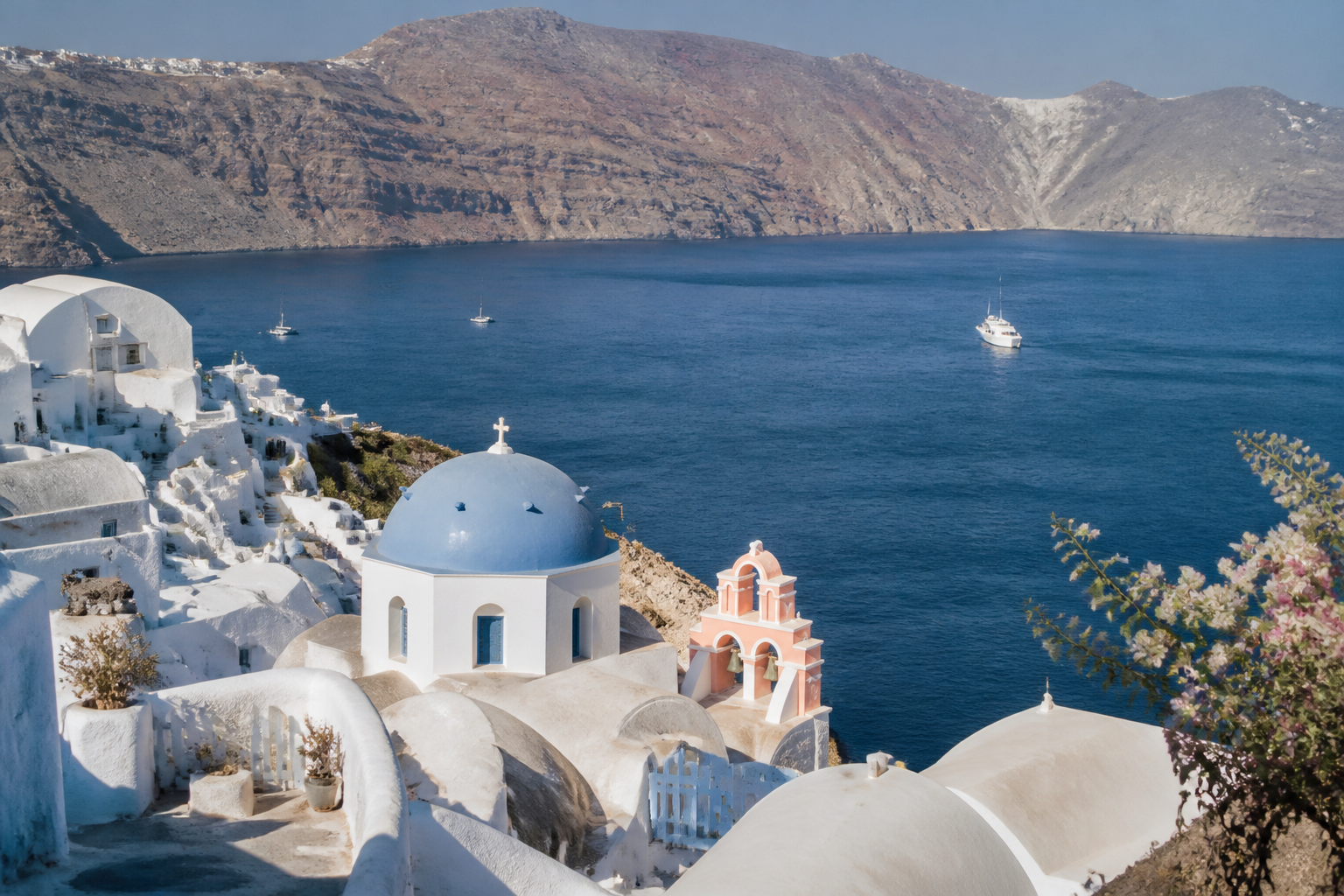
Santorini is beautiful in a way that can feel almost unfair: white houses spilling down volcanic cliffs, blue domes catching the afternoon sun, and the sea turning silver just before sunset. But it is also busy, expensive, and much more intense than the dreamy photos suggest.
I found the island most enjoyable in **May, early June, late September, or October**. The weather is warm enough for swimming and long lunches, but the paths in Oia and Fira are less crowded than in July and August. Summer days are hot, dry, and often windy, while evenings can feel surprisingly cool once the sun drops.
The recent news about possible closures and island-wide disruption is a good reminder to check local updates before travelling. Santorini has dealt with overcrowding, water pressure, transport strikes, earthquakes, and safety-related closures in recent years. If a shutdown is announced, hotels, ferries, restaurants, and archaeological sites may all run on different schedules. I would never arrive without checking the Greek Ministry of Foreign Affairs, ferry operators, and my accommodation first.
## Must-See Spots: My Top Picks
### 1. Oia at sunrise, not sunset
Oia is the image everyone comes for, and yes, it is genuinely lovely. The problem is that sunset crowds can turn the narrow lanes into a slow-moving queue.
I much prefer arriving early, before the cruise passengers and day-trippers appear. The village is quieter, the light is soft, and you can actually stop to look at the small details: blue shutters, tiny churches, flower-filled balconies, and cats curled up in warm corners.
If you do stay for sunset, walk away from the main castle viewpoint and find a quieter terrace or book a table well ahead. The famous spot is lovely, but it is not the only place with a view.
### 2. Fira to Oia along the caldera path
The hike between Fira and Oia takes around three to five hours, depending on how often you stop. It is not technically difficult, but there is very little shade, and the rocky sections can be tiring in the heat.
I set off early, carried more water than I thought I needed, and wore proper trainers rather than sandals. The views are wonderful all the way along, especially around Imerovigli and the smaller churches above the cliffs.
You can walk only part of the route and catch a bus or taxi back. Imerovigli makes a particularly good stopping point for coffee with a view, without quite as much chaos as Oia.
### 3. Akrotiri and the Red Beach area
Akrotiri is one of the island’s best places for a break from the postcard villages. The ancient settlement was buried by a volcanic eruption thousands of years ago, preserving houses, streets, and pottery beneath layers of ash.
It is far more atmospheric than I expected, especially on a quieter morning. Take your time inside, then continue towards the Red Beach area. The colours of the cliffs are striking, although access conditions can change, so follow local signs and do not ignore safety barriers.
Nearby wineries are another good reason to visit the southern part of the island. Santorini’s volcanic soil produces crisp, mineral-rich wines, particularly the local Assyrtiko grape.
### 4. A boat trip to the caldera
A caldera cruise can feel touristy, but I still enjoyed seeing Santorini from the water. The cliffs look enormous from below, and swimming near the volcanic islands makes the landscape feel much more real.
There are plenty of boat trips, from large group cruises to smaller sailing tours. I would avoid choosing purely by the lowest price. Check how many people are on board, whether food and drinks are included, and how much time is spent actually swimming rather than picking up passengers.
A smaller boat is usually more relaxed, though it costs more. If you are travelling on a budget, a public boat to Thirassia can offer a similar change of scenery for less.
## Practical Travel Advice
### Getting there and visa requirements
Santorini has an international airport with seasonal flights from several European cities. Many routes operate only during the warmer months, so you may find better prices by flying to **Athens** and taking a ferry.
The ferry from Piraeus usually takes several hours, depending on the service. Fast ferries save time but can be rough in windy weather. If you are prone to seasickness, choose a larger conventional ferry, sit outside when the sea is calm, and keep medicine with you.
Visa rules depend on your passport:
– Citizens of the EU, EEA, and Switzerland can enter Greece with a valid identity card or passport.
– Many visitors from the UK, United States, Canada, Australia, and New Zealand can visit the Schengen Area for up to 90 days in a 180-day period without a visa.
– Other travellers may need a Schengen visa before arrival.
Your passport should meet Schengen validity rules, and it is wise to check the latest requirements before booking. Entry regulations can change.
### Where to stay
**Oia:** Best for famous views, romantic trips, and beautiful hotels. It is also the most expensive and can feel crowded during the day.
**Fira:** The most practical base for first-time visitors. There are restaurants, shops, bus connections, and a wider choice of accommodation.
**Imerovigli:** Quieter than Fira and still close to the caldera views. It suits couples and travellers who want peace without being completely isolated.
**Kamari or Perissa:** Better for beaches and lower prices. These villages feel more relaxed, though you will spend more time travelling to Oia and the caldera towns.
**Akrotiri:** A good choice if you prefer archaeology, wineries, countryside, and fewer crowds. A car is useful here.
### Getting around
Santorini is not difficult to explore, but the roads can be busy and winding.
– **Buses:** The public KTEL buses connect Fira with Oia, Kamari, Perissa, Akrotiri, and the port. Fira is usually the main interchange. Timetables can change, especially outside peak summer.
– **Walking:** Fine for village centres and the Fira–Oia trail, but not always practical between towns.
– **Taxis:** Limited compared with mainland cities, and prices can rise during busy periods. Arrange airport or port transfers in advance.
– **Car or quad rental:** Useful for beaches and remote villages, but only if you are confident on narrow roads. I would avoid renting a quad unless you already have experience.
– **Rideshare apps:** Do not expect Uber-style coverage across the island. Local taxis and pre-booked transfers are more dependable.
If you arrive by ferry, check whether your hotel provides a port transfer. The climb from Athinios port is steep, traffic can be heavy, and walking with luggage is not realistic.
## Real Costs and Local Tips
Santorini is one of the pricier Greek islands, especially around Oia and the caldera.
### Approximate daily budgets
**Budget traveller: €70–€110 per person**
– Hostel or simple room: €30–€55
– Bakery breakfast: €4–€7
– Casual lunch: €8–€15
– Simple dinner: €15–€25
– Buses and occasional shared transport: €5–€12
**Mid-range traveller: €150–€260 per person**
– Comfortable double room: €90–€170 per person when shared
– Breakfast and coffee: €10–€18
– Sit-down lunch: €20–€35
– Dinner with wine: €35–€60
– Local transport or occasional taxi: €15–€30
Prices rise sharply in July and August, and caldera-view restaurants can charge far more for the setting than for the food.
Greece uses the **euro**. Tipping is not compulsory, but rounding up or leaving around **5–10%** for good service is appreciated. Check the bill first, as some restaurants add a small service charge or cover charge.
### A few ways to save money
– **Eat breakfast from a bakery.** Fresh spinach pies, cheese pies, yoghurt, and coffee are cheaper than a hotel breakfast and often more satisfying.
– **Stay away from the caldera edge.** A five-minute walk inland can cut accommodation and restaurant prices noticeably.
– **Book ferries and transfers early.** Last-minute port taxis and private transfers can be surprisingly expensive.
– **Carry water and sunscreen.** Shops in the busiest areas charge more, and there is little shade on the hiking route.
– **Ask about the menu price before ordering seafood.** Some fish is priced by weight, and the final bill can be much higher than expected.
– **Avoid squeezing everything into one day.** Santorini rewards slow mornings, long lunches, and wandering away from the main viewpoints. A rushed itinerary usually means spending more and enjoying less.
Santorini is not a hidden island anymore, and it does not pretend to be cheap. Still, when you give yourself time to look beyond the famous sunset, it can feel wonderfully personal: a quiet chapel above the sea, a glass of sharp white wine in a village courtyard, or a nearly empty beach at the end of the day.
KEYWORDS: Santorini Greece