
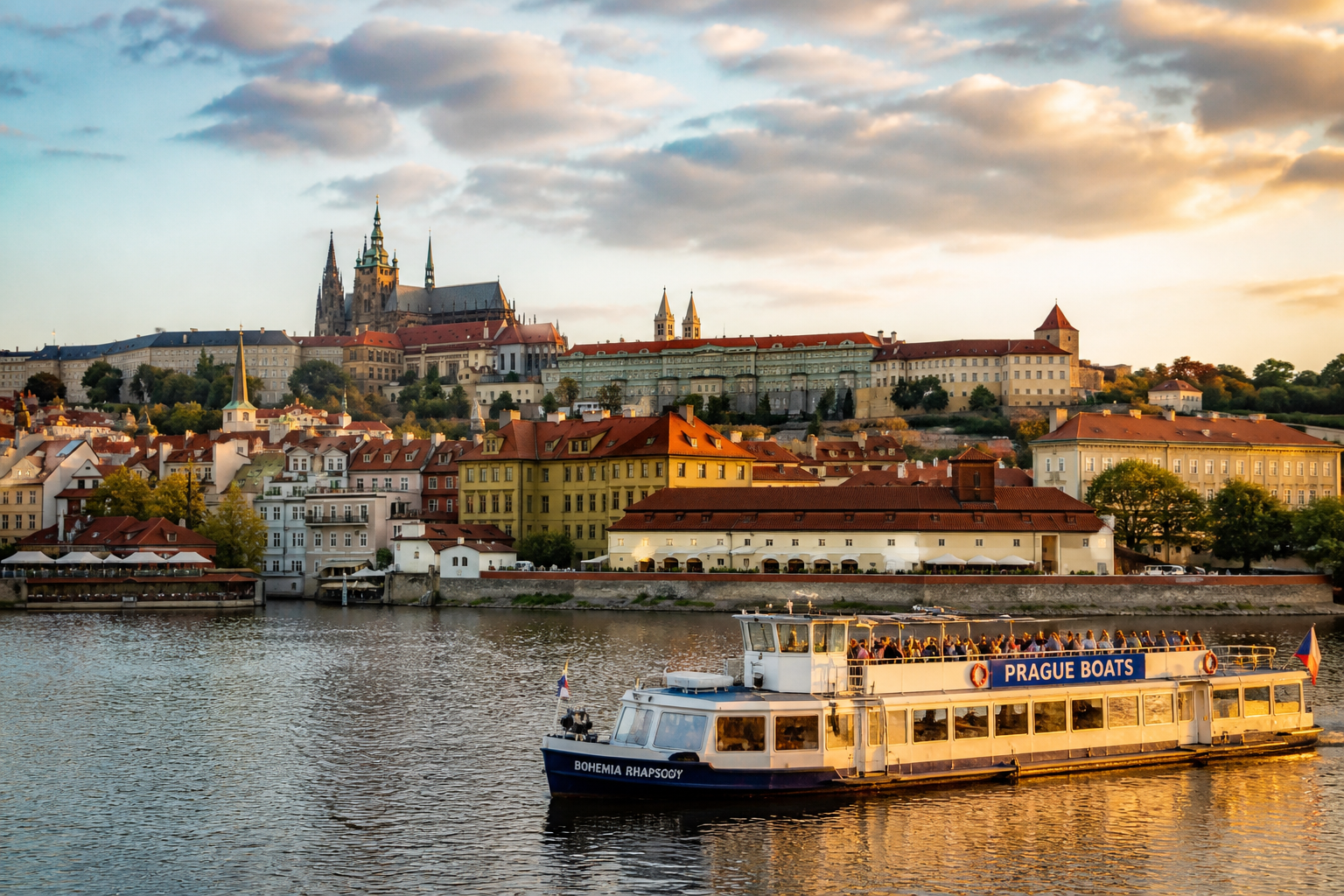
# Prague in Real Life: Beautiful Streets, Brilliant Beer, and Easy Ways to Enjoy the City
## The Vibe & When to Go
Prague has a slightly theatrical side—gothic towers, red roofs, grand squares—but it doesn’t feel like a museum after dark. Locals still hurry across the cobbles with coffee in hand, trams rattle past old buildings, and small neighborhood pubs fill up with regulars rather than just visitors.
The city is especially pleasant in spring, when the parks turn green and the weather usually sits somewhere between light-jacket cool and pleasantly warm. You may get a rainy afternoon, so pack a compact umbrella and shoes that can handle uneven streets. Prague’s strong visitor satisfaction makes sense to me: public transport is easy, services are generally reliable, and there’s enough variety to have a good day even when the weather misbehaves.
Summer brings longer days and larger crowds. Autumn has beautiful golden light and a calmer mood. Winter can be cold, but the Christmas markets and warm cafés give the city a lovely, old-world atmosphere.
## Must-See Spots: My Top Picks
### 1. Charles Bridge Before Breakfast
Charles Bridge is one of those places that can feel completely different depending on the hour. By late morning, it can be crowded with tour groups, musicians, photographers, and people stopping every few steps. I prefer crossing it before 8 a.m., when the river is quiet and the statues appear through the soft light.
After crossing from the Old Town, wander uphill into Malá Strana instead of turning straight back. The side streets around Kampa Island are peaceful, and the small park beside the river is a good place to sit with a pastry and watch the swans.
**My tip:** Keep your phone and wallet secure in busy areas. The bridge is beautiful, but it is also one of the city’s busiest tourist spots.
### 2. Prague Castle and the Streets Around It
Prague Castle deserves several hours, especially if you want to visit St. Vitus Cathedral, the Old Royal Palace, and Golden Lane. The cathedral’s stained glass is the highlight for me, but I also enjoy the views from the castle courtyards and the walk down Nerudova Street afterward.
Rather than taking the most direct route back into the center, walk through the gardens if they’re open. You’ll get quieter viewpoints over the rooftops and a break from the main crowds.
Nerudova is steep and paved with uneven stones, so comfortable shoes matter here. I’d also avoid booking the very first castle tour of the day if you dislike rushing; arrive early, but leave yourself time to enjoy the surroundings.
### 3. Old Town Square—Then Escape It
Old Town Square is Prague’s postcard scene: the Astronomical Clock, colorful façades, horse carriages, and the twin towers of Our Lady before Týn. It’s busy, but I still like seeing it once, especially early in the morning or after sunset.
The best part comes when you leave. Turn into the smaller lanes toward Josefov and the river, where you’ll find quieter streets, bookshops, cafés, and some of the city’s most interesting architecture. The Jewish Quarter is home to historic synagogues and the Old Jewish Cemetery; give it proper time rather than squeezing it between photo stops.
For lunch, walk a few blocks away from the square. Prices usually drop quickly once you leave the most obvious tourist restaurants.
### 4. Vyšehrad for a Slower Afternoon
If you want a break from central Prague, take the tram or metro to Vyšehrad. This hilltop fortress area has grassy paths, old walls, the Basilica of St. Peter and St. Paul, and lovely views toward the Vltava.
The cemetery here is peaceful and full of ornate tombs belonging to important Czech writers, artists, and composers. I find Vyšehrad much less hectic than Prague Castle, and it’s a good place for a relaxed walk with no strict schedule.
Bring water and a snack, especially on a warm day. There are cafés nearby, but fewer choices than in the Old Town.
## Practical Travel Advice
### Getting There and Visa
Prague’s Václav Havel Airport is the main international arrival point. From the airport, public buses connect with the metro, while Uber and Bolt offer straightforward rides into the city. A taxi booked through an official airport desk is another option.
The Czech Republic is part of the Schengen Area:
– Visitors from many countries, including the United States, Canada, the United Kingdom, Australia, and New Zealand, can generally visit visa-free for up to **90 days in any 180-day period**.
– Other nationalities may need a Schengen visa before arrival.
– Your passport should meet Schengen validity rules, including having sufficient validity beyond your planned departure.
– Entry systems and travel authorizations can change, so check the Czech Ministry of Foreign Affairs or your local Czech embassy before booking.
For flights, compare Prague with nearby airports if fares are high. Vienna, Berlin, and sometimes Dresden can offer alternatives, though the extra train or bus journey may cancel out the savings.
### Where to Stay
**Old Town and Josefov:** Best if you want to walk to the main sights and don’t mind paying more. It’s convenient but can be noisy and crowded.
**Malá Strana:** Romantic and atmospheric, with beautiful lanes and easy access to the castle and Charles Bridge. It becomes very quiet in the evening.
**Vinohrady:** My favorite choice for a longer stay. You get leafy streets, bakeries, wine bars, and restaurants popular with locals, while the center is only a short tram or metro ride away.
**Žižkov:** A good option for lower prices and a lively bar scene. It feels more residential and less polished, which is part of its charm.
**Holešovice:** Modern galleries, cafés, parks, and a creative neighborhood feel. It’s slightly farther from the historic center but very well connected.
### Getting Around
Prague is wonderfully walkable, though the hills and cobblestones can be tiring. I usually combine walking with trams and the metro.
– Buy public transport tickets before boarding or use the official PID Lítačka app.
– Tickets are based on time, not the number of rides, so you can transfer during the valid period.
– Validate paper tickets as required and keep digital tickets ready before entering the vehicle.
– Trams are often the nicest way to see the city while getting around.
– Uber and Bolt are useful late at night or when you have luggage.
– Avoid unmarked taxis waiting outside major tourist areas.
A 24-hour or 72-hour transit ticket can be good value if you plan to visit several parts of the city. For a central hotel, though, you may only need occasional transport.
## Real Costs and Local Tips
Prague uses the **Czech koruna (CZK)**. Some businesses accept euros, but the exchange rate may be poor, so I normally pay in koruna by card or withdraw a small amount from a bank-operated ATM.
### Approximate Daily Budgets
These estimates exclude international flights and depend heavily on your accommodation:
**Budget traveler: 900–1,400 CZK per day**
– Hostel bed or inexpensive room
– Bakery breakfast or supermarket food
– Casual lunch and one affordable dinner
– Public transport
– Mostly free sights and walking
**Mid-range traveler: 2,200–4,000 CZK per day**
– Comfortable hotel or private apartment
– Café breakfast and restaurant meals
– Museum or castle admission
– Occasional rideshare
– A drink or two in the evening
Accommodation can add another **700–1,500 CZK** per night for a hostel or simple room, while a comfortable central hotel may cost considerably more, especially from May through September and around Christmas.
### Tipping and Saving Money
– In restaurants, **5–10%** is a reasonable tip for good service. You can round up at cafés and bars.
– Check the bill before paying, especially in places near the main squares.
– Choose restaurants with menus showing prices clearly outside. If a server brings something you didn’t order, ask whether it is chargeable before accepting it.
– Drink beer at a local pub or neighborhood restaurant rather than a bar directly beside Charles Bridge.
– Eat lunch in the Czech style: many restaurants offer a weekday lunch menu that costs less than dinner.
– Use a bank ATM or your own bank’s partner network. Independent ATMs with flashy branding often add high fees.
– Buy water and snacks from supermarkets or small grocery shops before heading to the castle or major attractions.
– Reserve popular restaurants if you’re visiting on a Friday or Saturday, but don’t plan every hour. Prague is at its best when you leave room for an unexpected courtyard, café, or quiet riverside path.
Prague makes travel unusually easy without feeling bland or over-organized. You can spend the morning admiring centuries-old architecture, eat a very affordable lunch, ride a tram across town, and finish the day in a neighborhood pub where nobody seems in a hurry. That balance—beautiful but still lived-in—is what keeps bringing me back.
KEYWORDS: Prague skyline, Charles Bridge