
# Central Dalmatia Without the Guesswork: My Favorite Stops, Polish Travel Buzz, and Real Costs
## The Vibe & When to Go
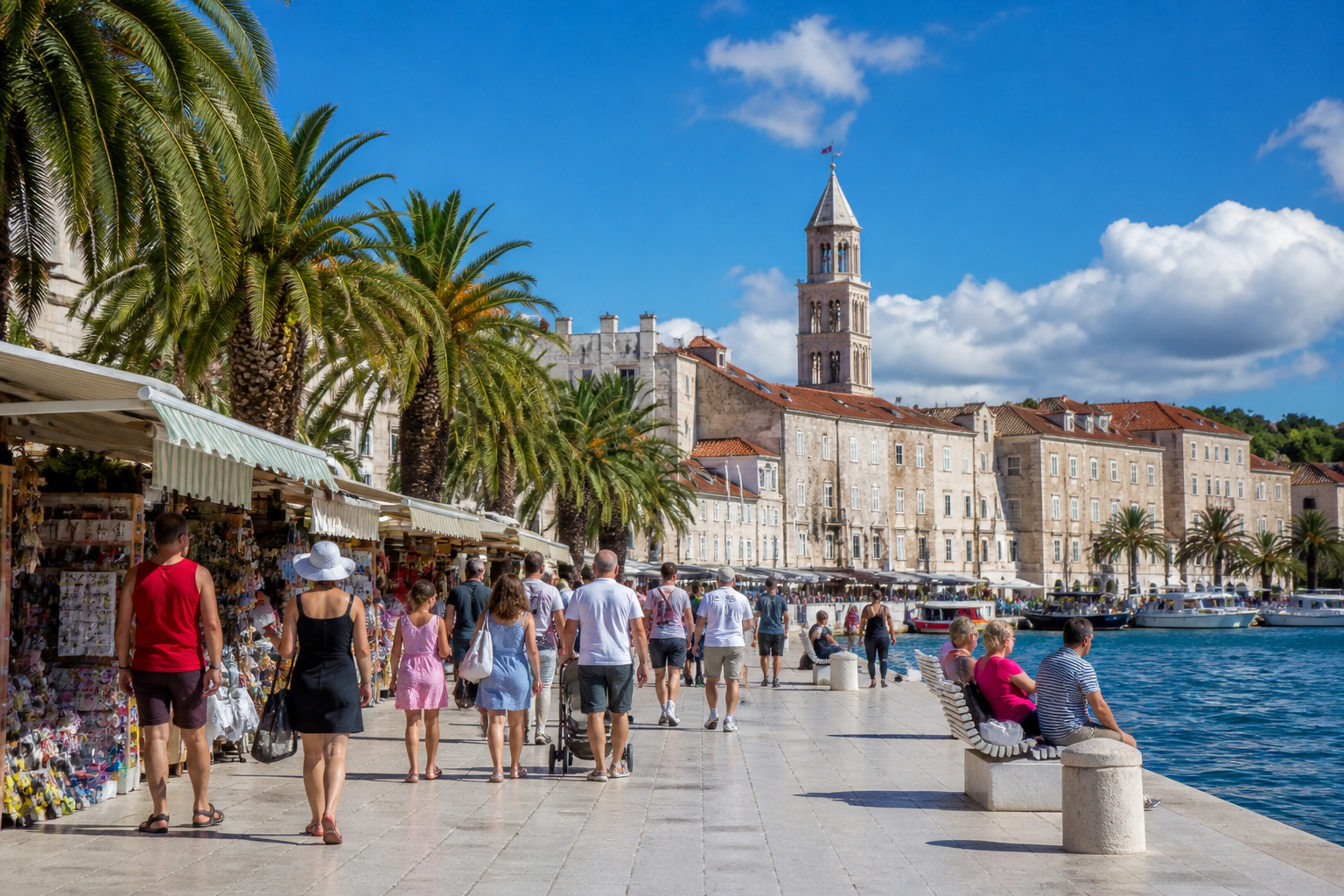
Central Dalmatia has a particular kind of energy: old stone streets warming in the sun, ferries humming out of the harbor, and the smell of grilled fish drifting from a side street. In recent seasons, I’ve noticed more Polish travelers than ever in Split, Trogir, Makarska, and on the islands. Direct flights from cities such as Warsaw, Kraków, Katowice, and Wrocław have made Croatia much easier for Polish visitors, and the Adriatic is clearly one of their favorite warm-weather escapes.
The busiest months are July and August. Days are hot—often around 28–32°C—and the sea is wonderfully warm, but beaches, ferries, and restaurants fill quickly. I prefer **May, June, September, or early October**. Late spring brings sunny days around 22–28°C, while September usually feels calmer and the sea remains warm. October can still be lovely, though evenings are cooler and some island businesses reduce their hours.
The best part of visiting outside peak summer is the pace. You can actually hear the church bells in Trogir, find a table by the water without a reservation, and walk through Diocletian’s Palace without being carried along by a crowd.
## Must-See Spots: My Top Picks
### 1. Split Beyond Diocletian’s Palace
Diocletian’s Palace is the obvious starting point, and it deserves the attention. I love getting lost among the narrow lanes around the Peristyle, where Roman columns sit beside cafés, laundry lines, and tiny shops. Go early in the morning, before the cruise passengers arrive, then return after dinner when the stone streets take on a softer glow.
For a quieter break, walk up **Marjan Hill**. The path through the pine trees leads to viewpoints over Split, Čiovo, and the nearby islands. Pack water and wear proper shoes—the route is manageable, but some sections are rocky. Beneath the hill, the beaches around Kašjuni and Bene feel less urban than the central waterfront.
### 2. Trogir for a Slow Afternoon
Trogir is small enough to explore in a few hours, but I usually stay longer. Its old town sits on an island connected by bridges, with polished stone lanes, shaded courtyards, and the beautiful Cathedral of St. Lawrence.
Climb the cathedral tower if your legs are willing. The views across the harbor are excellent, especially in the late afternoon. Then walk along the waterfront toward the Kamerlengo Fortress. Instead of eating directly on the busiest promenade, check the quieter lanes just behind it. Prices often drop, and the atmosphere feels more local.
Trogir also makes a practical base if you want to avoid Split’s higher accommodation prices while staying close to the airport.
### 3. Brač and the Walk to Zlatni Rat
The island of Brač is famous for Zlatni Rat beach near Bol, and yes, the long golden spit is beautiful. Its shape changes slightly with the wind and currents, which gives it a different look each time I visit.
The walk from Bol to Zlatni Rat follows a shaded coastal path and takes roughly 30 minutes. Go before 10 a.m. or later in the afternoon, when the sun is less intense. If you have more time, visit **Vidova Gora**, the highest point on the Croatian islands. The view over the beach and neighboring Hvar is one of the finest in the region.
Ferries and catamarans fill up during July and August, so I book island tickets ahead when traveling on a fixed schedule.
### 4. Šolta for a Quieter Island Day
If you want an island experience without the full summer spectacle, take the ferry from Split to **Šolta**. It feels slower and more rural than Brač or Hvar, with olive groves, stone villages, and small swimming coves.
I like exploring Maslinica and Stomorska, then stopping for a simple lunch of grilled fish, salad, and local wine. You won’t find endless attractions here, which is exactly the point. Bring swimming shoes, sunscreen, and patience. Public transport exists but is limited, so check the return ferry and bus times before setting off.
## Practical Travel Advice
### Getting There and Visa Rules
Split Airport is the main gateway for Central Dalmatia. From Poland, direct seasonal flights are commonly available from **Warsaw, Kraków, Katowice, Wrocław, and sometimes other regional airports**, although routes change from year to year. Booking early helps, especially for July and August. I also check flights to Dubrovnik or Zadar if Split prices climb, but allow extra time for the onward journey.
Croatia uses the **euro** and is part of the **Schengen Area**.
– Polish citizens can enter Croatia with a valid Polish identity card or passport and do not need a visa.
– Other EU citizens can generally travel with a valid national ID card or passport.
– Non-EU travelers should check the current Schengen entry rules for their nationality. Many visitors can stay up to 90 days in a 180-day period without a visa, but this depends on citizenship.
– Your travel document should remain valid for the required period beyond your stay.
Airlines often charge extra for cabin bags, seat selection, and airport check-in, so compare the final price rather than the headline fare.
### Where to Stay
– **Split Old Town:** Best for first-time visitors, nightlife, ferries, and historic sights. It can be noisy, especially near the Riva and clubs.
– **Veli Varoš:** My favorite Split neighborhood for a more residential feel. It has stone houses, small restaurants, and quick access to Marjan.
– **Bačvice:** Convenient for the beach and evening restaurants, though summer noise is part of the deal.
– **Trogir:** Good for airport access, families, and travelers who prefer a smaller town.
– **Makarska:** A practical base for beaches and Biokovo Nature Park, with plenty of apartments and restaurants.
– **Bol on Brač:** Ideal for beach days, walking, and a relaxed island atmosphere. Book well ahead in summer.
– **Šolta or Vis:** Better for travelers who want quiet mornings and fewer large hotels.
Apartments with kitchens can save a surprising amount, especially for families. I usually look for somewhere within a 10–15-minute walk of the harbor rather than directly beside it.
### Getting Around
Split’s center is highly walkable, but the old town has smooth-looking stone that becomes slippery after rain, so comfortable shoes matter. Local buses connect Split with nearby areas, though schedules can be less frequent outside the city.
For rides, **Uber and Bolt** are commonly available in Split and other larger tourist areas. Prices can rise sharply during ferry arrivals, concerts, and airport rushes, so check both apps before booking. Always confirm that the license plate matches the app.
Ferries are the backbone of island travel. Jadrolinija runs many routes, while other operators cover selected catamaran services. In high season, arrive early for vehicle ferries and buy passenger tickets online when possible. Renting a car is useful for the coast and inland villages, but parking in old towns is limited and expensive. I would avoid driving in Split’s historic center entirely.
## Real Costs and Local Tips
Croatia is no longer the bargain it was a decade ago, particularly on the waterfront and popular islands. Still, you can keep costs under control with a little planning.
### Approximate Daily Budgets
**Budget traveler: €55–85 per person**
– Hostel or basic room: €25–45
– Bakery breakfast or supermarket meal: €4–8
– Casual lunch: €10–15
– Local bus, short ferry, or shared transport: €5–15
– One inexpensive dinner or drinks: €15–25
**Mid-range traveler: €120–200 per person**
– Comfortable apartment or hotel share: €55–100
– Breakfast and coffee: €10–18
– Restaurant lunch or dinner: €20–40
– Transport and sightseeing: €15–35
– Drinks, beach rental, or small extras: €15–30
A meal of grilled fish, pasta, or a burger in a tourist-heavy area can easily cost €18–30. A bakery, konoba away from the main square, or local-style lunch menu is usually much kinder to your wallet.
### A Few Tricks That Help
– **Eat one street back from the water.** The view is lovely, but prices often fall noticeably after a two-minute walk.
– **Use bakeries for breakfast.** Burek, pastries, yogurt, and coffee make a filling start for a few euros.
– **Carry a reusable water bottle.** Tap water is generally drinkable, and buying small bottles all day adds up.
– **Book ferries and accommodation early for July and August.** Polish holiday demand, cruise traffic, and regional travelers can fill the best options quickly.
– **Check restaurant menus before sitting down.** Look for the price of fish by weight, as the final bill can surprise you.
– **Ask about card payments.** Most established businesses accept cards, but smaller beach bars, market stalls, and family-run places may prefer cash.
– **Tip modestly.** Rounding up or leaving around 5–10% for good service is appreciated, but tipping is not usually as automatic as in the United States.
Central Dalmatia works particularly well for a first Croatian trip because you can combine an atmospheric city, Roman history, quiet coves, mountain scenery, and island life without traveling huge distances. The growing number of Polish visitors makes sense to me: the flights are convenient, the weather is reliable, and there is enough variety for a long weekend or a full two-week holiday. The trick is simply to move a little beyond the most famous waterfronts—and leave room for a slow coffee, a missed bus, or a swim that lasts longer than planned.
KEYWORDS: Central Dalmatia, Split Croatia