
# Maldives Beyond the Overwater Villa: Halal Travel, Local Islands, and Honest Budget Tips
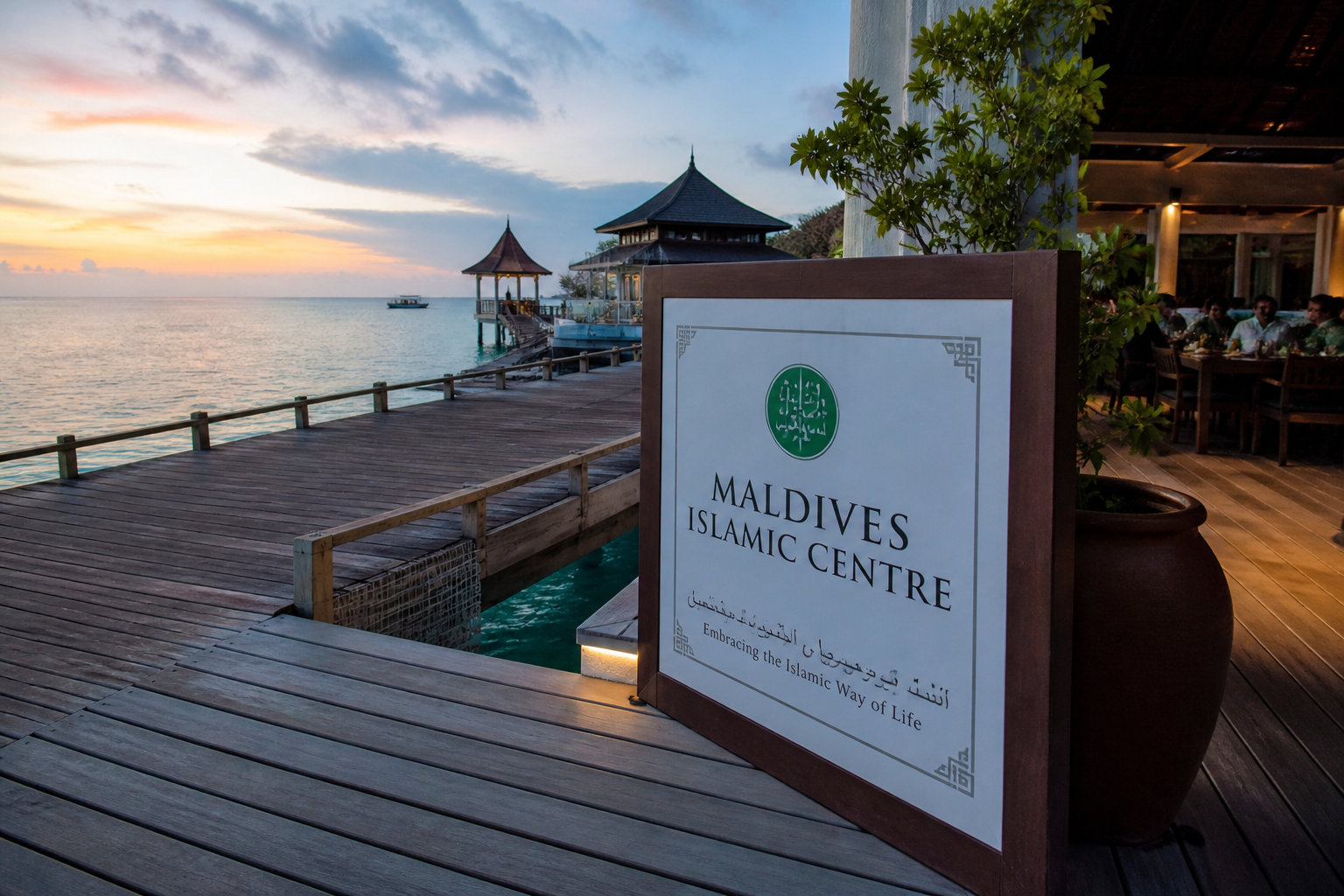
The Maldives is often pictured as a private overwater villa, a floating breakfast, and a price tag that makes your bank account nervous. But after spending time around Malé and the local islands, I found another side of the country—one that feels much more connected to everyday Muslim life.
That is also where Malaysia could make a real difference. The Maldives already has halal food, prayer spaces, and a Muslim-majority culture. Malaysia’s experience with halal certification, Islamic-friendly hotels, family travel, and organised tourism could help the Maldives welcome more Muslim visitors in a thoughtful, practical way.
For travelers, that may eventually mean clearer halal standards, better family facilities, more transparent resort information, and easier packages for visitors who want a beach holiday without compromising their faith.
## The Vibe & When to Go
The Maldives feels quiet, bright, and slightly dreamlike—but the mood changes depending on where you stay.
A private resort island can feel wonderfully still. Days move slowly between swimming, reading, eating, and watching the light change over the lagoon. On local islands such as Maafushi, Thulusdhoo, or Dhigurah, the atmosphere is more lively and grounded. You will see schoolchildren heading home, fishermen unloading their catch, scooters squeezing through narrow streets, and families enjoying the beach after sunset.
The country is Muslim, so alcohol is not sold on local islands. Resorts may serve it to visitors, but it is completely absent from local communities. Dress modestly away from resort beaches, and remember that Friday is the main day of worship—some services and shops may operate on reduced hours.
**Best time to visit:**
– **December to April:** Drier weather, calmer seas, and more reliable sunshine. This is also the busiest and most expensive period.
– **May to November:** The southwest monsoon can bring short, heavy showers and stronger winds, but there are still plenty of clear spells. Prices are often lower.
– **November and April:** Good shoulder-season choices if you want a balance of weather and cost.
If you are coming mainly for diving or surfing, check the conditions for the specific atoll. Water visibility and waves vary around the country.
## Must-See Spots: My Top Picks
### 1. Malé: Small, Busy, and Full of Character
Malé is not a place for long, lazy strolls along empty beaches. It is compact, crowded, and full of movement. Motorbikes fill the streets, cafés spill onto pavements, and the harbor is constantly active.
I like starting near the **Hukuru Miskiy**, the Old Friday Mosque, then walking toward the fish market and local produce stalls. The market can be noisy and strong-smelling, but it gives you a much better sense of the country than a resort buffet does. Tuna is central to Maldivian cooking, and you will see enormous fish being cleaned and carried through the market.
The **National Museum** is another good stop if you want some historical context. Allow a few hours rather than trying to rush through the city in one morning.
**Practical tip:** Malé is easy to walk across, but the heat and traffic can be tiring. Carry water and use taxis for longer hops, especially with luggage.
### 2. Maafushi: The Easiest Local-Island Introduction
Maafushi is one of the most accessible local islands from Malé, which makes it popular with first-time visitors and budget travelers. It has guesthouses, cafés, diving centers, excursions, and a small bikini beach for visitors.
I would not come here expecting untouched solitude. Maafushi is busy by Maldivian standards, but that is part of its appeal. You can join a snorkeling trip, take a sandbank excursion, go fishing at sunset, or simply sit near the harbor and watch island life pass by.
The island also shows how Muslim-friendly tourism can work without turning the place into a resort replica. Guesthouses cater to international visitors, but the community remains visibly local. Alcohol is not available, and modest clothing is expected away from the designated tourist beach.
**My favorite plan:** Book a morning snorkeling trip, return for lunch, then walk around the island before sunset. You do not need to fill every hour with activities.
### 3. Dhigurah: Long Beaches and a Slower Pace
Dhigurah has one of the longest beaches in the Maldives and feels less frantic than Maafushi. It is especially popular with divers and travelers hoping to see whale sharks.
The island is long and narrow, so walking through the palm-lined paths becomes part of the experience. At the southern end, the beach opens out into a wide, quiet stretch where you can often find more space than near the guesthouses.
The boat ride from Malé takes longer than the trip to Maafushi, but that extra travel helps keep the atmosphere calmer. Before booking, check the transfer schedule carefully—speedboats may not run every day, and weather can affect departures.
### 4. A Resort Day Without the Full Resort Price
If you want the classic Maldives experience but cannot justify several nights at a luxury resort, look into a **day pass** from Malé or a local island. Some resorts offer access to the beach, pool, lunch, and selected activities for one day.
Prices vary widely, and not every resort offers the same package. Ask whether transfers, food, snorkeling equipment, taxes, and service charges are included.
This is also where better halal-tourism standards could help. Before paying, ask specific questions:
– Is all food halal, or only selected dishes?
– Is the kitchen separately certified or simply pork- and alcohol-free?
– Are prayer mats and prayer spaces available?
– Is there a family-friendly swimming area?
– Are excursions suitable for guests who prefer alcohol-free environments?
Clear answers make a big difference.
## Practical Travel Advice
### Getting There & Visa
Most international visitors receive a **free visa on arrival for up to 30 days**, provided they meet the entry requirements. You generally need:
– A passport valid for the required period
– A confirmed onward or return ticket
– Proof of accommodation
– Sufficient funds for your stay
– The required online traveller declaration before arrival
Entry rules can change, so check the official Maldives immigration website or your airline before flying.
Flights commonly arrive at **Velana International Airport**, near Malé. From Southeast Asia, Kuala Lumpur can be a useful connection point, especially as Malaysia and the Maldives explore closer cooperation in Islamic tourism. Compare the full journey rather than just the airfare, because a cheap international ticket can become expensive once you add a seaplane or speedboat transfer.
If you are staying at a resort, confirm the airport transfer cost before booking. Seaplane transfers can cost several hundred dollars per person, sometimes more than the international flight.
### Where to Stay
**For the lowest prices:**
Choose a guesthouse on a local island such as Maafushi, Thulusdhoo, or Dhigurah. You will usually get a more relaxed, community-based experience and easy access to excursions.
**For surfing:**
Thulusdhoo and nearby islands are popular with surfers, particularly during the southwest monsoon season.
**For diving and whale sharks:**
Dhigurah and other islands in the South Ari Atoll are strong choices. Pick a guesthouse with a reputable dive center rather than choosing only by room price.
**For privacy and luxury:**
Stay at a private resort island. These are beautiful and convenient, but almost everything costs extra—transfers, drinks, excursions, taxes, and sometimes even basic activities.
**For a quick stopover:**
Malé or nearby Hulhumalé works best. Hulhumalé has wider roads, newer hotels, cafés, and a more open beach area, while Malé is better for markets and local history.
### Getting Around
You will not be driving from one end of the Maldives to the other. The sea is the road system.
– **Local ferries:** Cheapest option, but slower and less frequent.
– **Shared speedboats:** Faster and more comfortable, with fixed schedules on popular routes.
– **Private speedboats:** Convenient for groups, but expensive.
– **Seaplanes:** Scenic and quick for remote resorts, though costly and dependent on daylight and weather.
– **Walking:** The best way to explore local islands.
– **Taxis:** Useful in Malé and Hulhumalé. Agree on the fare or confirm the meter before setting off.
– **Rideshare apps:** Do not assume Uber or Grab will work as they do in Malaysia. Local taxi services and hotel-arranged cars are more reliable.
Build some flexibility into your plans. A storm can delay a boat, and a delayed international flight can mean an unexpected night near the airport.
## Real Costs & Local Tips
Prices depend heavily on whether you stay on a local island or at a private resort. The figures below are realistic starting points for one person, excluding international flights.
### Budget traveler: around **US$60–120 per day**
This usually covers:
– A guesthouse room shared between two people
– Local meals and simple cafés
– Public ferries or shared speedboats
– One modest excursion every few days
A single traveler may spend more because guesthouse rooms are often priced per room rather than per person.
### Mid-range traveler: around **US$150–300 per day**
This can include:
– A comfortable guesthouse or small hotel
– Several restaurant meals
– Shared snorkeling or diving trips
– Faster transfers
– Occasional nicer activities
A private resort can easily exceed **US$400–800 per person per day**, especially once meals, transfers, taxes, and activities are added.
### Currency and tipping
The local currency is the **Maldivian rufiyaa**, although US dollars are widely accepted in resorts and many tourist businesses. Keep small rufiyaa notes for cafés, ferries, shops, and short taxi rides.
Tipping is not required in the same way it is in some countries, but it is appreciated for good service. Many resorts add a service charge, so check the bill before adding more. On local islands, rounding up or leaving a small amount for guides, boat crews, or housekeeping is a kind gesture.
### A few ways to save money
– **Stay on a local island:** This is the biggest saving. You can still swim, snorkel, dive, and visit sandbanks without paying resort prices.
– **Check transfer costs first:** A room that looks cheap may become expensive after adding a seaplane or private boat.
– **Book excursions through a reputable local operator:** Compare what is included, especially lunch, equipment, permits, and hotel pickup.
– **Eat where locals eat:** Small cafés serving rice, curry, tuna, and flatbread are usually much cheaper than hotel restaurants.
– **Carry reef-safe sunscreen and basic medicines:** Shops on small islands may have limited choices and higher prices.
– **Respect local beach rules:** Wear a cover-up away from designated tourist beaches. It avoids uncomfortable situations and shows consideration for residents.
– **Ask about halal certification clearly:** “Halal” can mean different things to different travelers. If certification matters to you, ask whether the kitchen or supplier is officially certified rather than assuming.
The Maldives does not need to copy Malaysia to become stronger in Islamic tourism. Its greatest advantage is already here: a Muslim culture, beautiful marine environment, and communities that know how to welcome visitors. Malaysia’s halal expertise could help turn those strengths into clearer, more trustworthy travel experiences.
For me, the best Maldives trip is not only about the perfect lagoon view. It is also the morning fish market in Malé, a shared boat ride with local families, a plate of spicy tuna curry, and the simple comfort of knowing exactly what kind of holiday you are booking.
KEYWORDS: Maldives beach, Male Maldives