
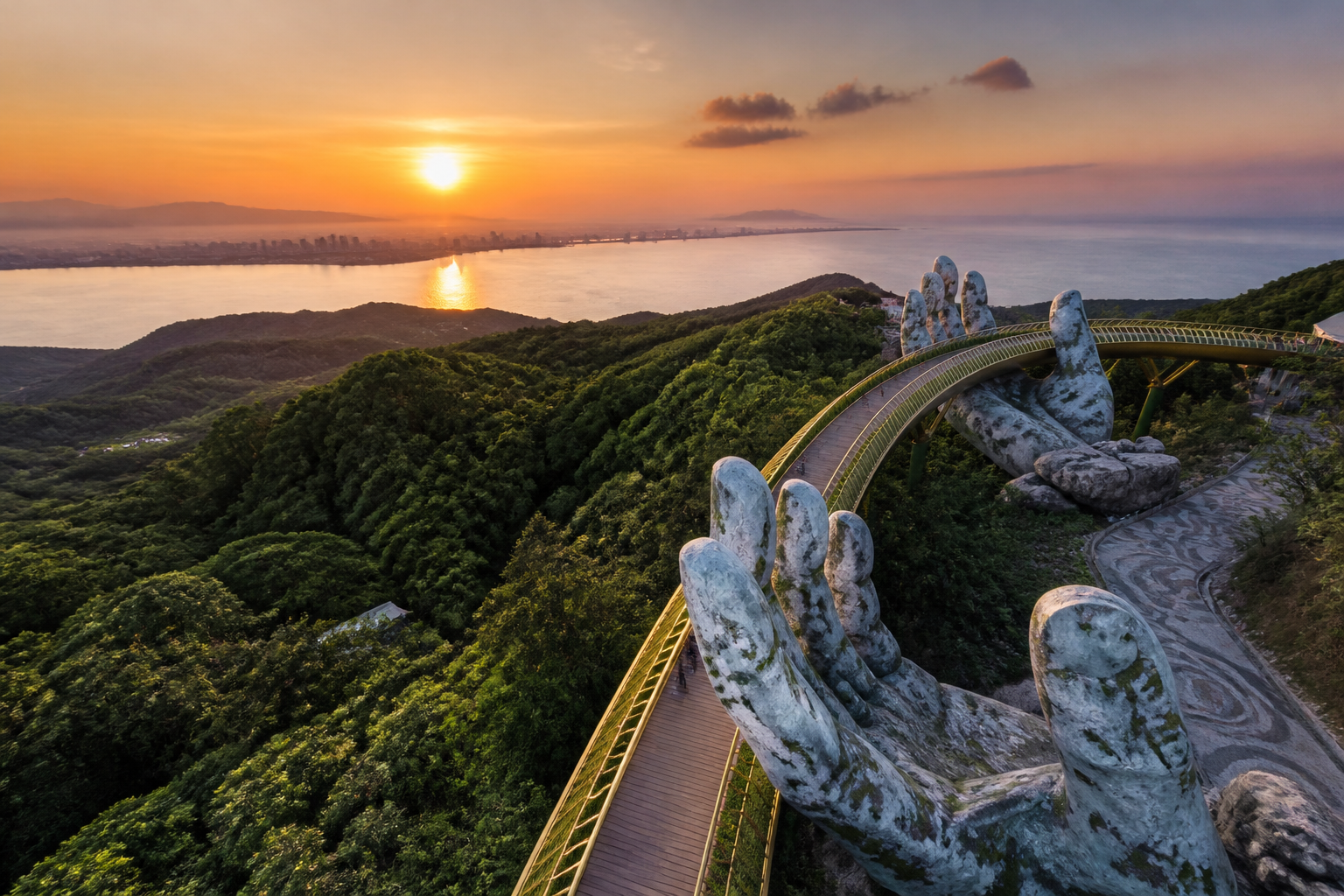
# Da Nang, Slowly and Sustainably: Beaches, Mountain Roads, Local Food, and Real Travel Tips
## The Vibe & When to Go
Da Nang has an easy rhythm. Mornings begin with people walking along the beach, older locals doing tai chi under the palm trees, and tiny coffee shops opening their doors before the heat arrives. By late afternoon, the city comes alive around the Han River, while the mountains and sea keep everything feeling more spacious than many other Vietnamese cities.
What I like most is that Da Nang feels developed without being overwhelming. You can sleep in a modern hotel, eat an excellent bowl of mì quảng for a few dollars, and be on a forested mountain road within half an hour. The city is also making a serious effort to become a greener destination, from beach cleanups and waste reduction to protecting the Son Tra Peninsula and encouraging more responsible tourism.
**The best travel periods are usually:**
– **March to May:** Warm, mostly dry, and comfortable for beaches, sightseeing, and motorbike rides.
– **June to August:** Hot and sunny, with excellent beach weather, though midday can feel intense.
– **September to December:** More rain and occasional storms. Short showers can be manageable, but boat trips and mountain plans may change.
– **January to February:** Cooler and sometimes cloudy, but still pleasant for food, cafés, and city exploring.
For a green-minded visit, bring a refillable bottle, skip single-use plastic where you can, and avoid leaving rubbish on the beach or in the forest. Small choices make a real difference here.
## Must-See Spots: My Top Picks
### 1. Son Tra Peninsula and Linh Ung Pagoda
Son Tra is the place that made me understand Da Nang’s appeal. One minute you are beside the busy coastline; the next, you are climbing through thick green forest with sea views opening up below.
Linh Ung Pagoda is the famous stop, home to the tall Lady Buddha statue overlooking the water. Go early in the morning if you can. The air is cooler, the light is softer, and you may see monkeys moving through the trees near the road.
I also enjoy taking the road farther toward **Ban Co Peak**, where the views stretch across Da Nang Bay. Ride carefully, especially around blind corners, and do not feed the monkeys. They may look friendly, but wild animals should stay wild.
A taxi or Grab car works well if you do not ride. If you rent a motorbike, only do so if you are confident in traffic and have the correct license and insurance.
### 2. My Khe Beach at Sunrise
My Khe is Da Nang’s best-known beach, but it still feels wonderfully local early in the morning. Around sunrise, the sand fills with swimmers, fishermen, runners, and families carrying small plastic stools down to the water.
I usually come before 7 a.m., walk barefoot along the shore, and grab a Vietnamese iced coffee afterward. The beach is much quieter then than in the late afternoon.
For a more peaceful stretch, walk south from the busiest hotel area toward the quieter parts of the coastline. Bring your own water and take rubbish with you—there are bins, but they can fill up during busy weekends.
### 3. Marble Mountains
The Marble Mountains are only a short drive from central Da Nang, yet the atmosphere changes quickly once you enter the caves and pagodas. Stone steps lead through temples, narrow passageways, and openings in the rock where shafts of sunlight fall across the walls.
**Thuy Son**, the largest mountain, is the main one visitors explore. Wear shoes with a decent grip; some steps are polished and slippery. I recommend arriving before 9 a.m. because the heat builds quickly and the narrow caves become crowded later.
Afterward, skip the hurried souvenir stops and have lunch at a small local restaurant nearby. Look for **mì quảng**, a regional noodle dish served with herbs, peanuts, shrimp, pork, or chicken. It is one of the dishes I most associate with central Vietnam.
### 4. The Han River and Da Nang’s Food Streets
Da Nang is at its nicest in the evening. Walk along the Han River, cross one of the bridges, and stop wherever the locals are eating. The Dragon Bridge is fun to see, especially during its weekend fire and water show, but I prefer wandering a few streets away from the main tourist areas.
Try:
– **Mì quảng:** Turmeric noodles with herbs, peanuts, and a small amount of rich broth.
– **Bún chả cá:** Fish cake noodle soup, a Da Nang favorite.
– **Bánh xèo:** Crisp savory pancakes wrapped in herbs and dipped in sauce.
– **Ốc:** Seasoned snails and shellfish, often ordered to share.
– **Vietnamese coffee:** Strong, sweet, and sometimes topped with salted cream.
For the Dragon Bridge show, check the current schedule locally. It usually takes place on weekend evenings, but times and traffic restrictions can change.
## Practical Travel Advice
### Getting There and Visa
Da Nang International Airport is close to the city center, usually around 10 to 20 minutes by car depending on traffic. There are direct flights from several Asian cities, while travelers from Europe, Australia, and North America may find better prices by connecting through Hanoi, Ho Chi Minh City, Singapore, Bangkok, or Kuala Lumpur.
Vietnam’s **e-visa** is available to citizens of many countries and can allow stays of up to 90 days, with single- or multiple-entry options. Some nationalities also receive visa-free entry for a limited number of days. Rules change, so check Vietnam’s official immigration website before booking non-refundable travel.
When you land, use the official taxi queue, pre-book a transfer, or order a Grab car once you have internet access. Be cautious with unofficial drivers offering fixed prices inside the terminal.
### Where to Stay
**My Khe and An Thuong:** Best for first-time visitors, beach access, cafés, and plenty of restaurants. This is the easiest area for a short stay.
**Han River and city center:** Better if you enjoy evening walks, markets, local food, and being close to bridges and shopping streets.
**Son Tra:** Quieter and greener, with sea views and a more relaxed feel. It is less convenient for walking to everything, so plan on using Grab.
**Near Non Nuoc Beach:** A good choice for resorts, longer stays, and quiet mornings. It is farther from the city center and Marble Mountains are nearby.
I usually choose a small hotel a few streets back from the beach rather than staying directly on the busiest road. The rooms are often quieter, and prices drop noticeably.
### Getting Around
Da Nang is not completely walkable, but many beachside areas are easy to explore on foot. For longer trips:
– **Grab:** The most practical choice for cars and motorbike taxis.
– **Be:** Another local ride-hailing option that sometimes has good prices.
– **Metered taxis:** Mai Linh and Vinasun are generally reliable.
– **Public buses:** Useful for some routes, but less convenient if you are carrying luggage or visiting several sights.
– **Motorbike rental:** Handy for experienced riders, especially for Son Tra and the coast. Always check helmet quality, brakes, rental papers, and insurance.
Traffic is calmer than in Hanoi or Ho Chi Minh City, but do not underestimate the heat, sudden rain, or busy intersections.
## Real Costs and Local Tips
Vietnam uses the **Vietnamese đồng (VND)**. At the time of writing, rough mental conversions are around **25,000 VND to US$1**, though exchange rates move.
### Daily budget
**Budget traveler: US$25–40 per person**
– Simple guesthouse or hostel: US$8–18
– Local meals: US$1.50–4 each
– Coffee or fresh juice: US$1–2
– Grab rides and small entrance fees: US$5–10 per day
**Mid-range traveler: US$60–110 per person**
– Comfortable hotel: US$35–75
– Restaurant meals and cafés: US$15–30
– Local transport and activities: US$10–25
– A little extra for massages, tours, or beachside drinks
Tipping is not compulsory. Round up for excellent service, or leave around 5–10% in a nicer restaurant if service is not already included. Small tips for drivers, guides, or hotel staff are appreciated but never expected in the same way they are in some Western countries.
### A few local tricks that save money
– **Eat where the menu is short and busy.** A small menu usually means the food is fresh and the kitchen knows what it does well.
– **Check prices before ordering seafood.** Ask whether the price is per kilogram, per dish, or per piece. This avoids unpleasant surprises.
– **Use Grab instead of negotiating every ride.** You see the fare before accepting, and it is especially useful in hot weather.
– **Buy water from supermarkets or refill stations.** Hotel minibars and beachfront shops often charge much more.
– **Visit popular sights early.** You get cooler weather, fewer crowds, and better photos without needing a private tour.
– **Carry small notes.** Street vendors and small cafés may not have change for large bills.
– **Choose reusable items.** A bottle, shopping bag, and coffee cup reduce both waste and small daily expenses.
Da Nang is not perfect, and some beaches and busy streets still struggle with litter during holidays. But that is part of why traveling thoughtfully matters here. Stay a little longer, support local cafés and family-run restaurants, use refill stations, and leave the mountains and shoreline as you found them. The city gives you plenty in return: warm mornings by the sea, mountain air, excellent food, and the feeling that nature is never far away.
KEYWORDS: Da Nang beach, Son Tra Peninsula