
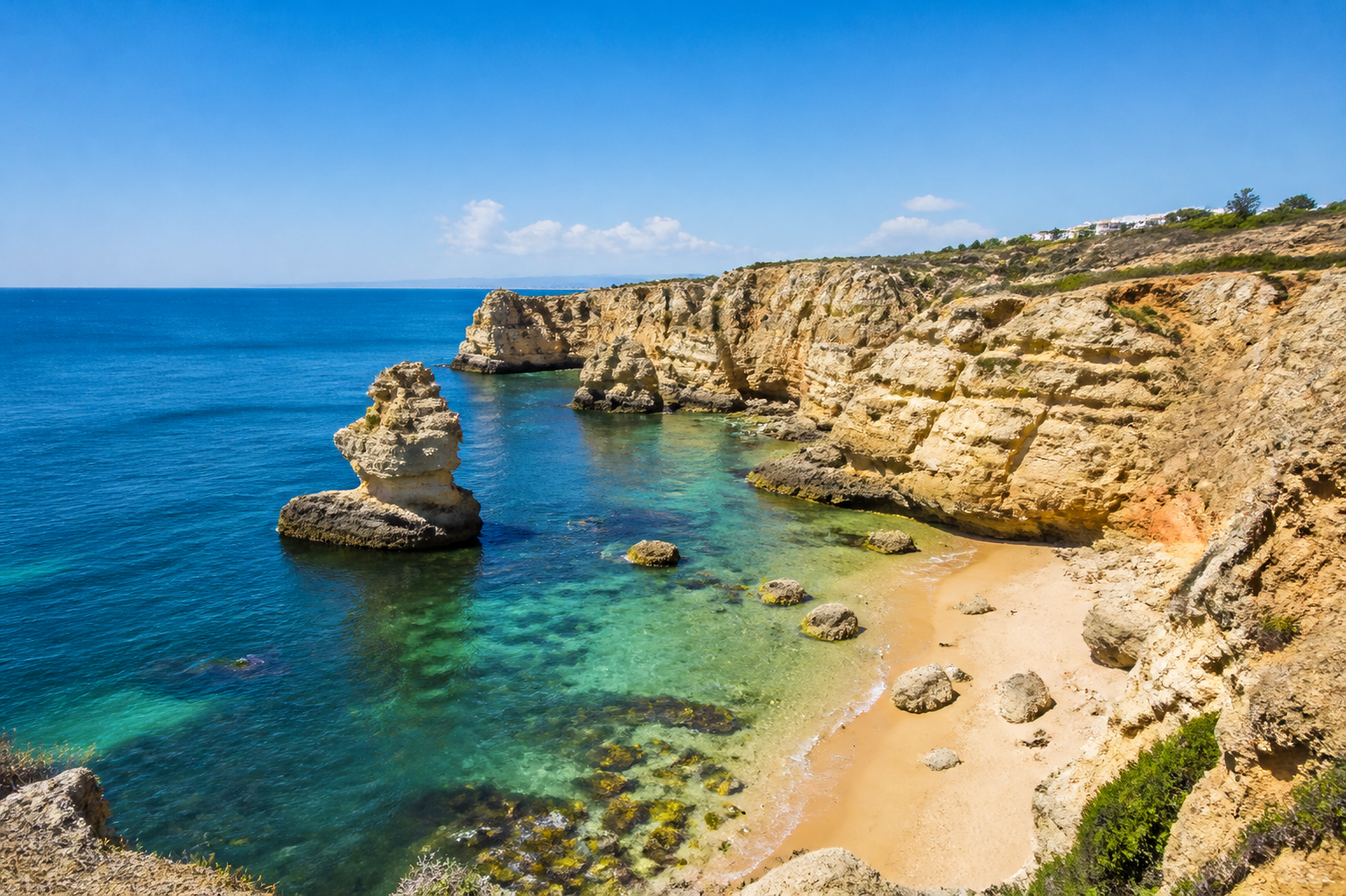
# Algarve, Beyond the Beaches: My Favorite Views, Seafood Stops, and Honest Travel Tips
The Algarve has a funny way of getting under your skin. Yes, there are golden beaches, dramatic cliffs, and water so blue it can look edited. But what stayed with me were the quieter moments: coffee in a nearly empty square in Tavira, fishermen repairing nets in Olhão, and the smell of grilled sardines drifting through a small-town street.
I first became curious when I read that the Algarve had become the first Portuguese tourist destination to advertise on ChatGPT, as reported by *Sul Informação*. It felt very modern for a place whose best experiences still involve getting slightly lost, waiting for lunch to arrive, and watching the sun drop behind the Atlantic.
## The Vibe & When to Go
The Algarve is relaxed, sunny, and a little uneven in the best possible way. One minute you’re in a polished resort town with rooftop bars and boat tours; the next, you’re walking past whitewashed houses, tiled façades, and locals chatting outside a café.
The weather depends heavily on the time of year:
– **Spring:** Mild and bright, with wildflowers and fewer visitors. The sea is still chilly, but hiking weather is excellent.
– **Summer:** Hot, dry, and busy, especially in July and August. Beach towns can feel crowded and accommodation prices rise sharply.
– **Autumn:** My favorite time for a balanced trip. The ocean remains pleasant, the evenings are warm, and the beaches begin to breathe again.
– **Winter:** Quiet and often sunny, though rainy days do happen. It’s a good season for walking, birdwatching, and finding low accommodation rates.
If you’re visiting during the warmer months, pack sunscreen, a hat, and a light layer for windy evenings. The Atlantic breeze can make a hot afternoon feel surprisingly cool near the cliffs.
## Must-See Spots: My Top Picks
### 1. Ponta da Piedade, Lagos
This is one of those places that really does look like the photographs—but it feels better in person. The cliffs are carved into arches, caves, and tall rock pillars, with water glowing below them.
I prefer arriving early and walking the cliff path before taking a small boat trip from Lagos harbor. The boat lets you see the formations from sea level, but the walking trail gives you the grand views. Wear proper shoes; some paths near the viewpoints are uneven, and the rocks can be slippery after rain.
For a quieter alternative, walk east from Lagos toward Praia do Pinhão and Praia Dona Ana before the main day-trippers arrive.
### 2. Tavira and the Ilha de Tavira
Tavira has a slower, more graceful feel than the bigger resort towns. I loved wandering across the old Roman bridge, looking into little courtyard gardens, and stopping for a pastry beside the river.
Take the short ferry to **Ilha de Tavira** for a broad sandy beach and calmer surroundings. Bring water and something to eat if you plan to stay for hours, although there are beach cafés in season. Tavira is also a good base for exploring the eastern Algarve, where the towns feel less dominated by package tourism.
### 3. Ria Formosa from Olhão or Faro
The Ria Formosa is a coastal lagoon of islands, salt marshes, sandbanks, and birdlife. It’s a completely different Algarve from the cliff beaches.
From Olhão, I’d take a local boat to one of the barrier islands, such as Armona or Culatra. Culatra has a small fishing-community atmosphere and feels more lived-in than resort-like. From Faro, you can also arrange guided boat trips through the lagoon.
Go in the morning if you can. The light is beautiful, the water is calmer, and you’ll have a better chance of seeing birds before the heat of the day.
### 4. Sagres and the West Coast
Sagres is windier, wilder, and less polished than central Algarve. That’s exactly why I liked it. The enormous cliffs around Cabo de São Vicente make you feel very small, particularly when the Atlantic is throwing waves against the rocks.
Stop at Fortaleza de Sagres, then continue toward the lighthouse at Cabo de São Vicente. The sunset can be spectacular, but bring a jacket—even in summer, the wind here is serious.
If you have a car, continue north along the Costa Vicentina. The beaches become less crowded, and the landscape feels much more rugged. Just don’t stand too close to the cliff edges; wind gusts arrive without much warning.
## Practical Travel Advice
### Getting There & Visa
Most visitors fly into **Faro Airport**, the main international gateway to the Algarve. Direct flights are common from major European cities, particularly between spring and autumn. From North America or destinations without a direct Faro route, flying to Lisbon and continuing by train, bus, or rental car can work well.
For entry:
– Portugal is part of the **Schengen Area**.
– Many travelers, including citizens of the United States, Canada, the United Kingdom, Australia, and New Zealand, can visit visa-free for up to **90 days in any 180-day period**.
– Your passport should generally be valid for at least three months after your planned departure and have been issued within the previous ten years.
– Visa rules depend on nationality, so check the Portuguese consulate or official EU immigration website before booking.
Flight prices often drop outside July and August. I’d also compare Faro with Lisbon, especially if you’re planning to visit Porto or Lisbon as part of the same trip.
### Where to Stay
**Lagos:** Best for first-time visitors, beaches, boat trips, and a lively but manageable town center. It gets busy in summer.
**Tavira:** My pick for a quieter, more traditionally Portuguese atmosphere. Good for couples, food lovers, and anyone who wants slower evenings.
**Faro:** Practical for airport access and city breaks. It has a pleasant old town and is a useful base for the Ria Formosa, though it is not the best choice if your main goal is dramatic beaches.
**Albufeira:** Convenient for nightlife, family resorts, and a wide choice of restaurants. The old town is enjoyable, but the louder “Strip” area is not for everyone.
**Sagres:** Great for surfers, hikers, and travelers who prefer open landscapes to polished resort streets. Expect wind and fewer evening options.
### Getting Around
A rental car makes the Algarve much easier, particularly if you want to visit small villages, remote beaches, or the west coast. Roads are generally straightforward, but parking in popular beach towns becomes difficult in July and August.
Public transport works best between the larger towns:
– **CP trains** connect places such as Faro, Olhão, Tavira, Lagos, and other stops along the coast.
– **VAMUS Algarve buses** serve many towns and beach areas, though schedules can be less frequent outside peak season.
– **Uber and Bolt** operate in much of the Algarve, especially around Faro, Albufeira, Lagos, and other busy areas.
– Taxis are useful for short journeys, but ask for an estimated fare before setting off if the meter is not obvious.
Within the old centers of Lagos, Tavira, Faro, and Albufeira, walking is usually the nicest way to get around. Comfortable shoes matter more than fashionable ones here.
## Real Costs and Local Tips
Portugal uses the **euro (€)**. Prices vary sharply between the busy coastal resorts and smaller inland towns.
### Typical daily budgets
**Budget traveler: €55–€85 per person**
– Hostel or simple room: €25–€45
– Bakery breakfast: €4–€7
– Casual lunch: €10–€15
– Simple dinner: €15–€25
– Local buses and occasional low-cost activities
**Mid-range traveler: €110–€180 per person**
– Comfortable guesthouse or hotel: €70–€120 for a shared double room
– Sit-down meals: €20–€35 per person
– One paid activity, such as a boat trip or kayak tour
– Rental car costs shared between two people
July and August can push these figures much higher, especially for hotels and car rentals.
Tipping is not compulsory, but rounding up or leaving around **5–10%** for good service is appreciated. Check whether a service charge has already been included.
### A few money-saving tricks
– **Eat lunch away from the waterfront.** A restaurant one or two streets inland is often noticeably cheaper and more local.
– **Look for “prato do dia.”** The daily set meal can include soup, a main dish, dessert, and coffee for far less than ordering separately.
– **Book boats and rental cars early in summer.** Last-minute prices can be painful, particularly in Lagos and Albufeira.
– **Carry water and snacks to the beaches.** Beach cafés are convenient but usually charge resort prices.
– **Travel east for better value.** Tavira, Olhão, Vila Real de Santo António, and nearby inland villages are often less expensive than the central Algarve.
– **Don’t assume every beach is easy to reach.** Some involve steep paths or long staircases, so check access before carrying umbrellas, coolers, or young children down to the sand.
The Algarve is easy to enjoy at a fast pace, but I think it rewards slowing down. Leave room for an unplanned seafood lunch, a village you didn’t see on your itinerary, and a long afternoon when the only plan is to watch the tide come in.
KEYWORDS: Algarve Portugal