
# Colombo Is More Than a Stopover: My Favorite Sights, Food, and Honest Travel Tips
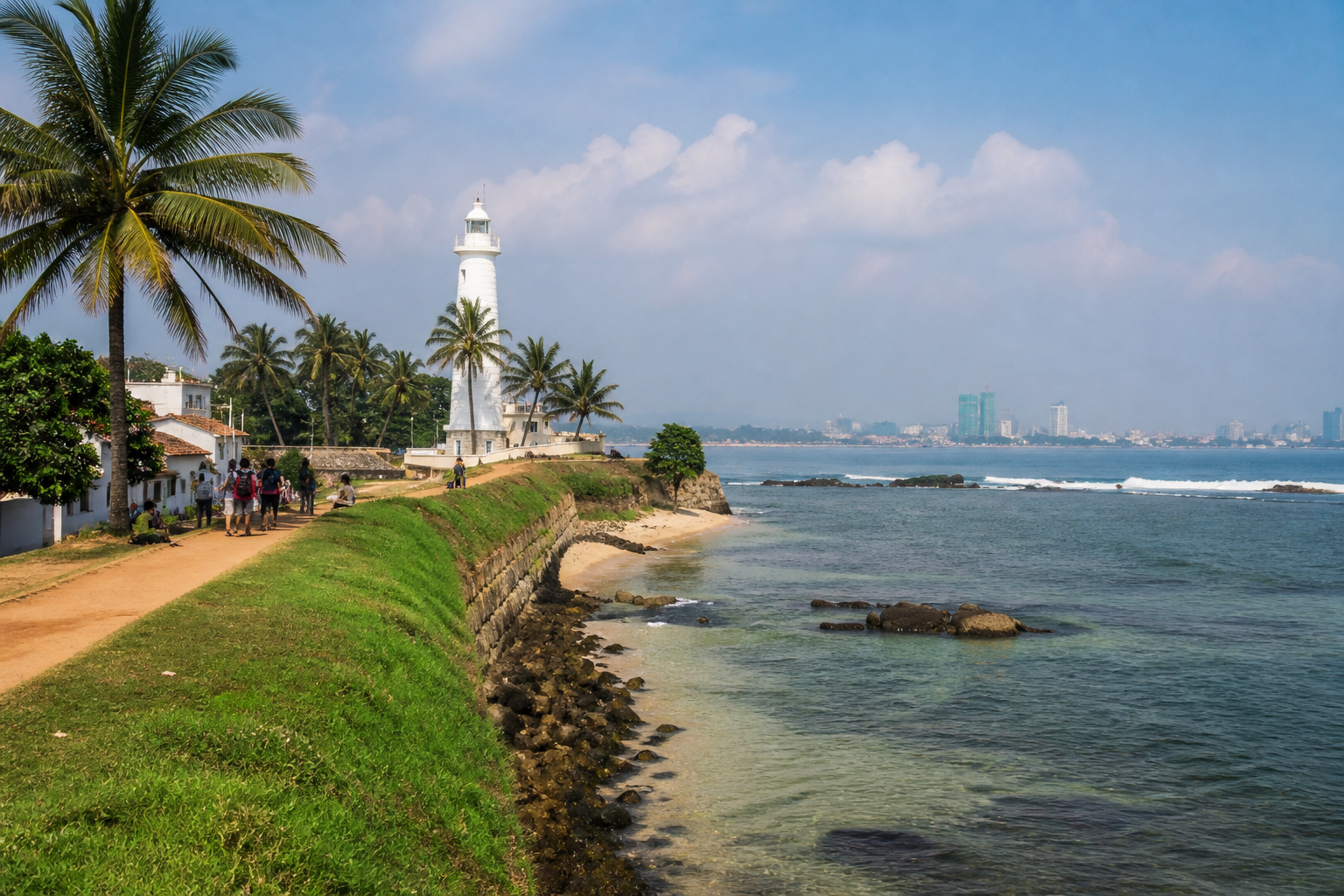
For years, many travelers treated Colombo as the place where they landed before rushing south to Galle, Ella, or the beaches. I understand why—the airport is outside the city, and Colombo can seem a little hectic at first. But after spending time there, I found a city with its own rhythm: salty sea air, old colonial streets, excellent food, leafy neighborhoods, packed markets, and sunsets that make you slow down.
That seems to be the thinking behind the World Bank’s growing support for Colombo as a tourism destination in its own right, rather than just a gateway to the rest of Sri Lanka. I agree with that idea. Give Colombo two or three days, and it starts to make sense.
## The Vibe & When to Go
Colombo feels busy without being overwhelming. Buses grumble through Fort, tuk-tuks squeeze between cars, office workers gather at tea shops, and the ocean is never far away. One minute you can be surrounded by traffic and concrete; the next, you’re sitting under palm trees with a cold king coconut.
The city is hot and humid for most of the year, with daytime temperatures usually around **28–32°C**. Rain can arrive suddenly, especially during the southwest monsoon from roughly May to September, while the inter-monsoon months can bring short, heavy showers.
The drier months, particularly **December to March**, are generally comfortable for sightseeing. Even then, I would plan outdoor walks for the morning or late afternoon. Midday heat in Colombo is not subtle.
The best reason to visit now is that the city is being taken more seriously as a place to stay, not simply pass through. New restaurants, hotels, creative spaces, and improved waterfront areas are adding to the old character rather than replacing it entirely.
## Must-See Spots: My Top Picks
### 1. Galle Face Green at Sunset
This is the easiest place to feel Colombo’s connection with the sea. In the late afternoon, families gather with snacks, children fly kites, couples sit facing the water, and food vendors start preparing spicy snacks.
I like arriving before sunset and walking slowly along the promenade. Try **isso wade**, a deep-fried lentil cake topped with prawns, or a paper bag of roasted peanuts. The food stalls are simple, but the atmosphere is the real attraction.
Bring a little patience. It can be windy, crowded, and occasionally messy. That is part of the charm.
### 2. Fort and Pettah: Two Very Different Sides of Colombo
Colombo Fort has grand old buildings, railway tracks, hotels, banks, and wide streets that hint at the city’s colonial past. It is a good area for a morning walk, especially when the streets are still relatively cool.
From Fort, walk or take a short tuk-tuk ride to **Pettah Market**. Pettah is louder, denser, and much more energetic. You’ll find fruit stalls, fabric shops, electronics, spices, religious items, and every kind of bargain imaginable.
I would not visit Pettah with a rigid sightseeing plan. Walk a few streets, stop for a tea, and watch the city working around you. Keep your bag close, ignore anyone who becomes too persistent, and agree on tuk-tuk prices before getting in.
### 3. Gangaramaya Temple and Beira Lake
Gangaramaya Temple is one of Colombo’s most unusual sights. It is an active Buddhist temple filled with statues, religious objects, antiques, and small details collected over many years. The collection can feel wonderfully chaotic rather than carefully arranged.
Dress modestly, remove your shoes, and keep your voice low. Afterward, walk toward **Beira Lake**, where the water gives you a brief break from the traffic.
This is not a place I would rush through with a checklist. Spend time looking at the smaller objects—the old clocks, carved furniture, and curious collections tucked into corners.
### 4. Cinnamon Gardens and Independence Square
For a calmer side of the city, head to **Cinnamon Gardens**, one of Colombo’s leafier neighborhoods. The roads are quieter, the houses sit behind walls and gardens, and the area feels far removed from Pettah.
**Independence Square** is an easy stop, with open lawns, shaded paths, and Sri Lankan architectural details. I enjoyed coming here in the early evening when locals were walking, exercising, or meeting friends.
Nearby, you’ll find cafés and restaurants that are better suited to a long lunch than a quick tourist stop. This is also one of the more comfortable areas for travelers who want to stay somewhere peaceful but still central.
## Practical Travel Advice
### Getting There and Visa
Most international visitors arrive at **Bandaranaike International Airport**, commonly called Colombo Airport, although it is actually located near Katunayake, north of the city. The journey into central Colombo can take **45 minutes to more than 90 minutes**, depending on traffic.
For entry, many travelers need a Sri Lankan **ETA or visa**, but rules and eligible nationalities can change. Check the official Sri Lankan immigration or embassy website before booking and use the official application channel rather than a random third-party site.
Your passport should generally have at least **six months of validity**, and immigration officers may ask for onward travel, accommodation details, or proof that you can support your stay. Keep digital and printed copies of your flight and hotel information.
For flights, compare Colombo with nearby regional hubs such as Dubai, Doha, Mumbai, Singapore, and Kuala Lumpur. If you are already traveling through South Asia, a separate regional ticket can sometimes be cheaper, but leave plenty of time between bookings.
### Where to Stay
**Fort:** Best for first-time visitors who want easy access to the railway station, Galle Face, Pettah, and major sights. It is convenient, but some streets become quiet after office hours.
**Cinnamon Gardens:** A good choice for a more relaxed, polished stay with cafés, museums, and leafy streets nearby. Prices are usually higher than in other areas.
**Kollupitiya and Bambalapitiya:** Practical for restaurants, shopping, the beachside road, and mid-range hotels. These areas are busy, but they make a useful base for longer stays.
**Wellawatte:** More local, lively, and often better value. It has plenty of South Indian food, small shops, and guesthouses. Traffic can be tiring, though.
**Mount Lavinia:** Choose this if you prefer a beachside atmosphere and do not mind being farther from central Colombo. It feels more like a separate coastal town than a city neighborhood.
## Getting Around Colombo
Colombo is walkable in small sections, but not as one large walking city. I enjoy walking around Fort, Cinnamon Gardens, and the Galle Face area, but heat, traffic, and uneven pavements make longer walks less pleasant.
For short trips, use **PickMe**, Sri Lanka’s popular local ride-hailing app. Uber also operates in parts of Colombo. These apps make fares clearer than stopping a tuk-tuk on the street.
Traditional tuk-tuks are still part of the experience. Ask for the meter, or agree on the price before leaving. If the driver refuses the meter, simply try another one.
Buses are cheap but can be crowded and confusing if you do not know the routes. Trains are useful for some coastal journeys, especially toward Mount Lavinia, but I would not rely on them for every trip around the city.
## Real Costs and Local Tips
Sri Lanka’s prices change quickly, but these are reasonable planning figures for Colombo:
### Budget travel: about **US$25–40 per person per day**
– Dorm bed or simple guesthouse: US$8–18
– Local breakfast or rice and curry: US$2–5
– Short tuk-tuk or PickMe rides: US$1–5
– Entry fees and snacks: US$3–8
### Mid-range travel: about **US$70–130 per person per day**
– Comfortable hotel: US$45–90
– Restaurant meals and cafés: US$15–30
– Several car or tuk-tuk rides: US$8–20
– Museums, drinks, and small purchases: US$10–25
Sri Lanka uses the **Sri Lankan rupee, or LKR**. Carry smaller notes for buses, tuk-tuks, market purchases, and cafés. Cards work in many hotels and modern restaurants, but cash is still essential in Pettah and smaller local businesses.
Tipping is appreciated but not compulsory. In restaurants, check whether a service charge has already been added. If it has not, leaving around **5–10%** for good service is a kind gesture. For tuk-tuk drivers, rounding up is usually enough.
### A few things that saved me money
– **Eat where office workers eat.** Busy local rice-and-curry shops are usually fresher and cheaper than restaurants aimed only at tourists.
– **Use PickMe to check the going fare.** Even if you take a street tuk-tuk, the app gives you a rough idea of what the journey should cost.
– **Visit markets earlier in the day.** The heat is easier, and vendors are often less pressured than during the evening rush.
– **Carry water and small cash.** Buying drinks at a hotel or tourist café adds up quickly, while local shops are far cheaper.
– **Do not pack every attraction into one day.** Colombo traffic can turn a short trip into a long one. Group nearby sights together and leave room for an unplanned tea stop.
Colombo is not polished in every corner, and that is exactly why I found it interesting. It can be noisy, humid, and occasionally confusing, but it also feels lived-in. Stay a little longer than your airport schedule demands, and you may find that Colombo is not merely the door to Sri Lanka—it is one of the places you came to experience.
KEYWORDS: Colombo Sri Lanka