
# Uttar Pradesh Beyond the Pilgrimage Trail: Food, Forts, Rivers, and Real Travel Tips
Uttar Pradesh is having a bit of a travel moment. It has long been one of India’s biggest pilgrimage destinations, but more travelers are now staying overnight—and discovering that the state offers far more than temples and holy cities.
On my favorite UP trips, the best memories have come from ordinary moments: eating buttery kulcha in Lucknow, watching the Yamuna turn pink beside Agra Fort, wandering through Varanasi lanes before the crowds woke up, and sipping tea from a clay cup at a railway platform.
## The Vibe & When to Go
Uttar Pradesh is vast, busy, noisy, generous, and full of contrasts. One day you may be walking through a polished heritage complex; the next, you are sharing a cramped auto-rickshaw with three strangers and passing fields of mustard-yellow flowers.
**October to March** is the most comfortable time to visit. Days are generally pleasant, though December and January can bring thick fog, especially around Agra, Lucknow, and Varanasi. February and March are particularly lovely: cooler mornings, warmer afternoons, and fewer weather-related travel disruptions.
Summer, from April to June, can be punishingly hot. Temperatures often climb above 40°C, but early mornings are still manageable if you plan carefully. The monsoon brings dramatic skies and greener countryside, although heavy rain can slow road journeys.
If you are visiting now in the cooler season, I would plan a route that mixes heritage, food, and river scenery rather than rushing from one pilgrimage site to another.
## Must-See Spots: My Top Picks
### 1. Lucknow for Food, Architecture, and Slow Evenings
Lucknow is the place that first changed my idea of what a UP trip could be. It feels more relaxed than many Indian cities, with elegant old buildings, wide roads, shaded parks, and a food culture that deserves several days on its own.
Start around **Bara Imambara** and the old city. The maze-like Bhool Bhulaiya is fun to explore with a guide, but I enjoyed the surrounding streets just as much—old façades, tiny perfume shops, and vendors preparing kebabs over smoky grills.
Come hungry for:
– Galouti kebabs and sheermal
– Tunday-style kebabs
– Nihari in the morning
– Basket chaat
– Kulfi and malai paan
For a quieter experience, visit **British Residency** in the late afternoon. The weathered ruins and grassy grounds are a welcome break from traffic. I also like walking around Hazratganj after sunset, when shops are open and families gather for snacks.
**My tip:** Don’t pack Lucknow into a single day. Two nights gives you time to eat properly and see the city without constantly checking the clock.
### 2. Agra Beyond the Taj Mahal
The Taj Mahal is famous for good reason, but Agra becomes more interesting once you stop treating it as a quick sunrise stop from Delhi.
Visit the Taj early, preferably at opening time. The first hour is calmer, and the marble changes color as the sun rises. Afterward, go to **Agra Fort**, where the views toward the Taj are beautiful and the history feels more immediate than in the crowded monument forecourt.
I also recommend **Mehtab Bagh** across the river. It is a peaceful place to watch the Taj from a distance, especially near sunset. The lanes around the old city are rougher and less polished, but they offer glimpses of workshops, sweet shops, and small restaurants serving local Mughlai food.
If you have an extra day, visit **Fatehpur Sikri**. The red sandstone city is about an hour from Agra and is best explored in the morning before the heat builds.
**Practical advice:** Be cautious with unofficial guides and anyone insisting on taking you to a particular shop. Agree on prices before accepting a ride or tour.
### 3. Varanasi for Dawn, Music, and River Life
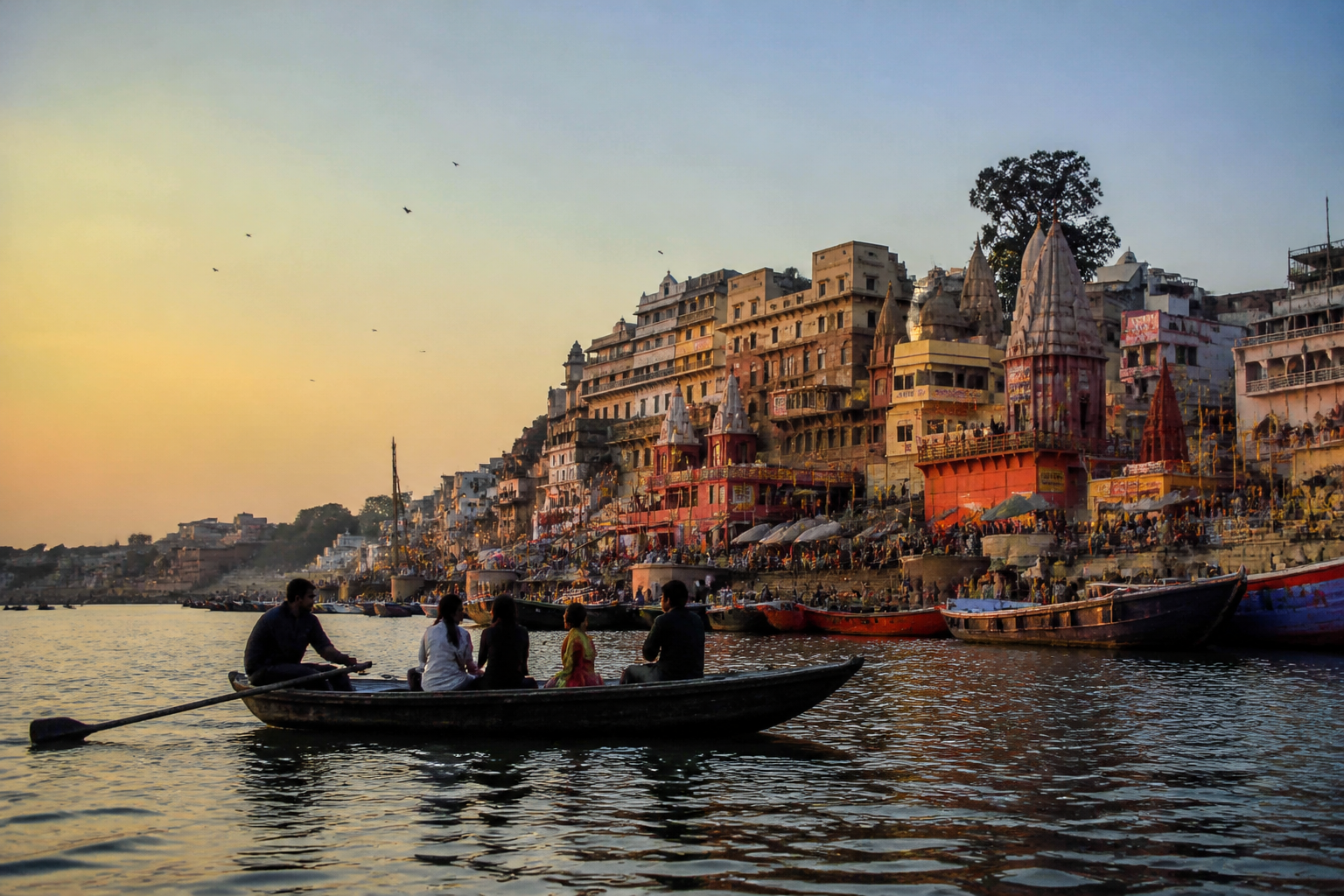
Varanasi can feel overwhelming at first. The lanes are narrow, the traffic is relentless, and the city is not polished in the usual tourist sense. Then you take a boat on the Ganges at dawn, and everything slows down.
I would spend at least two full days here. Take an early morning boat ride from one of the central ghats, then walk through the old lanes while the city is still waking up. You will see flower sellers, temple bells, milk vendors, musicians, and pilgrims heading toward the river.
The evening **Ganga Aarti** at Dashashwamedh Ghat is crowded, but it is still worth seeing once. For a less packed experience, watch a smaller ceremony at another ghat or sit quietly near Assi Ghat.
Beyond the ghats, look for:
– Banarasi silk workshops
– Classical music performances
– Lassi and kachori shops
– The grounds of Banaras Hindu University
– Sarnath, a short ride away, for Buddhist history and quieter surroundings
**My tip:** Wear comfortable shoes and keep your phone secure in the busiest lanes. Getting slightly lost is part of the experience, but do not wander into restricted or poorly lit areas late at night.
### 4. Dudhwa National Park for a Different Side of UP
If you want to see Uttar Pradesh beyond monuments and religious sites, Dudhwa National Park is the place to consider. It is much less convenient than Agra or Lucknow, but that is part of its appeal.
The park is known for swamp deer, elephants, crocodiles, birds, and the possibility of seeing tigers. Wildlife sightings are never guaranteed, so go for the landscape and the quiet as much as the animals. The grasslands and sal forests feel worlds away from the crowded cities.
Dudhwa requires more planning. Safaris operate seasonally, and accommodation near the park is limited. A local naturalist can make a big difference, especially for birdwatching.
**My tip:** Give yourself at least two nights. A rushed one-day visit usually means spending more time on the road than in the park.
## Practical Travel Advice
### Getting There and Visa
For Indian travelers, Uttar Pradesh is easy to reach by train, road, or domestic flight.
– **Lucknow** is the best entry point for central UP and has regular flights from Delhi, Mumbai, Bengaluru, Hyderabad, and other major cities.
– **Varanasi** has frequent flights and is convenient for eastern UP.
– **Agra** has limited flights, so many travelers arrive by train or road from Delhi.
– Delhi is also a useful gateway for Agra and western Uttar Pradesh.
India’s trains are often the most practical option between major cities. Book through the official **IRCTC** website or app, or use a trusted travel agent if the booking system feels confusing.
Foreign visitors generally need a valid passport and an Indian visa or e-visa before arrival. Many nationalities can apply online, but rules, permitted airports, and visa categories change, so check the official Indian government visa website before booking. Your passport should normally have at least six months’ validity and spare pages. Once you are inside India, there is no separate visa for traveling between UP cities, though some protected areas may require additional permits.
### Where to Stay
Your best neighborhood depends on the kind of trip you want.
– **Lucknow:** Stay around Hazratganj for central access, restaurants, and a more comfortable city feel. Chowk is better for old-city atmosphere and food, but it is noisier.
– **Agra:** Taj Ganj is convenient for visiting the Taj Mahal and has plenty of budget hotels. Sadar Bazaar is livelier and better for shopping and restaurants.
– **Varanasi:** Assi Ghat is calmer and popular with longer-stay travelers. Areas near Dashashwamedh Ghat put you close to the main action but can be crowded and noisy.
– **Ayodhya:** Stay near the main town if you want easy access to the temples and riverfront. Book well ahead during festivals and major holiday periods.
– **Dudhwa:** Choose a lodge or forest-side guesthouse near the park entrance and confirm safari arrangements before arrival.
I usually check recent reviews for hot water, cleanliness, noise, and transport access rather than relying on star ratings alone.
### Getting Around
For longer distances, trains are my first choice. They are often faster and more comfortable than road travel, especially between Lucknow, Agra, and Varanasi.
Inside cities:
– **Lucknow Metro** is useful for several main corridors and is clean and affordable.
– **Agra Metro** now covers selected areas, but autos and app-based cabs are still more practical for most sightseeing.
– **Varanasi** is best explored on foot in the old city, with autos or taxis for longer rides.
– **Ola, Uber, and Rapido** operate in many urban areas, though availability can be patchy outside city centers.
– Auto-rickshaws remain essential. Agree on the fare before getting in unless the driver uses a meter.
For Agra and Varanasi, a local driver for half a day can save time, but ask for a simple sightseeing transfer rather than a shopping-inclusive tour.
## Real Costs and Local Tips
The currency is the **Indian rupee (INR)**. Cash is still useful for street food, autos, small shops, and rural areas, although UPI and card payments are common in cities.
### Approximate Daily Budgets
**Budget traveler: ₹1,500–₹3,000 per person**
– Basic guesthouse or hostel: ₹600–₹1,500
– Street food and simple restaurants: ₹300–₹700
– Local transport: ₹200–₹500
– Entry fees and small extras: ₹200–₹500
**Mid-range traveler: ₹4,000–₹8,000 per person**
– Comfortable hotel: ₹2,000–₹5,000
– Restaurants and cafés: ₹800–₹1,500
– Cabs, trains, and sightseeing: ₹800–₹1,500
– Museums, guides, and activities: ₹400–₹1,000
The Taj Mahal, Agra Fort, and some other major attractions have separate foreign and Indian ticket prices. Check current official rates before visiting because they can change.
Tipping is not compulsory, but small tips are appreciated. I usually leave around 5–10% in a sit-down restaurant if service is good, round up auto fares when the driver has been helpful, and give hotel porters or local guides a modest amount.
### A Few Tricks That Saved Me Money
– **Book trains early.** Popular routes sell out, especially around weekends, festivals, and school holidays.
– **Eat where locals eat.** Busy stalls with high turnover are often safer and tastier than empty restaurants near major monuments.
– **Carry small notes.** Drivers and street vendors may not have change for ₹500 or ₹2,000 notes.
– **Use official ticket counters or websites.** Monument areas attract touts who may claim tickets are sold out or insist that a guide is mandatory.
– **Carry a refillable water bottle**, but use filtered or sealed water unless you know the local supply is safe.
– **Keep mornings flexible.** Fog, train delays, traffic, and unexpected processions are normal parts of traveling through UP.
Uttar Pradesh is not always an easy state to travel through, but it rewards patience. Stay a little longer than the usual one-night stop, leave room for an unplanned meal or conversation, and you will see why so many visitors return for reasons that have nothing to do with a single famous shrine.
KEYWORDS: Uttar Pradesh, India