
# From Hanoi to Nanning: A Friendly Guide to the New Vietnam–China Travel Link
The most interesting thing happening in northern Asian travel right now isn’t a flashy new resort or a giant attraction. It’s the return of easy, everyday movement between Vietnam and China—more flights, reopened border routes, and renewed cooperation between the two tourism industries.
I recently spent time around Hanoi and Nanning, and what stayed with me was how naturally the two places connect. The food changes gradually, the landscapes roll from Vietnamese limestone country into China’s subtropical cities, and border travel feels less like crossing between completely separate worlds and more like continuing the same journey.
## The Vibe & When to Go
Northern Vietnam and southern China feel lively, practical, and wonderfully food-obsessed. Hanoi has the familiar soundtrack of scooters, street vendors, coffee conversations, and early-morning exercise around the lake. Nanning is greener and more spacious, with broad streets, modern shopping areas, leafy parks, and a strong Cantonese-influenced food scene.
Spring and autumn are my favorite seasons for this route. Expect warm days, cooler evenings, and occasional rain. Hanoi can sit around **18–28°C**, while Nanning is often a little warmer and more humid. Summer brings heavy heat and sudden downpours, but it also gives you lush scenery. Winter is usually mild, though Hanoi can feel surprisingly damp and chilly.
This is a good time to go because cross-border travel is becoming easier again, with airlines and tourism companies rebuilding routes and tour connections. Still, schedules can change, so I would check flights and border arrangements before making a tightly packed itinerary.
## Must-See Spots: My Top Picks
### 1. Hanoi’s Old Quarter and Hoan Kiem Lake
I like arriving in Hanoi without a strict plan for the first few hours. Start at Hoan Kiem Lake early, before the traffic becomes intense. You’ll see locals walking, stretching, dancing, and practicing tai chi around the water.
From there, wander into the Old Quarter. The streets can feel chaotic at first, but each one traditionally had its own trade, and you’ll still find plenty of small workshops and family businesses hidden behind the shopfronts.
My favorite way to explore is to choose one small street, stop for coffee, and let the morning unfold. Try **egg coffee**, but don’t skip the simpler local drinks either. A strong iced coffee with condensed milk is still one of the best travel bargains in Hanoi.
**Small tip:** Cross busy streets slowly and predictably. Don’t make sudden stops in the middle of the road—the scooter traffic will flow around you more easily if you keep moving at a steady pace.
### 2. Nanning’s Qingxiu Mountain
Qingxiu Mountain is where I go when the noise of the city starts to wear me down. The park is large, green, and full of walking paths, gardens, pagodas, and viewpoints. It doesn’t feel like a quick photo stop; give yourself half a day.
Go in the morning if you want cooler weather and fewer crowds. Comfortable shoes are essential, and you may want to use the park shuttle if you don’t feel like walking uphill for hours.
Nanning itself is sometimes treated only as a transport point, but that’s a mistake. Spend at least two nights there. The city has a relaxed rhythm, and the evening food streets are a great place to try local noodles, grilled dishes, fruit, and regional snacks without paying hotel-restaurant prices.
### 3. Ha Long Bay or Bai Tu Long Bay
If you have time before or after heading toward China, add a bay trip from northern Vietnam. Ha Long Bay is famous for its limestone islands, but Bai Tu Long Bay tends to feel quieter and less crowded.
I prefer an overnight boat rather than a rushed day trip. The best moments usually happen away from the main timetable: early morning mist, a quiet deck after dinner, or watching the islands turn dark as the sun goes down.
Choose a boat carefully. Read recent reviews, ask how many passengers it carries, and check exactly what is included. The cheapest cruise is not always the best deal once transfers, drinks, and activities are added.
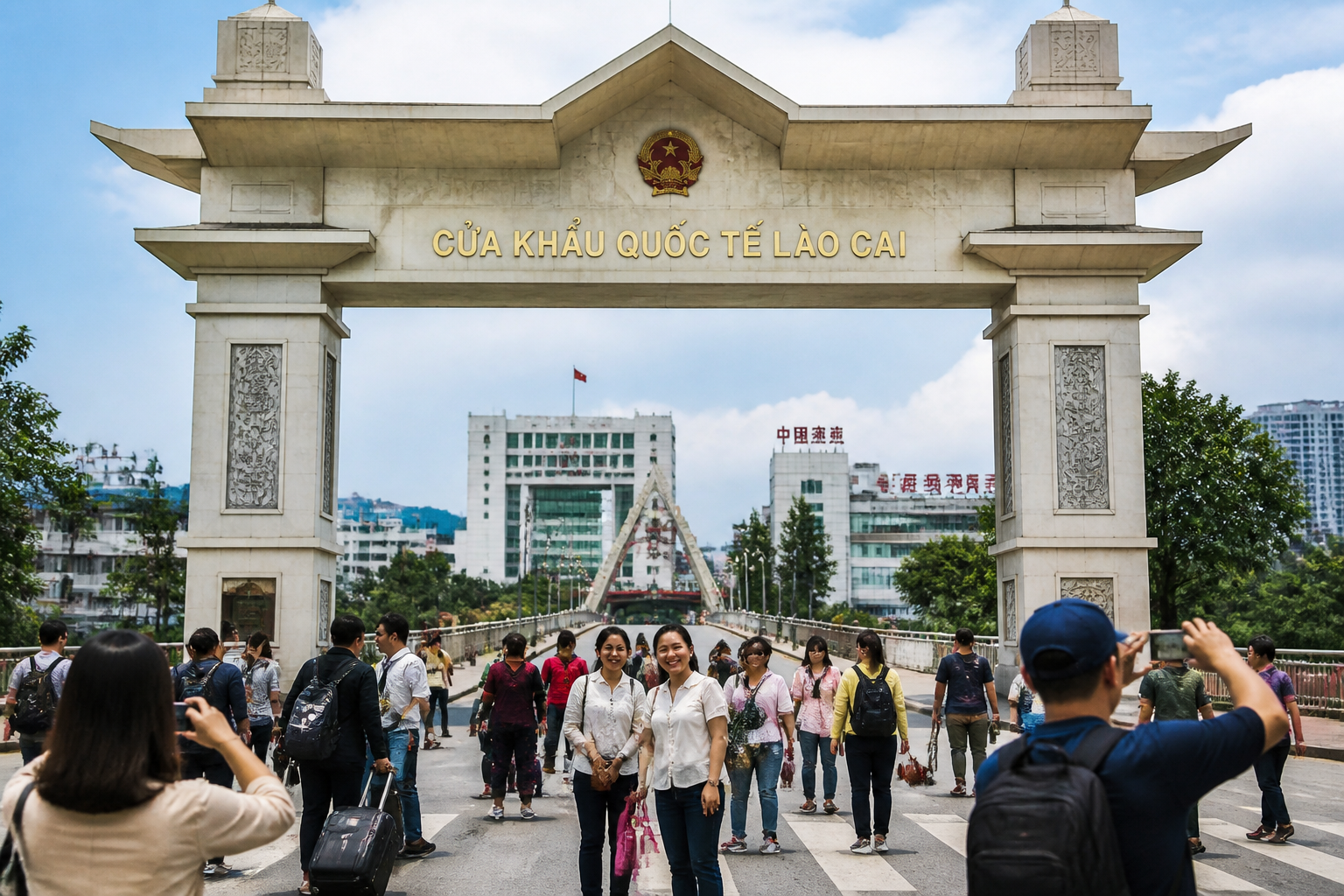
### 4. The Vietnam–China Border at Mong Cai and Dongxing
For travelers interested in the new cross-border tourism connection, Mong Cai in Vietnam and Dongxing in China offer a more personal experience than simply flying between major cities.
The border area is busy, commercial, and practical rather than picture-perfect. That is part of its appeal. You can watch traders, families, tour groups, and local workers moving through a place where the two countries meet every day.
Allow extra time for immigration, especially on weekends and public holidays. Keep your passport, entry documents, hotel details, and onward travel information easy to reach. Don’t put them at the bottom of a stuffed backpack.
## Practical Travel Advice
### Getting There and Visa Requirements
For Vietnam, many nationalities can apply for an online **Vietnam e-visa**, usually for stays of up to 90 days, depending on the passport and entry type. Apply through the official Vietnamese immigration website rather than a random agency charging extra fees.
Travelers going from Vietnam to China generally need a **Chinese visa before arrival**, unless they qualify for a specific visa-free arrangement, transit rule, or organized border-tourism policy. Requirements can vary by nationality, route, and purpose of travel, so check with the Chinese embassy or consulate in your country before booking non-refundable transport.
For flights, compare:
– Hanoi to Nanning
– Ho Chi Minh City to major Chinese hubs, followed by a domestic flight
– Direct flights between Vietnam and larger Chinese cities
Flight schedules can be seasonal. If you’re connecting through another Chinese city, leave plenty of time between flights, especially if you need to collect luggage and pass immigration.
For land travel, common northern routes include the **Mong Cai–Dongxing** crossing and the **Lao Cai–Hekou** crossing. Confirm that your visa and entry documents are valid for the exact crossing you plan to use.
### Where to Stay
**In Hanoi:**
Stay around Hoan Kiem if you want to walk to cafés, restaurants, markets, and historic streets. The area is lively and convenient but can be noisy. The French Quarter is calmer and has attractive old buildings, while Tay Ho suits longer stays, cafés, and a more relaxed neighborhood feel.
**In Nanning:**
Chaoyang Square is handy for shopping, restaurants, and public transport. The Qingxiu area is greener and quieter, with better access to the mountain park. If you have an early train or border transfer, staying near the station may save you stress.
I usually choose a modest hotel near a metro station rather than paying extra for a famous central address. Cleanliness, soundproofing, and recent guest reviews matter more to me than a rooftop pool.
### Getting Around
Hanoi is easy to explore on foot in short sections, though traffic makes some crossings challenging. For longer rides, use **Grab** for motorbike taxis and cars. Agreeing on a fare with a street driver can work, but app prices are clearer.
Nanning has a useful metro system, clean buses, and plenty of taxis. **Alipay and WeChat Pay** are widely used in China, so set up payment apps before arriving if possible. Some international cards may not work smoothly everywhere.
In both countries:
– Save your hotel name and address in the local language.
– Download offline maps before leaving Wi-Fi.
– Keep a screenshot of your train or bus booking.
– Ask your hotel to write destinations in Vietnamese or Chinese characters.
– Avoid assuming every driver or shop accepts foreign cards.
## Real Costs and Local Tips
Exchange rates change, but these are reasonable planning figures:
### Budget travel
– **Vietnam:** around **US$25–40 per person per day**
– **China:** around **US$30–50 per person per day**
That usually covers a simple guesthouse, local meals, public transport, coffee, and a few modest activities.
### Mid-range travel
– **Vietnam:** around **US$60–110 per person per day**
– **China:** around **US$70–130 per person per day**
This includes a comfortable hotel, restaurant meals, taxis or ride-hailing, entrance fees, and perhaps a guided day trip.
Vietnam uses the **Vietnamese đồng (VND)**, while China uses the **renminbi or yuan (CNY/RMB)**. Cash is still useful in Vietnam, especially at small food stalls. In China, mobile payment is more important than carrying a large wallet of cash.
Tipping is not a strong everyday custom in either country. You don’t need to tip street-food vendors or taxi drivers. At a nicer hotel or restaurant, a small amount for genuinely good service is appreciated but not required. Check whether a service charge has already been added.
### A Few Ways to Spend Less and Avoid Hassle
1. **Eat where office workers eat.**
If a small restaurant is busy at lunchtime with local workers, it is usually a better sign than a menu covered in English photos.
2. **Use apps for rides.**
Grab in Vietnam and local ride-hailing services in China reduce fare confusion and make it easier to find your driver.
3. **Avoid changing all your money at the airport.**
Exchange a small amount for immediate transport, then compare rates in town. Use reputable banks or licensed exchange counters.
4. **Check holiday dates before booking.**
Vietnamese and Chinese public holidays can fill trains, hotels, and border crossings quickly. Prices also rise around major festivals.
5. **Keep a flexible border day.**
I would never schedule a long international flight immediately after a land crossing. Delays are possible, and the extra breathing room makes the journey much less stressful.
The most rewarding part of this travel corridor is that it doesn’t feel manufactured. You see cooperation in practical details—transport links, tour groups, shared food traditions, and busy border towns—but you also experience the small differences that make each side worth visiting on its own. Give yourself more time than a rushed weekend, and the route from Vietnam into China becomes a fascinating trip rather than just a transfer.
KEYWORDS: Hanoi Nanning