
# Oman Travel Guide: Quiet Roads, Mountain Wadis, and the Best Local Flavors
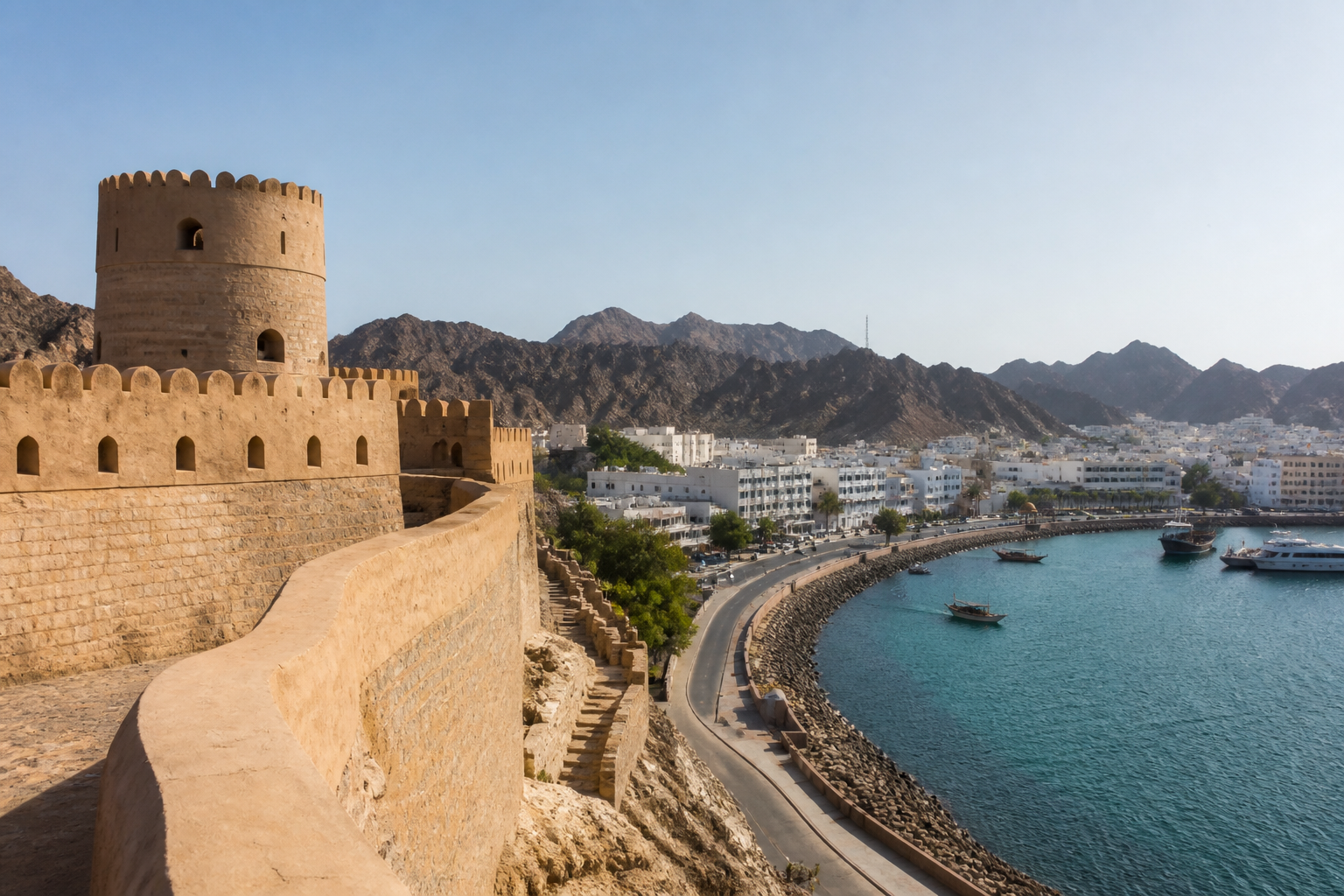
Oman has been selected by **Oman Observer** as one of the best travel destinations, and after spending time there, I understand why. It doesn’t feel like a place trying too hard to impress you. The beauty is in the long empty roads, the smell of cardamom coffee, the sudden green pools between dry mountains, and the way a busy souq can turn quiet within a few steps.
## The Vibe & When to Go
Oman feels calm, spacious, and refreshingly unhurried. Muscat is modern without being overwhelming, while the villages, wadis, and desert roads give you plenty of room to breathe. I found the country easy to enjoy slowly—one fort, one cup of coffee, and one scenic stop at a time.
The best weather is generally from **November to March**, when Muscat is comfortable for walking and the desert and mountains are far more pleasant. In late winter and early spring, daytime temperatures are usually warm but manageable, although afternoons can become hot in the lowlands. The evenings are lovely, especially around the coast and in the mountains.
From April onward, heat builds quickly. Summer can still work if you focus on Salalah during the khareef season, when the south turns misty and green, but central and northern Oman can be intensely hot.
## Must-See Spots: My Top Picks
### 1. Muscat’s Sultan Qaboos Grand Mosque and Mutrah Corniche
The Grand Mosque is one of the first places I’d visit in Muscat. The main prayer hall is peaceful and beautifully detailed, with enormous carpets, polished stone, and soft light filtering through the space. Dress modestly, and remember that non-Muslim visitors can usually enter in the morning on designated days, except Fridays.
Later, head to **Mutrah Corniche**. Walk along the waterfront near sunset, then wander into Mutrah Souq. The souq is much more enjoyable if you don’t rush. Look for frankincense, silver jewelry, woven textiles, and small boxes made from fragrant wood. Prices are often negotiable, but a friendly conversation goes further than aggressive bargaining.
For dinner, I like finding a small local restaurant away from the seafront. Try **shuwa**, grilled meat, rice dishes, or a plate of hummus and freshly baked bread.
### 2. Wadi Shab and Bimmah Sinkhole
Wadi Shab is one of Oman’s most memorable day trips. You take a short boat ride across the water, then walk through rocky scenery to reach pools of clear turquoise water. Bring sturdy shoes, plenty of water, and a waterproof bag for your phone. The hike is not impossible, but the heat makes it feel harder than the distance suggests.
The final swim can involve squeezing through a narrow opening in the rocks, so don’t carry anything bulky. If you’re not a confident swimmer, bring a flotation aid or stay in the shallower pools.
On the way back toward Muscat, stop at **Bimmah Sinkhole**. It is easy to reach by car and makes a refreshing break. Go early if you want a quieter experience; tour groups tend to arrive later in the morning.
### 3. Nizwa Fort and the Old Souq
Nizwa is where Oman’s history feels especially close. The huge round tower of **Nizwa Fort** gives you wide views over the town and surrounding date palms. I enjoyed wandering through the rooms and stairways, but the real atmosphere is in the nearby souq.
If you can, visit on a Friday morning for the traditional livestock market. It is lively, local, and very different from a polished tourist attraction. Arrive early, keep out of the way of sellers and animals, and ask before taking close-up photographs.
The souq is also a good place to buy dates, spices, halwa, and small food gifts. Taste before buying when offered, but don’t feel pressured to purchase a large quantity.
### 4. Jebel Akhdar and the Mountain Villages
The mountains around **Jebel Akhdar** offer a cooler side of Oman. Terraced farms, steep valleys, and small villages make the drive feel completely different from the coast. In spring, rose season brings a gentle fragrance to some villages, while pomegranates and walnuts appear later in the year.
You need a **4WD vehicle** to drive up to the higher mountain areas, and police checks may be made at the checkpoint. Don’t attempt the mountain road in a regular rental car.
I also recommend visiting **Misfat Al Abriyeen**, an old hillside village with narrow lanes and working aflaj irrigation channels. Walk quietly, since people still live there, and avoid entering private homes or gardens without permission.
## Practical Travel Advice
### Getting There and Visa
Most visitors fly into **Muscat International Airport**, with direct or connecting flights from major cities in the Gulf, India, Europe, and parts of Asia. Salalah has its own airport and is convenient if you are visiting southern Oman.
Visa rules depend on your nationality. Many travelers can apply for an **Oman eVisa**, while citizens of some countries may enter visa-free for short stays, often up to 14 days, under specific conditions. Your passport should generally be valid for at least six months, and you may be asked for proof of accommodation, onward travel, travel insurance, and sufficient funds.
Check the official **Royal Oman Police eVisa website** before booking non-refundable plans. Rules and eligible nationalities can change.
### Where to Stay
– **Mutrah:** Best for harbor views, the corniche, souq access, and a more traditional feel. Parking can be limited.
– **Qurum:** A good choice for beaches, cafés, restaurants, and a relaxed neighborhood atmosphere.
– **Al Khuwair or Al Ghubrah:** Practical areas with plenty of restaurants and mid-range hotels.
– **Old Muscat:** Quiet and scenic, especially if you want to stay near the palace and waterfront.
– **Nizwa:** Ideal for a night near the fort and souq before continuing into the mountains.
– **Jebel Akhdar:** Choose a mountain hotel or guesthouse for cooler air, dramatic views, and a slower pace.
For most trips, I’d split the stay between Muscat and one or two nights in Nizwa or the mountains.
### Getting Around
Oman is not especially walkable outside a few areas in Muscat. The best way to explore beyond the capital is by rental car, especially if you want to visit wadis, forts, and mountain villages.
In Muscat, local taxis are common, but agree on the fare before getting in. The **OTaxi** app can be useful for booking rides, although availability may vary by area. Public buses operate in Muscat, but routes and frequency are limited compared with larger cities.
A few driving reminders:
– Keep fuel topped up on longer road trips.
– Avoid wadis during or after heavy rain.
– Don’t drive into the desert or mountains without checking road conditions.
– Carry water, offline maps, and a power bank.
– Watch for sudden speed changes and roundabouts on highways.
## Real Costs and Local Tips
Oman uses the **Omani rial (OMR)**. It is a strong currency, and small shops or rural cafés may prefer cash. Cards are widely accepted in hotels, supermarkets, and larger restaurants.
### Approximate daily budgets
**Budget traveler: 25–40 OMR per person**
– Simple guesthouse or budget hotel
– Local meals and casual cafés
– Shared taxis or fuel split with another traveler
– Free beaches, forts, and self-guided walks
**Mid-range traveler: 60–110 OMR per person**
– Comfortable hotel
– Rental car shared between two people
– Restaurant meals
– Paid attractions and occasional guided tours
A 4WD rental, desert camp, or canyoning trip can push the daily cost higher.
Tipping is not compulsory, but rounding up or leaving around **5–10%** for good restaurant service is appreciated. For guides and drivers, a small tip is a kind gesture if they have done a good job.
### Small tricks that save money and hassle
– **Rent a car with another traveler:** Fuel is relatively manageable, but the rental cost for a 4WD becomes much easier to handle when shared.
– **Eat where locals eat:** Small cafeterias often serve filling meals of rice, grilled chicken, bread, and tea for much less than hotel restaurants.
– **Carry coins and small notes:** They make taxis, roadside snacks, parking, and small purchases much easier.
– **Buy water in supermarkets:** Roadside shops and hotel minibars can charge noticeably more.
– **Book mountain and desert stays early:** The better-value rooms disappear quickly during the November-to-March season.
– **Respect photography boundaries:** Always ask before photographing people, homes, or workers. It avoids awkward moments and is simply good manners.
Oman rewards travelers who leave space in their itinerary. Some of my favorite memories came from unplanned roadside stops: a tiny tea shop, a view over a date plantation, or a quiet stretch of coast with nobody else around. Come prepared, drive patiently, and let the country unfold at its own pace.
KEYWORDS: Oman landscape, Muscat Oman