
# Bangladesh Beyond the Headlines: My Favorite Places, Foods, and Honest Travel Tips
Bangladesh is having a tourism moment. While Thailand, India, Sri Lanka, and Nepal often get the regional attention, Bangladesh is quietly working on a stronger tourism strategy—better promotion, improved visitor services, and more attention to its rivers, wildlife, beaches, and historic cities.
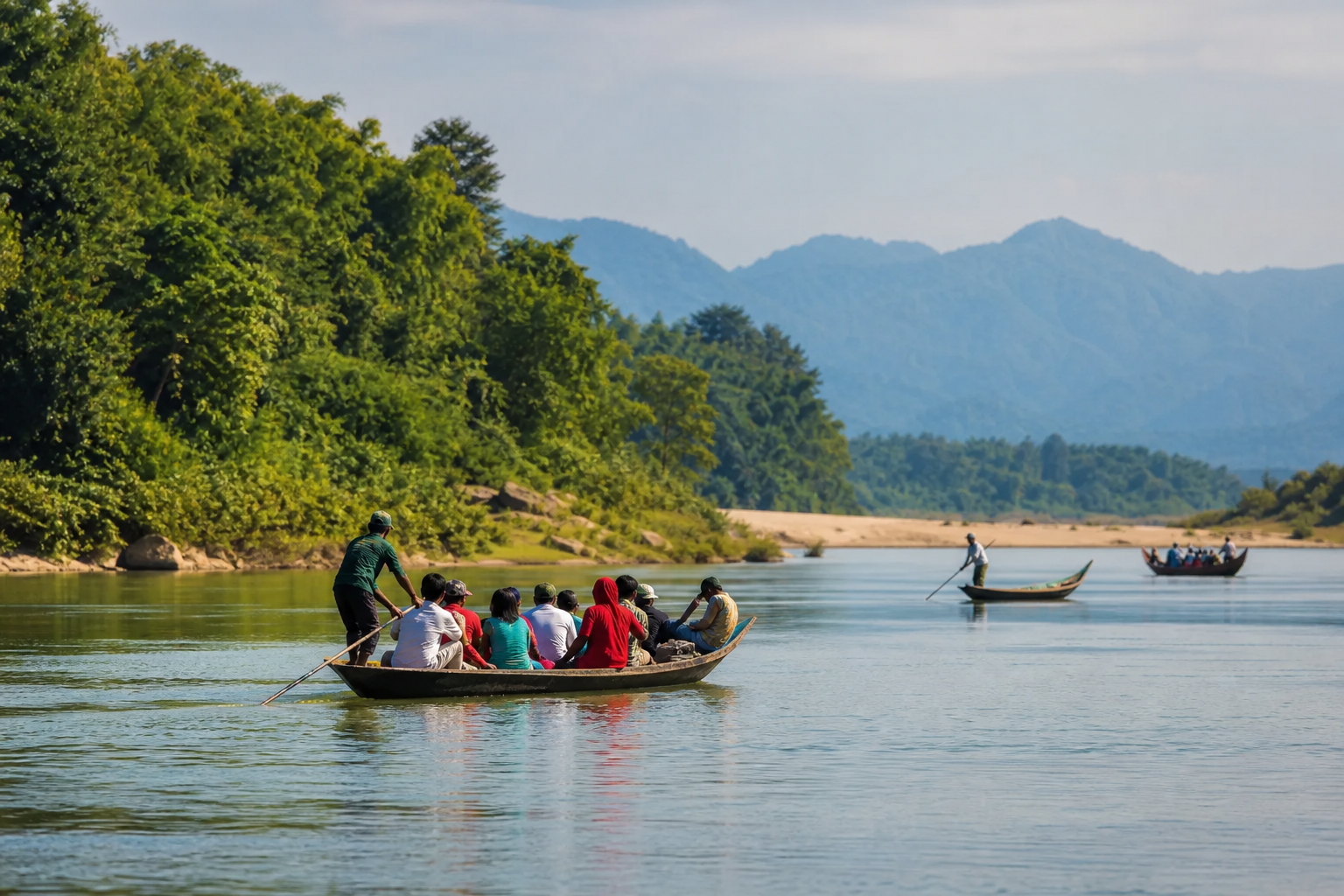
That change is welcome, but the country is still best experienced with patience and curiosity. Bangladesh can be noisy, crowded, humid, and wonderfully generous all within the same afternoon. I found the real reward came from slowing down: sharing tea with a shopkeeper, watching ferries cross the Buriganga River, or eating a plate of steaming rice and fish at a busy local restaurant.
## The Vibe & When to Go
Bangladesh feels lively from the moment you arrive. Dhaka is a whirl of traffic, rickshaws, street vendors, office workers, mosques, and sudden pockets of calm. Outside the capital, the pace softens. Green rice fields stretch toward the horizon, rivers shape daily life, and small towns often feel far removed from the rush of Dhaka.
The most comfortable time to visit is generally **November through February**. Days are cooler and drier, with pleasant temperatures for sightseeing. December and January can feel surprisingly mild in the mornings, especially in northern areas.
– **March to May:** Hot and increasingly humid, though still manageable for shorter trips
– **June to October:** Monsoon season, with heavy rain, flooded roads, and dramatic green scenery
– **November to February:** The easiest season for first-time visitors
If you enjoy photography, the monsoon months bring rich colors and swollen rivers, but transport can become unpredictable. For a relaxed first visit, I would choose winter.
## Must-See Spots: My Top Picks
### 1. Old Dhaka and Lalbagh Fort
Old Dhaka is not a quiet sightseeing district. It is crowded, colorful, and full of life, with narrow lanes where cycle rickshaws squeeze past spice sellers and small workshops.
I liked visiting **Lalbagh Fort** early in the day, before the heat and crowds built up. The unfinished Mughal complex has gardens, old gateways, and a calm feeling that contrasts with the streets outside. Afterward, wander toward Shakhari Bazar, where Hindu temples, brightly painted buildings, and traditional craft shops fill a surprisingly compact area.
For lunch, look for a busy local restaurant rather than an empty place with a long English menu. Old Dhaka is famous for dishes such as **kacchi biryani**, beef tehari, kebabs, and sweet yogurt. Bring cash, dress modestly, and expect the lanes to be much slower than they look on a map.
### 2. The Sundarbans
A trip to the **Sundarbans**, the world’s largest mangrove forest, was one of the most memorable parts of my time in Bangladesh. The landscape is quiet in a way Dhaka never is: muddy banks, narrow waterways, tangled roots, kingfishers, and long stretches of forest where the boat engine seems almost too loud.
Most visitors arrange a guided boat trip from Khulna or Mongla. Choose an operator carefully and ask about:
– Boat safety and life jackets
– Food and drinking water
– Forest permits
– Sleeping arrangements
– Group size
– Whether local guides are included
You may see spotted deer, crocodiles, monkeys, and a huge range of birds. A tiger sighting is rare, so I would not book the trip expecting one. The forest itself is the main experience.
### 3. Cox’s Bazar and Nearby Beach Areas
Cox’s Bazar has one of the world’s longest natural sandy beaches, but it is not a polished resort destination in the style of southern Thailand. The main town can be busy and cluttered, especially during holidays.
I preferred walking farther from the central beach area, particularly around sunrise or late afternoon when the heat eased. For a quieter stay, look toward **Inani Beach**, though transport and dining options are more limited there. Himchari National Park also makes a pleasant half-day outing, with coastal views and green hills.
Keep expectations realistic. Cox’s Bazar is lively and local rather than pristine and perfectly managed. That is part of its character, but travelers looking for silence should avoid weekends and public holidays.
### 4. Sylhet and the Tea Country
Sylhet feels greener and more relaxed than Dhaka. The surrounding tea estates, streams, forested hills, and villages make it a good choice if you want a slower few days.
I enjoyed visiting the tea gardens around **Sreemangal**, where the roads pass through rolling plantations and small roadside stalls sell hot tea and snacks. Lawachara National Park is another good stop for a forest walk, especially with a local guide who can point out birds and monkeys.
Try the local **seven-layer tea** if you see it advertised, but also make time for ordinary milk tea from a roadside stall. The simple version was often my favorite.
## Practical Travel Advice
### Getting There and Visa
Most international visitors fly into **Hazrat Shahjalal International Airport in Dhaka**. There are regular connections through Doha, Dubai, Abu Dhabi, Singapore, Kuala Lumpur, Bangkok, Delhi, and Colombo.
For flights, I would compare fares into Dhaka with connections through nearby hubs. If you are already traveling in South Asia, regional flights can be reasonable, but baggage rules vary sharply between airlines.
Visa rules depend on your passport. Many travelers need to arrange a visa before departure, while some nationalities may qualify for a visa on arrival under specific conditions. Requirements can change, so check the Bangladesh embassy or official immigration information for your nationality before booking.
Have these ready:
– Passport valid for at least six months
– Return or onward travel details
– Hotel address or local contact information
– Passport photographs, if requested
– Proof of funds or travel plans, depending on your nationality
Do not rely on an old blog post for visa information. Rules and fees can change without much warning.
### Where to Stay
**Gulshan or Banani, Dhaka:** Best for first-time visitors who want reliable hotels, restaurants, cafés, malls, and easier access to business districts. These areas are more expensive but generally more comfortable.
**Dhanmondi:** A good middle ground with local restaurants, parks, cafés, and a more residential feel. Traffic can still be intense.
**Old Dhaka:** Fascinating for atmosphere and food, but not the easiest base. I would stay here only if you enjoy busy streets and want to be close to historic sights.
**Sreemangal:** Choose a guesthouse, small resort, or tea-estate stay for a quieter countryside experience.
**Cox’s Bazar or Inani:** The main town has more restaurants and transport. Inani is calmer but less convenient.
### Getting Around
Dhaka is not especially walkable for long distances. Sidewalks can disappear, traffic is heavy, and crossing major roads takes confidence.
– **Uber and Pathao:** Useful for cars and motorbikes in Dhaka and some larger cities
– **CNG auto-rickshaws:** Convenient for short trips, though agree on the fare before leaving if the meter is not used
– **Cycle rickshaws:** Fun and practical for short distances, especially in quieter neighborhoods
– **Dhaka Metro:** Helpful on the routes it serves and often faster than sitting in traffic
– **Trains:** Comfortable on some routes, but schedules and delays require flexibility
– **Buses:** Cheap, though crowded and not always easy for visitors to navigate
For the Sundarbans, book transport and forest permits through a reputable local operator. For Sylhet and Cox’s Bazar, private cars with drivers can save time if you are traveling with two or more people.
## Real Costs and Local Tips
Bangladesh remains affordable compared with many popular destinations in the region, though international-standard hotels and guided tours can raise the total quickly.
### Daily Budget
**Budget travel: around 3,000–5,000 BDT per day**
About **US$25–40**, excluding international flights. This covers a simple guesthouse, local meals, buses or short rickshaw rides, and modest sightseeing.
**Mid-range travel: around 8,000–15,000 BDT per day**
About **US$65–125**, including a comfortable hotel, restaurant meals, private rides, entrance fees, and occasional guided trips.
A Sundarbans tour, domestic flight, or private car hire will sit outside these rough daily figures.
The local currency is the **Bangladeshi taka (BDT)**. Cash is still important, especially outside upscale hotels and restaurants. Cards are accepted in many larger businesses, but not reliably in small shops, rural guesthouses, or transport.
Tipping is not compulsory, but rounding up or leaving **5–10%** in a nicer restaurant is appreciated. For drivers, hotel staff, and guides, a small tip is a kind gesture when service has been good.
### A Few Tricks That Saved Me Money
– **Eat where local workers eat.** Busy restaurants usually have fresher food, faster turnover, and much lower prices than tourist-focused places.
– **Carry small notes.** Rickshaw drivers, tea stalls, and small shops may not have change for large bills.
– **Use ride apps when traffic and bargaining become exhausting.** Pathao and Uber make city rides easier, but check the route and fare before getting in.
– **Avoid changing money at the airport unless necessary.** Exchange a small amount on arrival and compare rates at reputable money changers or banks in the city.
– **Build extra time into every journey.** Dhaka traffic can turn a short trip into a long one, and rain can affect roads and ferries.
– **Ask before photographing people.** Bangladeshis are often friendly and curious, but a quick request is more respectful than raising a camera without warning.
Bangladesh may not yet have the smooth tourism infrastructure of its regional rivals, and that can make travel here more demanding. But the country offers something many heavily visited destinations have lost: a strong sense that daily life is still happening around you, not being performed for visitors. Come prepared for noise, delays, heat, and a little improvisation, and you may leave with some of your most genuine South Asian travel memories.
KEYWORDS: Bangladesh travel, Dhaka Bangladesh