
# Nepal in Dashain: Traditional Swings, Autumn Skies, and the Joy of Traveling Slowly
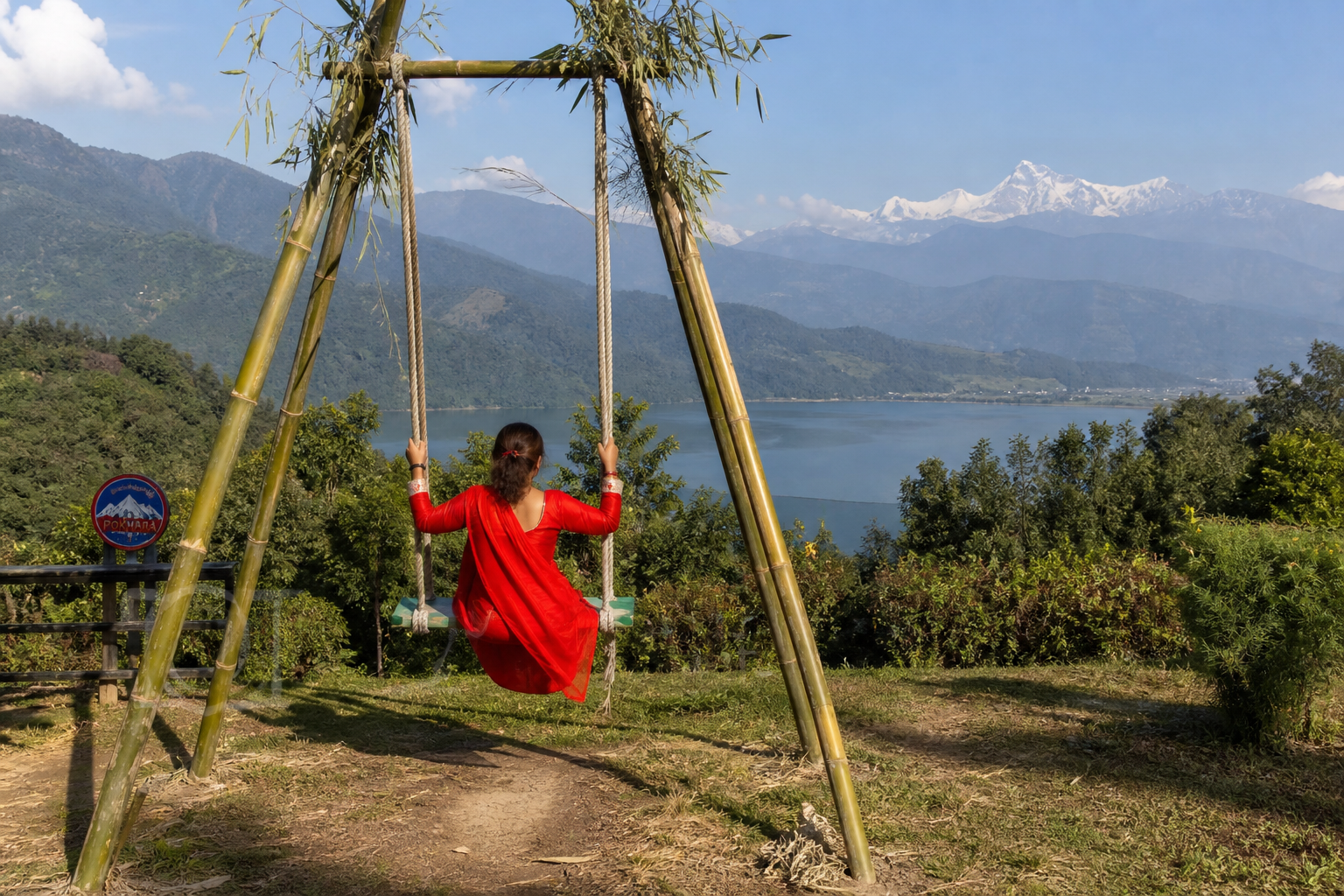
There is something wonderfully old-fashioned about Dashain in Nepal. As families return to their hometowns, markets fill with marigolds and fresh clothes, and traditional **ping swings** appear in towns and tourist areas. For a few weeks, children, grandparents, and curious travelers all line up for a turn.
The Nepal Tourism Board’s plan to install traditional swings at popular tourist destinations adds a lovely local touch to an already special season. These are not just photo props. In Nepal, swinging during Dashain is part of the celebration—loud, social, slightly chaotic, and usually accompanied by plenty of laughter.
If you are thinking about visiting Nepal around Dashain, this is one of the best times to experience the country’s streets, temples, food, and mountain views together.
## The Vibe & When to Go
Dashain usually falls in **September or October**, depending on the lunar calendar. The monsoon has mostly moved away by then, leaving clearer skies, cleaner mountain views, and comfortable daytime temperatures.
In Kathmandu, mornings can feel pleasantly cool, while afternoons are warm enough for walking. Pokhara is usually mild and bright, with good conditions for lakeside strolls and mountain-viewing. Higher areas, such as Nagarkot or Dhulikhel, become especially attractive when the air clears.
The atmosphere changes during Dashain. Roads can be quieter in Kathmandu as many residents leave for their family homes, but markets and tourist spots still have plenty of life. You may see swings being built in open spaces, children waiting impatiently for a turn, and families sharing snacks nearby.
The best time to visit is usually **a few days before Dashain through the festival period**, though transport and business hours can be unpredictable on the main holidays. I would allow some flexibility rather than planning every hour.
## Must-See Spots: My Top Picks
### 1. Kathmandu Durbar Square and the old city
Start around **Kathmandu Durbar Square**, then wander through the nearby lanes of Basantapur, Ason, and Indra Chowk. This part of the city is full of shrines, courtyards, spice shops, textile stalls, and small food counters.
During Dashain, the old city feels especially connected to the festival. You may come across temporary swings, religious activity, and families shopping for offerings and clothes. The lanes can be crowded, so go early if you prefer a calmer walk.
My favorite way to explore is without a fixed route. Stop for a cup of chiya, look into the courtyards, and let the sound of bells guide you toward the next temple. Wear comfortable shoes—the old stone streets are uneven.
### 2. Pokhara Lakeside
Pokhara has a more relaxed rhythm than Kathmandu. Lakeside is the easy base, with cafés, small restaurants, trekking shops, and views across Phewa Lake. If traditional swings are installed here for Dashain, the setting should be especially fun: a local festival activity with the lake and green hills nearby.
Take a boat across Phewa Lake in the morning, then walk along the lakeside road later in the day. For a quieter view, climb toward the World Peace Pagoda or visit the nearby villages instead of spending the whole day in the busiest part of Lakeside.
One small tip: sunrise views from **Sarangkot** can be beautiful, but clouds still appear even after the monsoon. Check the sky before paying for an early taxi.
### 3. Swayambhunath, the Monkey Temple
Swayambhunath is one of those places where the approach is almost as memorable as the view. Climb the stairs slowly, passing prayer flags, small shrines, and monkeys that are far more confident than most visitors.
From the top, you can see much of Kathmandu Valley. Visit in the late afternoon when the light softens, but keep your belongings secure and avoid carrying food openly around the monkeys.
Dashain is a good time to visit because the temple area feels active without always being as packed as during major religious days. Dress modestly, and walk clockwise around the central stupa as local visitors do.
### 4. Nagarkot or Dhulikhel for a slower festival break
If Kathmandu begins to feel noisy, spend a night in **Nagarkot** or **Dhulikhel**. Both are popular for valley and mountain views, and both offer a slower way to experience the season.
Nagarkot has more hotels aimed at visitors and is convenient for a short escape. Dhulikhel has a more lived-in town atmosphere and is a good choice if you want to combine scenery with local streets and temples.
Bring a light jacket. Even when Kathmandu feels warm, evenings on the ridge can be chilly.
## Practical Travel Advice
### Getting There and Visa
Most international visitors arrive at **Tribhuvan International Airport in Kathmandu**. Nepal offers visa-on-arrival facilities to citizens of many countries, but requirements can vary by nationality. You will generally need:
– A passport valid for at least six months
– A passport photo or digital photo
– A completed arrival form
– The visa fee, usually payable in major foreign currencies or by card where available
Check the latest rules on the official Nepal immigration website before flying. Indian citizens have different entry arrangements, and some nationalities may need to arrange a visa in advance.
Flights to Kathmandu can be delayed, especially around busy festival periods. If you are connecting onward to Pokhara or another city, avoid booking a very tight connection. I would leave several hours between flights, or spend the first night in Kathmandu.
### Where to Stay
**Thamel:** Best for first-time visitors, nightlife, trekking shops, restaurants, and easy access to travel services. It is busy, but convenient.
**Patan:** A calmer choice with beautiful traditional architecture, cafés, and Patan Durbar Square nearby. I prefer Patan when I want a more local-feeling base.
**Boudha:** Good for a peaceful stay near Boudhanath Stupa. There are guesthouses, Tibetan restaurants, and plenty of rooftop cafés.
**Lakeside, Pokhara:** The easiest area for restaurants, lake activities, and tour bookings. Stay a few streets away from the main road if you want less noise.
**Nagarkot or Dhulikhel:** Choose these for mountain air, sunrise views, and a quieter Dashain break. Confirm whether your hotel will serve meals during the main festival days.
### Getting Around
Kathmandu is walkable in small sections, but crossing the city can take much longer than the map suggests. Dust, traffic, and narrow streets make short distances surprisingly tiring.
For local rides, use **Pathao** or **inDrive** where available. They are usually easier than negotiating with a taxi on the street. Traditional taxis are still common, but agree on the fare before leaving if the meter is not being used.
In Pokhara, taxis and app-based rides are useful for longer distances. Lakeside itself is easy to explore on foot, and bicycles can be rented, though traffic is not always gentle.
For intercity travel, tourist buses between Kathmandu and Pokhara are common. During Dashain, seats can sell out and roads may be busy, so reserve early. Domestic flights are faster but can be affected by weather.
## Real Costs and Local Tips
Nepal remains fairly affordable, although prices rise around popular trekking routes and comfortable hotels.
### Typical daily budgets
**Budget traveler: USD 25–40 per day**
– Simple guesthouse or hostel
– Local meals and tea
– Buses, walking, and occasional app-based rides
– A few low-cost sights
**Mid-range traveler: USD 60–110 per day**
– Comfortable hotel or boutique guesthouse
– Restaurant meals and cafés
– Private rides or occasional guided trips
– Entrance fees and small cultural activities
These figures do not include international flights, trekking permits, major tours, or expensive mountain flights.
Nepal uses the **Nepalese rupee (NPR)**. Keep small notes for snacks, local buses, temple donations, and short taxi rides. Card payments are common in better hotels and restaurants but less reliable in small shops.
Tipping is appreciated but not compulsory. In restaurants, rounding up or leaving around **5–10%** is reasonable when service is good. Guides, porters, and drivers usually deserve a separate tip, especially after a trek or full-day tour.
### A few ways to save money and avoid hassle
– **Eat where office workers and local families eat.** Dal bhat, momos, thukpa, and Newari snacks are usually tastier and cheaper away from the most touristy streets.
– **Carry cash during Dashain.** Some shops and services close, while others may not accept cards or may charge a little more.
– **Ask whether an attraction is open before traveling across town.** Festival schedules can change, especially on the main Dashain days.
– **Do not rush to accept the first taxi price.** Check Pathao or inDrive first to get a rough idea of the fare.
– **Keep a scarf or mask for dusty roads.** Kathmandu traffic can be tough on the lungs, even when the weather is clear.
– **Treat the swings respectfully.** If a traditional ping is installed at a tourist destination, wait your turn, follow any local instructions, and avoid climbing onto the structure for photos.
## Final Thoughts
Nepal during Dashain offers more than mountain scenery and famous temples. It gives you a chance to see how celebration spills into everyday public life—through swings, food stalls, family gatherings, music, and the simple excitement of waiting for your turn.
I would combine a few days in Kathmandu with Pokhara, then leave room for one quiet hill town. Do not worry if the festival schedule changes your plans. Some of my favorite travel memories in Nepal have come from following a crowd toward a temple, stopping for an unplanned plate of momos, or watching children compete over who could swing highest.
That is the charm of visiting during Dashain: the country feels festive, welcoming, and wonderfully human.
KEYWORDS: Kathmandu Nepal