
# Hanoi Beyond the Headlines: Old Streets, Strong Coffee, and My Honest Travel Tips
## The Vibe & When to Go
Hanoi feels busy, curious, and wonderfully imperfect. Scooters stream through narrow streets, tiny plastic stools appear wherever there is a good bowl of noodles, and an old French villa might sit beside a brand-new coffee shop. It is the kind of city that rewards wandering without a strict plan.
The city is warm and humid at the moment, with sudden showers that can arrive just as you sit down for lunch. Mornings are usually the most pleasant time to walk, while the late afternoon brings cooler air and a livelier street scene. If you dislike heat, visit from **October to April**, when the weather is generally drier and more comfortable. May to August can be hot and stormy, but the fresh fruit, iced coffee, and quieter attractions make summer travel manageable.
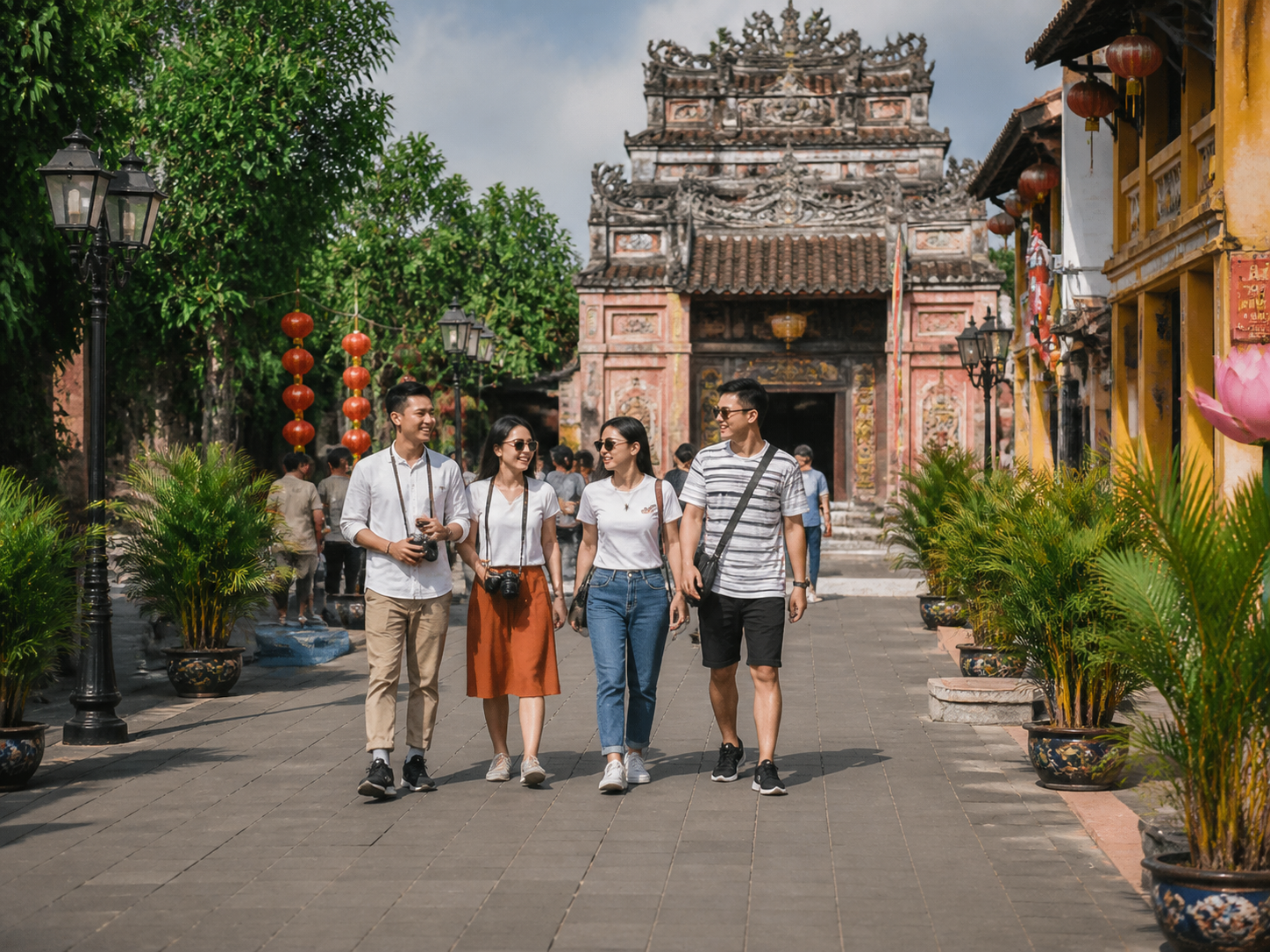
Hanoi also has a young, creative energy. I noticed it in the independent cafés, small galleries, streetwear shops, and the many young photographers and content creators giving visitors a different view of the city—one that goes beyond the usual postcard sights.
## Must-See Spots: My Top Picks
### 1. The Old Quarter, especially early in the morning
The Old Quarter is chaotic in the middle of the day, but early morning is when I like it best. Shopkeepers sweep their doorways, locals eat noodle soup at the roadside, and the streets feel less like a tourist attraction and more like a living neighborhood.
Start around **Hoan Kiem Lake**, then wander through streets such as Hang Bac, Ma May, and Ta Hien. Don’t worry about seeing every landmark. The best moments often come from small details: a woman arranging flowers on a bicycle, a family-run breakfast stall, or a narrow café hidden above a tailor shop.
**My tip:** Wear comfortable shoes and keep your phone secure when crossing roads. Traffic usually flows around pedestrians, but stopping suddenly in the middle of the street makes things harder for everyone.
### 2. Train Street—with a little common sense
Hanoi’s famous Train Street is visually striking, but it is also a working railway, not a theme park. Access rules change, and some sections may be closed. If you visit, follow local instructions and only enter through a café or area that is officially open.
I prefer going in the late afternoon, when the light is softer and the nearby cafés are less crowded than during peak photo hours. Have a coffee, enjoy the unusual setting, and don’t stand on the tracks for a dramatic photograph.
**A better nearby stop:** Walk toward Phung Hung Street, where colorful murals sit beneath the old railway arches. It is calmer and gives you more space for photographs.
### 3. The Temple of Literature
The Temple of Literature is one of those places that can feel crowded in photographs but peaceful in person if you arrive early. The courtyards, stone steles, and low tiled roofs create a welcome break from Hanoi’s traffic.
I spent about an hour here, moving slowly rather than trying to read every sign. The site is especially pleasant in the morning when the light falls across the courtyards and local students sometimes visit in traditional clothing for graduation photos.
Dress modestly, keep your voice down, and avoid climbing on the stone turtles and steles. This is a place for a quiet visit, not just a quick photo stop.
### 4. West Lake and Truc Bach
For a more relaxed side of Hanoi, head toward **West Lake**. The full lake is too large to walk around comfortably in one go, so choose a stretch near Truc Bach or Quang An. You’ll find cafés with lake views, small temples, international restaurants, and locals exercising along the water.
I like coming here near sunset, then stopping for a bowl of **pho cuon** or grilled fish. The atmosphere is less intense than the Old Quarter, and it gives you a sense of how Hanoi residents spend their evenings.
**Small discovery:** Look for the narrow streets around Truc Bach Lake. They are quieter than the main lakeside road and full of simple family restaurants.
## Practical Travel Advice
### Getting There & Visa
Most international travelers arrive at **Noi Bai International Airport**, about 30 kilometers from central Hanoi. A taxi or Grab car usually takes 35–60 minutes, depending on traffic.
Vietnam offers an **e-visa for citizens of many countries**, generally allowing stays of up to 90 days and, in many cases, multiple entries. Apply through the official Vietnamese immigration website and check that your passport has at least six months of validity and enough blank pages. Make sure the name and passport number on your application match your passport exactly.
For flights, compare Hanoi with Ho Chi Minh City as your entry point. Sometimes flying into one city and leaving from the other is cheaper and saves you from retracing your route.
### Where to Stay
– **Old Quarter:** Best for first-time visitors, nightlife, street food, and walking to major sights. It can be noisy, so read recent reviews carefully.
– **French Quarter:** Quieter, more spacious, and close to the Opera House and Hoan Kiem Lake. Good for couples and travelers who prefer comfortable hotels.
– **Tay Ho and West Lake:** Relaxed, café-heavy, and popular with long-stay travelers. A little farther from the historic center.
– **Ba Dinh:** Calm and residential, with museums, government buildings, and wider streets. A good choice if you want less nightlife.
I usually choose a small hotel on a side street rather than directly on a major road. The rooms are often quieter, and walking out into local life takes only a few steps.
### Getting Around
Hanoi is walkable in sections, but not from one end to the other. I use a mixture of:
– **Grab:** Useful for cars and motorbike taxis, with prices shown before booking.
– **Walking:** Best around Hoan Kiem Lake, the Old Quarter, the French Quarter, and parts of West Lake.
– **Public buses:** Cheap, though routes can be confusing for short visits.
– **Metered taxis:** Use established companies such as Mai Linh or Vinasun, and check that the meter is running.
Crossing the road takes patience. Walk at a steady pace, make eye contact with approaching riders, and avoid sudden movements. The traffic may look impossible at first, but it becomes easier after your first few crossings.
## Real Costs & Local Tips
Vietnamese currency is the **Vietnamese dong (VND)**. Cash is still useful for street food, small cafés, markets, and taxis, although hotels and larger restaurants usually accept cards.
### Typical daily budgets
**Budget traveler: 600,000–1,000,000 VND per day**
– Simple guesthouse or hostel
– Street food and local cafés
– Walking and occasional Grab rides
– Free sights and inexpensive museums
**Mid-range traveler: 1,500,000–3,000,000 VND per day**
– Comfortable private hotel room
– A mix of local food and sit-down restaurants
– Several Grab rides
– Museum visits, cafés, and an occasional guided activity
Prices rise during holidays and around popular events, so book accommodation early if you are visiting during Tet or a major festival.
### Tipping and spending habits
Tipping is not required in most everyday situations, though rounding up or leaving 20,000–50,000 VND for especially good service is appreciated. Some higher-end restaurants add a service charge, so check the bill before adding anything extra.
A few habits made my trip easier:
– **Carry small notes.** Street vendors may not have change for large bills.
– **Use a translation app for food orders.** Showing a photo or Vietnamese dish name can prevent confusion.
– **Check prices before sitting down.** This is especially helpful at seafood stalls, cafés with no menu, and market food counters.
– **Avoid eating directly beside the busiest attractions.** Walk two or three streets away and prices usually drop while the food becomes more local.
– **Bring a light rain jacket.** Hanoi showers can be brief but surprisingly heavy.
– **Don’t exchange all your money at the airport.** Change a small amount there, then compare rates at reputable city exchange counters or banks.
Hanoi is not a city I would describe as instantly easy. The traffic, humidity, and noise take a little getting used to. But after a day or two, the rhythms begin to make sense: coffee before the heat, lunch in the shade, a slow walk by the lake, and dinner wherever the sidewalk smells best. That is when the city starts to feel less like a destination and more like a place you could return to.
KEYWORDS: Hanoi Vietnam