
# Exploring Bengal for Real: Kolkata, Street Food, River Sunsets, and the Places the Ad Forgot
A recent Bengal tourism advertisement caused plenty of amusement—and irritation—after viewers noticed that some of its “Bengal” landmarks were actually in Moscow, Egypt, and Brazil. Saint Basil’s Cathedral, the pyramids, and Rio’s Christ the Redeemer had somehow taken the place of Bengal’s own memorable sights.
The funny part is that Bengal really does have enough character to fill a dozen travel films without borrowing anyone else’s monuments. From Kolkata’s old lanes and bookshops to the quiet mangrove waterways of the Sundarbans, this is a region that rewards curiosity more than checklist tourism.
## The Vibe & When to Go
Bengal feels busy, thoughtful, artistic, and wonderfully food-obsessed. Kolkata can be noisy and dusty, but it also has a relaxed rhythm once you settle into it. People linger over tea, argue about football and politics, and treat lunch as an event rather than a quick interruption.
For Kolkata, **October to March** is generally the most comfortable time to visit. The weather is cooler and drier, especially from November through February, though afternoons can still be sunny. Durga Puja in September or October is an unforgettable time to come if you enjoy crowds, lights, music, and enormous temporary art installations—but hotel prices rise and rooms disappear quickly.
Summer, from April to June, can be fiercely hot and humid. The monsoon brings dramatic rain and green landscapes, although some travel plans may need flexibility. Darjeeling is cooler for much of the year, while the Sundarbans are best visited during the drier months, roughly November to March.
## Must-See Spots: My Top Picks
### 1. Kolkata’s old heart: College Street, Coffee House, and north Kolkata
Start around **College Street**, where secondhand books spill onto pavements and you can spend an hour looking for something you never planned to buy. The nearby Indian Coffee House is famously slow, slightly worn, and still a good place to sit with a cup of coffee while watching students and professors debate around you.
I like wandering toward **Sovabazar and Kumartuli**, the traditional sculptors’ quarter. In the weeks before Durga Puja, artists shape clay idols by hand in narrow workshops. Even outside festival season, the area offers a more intimate look at Kolkata than the grand monuments do.
Go in the morning or late afternoon. The lanes are easier to walk before the heat builds, and you’ll see more everyday activity than if you arrive with a tour group at midday.
### 2. Victoria Memorial and the Maidan
Yes, **Victoria Memorial** is one of Kolkata’s most photographed sights, but it deserves the attention. The white marble building glows differently in the morning and late afternoon, and the museum inside gives useful context about colonial Bengal, even if the displays can feel a little old-fashioned.
Afterward, walk across the **Maidan**, Kolkata’s huge open green space. This is where the city exhales: cricket matches, football practice, horse-drawn carriages, families sharing snacks, and people escaping the traffic for a while.
For a quieter visit, arrive shortly after opening. If you want photographs with softer light, come near sunset, but expect more local visitors. Don’t ride a horse simply because someone insists it is part of the experience; check the animal’s condition and agree on the price beforehand.
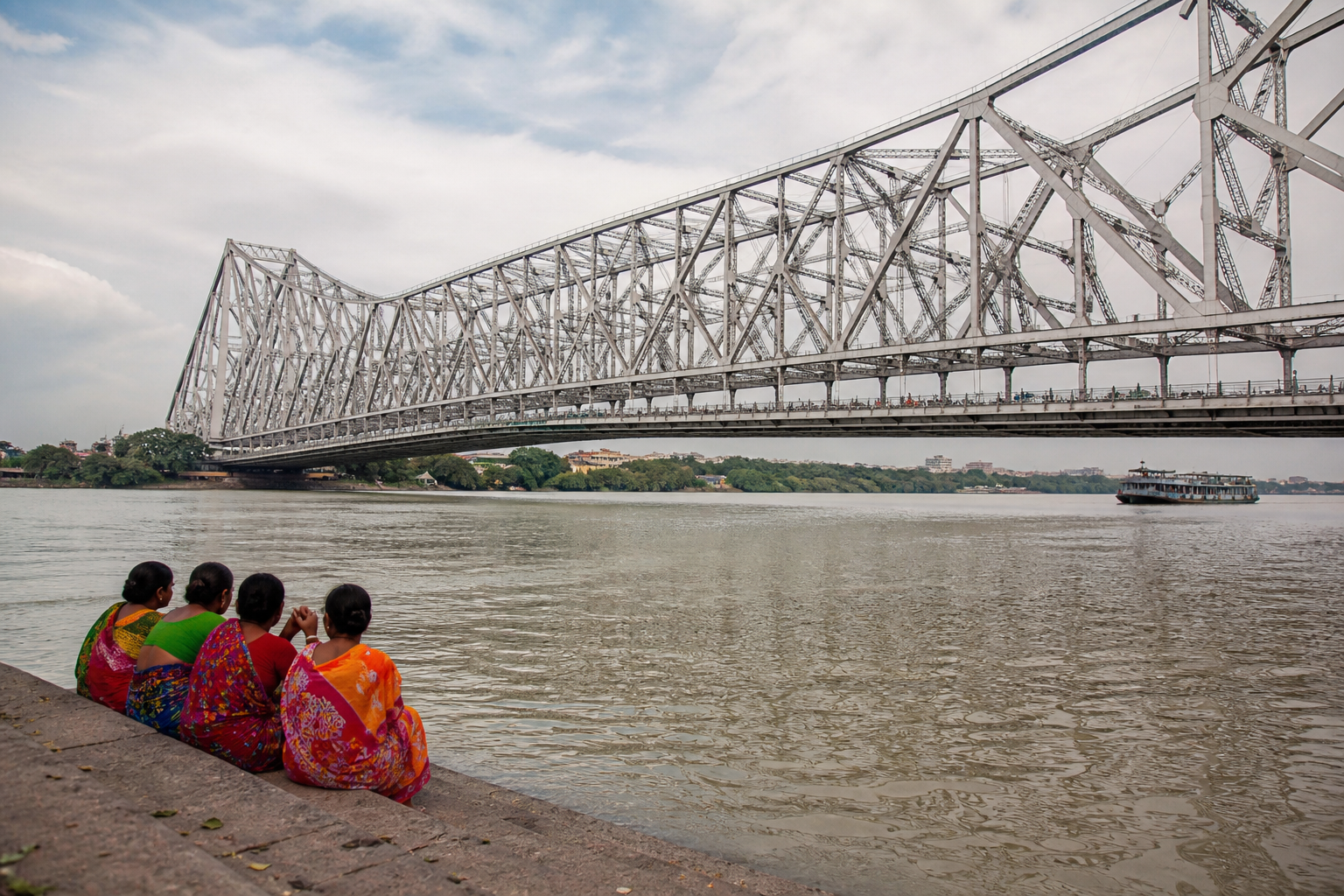
### 3. The Hooghly River and Howrah Bridge
The **Howrah Bridge** is one of those structures that looks even better when you stop trying to photograph it perfectly. Its constant flow of buses, taxis, pedestrians, and handcarts gives it a pulse of its own.
I prefer seeing it from the river. Take an evening boat ride from the Kolkata side or spend time around **Princep Ghat**, where the bridge and riverfront look especially beautiful after sunset. The breeze is a welcome break from the city heat.
For a more local experience, visit **Mallick Ghat Flower Market** near Howrah Bridge early in the morning. It is crowded, colorful, and not polished for tourists, which is exactly why I enjoy it. Wear closed shoes, watch your belongings, and be prepared for wet, uneven ground.
### 4. The Sundarbans: Bengal’s wild side
The **Sundarbans** are a completely different experience from Kolkata. This maze of tidal waterways and mangrove islands is home to saltwater crocodiles, spotted deer, monkeys, birds, and the famous Bengal tiger. A tiger sighting is never guaranteed, and any operator promising one is overselling the trip.
Most visitors join a two- or three-day package from Kolkata, often traveling through Godkhali or Gosaba before transferring to a boat. Choose an operator that uses licensed guides, follows forest rules, and does not encourage loud behavior or feeding animals.
The real pleasure is not just wildlife. It is waking before sunrise to mist over the water, hearing birds in the mangroves, and watching village life along the banks. Bring mosquito repellent, sunscreen, a hat, binoculars, and cash. Mobile coverage can be unreliable.
## Practical Travel Advice
### Getting There and Visa
Kolkata’s **Netaji Subhas Chandra Bose International Airport** has domestic connections to most major Indian cities and some international routes across Asia and the Middle East. If you are traveling from Europe, North America, or Australia, you may find better fares by connecting through Delhi, Mumbai, Doha, Dubai, Singapore, or Bangkok.
Foreign visitors generally need an Indian visa before arrival. Many nationalities can apply for an **Indian e-Visa online**, but eligibility, permitted entry airports, fees, and length of stay vary by passport. Use the official Indian government visa website rather than a third-party site that adds unnecessary fees.
Keep a digital and printed copy of your passport, visa, hotel details, and onward travel information. Indian immigration officers may ask for these, especially if you are entering on a tourist visa.
### Where to Stay
– **Park Street and New Market:** Handy for first-time visitors, restaurants, nightlife, and central sightseeing. It is lively and convenient, though traffic and noise are part of the deal.
– **Esplanade and Bhowanipore:** Good for access to the Maidan, Victoria Memorial, museums, and public transport.
– **Ballygunge and South Kolkata:** A calmer choice with cafés, restaurants, and more residential streets. Good for longer stays.
– **Salt Lake:** Quieter and more modern, useful for business trips or travelers who prefer larger hotels, though it is farther from the old city.
– **Darjeeling town center:** Best if you want to walk to cafés, shops, and viewpoints. Rooms with mountain views can cost more and are not always as warm as you expect, so check heating before booking.
### Getting Around
Kolkata’s central areas are fairly walkable, although pavements can be uneven and crossings require patience. The **Metro** is often the fastest way to avoid traffic, especially during busy hours. Buses are cheap but can be confusing for first-time visitors.
Uber and Ola are widely used, and yellow taxis remain part of the city’s character. App-based rides are easier when you want a clear fare, but drivers sometimes call to confirm the pickup point. For short distances, cycle rickshaws or auto-rickshaws can work well; agree on the price before leaving if the meter is not being used.
In Darjeeling, most sightseeing outside town involves shared jeeps or a hired car. For the Sundarbans, transport is usually arranged through your hotel or tour operator rather than booked independently.
## Real Costs and Local Tips
The local currency is the **Indian rupee (INR)**. Kolkata is still manageable on a modest budget, especially if you eat local food and use public transport.
### Approximate daily budgets
**Budget traveler: ₹1,500–₹3,000 per person**
– Simple guesthouse or hostel: ₹600–₹1,500
– Local breakfast and meals: ₹300–₹700
– Metro, buses, and occasional short rides: ₹200–₹500
– Tea, snacks, and small entrance fees: ₹200–₹400
**Mid-range traveler: ₹4,500–₹9,000 per person**
– Comfortable hotel: ₹2,500–₹5,500
– Restaurant meals and cafés: ₹1,000–₹2,000
– App taxis and sightseeing: ₹800–₹1,500
– Museums, river rides, and other activities: ₹300–₹1,000
A Sundarbans trip is usually priced separately. A two- or three-day package can range from around ₹6,000 to well above ₹15,000 per person, depending on the boat, accommodation, meals, permits, and group size.
Tipping is not compulsory, but rounding up or leaving **5–10%** in a restaurant is appreciated when service is good. Check whether a service charge has already been added. For porters, drivers, and guides, small tips are appropriate, especially after a long day.
### A few things that save money and frustration
– **Use the Metro during rush hour.** A short taxi ride can take far longer than expected when Kolkata traffic locks up.
– **Carry small notes and coins.** Street vendors, buses, and smaller cafés may not have change for large bills.
– **Ask before photographing people, workshops, or religious ceremonies.** A friendly question avoids awkwardness, and some artists or performers may expect a small payment.
– **Don’t accept the first taxi or tour price.** Ask your hotel for a rough local fare, compare it with Uber or Ola, and confirm whether the quoted amount includes tolls.
– **Try local food where the turnover is high.** Busy stalls are usually safer and fresher than empty places with a glossy tourist menu. For street food, start gently if you are not used to spicy food.
– **Carry mosquito repellent outside Kolkata.** The Sundarbans especially require it, even when the daytime weather feels pleasant.
Bengal does not need borrowed landmarks to make an impression. Its best moments are often smaller: a clay idol taking shape in a dusty workshop, a paper cup of tea beside a railway platform, the sound of evening bells over the Hooghly, or a boat slipping through mangrove water before sunrise. That is the Bengal I would rather see in an advertisement—and the one I would happily return to.
KEYWORDS: Kolkata West Bengal