
# South Korea Beyond the Hype: Favorite Corners, Honest Costs, and How to Travel More Comfortably
South Korea is having a huge moment. Seoul’s cafés, K-pop shops, street food, skincare stores, and palace rooftops are pulling in visitors by the millions. But the boom has also brought a record number of tourist complaints—crowded attractions, confusing booking systems, inflated prices, taxi refusals, communication problems, and the occasional feeling that the city is rushing to keep up with its own popularity.
I understand the frustration. I’ve had brilliant days in Korea and a few mildly chaotic ones too. The good news is that most problems are manageable if you slow down, avoid the busiest times, and plan a little more carefully than you might in a smaller destination.
## The Vibe & When to Go
South Korea feels energetic, stylish, fast-moving, and surprisingly peaceful all at once. Seoul can take you from a neon shopping street to a quiet mountain trail within half an hour. One minute you’re squeezing through a crowded subway station; the next, you’re drinking tea in a tiny traditional courtyard.
**Spring and autumn are the easiest seasons for sightseeing.** Spring brings mild temperatures and blossoms, while autumn offers crisp air and beautiful red and gold leaves. These are also the busiest periods, especially around cherry blossom season and major public holidays.
**Summer is hot, humid, and rainy**, with occasional typhoons. It can still be fun, but you’ll appreciate air-conditioned cafés and indoor attractions. **Winter is cold and dry**, though Seoul’s clear skies, festive lights, and nearby ski areas make it appealing if you pack properly.
Right now, the main challenge isn’t finding something to do—it’s dealing with demand. Popular palaces, beauty clinics, restaurants, and day tours can fill quickly. I’d visit Korea with a little flexibility, but I wouldn’t leave every reservation until the last minute.
## Must-See Spots: My Top Picks
### 1. Seoul’s Historic Center: Gyeongbokgung and Bukchon
Start early at **Gyeongbokgung Palace**, before tour groups and rental-hanbok photoshoots take over the main courtyard. The changing-of-the-guard ceremony is colorful, but I enjoyed wandering the quieter palace sections even more.
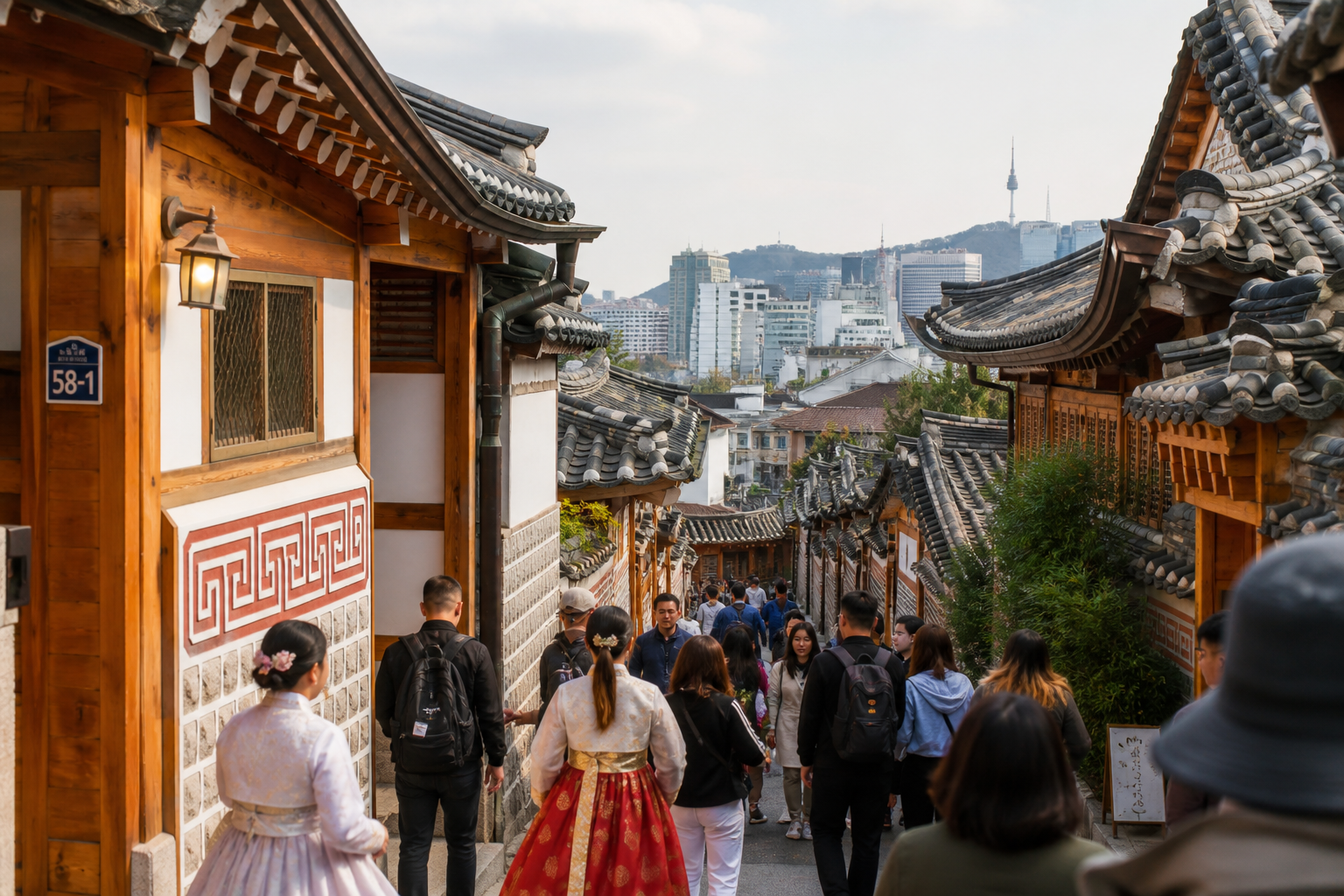
From there, walk toward **Bukchon Hanok Village**. The traditional homes are beautiful, but people still live there, so keep your voice down and avoid blocking narrow entrances. Some streets now have visitor restrictions and limited hours because residents have been worn down by crowds.
For a calmer alternative, continue toward **Samcheong-dong**, where you’ll find small galleries, tea houses, and less frantic cafés. I like this area for a slow afternoon rather than trying to race through every historic sight.
**Practical tip:** Wear comfortable shoes. The palace grounds are larger than they appear, and the hills around Bukchon are steep.
### 2. Euljiro and Ikseon-dong After Dark
Euljiro has an interesting rough-around-the-edges charm. Old printing shops, hardware stores, tiny bars, and stylish restaurants share the same narrow streets. It feels more lived-in than some of Seoul’s polished shopping districts.
Nearby **Ikseon-dong** is prettier and more popular, with traditional hanok buildings filled with dessert cafés and restaurants. Go on a weekday afternoon if possible. At peak dinner time, the lanes can become so crowded that browsing stops being enjoyable.
I usually choose one small restaurant rather than chasing the most photographed café. Korean food is often better value in unassuming places where office workers are eating. Look for handwritten menus, busy lunch counters, and locals waiting patiently outside.
### 3. Mangwon Market and the Han River
**Mangwon Market** is one of my favorite places to eat without spending much. Pick up dumplings, fried snacks, fruit, or a hotteok and wander slowly. It’s less theatrical than the famous markets, which is part of its appeal.
Afterward, walk toward the **Han River**. Convenience stores near the river sell instant noodles and snacks, and many people sit outside with picnic mats. Renting a bicycle is another good way to see the waterfront, especially around sunset.
This is a nice break from Seoul’s dense shopping streets. There’s no pressure to photograph everything or buy anything. You can simply sit, eat, and watch the city lights come on.
### 4. A Day Trip to Gyeongju
If you have an extra day, take the train to **Gyeongju**, the former capital of the Silla kingdom. The city has ancient tombs, temples, stone pagodas, and broad green spaces that feel completely different from Seoul.
The historic areas are spread out, so rent a bicycle if the weather is comfortable or use local buses and taxis. I particularly enjoyed walking around the royal tomb park in the late afternoon, when the light softened and the tour groups thinned out.
Gyeongju is calmer than Seoul, but don’t expect every attraction to be open late. Check transport times before wandering too far from the center.
## Practical Travel Advice
### Getting There and Visa Requirements
Most international visitors arrive through **Incheon International Airport**, which is connected to Seoul by airport rail, limousine buses, and taxis. The airport rail service is usually the simplest choice if you’re staying near Seoul Station or Hongdae.
Visa rules depend on your passport. Many travelers can enter South Korea visa-free for short visits, while some nationalities need a visa or an electronic travel authorization. **K-ETA rules and temporary exemptions change**, so check the official Korea Visa Portal and K-ETA website before booking or flying. Don’t rely on an old blog post or a social media comment.
For flights, I’d compare Incheon with **Gimpo Airport** if you’re connecting from another Asian city. Gimpo is much closer to central Seoul, but most long-haul flights use Incheon. Booking a flight that arrives in the late morning or afternoon can make the first day easier than landing at dawn after a long overnight journey.
### Where to Stay
– **Myeongdong:** Convenient for first-time visitors, shopping, skincare, and easy access to major sights. It can feel crowded and commercial, but the location is practical.
– **Hongdae:** Best for nightlife, cafés, younger energy, live music, and easy airport access. It gets noisy on weekends.
– **Insadong or Jongno:** Good for history, palaces, traditional restaurants, and a more central sightseeing base.
– **Euljiro:** Ideal if you like bars, restaurants, and a slightly grittier neighborhood atmosphere.
– **Gangnam:** Modern, polished, and convenient for clinics, luxury shopping, and business districts. It’s farther from many historic attractions.
– **Seongsu:** Trendy cafés, design shops, and converted warehouses. Fun, but accommodation prices can rise quickly.
For a first visit, I’d choose Jongno, Myeongdong, or Hongdae rather than staying too far south of the river.
### Getting Around
Seoul’s subway is excellent, but the stations can involve long underground walks and plenty of stairs. Buy a **T-money card** at a convenience store or subway station and use it for trains and buses.
Download:
– **Naver Map** or **KakaoMap** for directions
– **Papago** for translations
– **Kakao T** for taxis
Google Maps is less reliable for detailed walking and driving directions in South Korea, so I wouldn’t depend on it alone.
Taxis are generally safe, but getting one during rain, rush hour, or late at night can be difficult. Use the app when possible, confirm the destination, and check that the meter is running. If a driver refuses a short ride, try another taxi or book through Kakao T rather than arguing.
Seoul is very walkable by neighborhood. I prefer using public transport between districts, then exploring each area on foot. It saves money and lets you notice the small bakeries, stationery shops, and quiet side streets that disappear when you spend the whole day underground.
## Real Costs and Local Tips
Prices vary by season and neighborhood, but these are reasonable daily estimates for Seoul, excluding flights and major shopping.
### Budget Traveler: ₩60,000–₩90,000 per day
– Dorm bed or basic guesthouse: ₩25,000–₩45,000
– Simple meals and market food: ₩15,000–₩25,000
– Public transport: ₩5,000–₩10,000
– One inexpensive attraction or coffee: ₩5,000–₩10,000
### Mid-Range Traveler: ₩120,000–₩220,000 per day
– Comfortable hotel or private guesthouse: ₩80,000–₩150,000
– Restaurant meals and cafés: ₩30,000–₩60,000
– Transport and small admissions: ₩10,000–₩20,000
The currency is the **South Korean won (₩ or KRW)**. Credit cards work widely in hotels, shops, and restaurants, but keep some cash for markets, small eateries, and topping up transport cards. Tipping is not expected. A tip can even make staff uncomfortable in ordinary restaurants, so simply pay the bill unless a service charge is clearly included.
### A Few Ways to Avoid Hassles and Save Money
– **Eat lunch like a local.** Set menus and noodle restaurants often offer much better value at midday than dinner.
– **Don’t assume the most photographed café is the best one.** Walk two or three blocks away and prices usually drop.
– **Book popular attractions early.** Certain palace experiences, DMZ tours, concerts, and beauty treatments sell out quickly.
– **Travel outside peak hours.** The subway is far more comfortable before 8 a.m., between 10 a.m. and 4 p.m., or after the evening rush.
– **Check the final price before agreeing to tours or services.** This is especially important with taxis, souvenir shops, photo packages, and beauty treatments.
– **Respect residential areas.** Places like Bukchon are not theme parks. Keeping noise down helps preserve access for future visitors.
– **Carry a portable battery.** Maps, translation apps, reservations, and transport apps can drain a phone quickly.
– **Build in empty time.** Korea is easier to enjoy when you’re not trying to cross the city for one more viral restaurant.
South Korea is still a wonderful place to travel, but the current tourism boom has changed the experience. The busiest spots can feel overloaded, and some services haven’t caught up with the number of visitors. I found that the best days came from staying curious but not frantic: eating where locals eat, visiting famous places early, leaving room for side streets, and treating crowded neighborhoods as real communities rather than attractions.
**KEYWORDS: Seoul South Korea**