
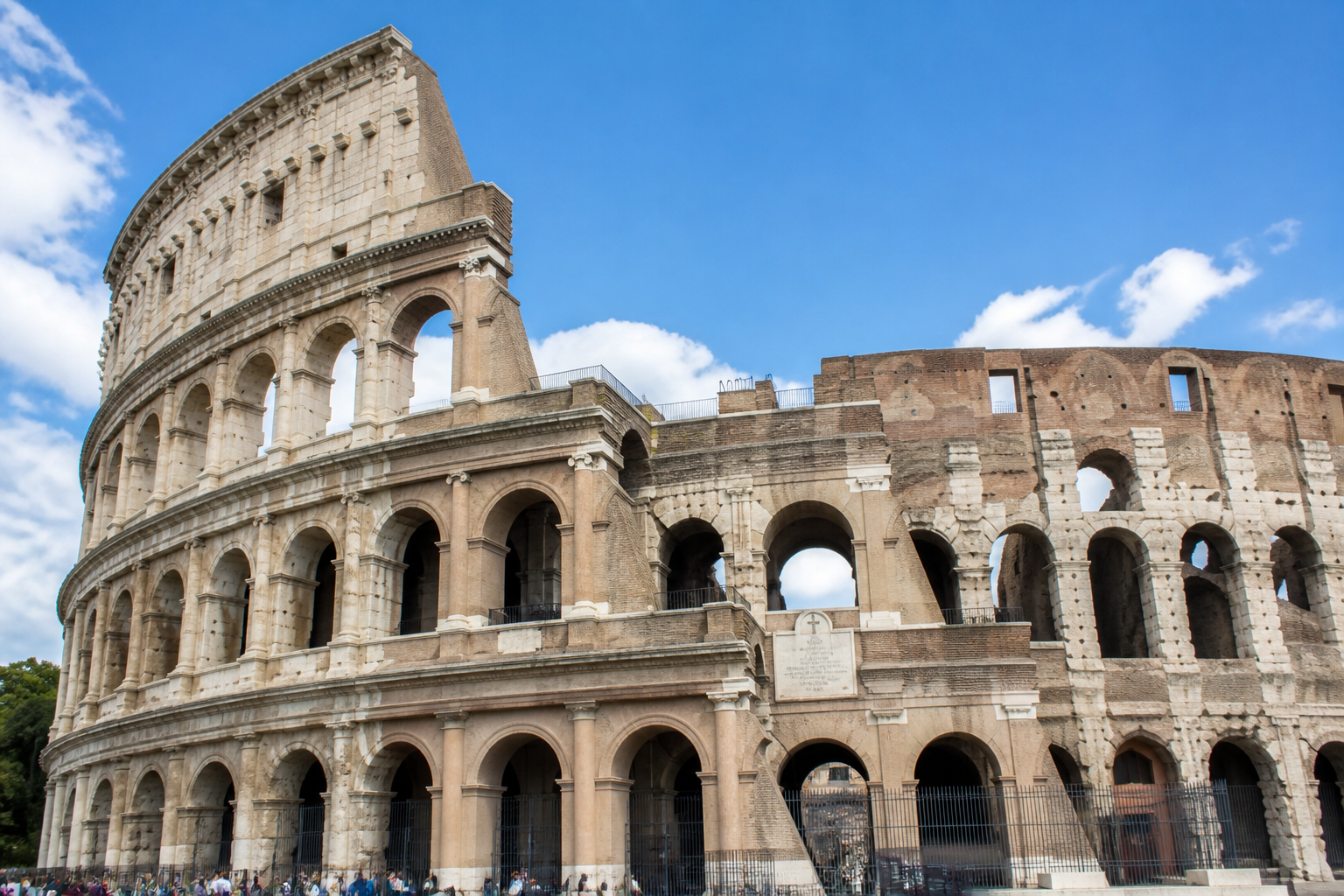
# Rome Beyond the Colosseum: What to See, Where to Stay, and How to Visit Thoughtfully
There’s something emotional about seeing the Colosseum in person. Photos never quite prepare you for its size, the worn stone, or the busy streets pressing right up against a building that has stood here for nearly 2,000 years.
A recent report from ANC 24/7 said that the Colosseum’s second level was temporarily closed after a worker died inside overnight. It’s a sad reminder that this is not just a backdrop for holiday photos, but an active archaeological site and workplace. Check the **official Colosseum Archaeological Park website** before going, since access to upper levels, guided routes, and refunds can change quickly. Even if the second level remains closed, the ground-level arena, Roman Forum, and Palatine Hill still make for a memorable visit.
## The Vibe and When to Go
Rome feels wonderfully unruly. Scooters zip through narrow streets, church bells interrupt conversations, and every few minutes you seem to turn a corner and find a fountain, ruin, or tiny café.
Spring and autumn are my favorite seasons here. The days are usually comfortable for walking, though mornings and evenings can feel cool. Summer brings long daylight and a lively atmosphere, but the heat around the ancient ruins can be intense, especially with little shade. Winter is quieter and often easier on the budget, with shorter lines at many sights.
If you’re visiting during the current Colosseum closure, don’t cancel your trip automatically. The monument is still impressive from the outside, and Rome offers plenty to fill the day. Just avoid booking an expensive nonrefundable tour until you know exactly which areas are open.
## Must-See Spots: My Top Picks
### 1. The Colosseum and its arena floor
Even from the main visitor route, standing inside the Colosseum gives you a strong sense of its scale. I like arriving early, before the square becomes crowded and before the stone starts reflecting the afternoon heat.
If the second level is closed, ask whether the arena floor or standard interior route is available. Don’t climb barriers or enter restricted areas for a better photo. The rules are there to protect both visitors and the ancient structure.
For pictures, the view from the gardens near **San Bonaventura al Palatino** can be calmer than the busiest angle directly outside the monument.
### 2. The Roman Forum
The Forum can feel confusing at first, with columns and fragments spread across a large, uneven landscape. Give yourself time to wander rather than rushing from one famous ruin to the next.
I especially enjoy the view from the higher paths near the **Temple of Saturn** and the **Arch of Septimius Severus**. Bring water and comfortable shoes—the paving stones are uneven, and there isn’t much shade in several sections.
A small guidebook or audio tour helps here. Without context, it can look like a field of broken stones; with a little explanation, the place becomes much easier to imagine as the center of Roman political and public life.
### 3. Palatine Hill
Palatine Hill is included with many Colosseum and Forum tickets, and it’s often overlooked. That’s a mistake. The paths are quieter, the views stretch across the Forum, and the gardens offer a welcome break from the traffic below.
I like visiting after the Forum, when the uphill walk feels more manageable and the city views give the ruins some perspective. Wear shoes with a decent grip, especially after rain.
### 4. Monti and the quiet corners nearby
After the archaeological sites, walk into **Monti**, the neighborhood just north of the Colosseum. Its narrow streets are filled with small wine bars, simple restaurants, vintage shops, and cafés where locals gather.
For a peaceful change of scene, continue toward **Basilica di San Clemente**, which has several historical layers below street level. It’s a fascinating visit and usually feels calmer than the major monuments. Another good option is a sunset walk toward the **Aventine Hill** and its famous keyhole view of St. Peter’s Basilica.
## Practical Travel Advice
### Getting there and visa requirements
Rome is served mainly by:
– **Leonardo da Vinci–Fiumicino Airport (FCO):** the main international airport, about 30 kilometers from the center
– **Ciampino Airport (CIA):** often used by low-cost airlines and closer to the city
From Fiumicino, the Leonardo Express train reaches Roma Termini without intermediate stops. Regional trains and buses can be cheaper but take longer. From Ciampino, buses connect with Termini, and taxis have a fixed fare to central Rome when using the official airport taxi queue.
Visa rules depend on your passport. Many visitors from the United States, Canada, the United Kingdom, Australia, and several other countries can enter the Schengen Area for up to **90 days within a 180-day period** without a tourist visa. Your passport generally needs to be valid for at least three months after your planned departure and issued within the past ten years.
Check the Italian Ministry of Foreign Affairs or your country’s embassy before booking. Requirements can change, and entry permission is not the same as permission to work or study.
For flights, compare Fiumicino with Ciampino, but include the cost and travel time into Rome. A cheap ticket to Ciampino may not be cheaper after adding airport transfers and luggage fees.
### Where to stay
– **Monti:** Best for first-time visitors who want restaurants, atmosphere, and easy access to the Colosseum
– **Centro Storico:** Ideal for walking to the Pantheon, Trevi Fountain, and Piazza Navona, though accommodation is often pricier
– **Trastevere:** Good for evening meals, wine bars, and a lively neighborhood feel
– **Prati:** Quieter, more residential, and convenient for the Vatican
– **Termini and Esquilino:** Usually better for budget hotels and transport connections; choose your street carefully at night
I prefer staying within walking distance of a metro station rather than directly beside a major landmark. You pay less and usually sleep better.
### Getting around Rome
Central Rome is very walkable, but expect cobblestones, hills, and traffic that does not always behave as you’d hope.
The metro is useful for longer journeys, especially between Termini, the Colosseum, the Spanish Steps, and the Vatican area. Buses cover more streets but can be delayed by traffic. Buy tickets before boarding through a tobacco shop, metro machine, or the official transport app, and validate paper tickets when required.
For taxis, use the official white taxis from marked stands or call through a reputable app. **Free Now** and **itTaxi** are commonly used. Uber operates in Rome, but the available vehicle categories may be more expensive than a regular taxi.
## Realistic Costs and Local Tips
Rome uses the **euro (€)**.
### Typical daily budgets
**Budget traveler: €65–€100 per person**
– Hostel or simple guesthouse: €30–€55
– Casual meals and bakery food: €20–€30
– Public transport: €7–€10
– One paid attraction or small extras: €10–€20
**Mid-range traveler: €140–€220 per person**
– Comfortable hotel or private room: €80–€140
– Sit-down meals: €40–€65
– Transport and attractions: €20–€35
– Coffee, gelato, and drinks: €10–€20
Prices rise during summer, major holidays, and weekends.
Tipping is not compulsory in Rome. If service was good, rounding up or leaving a few euros is perfectly fine. Some restaurants add **coperto**, a small cover charge, so look at the menu before ordering. You do not need to tip again just because a service charge appears.
### A few tricks that save money and frustration
– **Book the Colosseum only through the official site** or a clearly identified authorized operator. Fake ticket sellers gather around the monument.
– **Carry a refillable bottle.** Rome’s public drinking fountains, called *nasoni*, provide free water.
– **Eat away from the immediate Colosseum and Trevi Fountain areas.** Walk ten or fifteen minutes into Monti, Celio, or a residential street for better food and calmer prices.
– **Order coffee at the bar.** Sitting at a table can cost considerably more, especially in busy central squares.
– **Keep bags and phones secure on crowded buses and around Termini.** Rome is generally easy to explore, but busy tourist areas attract pickpockets.
– **Check attraction conditions on the morning of your visit.** Ancient sites sometimes close sections for safety, restoration, weather, or unexpected incidents. In the case of the reported worker’s death, give staff and investigators space and rely on official updates rather than rumors circulating online.
Rome is at its best when you leave room for an unplanned turn: a quiet church, a good plate of cacio e pepe, or a shady bench overlooking the Forum. The Colosseum may not offer every level during your visit, but the city around it still has more history than most travelers can take in during one trip.
KEYWORDS: Rome Colosseum