
# Seychelles Beyond the Postcard: Island Beaches, Creole Food, and What I’d Plan Differently
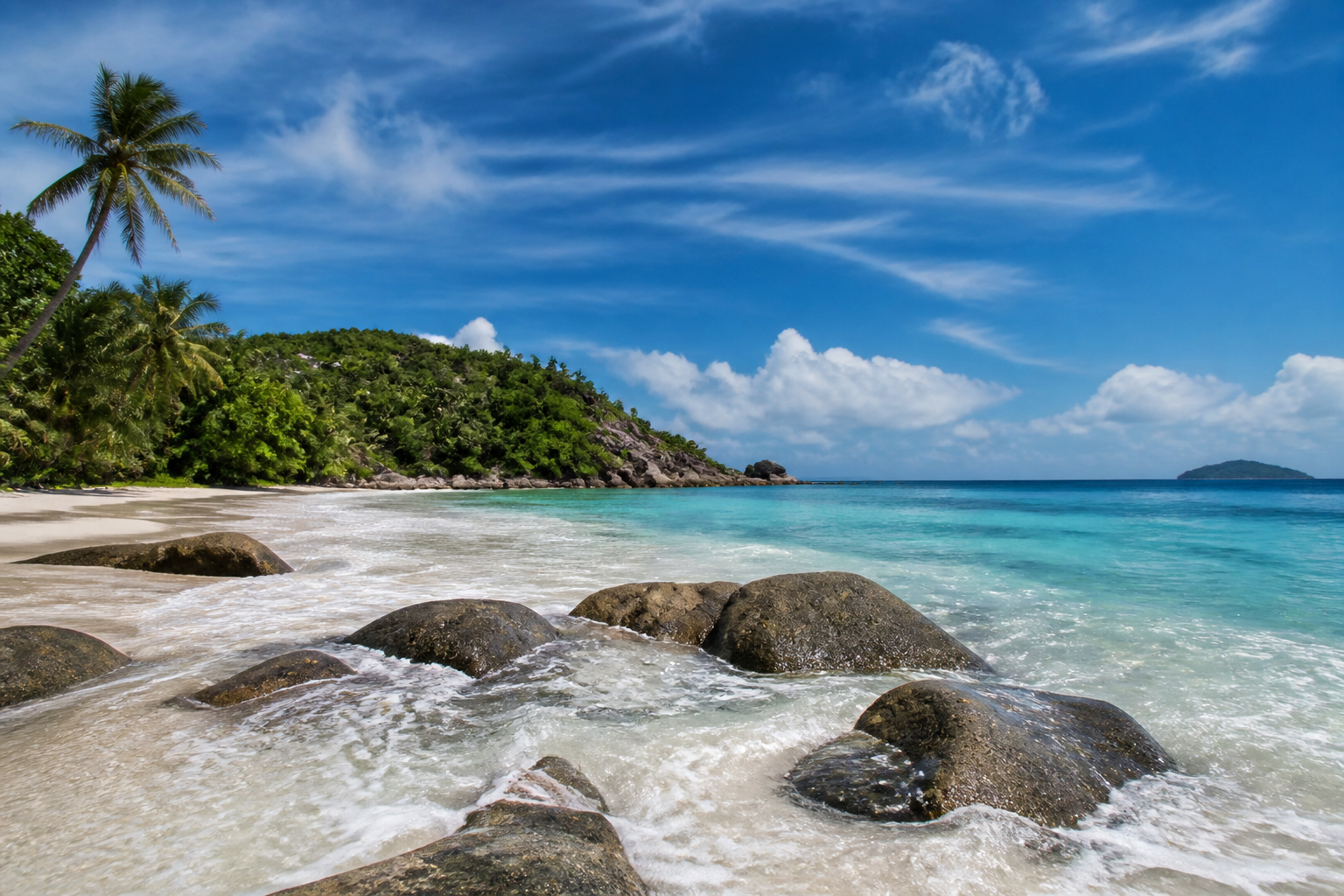
Seychelles is easy to picture: granite boulders, bright blue water, and beaches that look almost too tidy to be real. But what stayed with me wasn’t only the scenery. It was the slower rhythm of island life—the bus rides through thick green hills, the smell of grilled fish drifting from a roadside takeaway, and the way a quiet beach could make an entire afternoon disappear.
With the Seychelles Tourism Board putting fresh energy into trade relationships at GlobeMeets 2026, the islands are likely to become even easier for travelers to reach and plan. That’s good news, but I’d still encourage you to look beyond a quick resort stay. Seychelles rewards travelers who leave room for local meals, ferry rides, small guesthouses, and unplanned stops.
## The Vibe & When to Go
Seychelles feels relaxed without being sleepy. Mahé has the most movement, with Victoria’s market, mountain roads, local buses, and busy beaches. Praslin is quieter and greener, while La Digue is wonderfully unhurried—bicycles, ox carts, sandy lanes, and very few reasons to check the time.
The islands are warm throughout the year, usually around **24–30°C**, with humidity that becomes more noticeable during wetter months.
– **April to May and October to November:** Often the best balance of calmer seas, warm water, and lighter winds.
– **June to September:** Drier and breezier, especially on beaches facing the southeast trade winds. Great for hiking and sailing, though some beaches can be choppier.
– **December to March:** Hotter and wetter, with short heavy showers rather than constant rain in many places.
For a 2026 trip, I’d book early if you want a particular island or beachfront guesthouse. Seychelles has a limited number of rooms, and the smaller properties can fill quickly around school holidays and peak sailing months.
## Must-See Spots: My Top Picks
### 1. Anse Source d’Argent, La Digue
This is the famous one, and yes, it can be busy. The enormous granite rocks and shallow turquoise water really do look like a film set. Go early in the morning or later in the afternoon, when the light softens and day-trippers begin leaving.
Rent a bicycle near the ferry jetty and ride slowly through the island. Stop for fresh juice, explore the old plantation at L’Union Estate, and keep going toward Grand Anse if you have the energy. The road there is hilly, but the beach feels much wilder than Anse Source d’Argent.
A word of caution: the current and waves can be strong at Grand Anse. Check local signs before swimming.
### 2. Vallée de Mai, Praslin
Walking through Vallée de Mai feels completely different from being on the beach. The forest is quiet, humid, and full of giant palms, including the famous coco de mer. I loved taking my time here rather than rushing through for a few photographs. Listen for birds in the canopy and look closely at the broad leaves and twisting roots along the trails.
Go early to avoid the hottest part of the day. Wear proper shoes rather than flip-flops, especially after rain, when the paths can become slippery.
Afterward, head to **Anse Lazio**, one of Praslin’s most beautiful beaches. The water is usually inviting, but conditions change with the wind, so ask locally before swimming far from shore.
### 3. Victoria Market and the streets around it
Victoria is small, but it gives you a more ordinary view of Seychelles than the resort areas do. The market is busiest in the morning, when vendors sell fish, fruit, vegetables, spices, and homemade snacks.
I’d buy a fresh juice and walk without a strict plan. Look for Creole houses, small cafés, colorful buses, and the clock tower in the center of town. It’s not a place for a full day of sightseeing, but it’s an excellent half-day introduction to local life.
For lunch, try a simple Creole plate with grilled fish, rice, lentils, pumpkin, or chutney. Takeaway counters are often much better value than hotel restaurants.
### 4. Morne Seychellois National Park, Mahé
Mahé’s interior is far more dramatic than many first-time visitors expect. The roads climb into forested mountains, with sudden viewpoints over the coast and neighboring islands.
The **Morne Blanc Trail** is a good choice if you want a proper walk without committing to a full-day expedition. Start early, carry water, and expect humidity even when the sky looks cloudy. If hiking isn’t your thing, drive along Sans Soucis Road and stop at viewpoints along the way.
One of my favorite Seychelles moments was simply pulling over at a lookout, hearing insects in the forest, and watching clouds move across the peaks. The island’s beauty is not limited to its beaches.
## Practical Travel Advice
### Getting There & Visa
Seychelles generally allows visitors to enter **without a traditional visa**, but travelers must complete the country’s online **Travel Authorisation** before departure. Requirements can include:
– A valid passport
– Confirmed accommodation
– A return or onward ticket
– Proof of sufficient funds
– Health documents where applicable
– A completed travel authorization approval
Check the official Seychelles immigration and travel authorization websites before booking, since rules and fees can change. Travelers arriving from countries with yellow fever risk may need a vaccination certificate.
Most international visitors arrive at **Seychelles International Airport on Mahé**. Depending on your departure city, you may connect through hubs such as Doha, Dubai, Addis Ababa, Nairobi, or Colombo. If you’re visiting Praslin or La Digue, compare the cost of a domestic flight with the ferry. The flight to Praslin is quick; the ferry is usually more affordable but can be uncomfortable in rough seas.
### Where to Stay
**Mahé:** Best for first-time visitors, hiking, restaurants, and a wider choice of accommodation. Beau Vallon is convenient and social, while the south and west coasts feel quieter and more residential.
**Praslin:** A good fit for couples, families, and anyone who wants beautiful beaches with less driving. Anse Volbert has restaurants and easy beach access. Anse Lazio and the western coast feel more secluded.
**La Digue:** Choose this for a slower trip built around cycling, beaches, and simple guesthouses. Stay near La Passe if you want restaurants and ferry access; go farther inland for more peace.
I’d avoid changing islands every night. Two or three nights on each island is much more comfortable than constantly packing and waiting for ferries.
### Getting Around
Mahé and Praslin have public buses, and they’re inexpensive. They can be crowded, slow on winding roads, and less practical if you’re carrying large luggage, but they’re a great way to keep costs down.
Rental cars are useful on Mahé and Praslin, especially if you want to explore beaches and viewpoints independently. Roads can be narrow, steep, and winding, so drive carefully and avoid assuming every beach has easy parking.
Taxis are available, but fares can add up quickly. Agree on the price before setting off or ask your accommodation to arrange the ride. Seychelles is not a destination where I’d depend on a familiar rideshare app; local taxis, buses, hotel transfers, and rental cars are the more dependable options.
On La Digue, bicycles are the main form of transport. Bring patience for hills, and check your brakes before heading toward the less-developed beaches.
## Real Costs & Local Tips
The local currency is the **Seychellois rupee (SCR)**, though euros and US dollars are widely accepted in tourist areas. Cards work at most hotels and established restaurants, but small takeaways, buses, market stalls, and beach vendors may prefer cash.
### Approximate daily budgets
**Budget traveler: SCR 1,500–2,500 / US$110–185 per person**
This could cover a guesthouse room shared between two people, buses, occasional ferries, takeaway meals, and free beaches or low-cost attractions.
**Mid-range traveler: SCR 3,500–6,500 / US$260–480 per person**
This usually allows for a comfortable guesthouse or hotel, rental car or several taxi trips, restaurant meals, island transfers, and paid attractions. Resort stays and private boat trips can push the total much higher.
Prices vary sharply by island and season. Accommodation, ferries, domestic flights, and boat excursions are usually the biggest expenses.
### A few ways to spend less
– **Eat at takeaway counters.** A generous Creole meal is often much cheaper than a hotel dinner and can be more authentic too.
– **Book ferries and domestic flights early.** Last-minute island transfers may be expensive, especially during busy periods.
– **Carry a reusable water bottle.** Buying drinks repeatedly at beaches and attractions adds up quickly.
– **Ask about beach orientation.** A beach can be calm and perfect on one side of an island while windy and rough on another. This saves you from paying for a boat trip when a better swimming spot is nearby.
– **Don’t assume the most famous beach is the best beach that day.** Wind, tide, and seaweed change the experience. Ask your guesthouse host where locals are swimming.
– **Tip modestly rather than automatically.** A service charge may already be included. If service was good, rounding up or leaving around 5–10% is appreciated, but tipping is not as rigid as in some countries.
Seychelles is not a bargain beach destination, but it can still feel manageable with a little planning. Spend on the experiences you’ll remember—perhaps a local boat trip or a day on La Digue—and save money with buses, takeaway lunches, and self-guided beach days.
The best trips here are not packed with activities. Leave space for a long swim, a slow lunch, a wrong turn on a mountain road, or an hour watching fishing boats return at sunset. That slower pace is one of the real pleasures of Seychelles.
KEYWORDS: Seychelles beaches, La Digue island