
# Kerala Beyond the Backwaters: What to See Now as 100 New Destinations Take Shape
Kerala is planning to add **100 new tourism destinations over the next five years**, according to Tourism Minister PC Vishnunadh. The idea is to take visitors beyond the familiar backwaters and beaches and bring more villages, hills, heritage sites, rivers, and food traditions into the travel map.
That sounds exciting, especially for anyone who has already seen the usual Kerala highlights. The new places will take time to develop, though, so I’d treat this as a good reason to explore Kerala slowly rather than expecting 100 polished tourist attractions right away.
## The Vibe & When to Go
Kerala feels lush, unhurried, and wonderfully varied. In one trip, you can move from fishing boats and spice markets to tea-covered hills, quiet temples, forest roads, and long beaches where life carries on at an easy pace.
From **March to May**, the weather is generally hot and humid, with temperatures often around 28–35°C in the lowlands. Munnar and Wayanad stay cooler, making them good escapes from the heat. The southwest monsoon usually arrives from June, bringing heavy rain but also incredibly green landscapes. For comfortable sightseeing, **October to February** is usually the safest period.
I like visiting during the shoulder months, especially February or October. Hotels can be a little easier to book, and the main sights don’t feel quite as crowded. If you travel during the monsoon, build in extra time for road journeys and expect some rain interruptions.
## Must-See Spots: My Top Picks
### 1. Fort Kochi for history, cafés, and evening walks
Fort Kochi is the place I send first-time visitors who want an easy introduction to Kerala. The old streets are best explored on foot, especially early in the morning when the air is cooler and the fishing nets are still part of the daily scene rather than a photo stop.
Walk around **St. Francis Church**, the old spice-trading lanes, and the colorful streets near Princess Street. I also enjoy the smaller galleries and cafés tucked into restored buildings. Around sunset, the Chinese fishing nets become busy and atmospheric, but don’t feel obliged to eat at the restaurants directly beside them. A few streets inland, you’ll usually find better-value meals.
For a more local evening, take a short auto-rickshaw ride toward **Mattancherry and Jew Town**. Browse the antique shops, visit the Paradesi Synagogue area, and stop for a Kerala-style biryani or a plate of appam with stew.
### 2. Alappuzha for the backwaters—but choose your boat carefully
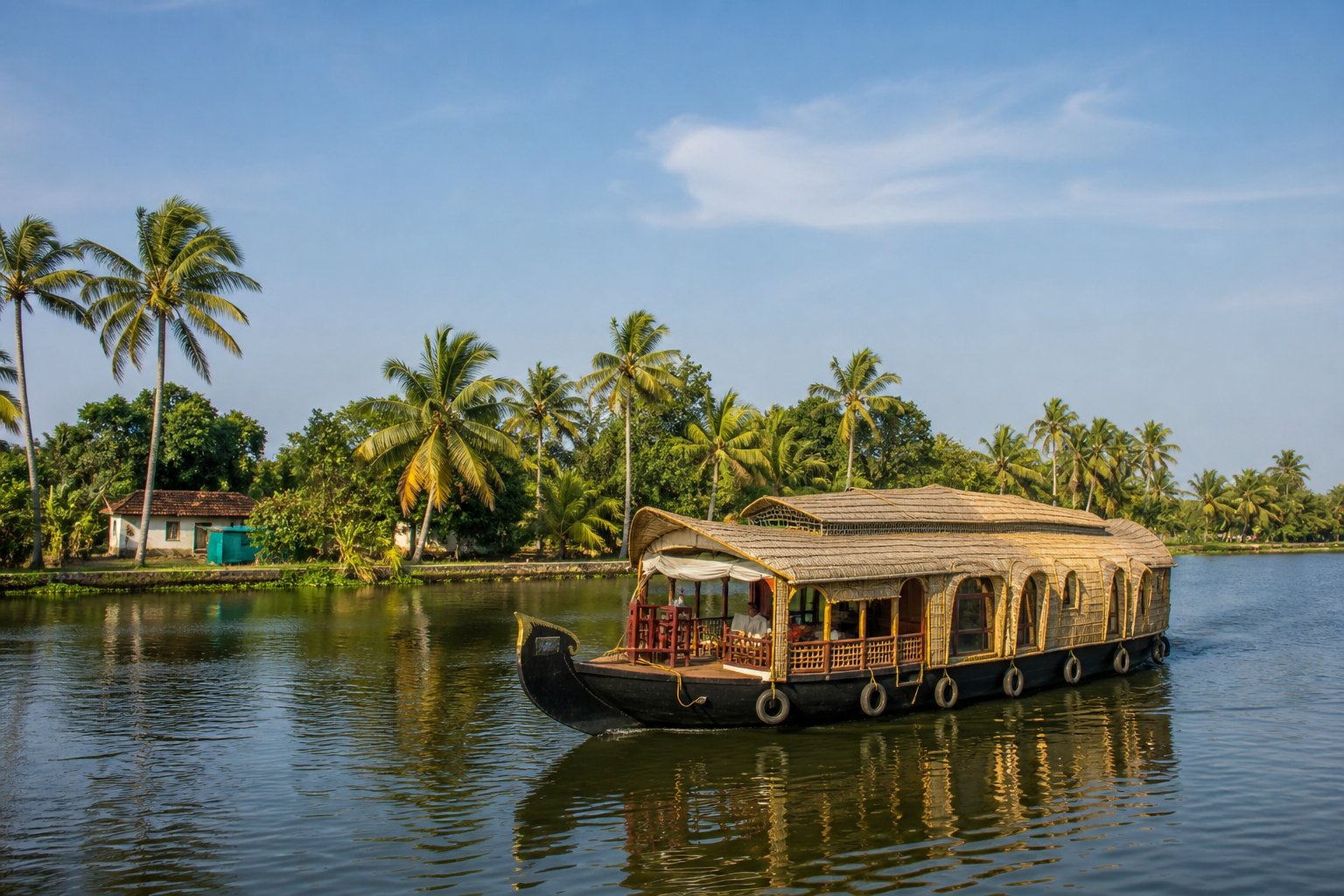
The backwaters are still one of Kerala’s most memorable experiences, but the large houseboats can be expensive and sometimes feel disconnected from village life. If you’re traveling on a smaller budget, consider a **day cruise on a public ferry**, a canoe ride through narrower canals, or a simple homestay near Kuttanad.
The smaller boats take you past narrow waterways, coconut groves, rice fields, and homes where people still use the canals for everyday transport. I found these quieter rides more personal than spending an entire day on a large boat.
Before booking a houseboat, ask to see recent photos, confirm whether meals and fuel are included, and check how many hours the boat actually cruises. Some spend a surprising amount of time tied up.
### 3. Munnar for tea hills and cool mornings
Munnar is a welcome change after Kerala’s humid coast. The drive itself is beautiful, with winding roads, waterfalls, spice gardens, and small roadside tea stalls. Try to arrive before dark if you’re driving from Kochi, since the hill roads become tiring after sunset.
The **tea plantations around Munnar** are the main attraction, but I prefer starting early and visiting a tea museum or a smaller estate before heading to the more popular viewpoints. The scenery is peaceful, though some famous lookouts can become crowded by mid-morning.
Stay just outside the busiest town center if you want quiet views. Ask your guesthouse about short local walks rather than booking every activity through a large tour desk. Weather can change quickly in the hills, so carry a light jacket even when Kochi is hot.
### 4. Varkala for cliffs, beaches, and slower days
Varkala is a good choice if you want a beach break without giving up cafés, yoga studios, and easy transport. The cliff walk has restaurants and shops, but the best part for me is heading down to the beach early, before the heat and crowds build.
The water can be rough during parts of the year, so check local advice before swimming. You can also visit **Janardhana Swamy Temple**, walk through the quieter residential lanes, or take a short trip to nearby villages and temples.
Varkala’s cliff area is more expensive than the surrounding town. Staying a little farther inland can save money, and you’ll still be close enough to walk or take an auto-rickshaw to the beach.
## Practical Travel Advice
### Getting There and Visa
The main international entry points are:
– **Cochin International Airport**, best for Kochi, Munnar, Alappuzha, and central Kerala
– **Trivandrum International Airport**, convenient for Varkala, Kovalam, and southern Kerala
– **Calicut International Airport**, useful for northern Kerala and Wayanad
Most foreign visitors need an Indian visa. Many nationalities can apply online for an **India e-Visa**, but eligibility, passport rules, permitted airports, and processing times can change. Apply through the official Indian government visa website rather than an unofficial agency, and check the rules for your nationality before booking non-refundable travel.
For domestic flights, Kochi and Trivandrum usually have the broadest connections. Booking early helps, but compare baggage allowances carefully—some low-cost fares look cheap until luggage is added.
### Where to Stay
– **Fort Kochi:** Best for heritage buildings, cafés, galleries, and walking
– **Ernakulam:** More practical for transport, shopping, and lower hotel prices
– **Alappuzha:** Good for backwater cruises and homestays
– **Munnar town:** Convenient for tours, restaurants, and transport
– **Munnar outskirts:** Better for peace, views, and cooler evenings
– **Varkala cliff:** Best for beach access and restaurants
– **Varkala town or inland lanes:** Better for budget rooms and a quieter stay
– **Wayanad villages:** Ideal for farm stays, forests, and a slower rural trip
If Kerala’s planned new destinations begin opening over the next few years, small homestays and family-run lodges may become the most interesting places to stay. I’d check recent reviews and ask how far the property is from restaurants and transport before booking.
### Getting Around
Kerala is easy to explore, but distances can take longer than they look on a map.
– **Trains:** Useful between major towns such as Kochi, Alappuzha, Kollam, and Trivandrum. Book ahead for comfortable seats.
– **KSRTC buses:** Inexpensive and extensive, though journeys can be crowded and slower.
– **Taxis:** Best for Munnar, Wayanad, and multi-stop day trips. Agree on the fare and inclusions first.
– **Auto-rickshaws:** Handy for short rides. In larger cities, Uber and local ride-booking services may be available, but coverage varies.
– **Walking:** Fort Kochi, Varkala cliff, and parts of central Thiruvananthapuram are easy to explore on foot.
– **Ferries:** Particularly useful around Kochi and Alappuzha, and often more enjoyable than sitting in traffic.
For hill areas, I’d avoid packing too many stops into one day. A map may show a short distance, but narrow roads, buses, and rain can turn a two-hour journey into four.
## Real Costs and Local Tips
Kerala uses the **Indian rupee (INR)**. Prices vary sharply between beach resorts, houseboats, and small inland towns.
### Approximate daily budgets
**Budget traveler: ₹1,800–₹3,500 per person**
– Simple guesthouse or hostel: ₹700–₹1,500
– Local meals: ₹100–₹300 each
– Buses, trains, and short auto rides: ₹200–₹600
– One modest activity or entrance fee
**Mid-range traveler: ₹5,000–₹10,000 per person**
– Comfortable hotel or homestay: ₹2,500–₹6,000
– Restaurant meals and cafés: ₹800–₹1,800
– Private transfers or occasional taxi rides: ₹1,000–₹3,000
– A guided tour, cruise, or cultural activity
These figures don’t include flights, luxury resorts, or full-day private houseboats, which can raise the total considerably.
Tipping isn’t compulsory, but rounding up at small restaurants or leaving around **5–10%** for good service is appreciated. Check whether a service charge has already been added at higher-end restaurants.
### A few ways to save money
– **Eat where office workers and families eat.** A busy local restaurant usually offers better value than a view-facing tourist café.
– **Use public ferries and trains when possible.** They’re cheap and give you a more authentic look at everyday Kerala.
– **Ask for the total taxi price before leaving.** Confirm whether waiting time, tolls, parking, and return travel are included.
– **Book houseboats directly only after checking the boat.** A cheaper boat is not a bargain if the rooms are poorly maintained or the cruise is mostly stationary.
– **Carry cash in smaller notes.** Card and mobile payments are common in cities, but small shops, autos, and rural guesthouses may still prefer cash.
– **Keep an eye on the new destinations.** As the 100-site plan develops, some places may be promoted before facilities are ready. Check recent local reviews, road conditions, toilets, food options, and transport before making one the centerpiece of your trip.
Kerala is already rewarding, but the new tourism plan could make a longer, more curious journey possible. Instead of rushing between famous stops, I’d choose two or three regions and leave room for unplanned detours: a village ferry, a roadside tea stall, a temple festival, or a small homestay recommended by someone you meet along the way. Those moments are often what stay with you after the bigger sights blur together.
KEYWORDS: Kerala backwaters