
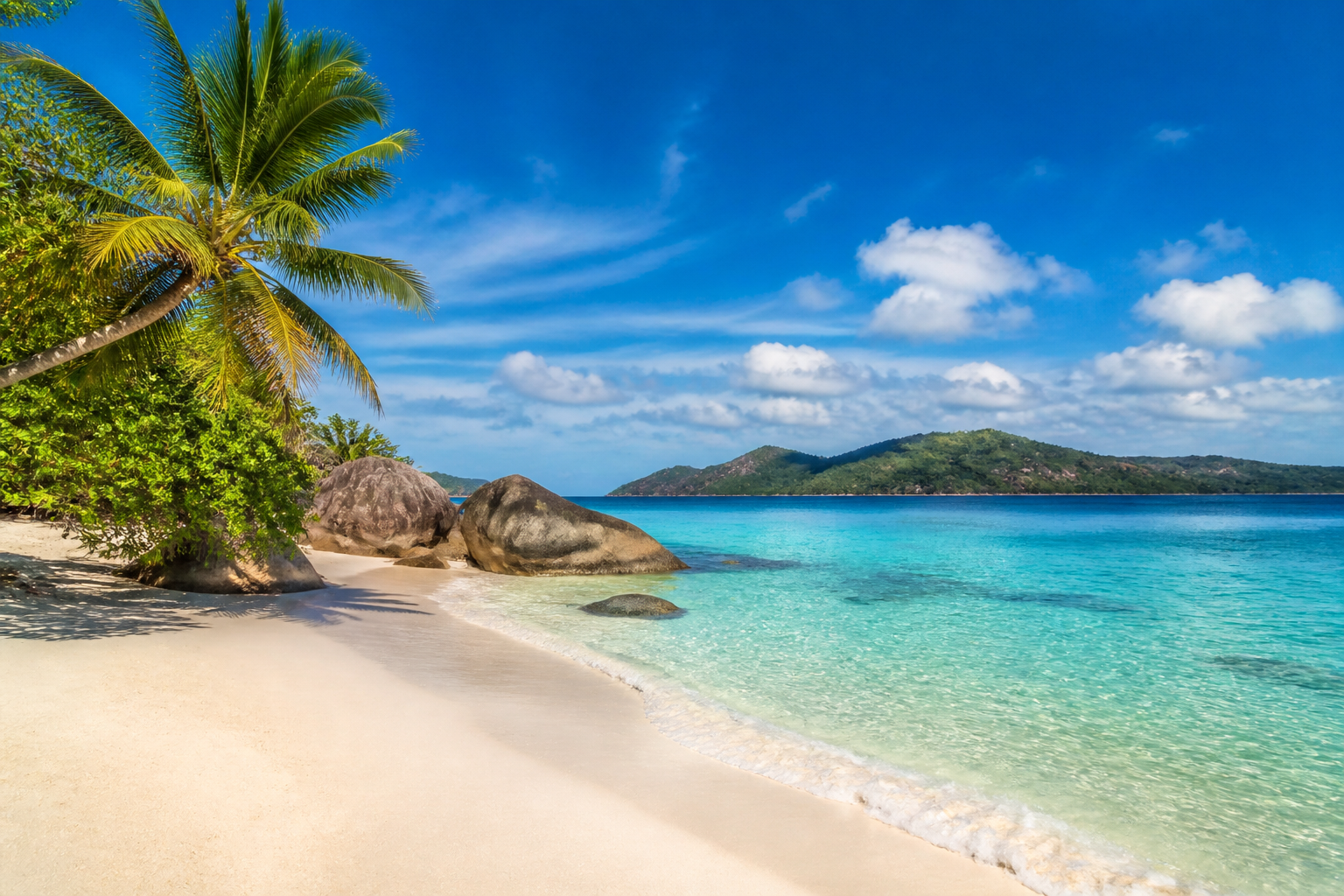
# Seychelles Beyond the Postcard: Island Favorites, GCC Travel Tips, and Real Costs
## The Vibe & When to Go
Seychelles has a slower rhythm than many Indian Ocean destinations. Mornings begin with bright water, warm bread from a small bakery, and the sound of buses or bicycles moving along narrow coastal roads. By afternoon, the heat settles in, and everyone seems to find a shady beach, a quiet swimming spot, or a table overlooking the sea.
The islands are getting extra attention from Gulf travelers as Seychelles presents itself at **Arabian Travel Market 2026**. The message is easy to understand: short-ish flight connections from the GCC, warm weather most of the year, private villas, beautiful beaches, and plenty of room for family holidays, honeymoons, and relaxed beach escapes.
Around the May ATM period, Mahé is usually hot and humid, with temperatures often sitting around **25–30°C**. Rain can arrive in quick bursts, but it rarely ruins the whole day. April and May bring a change between the northwest and southeast trade winds, so the sea can be especially pleasant for swimming and boat trips. October and November are also lovely, while July and August tend to feel breezier and drier.
You don’t come here to race through a checklist. Seychelles rewards an unhurried plan—perhaps two islands, rather than four, with enough time to return to the same beach twice.
## Must-See Spots: My Top Picks
### 1. Mahé’s South Coast
Mahé is the main island, and many visitors spend too much time around Victoria before moving on. I prefer driving south along the coast, where the scenery becomes quieter and the beaches feel more local.
**Anse Intendance** is dramatic and open, with tall palms and strong waves. It’s beautiful for a walk, but swimming conditions can be rough during certain seasons. For calmer water, I usually head to **Anse Royale**, where the reef creates shallow turquoise pools and small food stalls make an easy lunch stop.
A rental car is useful here, although the roads are narrow and bend sharply around the hills. Drive slowly, especially after dark.
### 2. Victoria and the Morne Blanc Viewpoint
Victoria is small enough to explore on foot in a morning. I like beginning at the market, where you’ll find fruit, spices, fish, and the lively everyday side of island life. Go early if you want to avoid the midday heat.
From there, make time for the **Morne Blanc trail** if the weather is clear. The walk is steep in places, but the viewpoint over Mahé’s western coast is one of my favorite island scenes. Bring proper shoes, water, and insect repellent. Clouds can roll in quickly, so don’t be disappointed if the view disappears for a few minutes.
For an easier afternoon, visit the **Seychelles National Botanical Gardens**. The giant tortoises and enormous palms make it a pleasant break from the beach.
### 3. Praslin: Vallée de Mai and Anse Lazio
Praslin feels more relaxed than Mahé and is a good choice for travelers who want beaches without giving up nature. The **Vallée de Mai** is home to the famous coco de mer palm, whose huge seeds are among Seychelles’ most recognizable symbols. Walk slowly and listen for birds rather than rushing through the paths.
Later, head to **Anse Lazio**, one of the islands’ best-known beaches. It is gorgeous, but arriving early makes a real difference. By late morning, day-trippers and tour groups can fill the sand. I prefer visiting before breakfast, swimming for an hour, and then finding a shaded table nearby.
If you have time, take a local bus to a less famous beach and ask the driver where residents swim. You may get a better afternoon than at the headline attractions.
### 4. La Digue by Bicycle
La Digue is the island that makes people slow down almost immediately. Bicycles are the main way to get around, and the roads are quiet enough to enjoy the ride.
**Anse Source d’Argent** is famous for its granite boulders and shallow water. Go early or late in the afternoon for softer light and fewer crowds. The entrance is through L’Union Estate, where there are also old plantation buildings and giant tortoises.
For a more peaceful beach day, cycle toward **Anse Severe** or **Grand Anse**. Grand Anse can have strong waves and currents, so check local advice before swimming. The ride itself is part of the pleasure—stop for fresh juice, grilled fish, or a cold drink when the heat catches up with you.
## Practical Travel Advice
### Getting There and Visa Requirements
Seychelles is generally **visa-free for visitors**, including travelers from the GCC, but everyone must complete the country’s online **Travel Authorisation** before departure. You’ll usually need:
– A valid passport
– Confirmed accommodation
– A return or onward ticket
– Proof of sufficient funds
– Details of your travel plans
– Travel and health information requested through the online application
Requirements and fees can change, so check the official Seychelles immigration and Travel Authorisation websites before booking.
From the Gulf, look for flights from **Dubai, Doha, Abu Dhabi, or other major regional hubs**. Some routes are direct or seasonal, while others connect through another hub. Flight schedules change frequently, especially around school holidays, so compare baggage rules carefully before choosing the cheapest fare.
Mahé International Airport is the main arrival point. If you’re continuing to Praslin, you can take a short domestic flight or a ferry. Ferries are practical, but the crossing can be uncomfortable for anyone prone to seasickness.
### Where to Stay
**Mahé:**
Choose Beau Vallon for an easy first visit, swimming, restaurants, and a more social atmosphere. Victoria is practical for short business trips or a night near the airport, but I wouldn’t spend an entire beach holiday there.
**South Mahé:**
Stay near Anse Royale, Baie Lazare, or Anse Intendance for a quieter feel, pretty beaches, and sunsets. A car is especially useful in this part of the island.
**Praslin:**
Côte d’Or is convenient for restaurants, boat trips, and easy beach access. The west and south of the island are calmer and better suited to villas or small guesthouses.
**La Digue:**
Stay near La Passe if you want shops, ferry access, and bicycle rentals close by. Accommodation becomes quieter as you move away from the port, but check how far you’ll need to cycle with luggage.
Guesthouses and self-catering apartments can offer much better value than large resorts. A kitchen is helpful because restaurant prices add up quickly.
### Getting Around
There is no Uber network like you might find in Dubai or Doha. On Mahé and Praslin, your realistic choices are:
– Rental car
– Public buses
– Hotel-arranged taxis
– Private transfers
– Boat or ferry connections between islands
Buses are inexpensive and useful, but they can be crowded, and large luggage may be awkward. Taxis are convenient but should be agreed upon in advance or booked through your hotel.
On La Digue, rent a bicycle as soon as you arrive. Electric bicycles are available in some places, though prices vary and supplies can run low during busy periods.
You can walk in town and around individual beaches, but Seychelles is not a highly walkable destination overall. Distances, hills, heat, and limited sidewalks make transport important.
## Real Costs and Local Tips
Seychelles is beautiful, but it is not a budget destination by default. The biggest savings usually come from choosing a guesthouse, shopping locally, and limiting private boat tours.
### Typical Daily Budgets
**Budget traveler: around US$80–140 per person**
– Guesthouse or simple apartment: US$45–90
– Local takeaway meal: US$6–15
– Bus rides: inexpensive
– One beach or self-guided nature day
– Shared ferry or public transport
This assumes you share accommodation and avoid frequent restaurant meals.
**Mid-range traveler: around US$180–350 per person**
– Comfortable hotel or small resort: US$120–250 per room
– Restaurant meals and café stops
– Rental car or occasional taxi
– One boat trip, guided walk, or island transfer
Luxury resorts and private excursions can push the daily total far higher.
The local currency is the **Seychellois rupee (SCR)**. Cards are accepted at most hotels, restaurants, and larger shops, but keep some rupees for buses, small takeaways, beach vendors, and roadside fruit stalls. Tipping is not compulsory because service charges are commonly included, but a small extra amount is appreciated for kind service.
### Small Tricks That Save Money
– **Eat at takeaway shops and local cafés.** A generous plate of rice, curry, grilled fish, or noodles is much cheaper than a resort dinner and often more satisfying.
– **Buy fruit, snacks, and water in Victoria or larger supermarkets.** Small beach shops and hotel minibars can be surprisingly expensive.
– **Book ferries and domestic flights early during school holidays.** Last-minute island transfers may leave you with fewer choices and higher prices.
– **Don’t assume every beach is safe for swimming.** Currents and seasonal waves can be strong. Ask your guesthouse or a lifeguard before entering the water.
– **Carry reef-safe sunscreen and insect repellent.** Both can cost much more on the islands than they do in the GCC.
– **Check taxi prices before getting in.** For longer trips, ask your hotel to arrange a fixed fare rather than relying on an unclear meter.
– **Plan island transfers around your flight.** The final ferry or domestic flight may leave earlier than expected, and missing it can mean an expensive overnight stay.
Seychelles’ growing presence at Arabian Travel Market 2026 makes sense, especially for Gulf travelers looking for a warm island break without a complicated visa process. Still, the best experience comes when you leave room in the itinerary. Spend a morning doing nothing, stop at a roadside stall for grilled fish, and let the weather decide whether the afternoon is for hiking or swimming.
That relaxed pace is the real luxury here—not simply having a beautiful beach, but having time to enjoy it.
KEYWORDS: Seychelles beach, Mahé Island