
# North Gyeongsang in Autumn: Seven Beautiful Stops, Good Food, and Honest Travel Tips
## The Vibe & When to Go
North Gyeongsang Province feels slower and more spacious than Seoul or Busan. One day you can walk among old royal tombs in Gyeongju, and the next you’re standing beneath red mountain cliffs in Cheongsong or looking out over the sea from Ulleungdo.
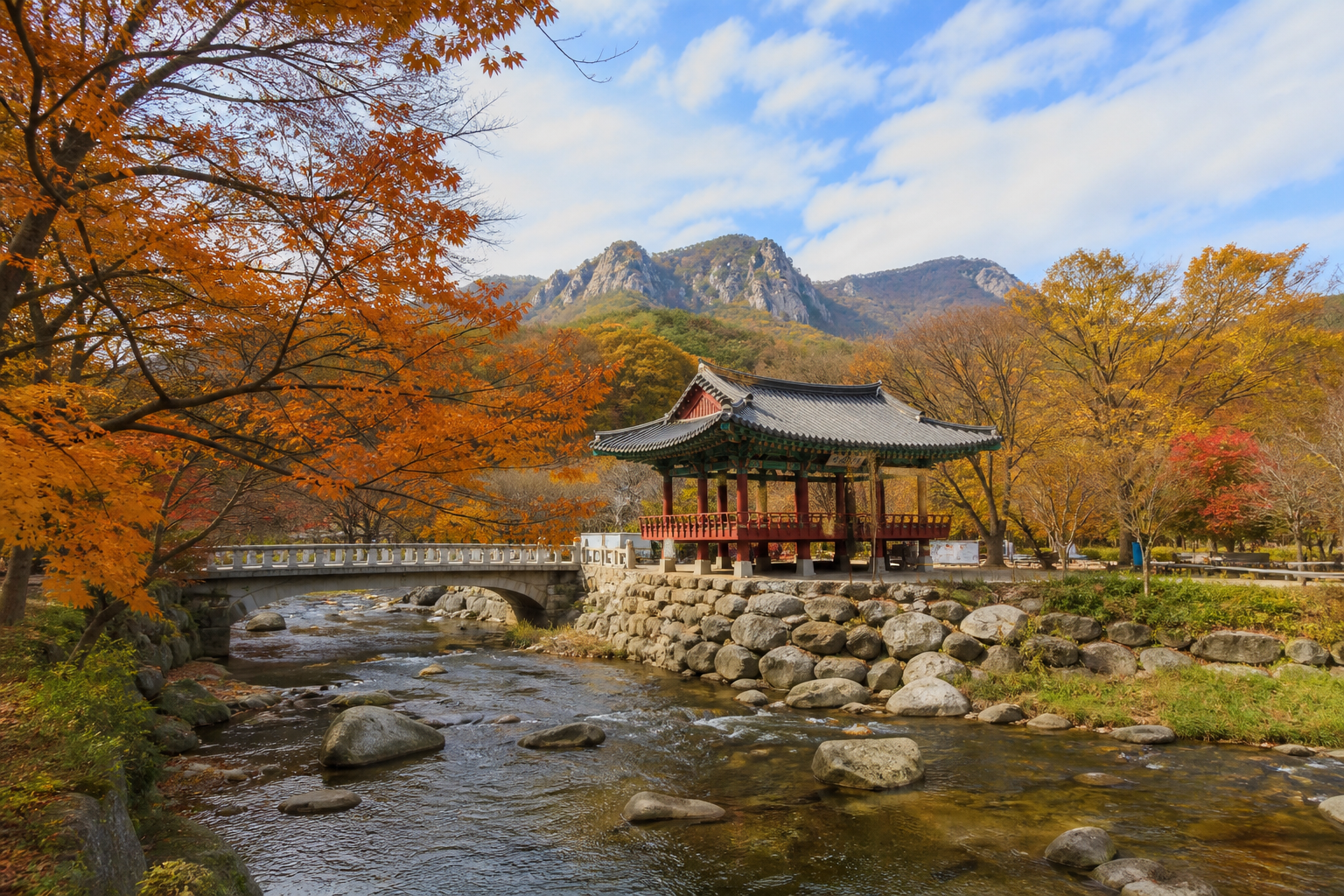
Autumn is my favorite time to visit. From late September into November, the air turns cool and dry, the rice fields fade from green to gold, and the mountains slowly change color. October is usually the safest month for pleasant weather, with comfortable daytime temperatures and chilly mornings. By early November, the foliage is often at its best in the mountain areas, though the exact timing changes every year.
Pack layers, comfortable shoes, and a light rain jacket. Mountain weather can shift quickly, especially around Juwangsan and Mungyeong Saejae.
## Seven Autumn Places I’d Put on Your Map
### 1. Gyeongju: Royal History with a Gentle Autumn Glow
Gyeongju is the easiest place in North Gyeongsang to fall in love with. The city was once the capital of the Silla kingdom, and its historic sites are spread through quiet parks rather than hidden behind large museum buildings.
I like starting near **Daereungwon Tomb Park**, where enormous grassy burial mounds sit among old trees. In autumn, the golden grass and red foliage make the area especially peaceful. From there, walk toward **Cheomseongdae Observatory** and **Woljeonggyo Bridge**. The distance is manageable, and the streets are full of small cafés and local restaurants.
For a calmer moment, visit **Bulguksa Temple** early in the morning. The stone steps, temple roofs, and surrounding trees look beautiful in the soft light. If you have time, continue to **Seokguram Grotto**, though the road up the mountain is easier by taxi or tour bus than on foot.
**My tip:** Gyeongju’s main historic area is wonderful by bicycle, but don’t try to cycle everywhere in one day. The distances between central Gyeongju, Bulguksa, and Bomun Lake are larger than they look on a map.
### 2. Andong and Hahoe Village: Autumn with a Traditional Rhythm
Andong is a good choice if you want to see an older, quieter side of Korea. **Hahoe Folk Village** has traditional houses, tiled roofs, and narrow lanes that still feel connected to village life rather than staged for visitors.
The best view comes from **Buyongdae Cliff**, across the river. The climb is short but steep, and the view over the curved Nakdong River and village rooftops is worth the effort. Try to arrive before midday, when the light is softer and the paths are less crowded.
Back in Andong, order **jjimdak**, a soy-braised chicken dish with glass noodles, potatoes, and vegetables. It’s filling, inexpensive, and ideal after walking around all afternoon. Andong’s salted mackerel is another local favorite.
**My tip:** Hahoe Village has fewer restaurants and cafés than you might expect. Eat in Andong city or bring water and a small snack with you.
### 3. Mungyeong Saejae and Juwangsan National Park: The Best Mountain Walks
These are two different destinations, but I like pairing them because both show off North Gyeongsang’s autumn colors.
At **Mungyeong Saejae Provincial Park**, old mountain roads once used by travelers and government messengers lead through forested passes. The paths are broad and relatively comfortable, making this a good choice for a relaxed walk. The three historic gates are spread along the route, so you can turn around whenever your legs have had enough.
**Juwangsan National Park** near Cheongsong is more dramatic. The trail to **Yongyeon Falls** and the rocky valleys passes through narrow cliffs, clear streams, and thick woodland. In autumn, the red leaves against the dark rock walls are unforgettable. Some sections can be slippery after rain, so wear shoes with a decent grip.
Cheongsong is also known for apples. In autumn, roadside stalls often sell crisp local apples, apple juice, and apple-based snacks. They make excellent picnic food.
**My tip:** Public transportation to these mountain areas is limited. If you don’t drive, check bus times carefully and consider staying one night nearby rather than forcing everything into a day trip.
### 4. Yeongju, Bonghwa, and Ulleungdo: Quieter Corners for Slow Travel
For a less hurried trip, head toward **Buseoksa Temple in Yeongju**. The temple sits on a mountainside with wide views over the surrounding countryside. The long wooden hall, stone pagoda, and autumn trees create a very calm atmosphere. Go near opening time if you want a few quiet minutes before tour groups arrive.
**Bonghwa** is a good stop for forest scenery and rural food. The area around the mountain passes is particularly lovely in October, when the roads wind through yellow and red hills. It’s not a place I’d visit for a packed sightseeing schedule; it suits travelers who enjoy scenic drives, markets, and simple meals.
Then there is **Ulleungdo**, the most adventurous option on the list. Ferries usually leave from mainland ports such as Pohang or Hupo, and the crossing can be rough. Once on the island, you’ll find steep coastal cliffs, clear water, winding roads, and seafood restaurants serving squid, mussels, and local vegetables.
**My tip:** Keep Ulleungdo flexible. Ferries can be delayed or canceled because of wind and waves, so leave a spare day in your itinerary if possible.
## Practical Travel Advice
### Getting There and Visa
Most international travelers reach North Gyeongsang through **Incheon International Airport**, then continue by KTX, express bus, or domestic flight. Depending on your final destination, **Daegu International Airport** can be more convenient, especially for Gyeongju and parts of southern North Gyeongsang.
South Korea’s visa and K-ETA rules depend on your passport and the date of travel. Some nationalities can enter visa-free, while others need a visa in advance. K-ETA exemptions and application rules can change, so check the official Korean immigration or K-ETA website before booking your flight.
For Gyeongju, the KTX station is outside the old city, so you’ll need a local bus or taxi after arriving. Express buses are often more convenient for Andong, Cheongsong, Mungyeong, and Bonghwa.
### Where to Stay
– **Gyeongju historic center:** Best for first-time visitors, walking, cafés, and evening sightseeing.
– **Bomun Lake:** Quieter and more resort-like, with larger hotels and easy access to Bulguksa.
– **Andong city center:** Convenient for restaurants, markets, and buses to Hahoe Village.
– **Cheongsong or Mungyeong:** Best for mountain walks and early starts.
– **Yeongju:** A practical base for Buseoksa and nearby rural areas.
– **Ulleungdo harbor towns:** Stay near Dodong or Jeodong for ferry access, restaurants, and local buses.
Guesthouses and small pensions are common outside the main cities. In autumn, mountain accommodations and weekend stays can fill quickly, especially around colorful foliage weekends.
### Getting Around
Gyeongju is the easiest destination to explore on foot, by bicycle, or with local buses. In other parts of the province, buses are affordable but may run only a few times a day.
I usually use **Naver Map** or **KakaoMap** for routes and bus times. For taxis, **Kakao T** is the most useful app, though having a Korean phone number can make setup easier. In smaller towns, taxis may be easier to find at a bus terminal than through an app.
A rental car is helpful for Juwangsan, Bonghwa, rural Yeongju, and scenic drives. Drive slowly on mountain roads; some bends are narrow, and fog can appear in the morning.
## Real Costs and Local Tips
Prices vary by season, but these are realistic daily estimates per person, excluding flights:
### Budget travel: around ₩60,000–₩90,000
– Guesthouse or simple motel: ₩25,000–₩45,000
– Meals from markets, noodle shops, or casual restaurants: ₩20,000–₩30,000
– Buses and occasional short taxi rides: ₩10,000–₩15,000
### Mid-range travel: around ₩130,000–₩220,000
– Comfortable hotel or pension: ₩70,000–₩130,000 per person when sharing
– Restaurant meals and coffee: ₩35,000–₩60,000
– Local transport and entrance fees: ₩15,000–₩30,000
South Korea uses the **won (₩)**. Cards are accepted almost everywhere, but small markets, buses, and rural snack stalls are easier with cash. Tipping is not expected in restaurants, cafés, taxis, or hotels. A sincere “thank you” is more appropriate than adding money to the bill.
A few things that saved me money and hassle:
– **Use convenience stores for breakfast and snacks.** Kimbap, boiled eggs, fruit, and coffee are cheap and easy to carry on buses.
– **Eat near traditional markets.** Portions are usually generous, and prices are often better than in restaurants beside major attractions.
– **Avoid arriving at mountain destinations without checking the last bus.** A short taxi ride can become expensive if you miss the final service.
– **Book autumn weekends early.** Gyeongju, Mungyeong, and mountain pensions become noticeably more expensive during peak foliage.
– **Carry a reusable water bottle.** Public drinking fountains are common at parks and temples, and buying several small bottles adds up.
North Gyeongsang is best enjoyed with a little patience. Leave room for an unplanned bakery stop in Gyeongju, a roadside apple stand near Cheongsong, or a slow cup of tea after a temple walk. The province rewards travelers who don’t try to rush through every stop.
KEYWORDS: North Gyeongsang, autumn Korea