
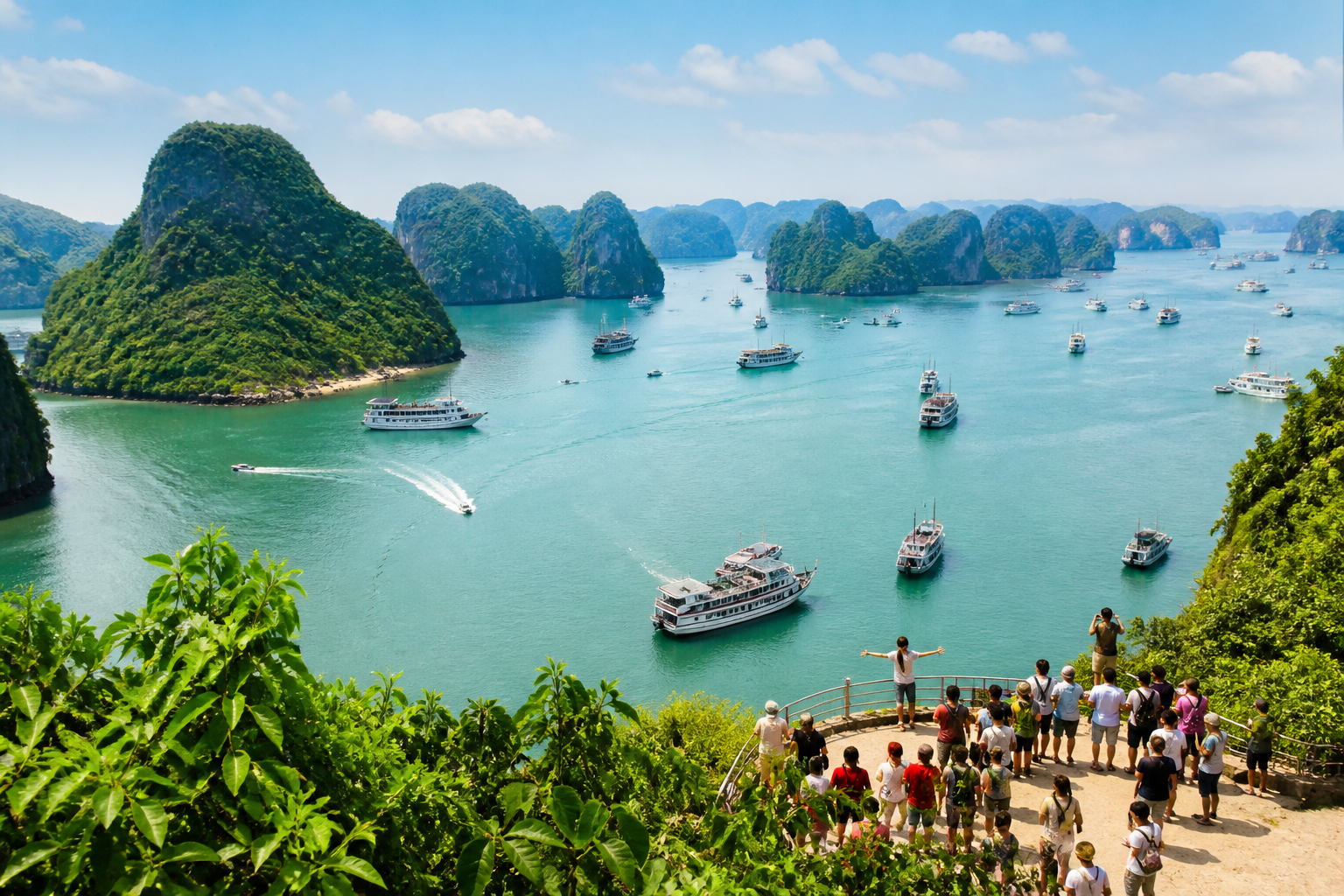
# Exploring Vietnam: Favorite Stops, Local Food, and Honest Budget Tips
Vietnam is the kind of country that rewards a little patience. One minute you’re sipping strong coffee on a noisy Hanoi pavement, and a few hours later you’re standing among rice fields, limestone peaks, or quiet fishing villages. It can feel busy and wonderfully chaotic, but the best moments often happen away from the famous postcard views.
I’ve also noticed how much local travel agencies and small tour operators are helping visitors reach places that used to be overlooked. Good partnerships with homestays, guides, transport companies, and village communities are opening up destinations such as Quy Nhon, Ha Giang, Quang Binh, and the Mekong Delta without making them feel completely packaged.
## The Vibe & When to Go
Vietnam changes dramatically from north to south, so there isn’t one perfect season for the whole country.
**March is a particularly good time to travel.** Northern Vietnam is usually mild, with comfortable days for Hanoi, Ninh Binh, and mountain trips. Central Vietnam tends to be warm and fairly dry, while Ho Chi Minh City and the Mekong Delta are hot, sunny, and still mostly in their dry season.
The atmosphere is lively but not always relaxing. Traffic can be startling at first, sidewalks may double as cafés or motorbike parking, and meals often happen on tiny plastic stools. After a day or two, I found the rhythm surprisingly easy to follow.
If you prefer cooler weather in the north, try October to April. Central Vietnam is generally best from February to August, while southern destinations are at their driest from December to April.
## Must-See Spots: My Top Picks
### 1. Hanoi’s Old Quarter and quieter corners
Hanoi is noisy, fragrant, historic, and full of small discoveries. I love wandering around Hoan Kiem Lake early in the morning, before the streets fill with scooters. Locals exercise, practice tai chi, and gather for coffee as the city slowly wakes up.
The Old Quarter is fun, but don’t spend all your time on the busiest streets. Walk toward **Phan Dinh Phung Street**, explore the lanes around **Truc Bach Lake**, and visit the small cafés near **Train Street** only through properly managed entrances. Some unofficial access points have been closed for safety reasons.
For food, try:
– **Bun cha** with grilled pork and noodles
– **Banh cuon**, delicate steamed rice rolls
– **Egg coffee**, especially on a cool morning
– A simple bowl of **pho** from a busy local shop
Hanoi is a city for walking, snacking, and stopping whenever something catches your eye.
### 2. Ninh Binh: limestone cliffs and quiet waterways
Ninh Binh is an easy trip from Hanoi, usually around two hours by limousine van or train. The scenery is beautiful, but the timing of your visit matters. I prefer taking a boat at **Trang An** early in the morning, when the water is calm and the caves are cooler.
**Tam Coc** is another popular option, especially during the rice-growing season when the fields turn bright green. For a quieter experience, consider **Van Long Nature Reserve**, where the landscape feels less crowded and more open.
Renting a bicycle is one of my favorite ways to see the area. The roads between villages are mostly flat, and you can stop at small temples, roadside cafés, and rice fields without having to follow a strict tour schedule.
Stay overnight rather than rushing back to Hanoi. The countryside becomes wonderfully peaceful after the day-trippers leave.
### 3. Hoi An and the nearby coast
Hoi An’s lantern-lit streets can feel busy in the evening, but the town is still lovely if you explore beyond the central lanes. I like visiting early, when shopkeepers are opening their doors and the old buildings are washed in soft morning light.
Rent a bicycle and ride toward **Tra Que Vegetable Village** or **An Bang Beach**. You’ll pass gardens, canals, rice paddies, and small cafés where a cold drink costs very little.
A few things I recommend:
– Take a cooking class that includes a local market visit
– Have clothes made, but allow at least two fittings
– Visit the old town before 8 a.m.
– Spend an afternoon at An Bang instead of staying downtown all day
– Try **cao lau**, **white rose dumplings**, and fresh seafood
Hoi An has become popular, so working with a small local guide or family-run operator can make the experience feel more personal. They often know quieter craft workshops and restaurants outside the main tourist streets.
### 4. Ho Chi Minh City and the Mekong Delta
Ho Chi Minh City moves quickly. The traffic looks impossible, yet somehow everyone gets where they’re going. I enjoy the city most by choosing one area at a time rather than trying to see everything in a single day.
Visit the **Central Post Office**, walk around **District 3**, and spend time in small cafés away from the main shopping streets. For food, look for broken rice, banh xeo, grilled seafood, and fresh sugarcane juice.
If you have two extra days, head to the **Mekong Delta**. I’d avoid the rushed day tours that combine several towns in one exhausting itinerary. A slower overnight trip through **Ben Tre** or **Can Tho** gives you more time to see fruit gardens, small canals, and family-run workshops.
Choose an agency that works directly with local boat operators and homestays. That usually means your money reaches the communities you visit, rather than disappearing into a large chain of middlemen.
## Practical Travel Advice
### Getting There and Visa
Most international visitors can apply for a **Vietnam e-visa online**, generally allowing stays of up to 90 days with single or multiple entry. Requirements and eligible entry points can change, so check the official Vietnamese immigration website before booking.
Your passport should normally be valid for at least six months beyond your arrival date. Keep a digital and printed copy of your e-visa, and make sure the entry airport or border crossing on the application matches your actual arrival point.
Major arrival airports include:
– **Hanoi:** Noi Bai International Airport
– **Ho Chi Minh City:** Tan Son Nhat International Airport
– **Da Nang:** useful for Hoi An and central Vietnam
For cheaper flights, compare Hanoi and Ho Chi Minh City rather than assuming one will be less expensive. An open-jaw route—flying into Hanoi and leaving from Ho Chi Minh City—can save both money and a long train or bus journey.
### Where to Stay
**Hanoi**
– Old Quarter: best for first-time visitors, food, and nightlife
– Hoan Kiem: convenient and a little calmer
– Tay Ho: cafés, longer stays, and a more relaxed international crowd
**Hoi An**
– Ancient Town: atmospheric but busier and pricier
– Cam Chau: peaceful, central, and good for cycling
– An Bang: beach access and a slower evening scene
**Ho Chi Minh City**
– District 1: convenient for major sights and nightlife
– District 3: more local restaurants and a quieter feel
– Thao Dien: modern cafés, apartments, and longer stays
For smaller destinations, I usually choose a family-run homestay with recent reviews. The best ones often include breakfast, bicycle use, and helpful advice about local transport.
### Getting Around
Vietnam is easier to navigate than it may first appear.
– Use **Grab** for motorbike taxis, cars, and food delivery.
– **Be** and **Xanh SM** are useful alternatives in larger cities.
– Trains are comfortable for scenic routes such as Hanoi to Ninh Binh or Da Nang to Hue.
– Sleeper buses save time, but quality varies. Check recent reviews before booking.
– Domestic flights are useful for long distances, though delays are not unusual.
– In cities, walking works well for short distances, but crossing major roads takes confidence. Walk steadily and predictably rather than darting between scooters.
For rural areas, book transport through your hotel or a trusted local agency. A slightly higher price is often worthwhile if it includes a reliable driver and clear pickup details.
## Real Costs and Local Tips
Vietnam can be very affordable, although prices rise in Hoi An, Ha Long Bay, and popular beach towns during holidays.
### Typical daily budgets
**Budget traveler: around 600,000–1,000,000 VND per day**
– Dorm bed or simple guesthouse
– Local meals and street food
– Buses, walking, and occasional motorbike rides
– A few low-cost attractions
**Mid-range traveler: around 1,500,000–3,000,000 VND per day**
– Comfortable hotel or private homestay
– Restaurant meals and café stops
– Grab rides or occasional private transfers
– One paid activity or day tour
Flights, upscale cruises, and multi-day treks will add considerably to those figures.
The currency is the **Vietnamese dong (VND)**. Cash is still important at markets, family restaurants, small shops, and rural homestays. Cards are widely accepted in hotels and modern restaurants. Tipping is not required, but rounding up or leaving 20,000–50,000 VND for excellent service is appreciated.
### A few tricks that saved me money
– **Eat where locals are eating.** A crowded stall with a short menu is often safer and tastier than an empty restaurant with large photos of every dish.
– **Confirm taxi prices before getting in.** Grab’s fixed fare is much easier than negotiating on the street.
– **Carry smaller banknotes.** Breaking a 500,000 VND note for a cheap drink can be awkward.
– **Book tours through local partners carefully.** Ask what is included, how many people will be in the group, and whether the guide is paid directly by the operator.
– **Avoid major holiday travel if possible.** During Tet, transport and hotels fill quickly, and many small businesses close for several days.
– **Don’t schedule every hour.** Some of my best meals and encounters came from taking a wrong turn or following a recommendation from a guesthouse owner.
Vietnam is developing quickly as a destination, but the most rewarding trips still feel personal. Choose locally run experiences where you can, stay a little longer in each place, and give yourself room to notice the everyday details: the woman preparing noodles before sunrise, the children cycling home from school, or the tiny coffee shop you would have missed from a tour bus.
KEYWORDS: Vietnam travel, Hanoi Vietnam