
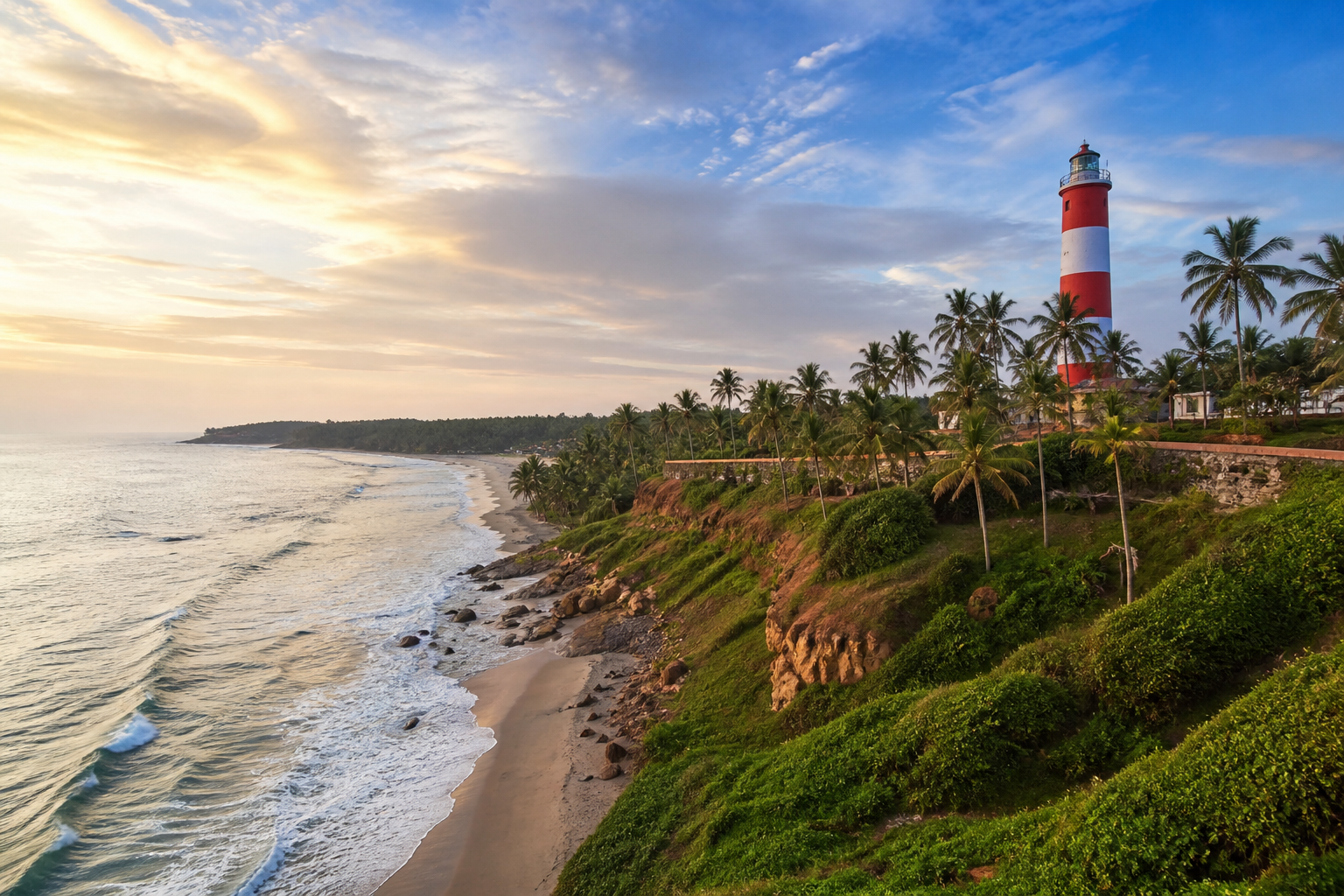
# Malabar Beyond the Headlines: Food, Beaches, and the New Travel Trail in Kerala
The Mathrubhumi Tourism Conclave’s focus on the **Malabar Travel Mart** feels timely. For years, visitors have known Kerala through Kochi, Munnar, and Alleppey, while the northern coast quietly kept some of the state’s best food, beaches, craft traditions, and old trading towns to itself.
Malabar is not one single postcard destination. It is a wide, flavorful stretch of northern Kerala, with Kozhikode as a natural starting point and Kannur, Thalassery, Beypore, and the hills inland adding their own character. The new tourism conversation is encouraging because it puts this region where it belongs: at the centre of Kerala’s travel plans.
## The Vibe & When to Go
Malabar feels more lived-in than polished. Tea shops are busy from early morning, conversations spill onto roadside benches, and lunch can easily turn into the main event of the day. There is a strong Muslim, Hindu, and coastal cultural mix here, visible in the architecture, festivals, markets, and, above all, the food.
The most comfortable months are usually **October to February**, when the days are warm but easier for walking and sightseeing. From **June to September**, the monsoon brings heavy rain, green hills, rough seas, and a slower rhythm. It can be beautiful, but beach plans may need to change at short notice. **March to May** is hot and humid, though early mornings and evenings are still pleasant enough for exploring.
Right now, the appeal of visiting Malabar is simple: tourism is opening up beyond the familiar Kerala circuit, but the region still feels personal and unhurried. If you enjoy places where the best discoveries happen between the major sights, this is a good time to come.
## Must-See Spots: My Top Picks
### 1. Kozhikode Beach and the old harbour side
Kozhikode Beach is not a place I would visit for a quiet swim—the sea can be rough, and swimming conditions are not always safe—but it is excellent for an evening walk. Families gather along the promenade, vendors sell snacks, and the sunset light turns the fishing boats into dark silhouettes.
For a quieter look at the city’s maritime past, wander around the old harbour area and nearby lanes. The region’s history as a spice-trading centre is still easy to imagine here, even when the streets are busy with everyday life.
**My tip:** Come before sunset, then stay for a cup of tea and a plate of banana fritters. The beach is liveliest after 5 p.m.
### 2. SM Street and Kozhikode’s legendary food
Sweet Meat Street, usually called **SM Street**, is one of those places where you should arrive hungry and without a strict plan. It is a shopping street, but the food is the real attraction. Look for Kozhikode halwa in bright colours, banana chips fried in coconut oil, spiced nuts, pickles, and small bakeries selling savoury snacks.
I always recommend trying more than one kind of halwa rather than buying a large box immediately. The texture and sweetness vary from shop to shop. For a proper meal, order **Malabar biryani**, preferably with a side of pickles and a cooling drink. If you eat meat, the local beef dishes and seafood are also excellent.
**My tip:** Ask the shopkeeper which items were made that morning. Fresh snacks are usually a better buy than attractively packaged souvenirs.
### 3. Beypore and the uru boat builders
A short ride south of Kozhikode, **Beypore** has a different mood. Its harbour is tied to the making of traditional wooden ships called **urus**, large sailing vessels once used in Gulf trade. The boat-building tradition is the main reason to visit, but I also enjoy the relaxed waterfront and the chance to see a working coastal town rather than a staged heritage attraction.
Depending on the day, you may be able to view boat construction from outside the yards. Be respectful around workers and ask before taking close-up photographs.
**My tip:** Combine Beypore with a seafood lunch and allow half a day. It is not a place to rush through in an hour.
### 4. Thalassery and the northern Malabar food trail
Thalassery is one of my favourite stops for travellers who plan their trips around food. The town is associated with **Thalassery biryani**, crisp snacks, cakes, and a long history of contact between local communities and overseas traders.
Walk around the old town, look for colonial-era buildings, and stop at a traditional bakery. If you have time, explore nearby **Muzhappilangad Drive-in Beach**, where the broad shoreline is famous for allowing vehicles on the sand during suitable conditions. Check local guidance before driving onto the beach, especially after rain or when the sea is rough.
For a deeper cultural trip, add **Kannur** to the route. If your dates match a performance, a theyyam ritual can be unforgettable, but schedules and locations change, so ask local tourism offices or hosts rather than relying on old online listings.
## Practical Travel Advice
### Getting There and Visa
For international visitors, **Calicut International Airport**, also called Kozhikode Airport, is the most convenient arrival point for southern Malabar. **Kannur International Airport** works well for Kannur and northern Kerala. Kochi is farther away but has more international connections and can be useful if you are combining Malabar with central or southern Kerala.
India’s visa rules depend on your nationality. Many travelers can apply for an **Indian e-Visa online**, but use only the official government website and check the permitted airports, passport validity, and entry rules before booking. Your passport generally needs at least six months of validity and blank pages. Do not assume that a visa for another country or a previous Indian visa is still valid.
From major Indian cities, domestic flights to Kozhikode and Kannur are often the easiest option. Book early around holidays, Ramadan and Eid travel periods, Christmas, and school vacations. Trains are slower but often more atmospheric, especially if you are coming from Kochi, Bengaluru, or Mangaluru.
### Where to Stay
– **Kozhikode city centre:** Best for first-time visitors, food, shopping, railway connections, and easy access to the beach.
– **Beach Road:** A pleasant choice if you want evening walks and sea views, though not every property is within a comfortable walking distance of restaurants.
– **Beypore:** Good for a quieter stay and harbour access, but you will have fewer hotel choices.
– **Kannur:** Better for travellers planning beaches, forts, and theyyam experiences.
– **Wayanad or the Malabar hills:** Choose this only if you want a nature-focused extension. Roads can be winding, and hill stays are not practical for a quick city break.
I usually prefer a modest hotel or family-run guesthouse near the centre rather than an isolated resort. You get better access to breakfast shops, autos, and local advice.
### Getting Around
Kozhikode’s central areas are manageable on foot, especially around SM Street and the beach. For Beypore, Thalassery, and nearby attractions, use a taxi or auto-rickshaw.
Uber and other app-based rides may be available in larger Kerala towns, but coverage can be inconsistent. **Rapido** and local auto services may help in some areas, though availability changes. For day trips, booking a car with a driver is often less stressful than arranging several separate rides.
Trains are useful between Kozhikode, Thalassery, Kannur, and other coastal towns. Buses are cheap and frequent, but they can be crowded and confusing if you do not know the route. Ask your hotel to write the destination in Malayalam if you are taking a local bus or auto.
## Real Costs and Local Tips
The local currency is the **Indian rupee (INR)**. Cards are accepted at hotels, larger restaurants, and shops, but keep cash for tea stalls, autos, small bakeries, and beach vendors.
### A realistic daily budget
**Budget travel: ₹1,800–₹3,500 per person**
– Simple guesthouse or hostel: ₹700–₹1,500
– Local meals and snacks: ₹500–₹900
– Buses, trains, and short auto rides: ₹300–₹700
– A few small entry fees or treats: ₹200–₹400
**Mid-range travel: ₹5,000–₹9,000 per person**
– Comfortable hotel: ₹2,500–₹5,000
– Restaurant meals and cafés: ₹1,200–₹2,000
– Taxis and day-trip transport: ₹1,000–₹2,000
– Activities and shopping: ₹300–₹1,000
Tipping is not compulsory, but rounding up at small cafés or leaving around **5–10%** at a good restaurant is appreciated. Check whether a service charge has already been added before tipping more.
### A few local tricks that save money
– **Eat where office workers and families eat.** Busy local restaurants usually offer fresher food and better prices than places aimed only at tourists.
– **Confirm auto fares before getting in.** If the meter is not used, agree on the price first. Your hotel can give you a rough idea of the usual fare.
– **Carry small notes.** A ₹10, ₹20, or ₹50 note makes tea stalls and short rides much easier.
– **Buy snacks from established bakeries or busy shops.** Colourful halwa and chips are tempting everywhere, but turnover matters more than fancy packaging.
– **Leave time between destinations.** Coastal Kerala traffic can be slow, and a journey that looks short on a map may take much longer than expected.
Malabar’s strongest attraction is not a single monument. It is the feeling of moving through a region that is finally receiving the attention it has long deserved. The Malabar Travel Mart and the wider tourism push may bring better connections, clearer travel circuits, and more thoughtful experiences, but the heart of the place is already here: in harbour towns, family kitchens, old bakeries, rain-darkened roads, and conversations over tea.
**KEYWORDS: Malabar Kerala**