
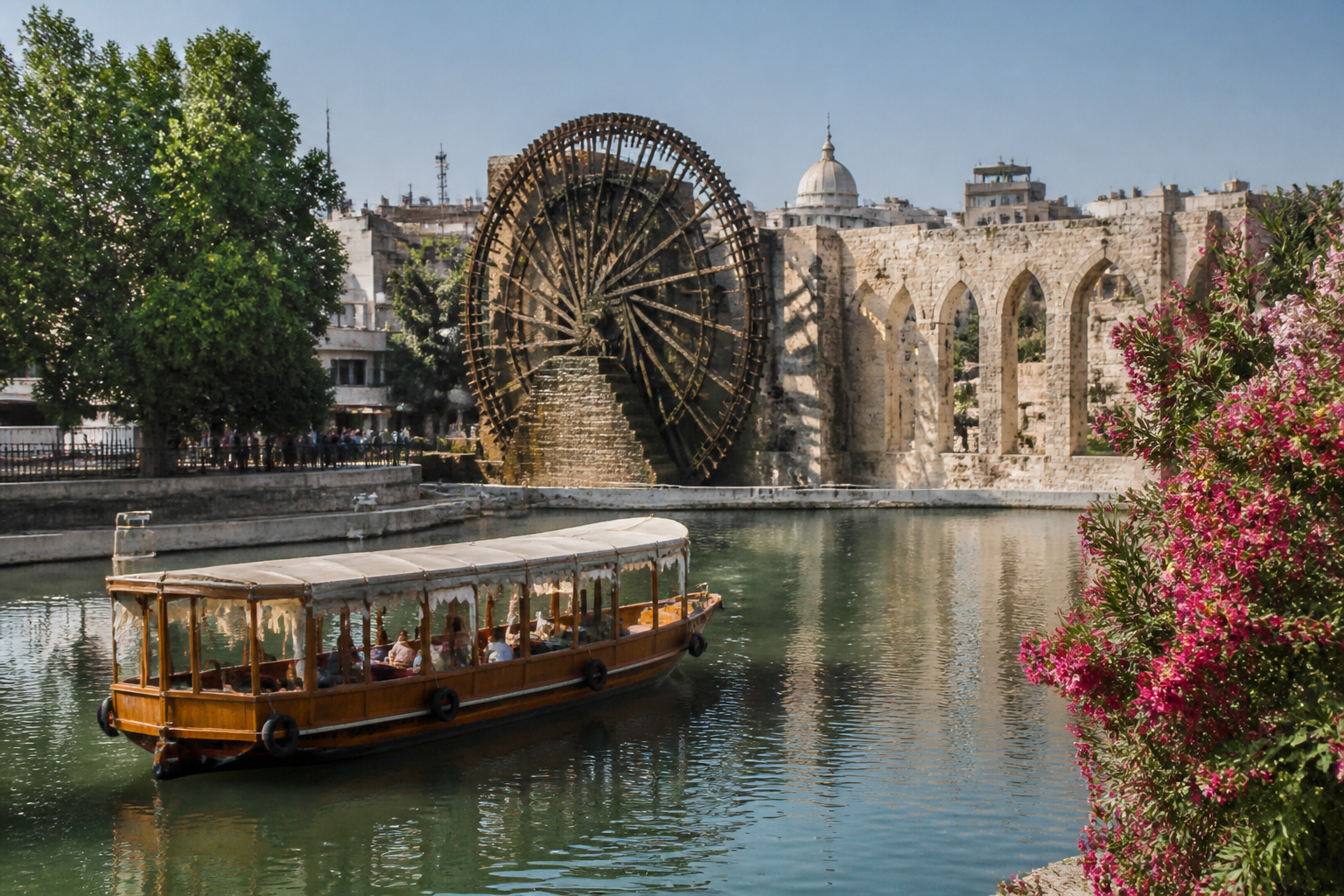
# Syria Beyond the Headlines: Old Cities, Great Food, and the Travel Reality Right Now
Syria is being talked about again as visitor numbers rise and international hotel companies look at the country with fresh interest. That sounds hopeful, but the story on the ground is more complicated. A reported increase to around 3.5 million visitors does not mean Syria is easy or safe for ordinary independent travel.
If you are considering a trip, treat this as a guide for **careful, legally permitted travel**, not a suggestion to ignore government warnings. Several countries still advise against all or most travel to Syria because of conflict, detention risks, unexploded ordnance, sanctions, and sudden changes at airports and borders.
## The Vibe & When to Go
Damascus can feel wonderfully alive in the middle of a difficult reality. In the old city, you may hear shopkeepers calling to one another, smell cardamom coffee drifting from a café, and find families sharing plates of hummus and grilled meat late into the evening. Then, only a few streets away, damaged buildings and shuttered businesses remind you that the country is still recovering.
The best weather for Damascus is usually **April to May and September to November**. Spring brings comfortable daytime temperatures and cool evenings, while autumn is pleasant for walking through the old city. Summers can be very hot, especially inland, and winters are cooler and wetter than many first-time visitors expect.
Aleppo is also generally more comfortable in spring and autumn. Palmyra and other desert sites can become brutally hot in summer, and access may change without warning.
I would not plan a trip around the idea that Syria has suddenly become a normal tourist destination. I would plan it only if:
– Your government permits travel to the areas you want to visit.
– You have confirmed entry permission in writing.
– A reputable local operator is handling transport and security.
– Your insurance explicitly covers Syria.
– You are prepared for cancellations, checkpoints, weak banking access, and limited consular support.
## Must-See Spots: My Top Picks
### 1. Damascus Old City
This is where the city feels most intimate. Walk through the narrow lanes around **Bab Touma**, **Bab Sharqi**, and the Umayyad Mosque, allowing plenty of time to stop for coffee or sweets rather than rushing from landmark to landmark.
The Umayyad Mosque is the major highlight, but I often find the quieter details more memorable: old stone courtyards, tiny workshops, brassware shops, and restaurants hidden behind plain doors. Al-Hamidiyah Souq can be busy and commercial, so wander beyond its busiest stretch and look for small family-run places serving **fatayer**, **kibbeh**, and **baklava**.
Dress modestly, especially around religious sites. Comfortable shoes help—the old paving can be uneven, and you will probably walk more than expected.
### 2. Azm Palace and the Courtyards of Damascus
Azm Palace offers a calmer look at the city’s Ottoman-era architecture, with cool stone rooms, carved wood, fountains, and shaded courtyards. It is easy to visit quickly, but I would slow down and pay attention to the workmanship.
The surrounding streets are ideal for an unhurried afternoon. Look for traditional soap, embroidered goods, spices, and local sweets. Ask before photographing shopkeepers or residents; a friendly conversation usually goes further than a camera pointed across a counter.
### 3. Aleppo’s Historic Citadel and Old Markets
Aleppo has suffered enormous damage, yet the city’s historic center still carries a powerful sense of identity. The **Citadel of Aleppo** is the essential stop, with broad views across the city and layers of history underfoot.
The old souqs have been partly restored, while other areas remain visibly damaged. That contrast can be emotional, so visit with humility. A local guide can explain which areas are open and which should be avoided. Do not wander into damaged buildings or photograph military sites, checkpoints, government offices, or security personnel.
Try Aleppo’s famous cuisine if you have the chance, especially **kebab khashkhash**, **muhammara**, and local pistachio sweets. Aleppine food is one of the strongest reasons to spend more than a single day here.
### 4. Palmyra—Only If Officially Cleared
Palmyra is one of Syria’s most famous archaeological sites, but it is not a casual day trip. The area has been affected by conflict, and the security situation, road access, and site openings can change quickly.
If access is officially approved, go with an experienced local operator, use a proper vehicle, and follow instructions closely. Never leave marked routes or touch anything that looks like unexploded ordnance. A photograph is not worth taking a risk in the desert.
## Practical Travel Advice
### Getting There & Visa
International access is limited and can change with little notice. Flights to Damascus may be available through a small number of regional carriers, but schedules are often revised, suspended, or affected by political and security developments. Do not book a nonrefundable itinerary until you have confirmed the flight directly with the airline.
Most travelers need a visa or prior entry approval. Requirements depend on nationality, passport history, travel purpose, and the border or airport being used. Some visitors arrange entry through a licensed Syrian travel agency or local sponsor. Rules can also differ for people who have recently visited certain countries or who hold passports from particular nations.
Before booking:
– Contact the nearest Syrian embassy or consulate.
– Ask a registered Syrian travel company for current entry requirements.
– Confirm whether you need a security clearance or invitation.
– Check that your passport has sufficient validity and blank pages.
– Carry printed copies of approvals, hotel details, insurance, and emergency contacts.
Land borders are not a simple backup plan. Openings, crossing rules, and transport arrangements can change rapidly.
### Where to Stay
In Damascus, the **Old City** is the most atmospheric choice. Traditional houses converted into guesthouses can place you close to cafés, souqs, and historic sites, though you should check backup power, hot water, internet, and vehicle access before paying.
**Al-Malki** and nearby modern districts suit travelers who prefer larger hotels, quieter streets, and easier access for arranged car pickups. Hotel standards vary, even among properties using familiar international names, so recent guest reviews matter.
In Aleppo, stay only in accommodation currently operating with reliable local support. Ask your guide or agency which properties are functioning properly rather than relying only on online booking platforms.
Do not assume that a hotel carrying a global brand name offers the same services, payment systems, or security standards you might expect elsewhere.
### Getting Around
Damascus Old City is best explored on foot, but you will need a car or taxi for longer trips. Street taxis are common, though agreeing on the price before departure is sensible. Ride-hailing availability is inconsistent, so do not rely on Uber-style apps as your main transport plan.
For travel between cities, use a licensed driver or tour operator. Public buses can be inexpensive, but routes, checkpoints, comfort, and reliability vary. Avoid traveling at night, especially outside city centers.
Keep your passport accessible but secure. Checkpoint procedures can be unpredictable, and photography around transport hubs or security installations can create serious problems.
## Real Costs & Local Tips
Prices change quickly because of inflation, currency fluctuations, shortages, and the gap between official and informal exchange rates. Use current local advice rather than treating old online budgets as fixed.
A rough guide for **legal, carefully arranged travel**:
– **Budget traveler:** about **US$35–60 per day**, excluding international flights, if using a simple guesthouse, inexpensive meals, and shared or locally arranged transport.
– **Mid-range traveler:** about **US$90–170 per day**, excluding flights, with a comfortable hotel, private car or guide for some journeys, and restaurant meals.
– **Higher-end arrangements:** can cost considerably more, especially when private security, specialist guides, or chartered transport is involved.
The local currency is the **Syrian pound**, but exchange rates can vary sharply. Bring enough clean, undamaged foreign currency for your trip, usually US dollars or euros where legally permitted. International cards and ATMs may not work reliably, and sanctions can make ordinary banking transactions difficult.
A few practical habits make life easier:
– **Ask about the exchange rate before paying.** Do not exchange money with strangers on the street; use a reputable, legally operating source.
– **Carry small notes.** Shops, taxis, and cafés may not have change.
– **Confirm prices first.** This is especially important for taxis, guides, and market purchases.
– **Tip modestly when service is good.** Rounding up in cafés or leaving around 5–10% in a good restaurant is generally appreciated, but tipping is not a reason to overpay.
– **Eat where locals eat.** Busy family restaurants are often better value than polished hotel dining rooms.
– **Keep plans flexible.** A route, museum, border crossing, or flight may close with little notice.
Syria has extraordinary food, architecture, and human warmth, but those qualities should not be used to gloss over the country’s risks. The future hotel investment and rising visitor figures may signal rebuilding and renewed interest. For travelers, though, the right approach is patience, humility, careful preparation, and a willingness to turn around when local conditions say you should.
KEYWORDS: Damascus Syria