
# Lisbon, the World’s Happiest Travel Destination? My Honest Guide to the City
Lisbon has a way of making an ordinary day feel generous. You turn a corner and find yellow sunlight on tiled walls, hear a tram rattling uphill, or sit down for a tiny espresso that somehow tastes better than the one you had at home.
A recent global survey reported by **Euronews** named Lisbon the world’s happiest travel destination. I can understand why. The city isn’t polished in every corner, and that’s part of its charm. Pavements are uneven, hills can be brutal, and the famous trams are often packed. But Lisbon gives you plenty of small pleasures in return: good food, open skies, friendly cafés, and a pace that encourages you to linger.
## The Vibe and When to Go
Lisbon feels relaxed but lively, with a slightly scruffy, creative character. Laundry hangs from balconies, old buildings sit beside modern restaurants, and locals gather in neighbourhood squares late into the evening.
The best times to visit are **March to May** and **September to October**. Spring usually brings mild days, green parks, and fewer crowds than summer. Early autumn is especially pleasant, with warm afternoons and comfortable evenings.
Summer is sunny and energetic, but July and August can be hot, busy, and expensive. If you visit then, plan sightseeing for the morning and save the late afternoon for a shady terrace or a trip to the coast. Winter is cooler and wetter, but Lisbon still gets plenty of bright days—and hotel prices are often much kinder.
## Must-See Spots: My Top Picks
### 1. Alfama at sunrise
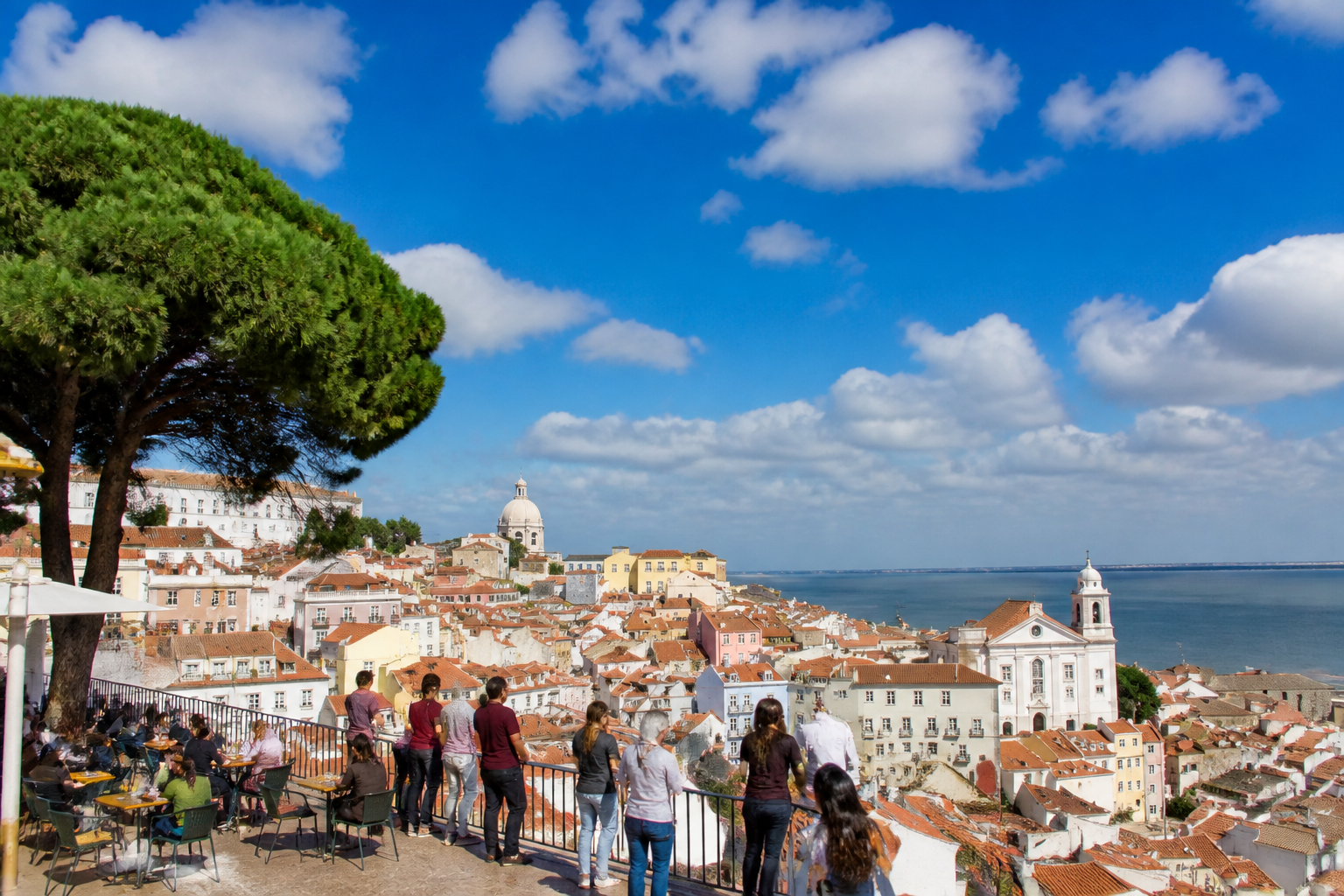
Alfama is the old quarter people picture when they imagine Lisbon: narrow lanes, tiled façades, tiny balconies, and steep stairways leading to unexpected viewpoints.
I prefer visiting early, before the tour groups arrive. Start near the Sé Cathedral and wander uphill toward **Miradouro de Santa Luzia** and **Portas do Sol**. The views over the terracotta roofs and the Tagus River are beautiful, but the quiet side streets are just as memorable.
Wear shoes with a good grip. The cobblestones can be slippery, especially after rain.
### 2. The riverfront in Belém
Belém is home to some of Lisbon’s best-known sights, including the **Jerónimos Monastery**, **Belém Tower**, and the **Monument to the Discoveries**. Go early if you want to visit the monastery without spending half the morning in a queue.
Afterward, walk along the river rather than rushing from one monument to the next. The waterfront is spacious and breezy, and it gives you a break from Lisbon’s hills.
Naturally, I also made time for a custard tart at **Pastéis de Belém**. The café is famous, but the experience is more enjoyable if you sit inside at the back instead of joining the takeaway line. Order one warm, dust it with cinnamon, and try not to immediately order another.
### 3. LX Factory and Alcântara
LX Factory is a former industrial site turned into a mix of bookshops, studios, restaurants, bars, and small design stores. It’s more relaxed on weekday mornings, while Sundays bring a popular market and a livelier crowd.
I liked wandering without a strict plan here. Look up at the old brick buildings, browse **Ler Devagar**, and stop for coffee before the afternoon gets busy. Prices can be higher than in traditional neighbourhood cafés, so I usually treat LX Factory as a browsing and snack stop rather than somewhere to eat every meal.
### 4. Graça and the city’s viewpoints
For a more local-feeling afternoon, head to **Graça**. The neighbourhood has independent cafés, family-run restaurants, and some of the best views in the city.
**Miradouro da Senhora do Monte** is the high point, literally and visually. It can be reached by tram or taxi, but walking uphill gives you a better sense of the neighbourhood. Bring water and take your time.
For sunset, I also enjoy **Miradouro de São Pedro de Alcântara** in Bairro Alto. It’s easier to reach and often has musicians playing nearby. Go before sunset if you want a good spot on the terrace.
## Practical Travel Advice
### Getting there and visa requirements
Lisbon Airport has direct connections to many European cities, North America, Brazil, and other international destinations. From the airport, the metro is usually the cheapest straightforward way into the centre. A taxi or rideshare is more comfortable if you have heavy luggage.
Portugal is part of the **Schengen Area**. Visitors from the United States, Canada, the United Kingdom, Australia, and several other countries can generally enter visa-free for up to **90 days within a 180-day period**, for tourism. Your passport should meet Schengen validity rules, including being valid for at least three months after your planned departure.
Rules can change, so check Portugal’s official immigration guidance or your own government’s travel advice before booking. Travellers who do need a Schengen visa should apply through the appropriate Portuguese consulate or visa centre.
For flights, compare Lisbon with nearby airports only if the savings are substantial. Adding a long transfer from another city can erase the benefit, especially after a late arrival.
### Where to stay
– **Baixa and Chiado:** Best for first-time visitors who want major sights, restaurants, and easy transport nearby. Expect more noise and higher prices.
– **Alfama:** Atmospheric and beautiful, but hilly and not ideal with large suitcases.
– **Graça:** A good choice for a quieter, more residential feel and excellent viewpoints.
– **Príncipe Real:** Stylish, walkable, and full of cafés, boutiques, and restaurants. Usually pricier.
– **Cais do Sodré:** Handy for nightlife, the river, and trains to the coast. It can be loud at night.
– **Estrela or Campo de Ourique:** Better for longer stays and travellers who want a local neighbourhood rather than a sightseeing base.
I’d avoid booking purely by price without checking the location on a map. A cheap room at the top of a steep hill can become tiring very quickly.
### Getting around
Lisbon is walkable, but not flat. I often combine walking with public transport rather than trying to conquer every hill.
– The **metro** is quick and useful for longer distances.
– Trams are fun, but the famous Tram 28 can be extremely crowded. Ride early in the morning or choose a less famous route.
– Buses reach places the metro doesn’t, though traffic can slow them down.
– **Bolt and Uber** are widely used and usually cheaper than traditional taxis.
– The **Viva Viagem** transport card works for many public transport journeys. Buy it from a metro station and keep it separate from other cards.
– Trains from **Cais do Sodré** head toward Cascais, while trains from **Rossio** go toward Sintra.
For Sintra, start early and book popular palace tickets ahead of time. The train is easy, but the town and palace roads become crowded later in the day.
## Real Costs and Local Tips
Lisbon is still more affordable than many Western European capitals, but it is no longer the bargain it once was.
### Rough daily budgets per person
**Budget: €45–€75**
– Hostel dorm or simple room shared with another traveller
– Bakery breakfast and inexpensive local meals
– Public transport and mostly free sightseeing
– Occasional coffee or pastry
**Mid-range: €110–€180**
– Comfortable private hotel or guesthouse
– Sit-down lunch and dinner
– A few paid attractions
– Rideshares when convenient
– Drinks, cafés, and small treats
Prices rise sharply in July, August, and around major holidays.
Portugal uses the **euro**. Cards are accepted almost everywhere, though I still carry a little cash for small cafés, markets, and older neighbourhood restaurants.
Tipping is not compulsory in the same way it is in the United States. If service is good, leaving around **5–10%** is appreciated, but you don’t need to tip automatically. Check that a service charge has not already been added.
### A few ways to spend less and avoid hassle
– **Eat lunch like a local.** Many restaurants offer a prato do dia, or dish of the day, often with soup, a main course, and a drink for much less than a dinner menu.
– **Look beyond the main squares.** Restaurants directly beside Praça do Comércio, Rossio, and the busiest streets usually charge more. Walk two or three blocks away.
– **Don’t queue for every famous pastry shop.** Pastéis de nata are available all over Lisbon. Try them at a neighbourhood bakery, where they’re often just as good and much less crowded.
– **Reserve accommodation early.** Lisbon’s better-value rooms disappear quickly, especially in spring and early autumn.
– **Keep your bag closed on crowded trams.** Lisbon is generally welcoming, but busy tourist routes attract pickpockets.
– **Carry water.** The hills and warm pavement can catch you off guard, especially when you’re distracted by the views.
Lisbon didn’t feel happy to me because everything was perfect. It felt happy because the city made room for simple things: a slow breakfast, a late walk beside the river, music drifting from a bar, and a view that cost nothing but a climb. Give yourself a few unplanned hours here, and Lisbon will probably give you something back.
KEYWORDS: Lisbon Portugal