
# Lisbon, With a Smile: My Favorite Views, Neighborhoods, and Honest Travel Tips
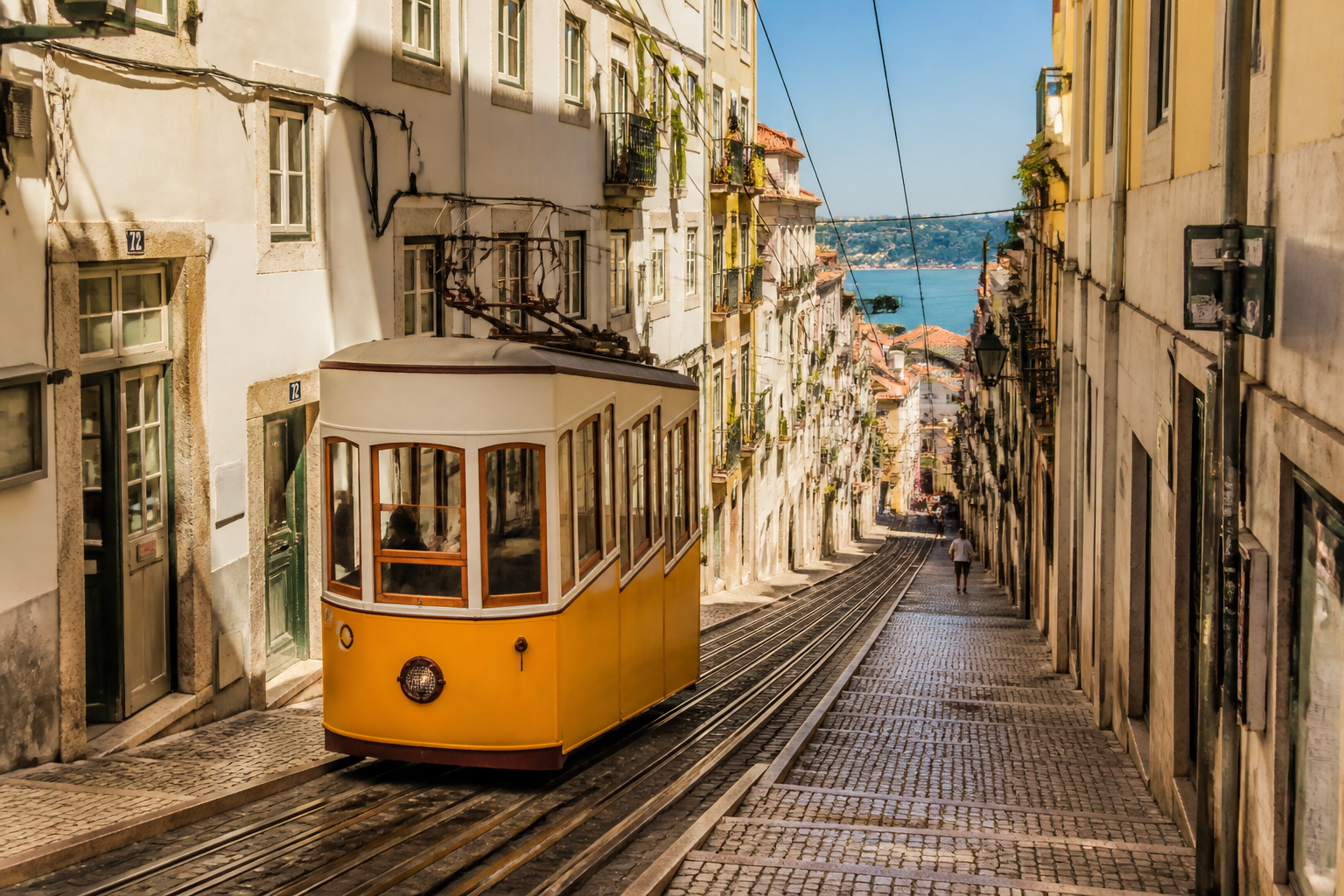
Lisbon has just been voted the world’s happiest travel destination in a new global survey reported by *Euronews*, and I can understand why. Happiness here isn’t loud or polished. It shows up in small things: an old man chatting with the bakery owner, sunlight bouncing off tiled façades, a tram squeaking uphill, and people lingering over coffee when they could easily be rushing somewhere else.
Lisbon can be hilly, crowded, and occasionally chaotic—but that is part of its charm. Give yourself time to wander, stop for a pastry, and let the city unfold at a slower pace.
## The Vibe and When to Go
Lisbon feels relaxed without being sleepy. It has the energy of a capital city, but most neighborhoods still feel personal and lived-in. Laundry hangs from balconies, tiny grocery shops sit beside modern restaurants, and locals seem to make room in their day for conversation.
The city is especially lovely from **March to June** and **September to October**, when the weather is generally warm and comfortable for walking. Spring brings bright skies and green parks, while early autumn often feels pleasantly summery without the peak-season crowds.
**July and August** are hot, busy, and expensive, though the evenings are beautiful. Winter is cooler and wetter, but Lisbon rarely feels harsh, and you can often find better hotel prices. Bring comfortable shoes in every season—the hills and polished cobblestones are beautiful but unforgiving.
## Must-See Spots: My Top Picks
### 1. Alfama and the São Jorge Castle area
Alfama is the Lisbon I imagined before visiting: narrow lanes, faded tiles, tiny balconies, and the sound of someone singing fado behind a half-open window.
I like exploring early in the morning before the cruise-ship crowds arrive. Start near the Sé Cathedral and wander uphill toward **Miradouro de Santa Luzia**, where you can see the terracotta rooftops stretching toward the river. Continue to **Portas do Sol** for another lovely view.
The castle is popular, but I still enjoy walking its old walls. For a quieter pause, look for small side streets away from the main viewpoints. Some are almost absurdly steep, so wear shoes with decent grip.
### 2. Belém for monuments, pastries, and river air
Belém is home to some of Lisbon’s grandest sights, including the **Jerónimos Monastery**, **Belém Tower**, and the **Monument to the Discoveries**. Go early if you want to visit the monastery without standing in a long line.
The highlight for me is simpler: stopping at **Pastéis de Belém** for one of the famous warm custard tarts, dusted with cinnamon. There are plenty of good pastéis de nata across Lisbon, but this bakery has been making its version since the nineteenth century.
After sightseeing, walk along the river toward the MAAT museum. The waterfront is open and breezy, and it gives you a break from the city’s hills.
### 3. Graça and the best sunset views
Graça has a more residential feel than the central tourist districts. It is a good place to wander without a fixed plan, especially around the old church and neighborhood squares.
For a sunset view, head to **Miradouro da Senhora do Monte**. It is one of my favorite viewpoints in Lisbon because you can see the castle, the river, and much of the city from above. Bring a drink or a small picnic, but keep an eye on your belongings when it gets busy.
A useful trick: take the tram or a ride uphill, then walk down. Lisbon’s hills are much friendlier in that direction.
### 4. Mouraria and the food-and-music side of Lisbon
Mouraria is one of the city’s most multicultural areas and has a fascinating connection to fado. It is less polished than Chiado or Avenida da Liberdade, which is exactly why I enjoy it.
Look for small family-run restaurants serving Portuguese, Cape Verdean, Indian, and Chinese food. Around **Rua do Capelão**, you can find fado-related history without the formal atmosphere of some dinner shows.
For a casual meal, I prefer a neighborhood tasca: order grilled fish, bifana, or a plate of the day rather than choosing a restaurant based only on a menu board aimed at visitors.
## Practical Travel Advice
### Getting there and visa requirements
Lisbon’s main airport is **Humberto Delgado Airport**, just a short metro ride from the center. Direct flights are available from many European cities, North America, Brazil, and other international hubs.
Travelers from the United States, Canada, the United Kingdom, Australia, and many other visa-exempt countries can generally visit Portugal for up to **90 days within a 180-day period** for tourism. Portugal is part of the Schengen Area, so your time in other Schengen countries counts toward that limit.
If you need a Schengen visa, apply through the Portuguese consulate or the official visa service in your country. Check passport validity and entry rules before booking, since requirements can change. Your passport usually needs to be valid for at least three months after leaving the Schengen Area and issued within the previous ten years.
For flights, I usually compare prices across several dates. Flying into Lisbon and returning from Porto can work well if you are planning a longer Portugal trip. A late-evening arrival is also manageable, since the metro and airport taxis make the city fairly easy to reach.
### Where to stay
– **Baixa or Chiado:** Best for first-time visitors who want major sights, restaurants, and transport close by. Expect more noise and higher prices.
– **Alfama:** Atmospheric and beautiful, especially for a short stay. The hills and uneven streets are less convenient with large luggage.
– **Graça:** A quieter neighborhood with good views, local cafés, and a more residential feel.
– **Príncipe Real:** Stylish without feeling completely overrun. Good for boutiques, gardens, and excellent restaurants.
– **Cais do Sodré:** Handy for nightlife, trains, and the river, though it can be noisy after dark.
– **Avenida da Liberdade:** A comfortable choice for upscale hotels and easy access to the center, but it feels less local.
### Getting around Lisbon
Lisbon is very walkable if you are prepared for hills. I use the metro for longer distances and walk between neighborhoods whenever possible. The **Viva Viagem** card is useful for public transport, and you can load different ticket options onto it.
The famous Tram 28 is fun, but it gets extremely crowded. Ride early in the morning or use another tram route for the experience without quite so many elbows. Tram 12 offers a shorter loop through old Lisbon and can be easier to manage.
Uber and Bolt are both common and generally affordable. Taxis are also easy to find, but confirm that the meter is running. For airport transfers, the metro is usually the cheapest option unless you arrive very late or have heavy bags.
## Real Costs and Local Tips
Lisbon is no longer the bargain it once was, but you can still keep costs under control.
### Approximate daily budgets
**Budget traveler: €45–€75 per person**
– Hostel bed or simple guesthouse: €20–€40
– Coffee and pastry breakfast: €3–€6
– Casual lunch: €8–€14
– Simple dinner: €12–€20
– Public transport and occasional attraction: €5–€15
**Mid-range traveler: €110–€180 per person**
– Comfortable hotel room shared by two people: €70–€130 per person
– Café breakfast: €8–€15
– Restaurant lunch: €15–€25
– Dinner with wine: €25–€45
– Transport, museums, and small extras: €15–€30
Portugal uses the **euro**. Tipping is not compulsory in the way it is in the United States. If the service is good, rounding up or leaving around **5–10%** is appreciated, but check whether a service charge has already been included.
A few things that saved me money:
– **Order the prato do dia** at local restaurants. The dish of the day is often better value than the tourist menu.
– **Buy water and snacks at supermarkets**, not cafés beside major viewpoints.
– **Book popular attractions online or arrive early**, especially Jerónimos Monastery and São Jorge Castle.
– **Avoid eating directly on Rua Augusta and around the busiest squares**. Walk two or three streets away and prices usually improve.
– **Carry a small bottle of water and cash for tiny cafés**, where card machines may not always be available.
– **Be cautious with unsolicited restaurant invitations or street sellers** in busy areas. A polite “não, obrigado” is enough.
Lisbon’s happiness, at least from my perspective, comes from how easy it is to enjoy an ordinary day. A tram ride, a strong espresso, a plate of grilled sardines, and a sunset over the rooftops can be enough. You do not need to fill every hour here. Leave some room to get pleasantly lost.
KEYWORDS: Lisbon Portugal