
# Kerala by the Backwaters and Beyond: Safe, Slow Travel with Local Tips
Kerala has a way of making you lower your voice and slow your walking pace. One minute you’re watching Chinese fishing nets sway over the water in Kochi; the next, you’re winding through tea country, coconut groves, or a quiet beach where fishing boats come in before breakfast.
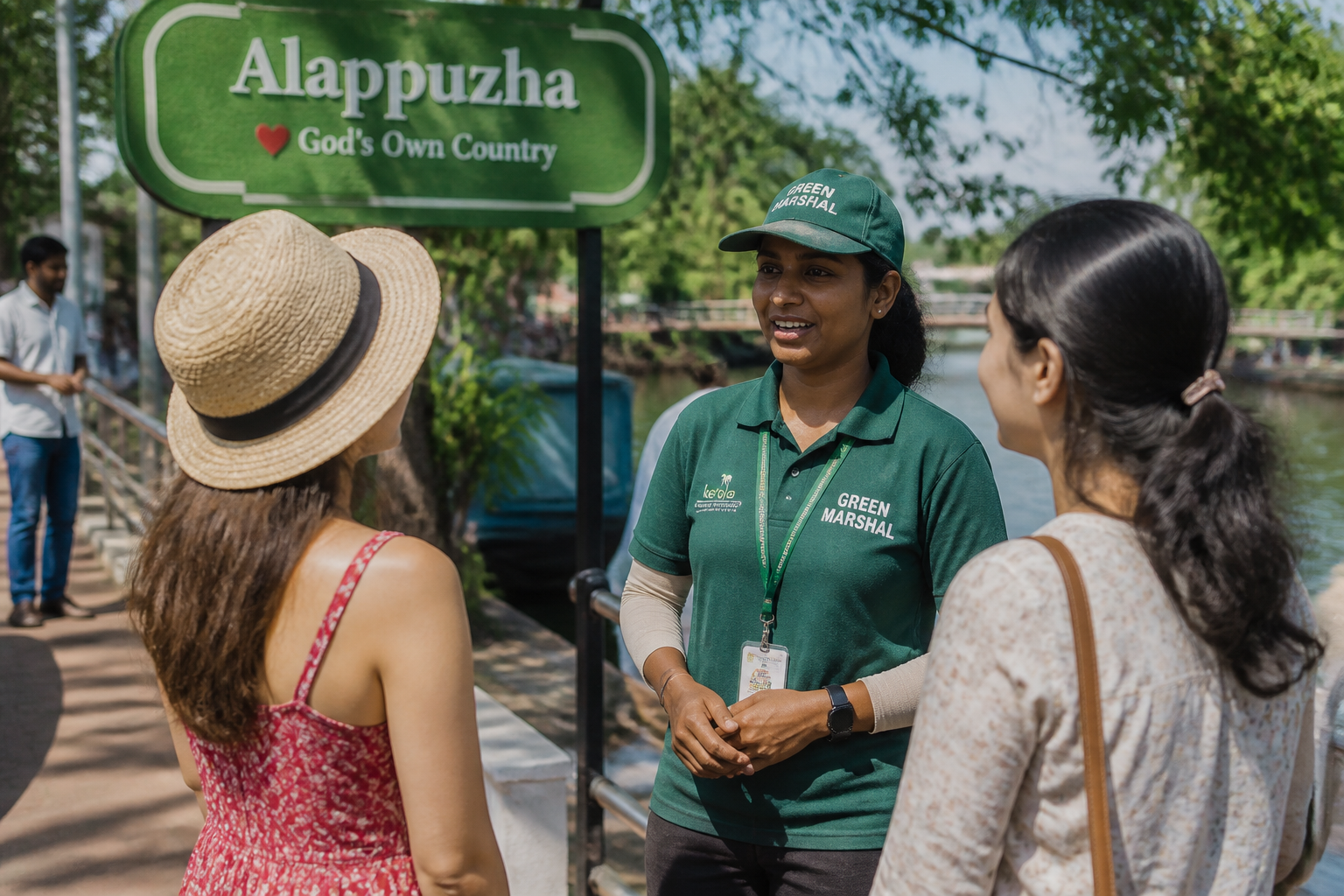
A recent initiative to station **“Green Marshals” at tourist destinations to assist women** is a welcome step for travelers. The idea is to provide a visible support presence at busy visitor spots and help women feel more comfortable while exploring. I still recommend the usual common-sense habits—keep emergency contacts saved, use trusted transport after dark, and ask your hotel about local conditions—but this kind of local support can make a real difference, especially for solo travelers and families.
## The Vibe & When to Go
Kerala feels relaxed, green, and wonderfully unhurried. Even in the larger towns, life often revolves around tea shops, ferry jetties, temple festivals, and long conversations over food.
The best time to visit is generally **November through February**, when the days are warm but more comfortable for sightseeing. December and January can be busy, particularly in Kochi, Alleppey, and Varkala, so book your stays early.
**March to May** is hotter and humid, though hill stations such as Munnar remain pleasant. The **southwest monsoon arrives around June**, bringing heavy rain but also dramatic greenery, lower prices, and a quieter atmosphere. If you enjoy photography and don’t mind flexible plans, the monsoon can be beautiful. Just allow extra time for road journeys.
## Must-See Spots: My Top Picks
### 1. Fort Kochi for history, cafés, and evening walks
Fort Kochi is where I’d begin. Walk along the waterfront near the Chinese fishing nets, then turn into the older lanes around St. Francis Church, Mattancherry Palace, and Jew Town.
The best moments are often between the major sights. I like stopping at a small café for cardamom tea, browsing antique shops, and watching local life carry on around the restored colonial buildings. The area is easy to explore on foot during the day, though the heat can build up quickly.
For a calmer visit, go out early. The fishermen are active near the waterfront, the streets are quiet, and you’ll avoid the strongest afternoon sun. Women traveling alone may also appreciate checking with local tourism staff or Green Marshals about busy areas and safe transport options.
### 2. Alleppey and the backwaters
A backwater trip is one of Kerala’s classic experiences, but you don’t have to book an expensive private houseboat to enjoy it.
For a more affordable and less staged experience, take a **public ferry from Alappuzha**, or book a short canoe tour through the smaller canals. You’ll pass homes, schools, churches, toddy shops, and people washing boats beside the water. These everyday scenes stayed with me much longer than the larger houseboat meals.
If you do choose a houseboat, ask exactly what is included, whether the boat has a proper license, and how many hours it will actually cruise. Some boats spend much of the day moored. A daytime cruise can be enough for a first visit and costs considerably less than an overnight booking.
### 3. Munnar for tea plantations and cool mornings
Munnar is a welcome change after the heat of the coast. The roads climb through winding hills covered with tea bushes, and the air becomes noticeably cooler as you gain altitude.
Visit a tea museum, walk through a plantation with a local guide, and get up early for viewpoints before the clouds roll in. I prefer staying just outside the busiest center, where the mornings are quieter and the views feel more open.
The roads are curvy, so take motion-sickness tablets if you need them. A private car with a driver is often the most comfortable option from Kochi, especially if you want to stop at waterfalls and small roadside stalls along the way.
### 4. Varkala for cliffs, seafood, and a slower beach day
Varkala is easy to enjoy without planning every hour. The cliff-top path is lined with cafés, small shops, and restaurants, while the beach below is reached by a steep walk down.
I like arriving before sunset, finding a shaded table, and ordering fresh fish with rice and a cold lime soda. The cliff can feel busy around sunset, but the northern end is generally quieter than the main stretch.
Swim only where lifeguards advise. The sea can have strong currents, and the beach is not equally safe at every point. If you’re traveling alone, keep valuables at your guesthouse rather than leaving them in a bag while you swim.
## Practical Travel Advice
### Getting There & Visa
Most international visitors arrive through:
– **Cochin International Airport**, useful for Kochi, Munnar, Alleppey, and central Kerala
– **Thiruvananthapuram International Airport**, convenient for Varkala and southern Kerala
– **Calicut International Airport**, useful for northern Kerala and Wayanad
Visitors from many countries can apply online for an **Indian e-Visa**, but eligibility, permitted airports, fees, and visa length vary by nationality. Apply through the official Indian government visa website rather than an unofficial agency. Your passport usually needs at least six months of validity and blank pages, but check the latest requirements before booking.
Domestic flights from Delhi, Mumbai, Bengaluru, and Chennai are frequent. For longer journeys within India, overnight trains can be comfortable and affordable if booked early.
### Where to Stay
– **Fort Kochi:** Best for history, cafés, galleries, and walking
– **Ernakulam:** More practical for transport, shopping, and business hotels
– **Alappuzha:** Good for ferry access and backwater trips
– **Munnar town or nearby villages:** Choose the town for convenience, the outskirts for peace and views
– **Varkala North Cliff:** Handy for cafés and the beach; quieter guesthouses are farther from the busiest strip
– **Wayanad:** Better for nature, homestays, and a few slower days away from the coast
For women traveling solo, I’d choose a well-reviewed guesthouse or hotel with a 24-hour reception, clear transport arrangements, and recent reviews mentioning the surrounding area.
### Getting Around
Kerala is easy to explore, but journeys often take longer than the map suggests.
– **Kochi Metro:** Useful between parts of Ernakulam and nearby areas, though it does not cover Fort Kochi directly
– **Local buses:** Cheap and extensive, but crowded and sometimes confusing for first-time visitors
– **Auto-rickshaws:** Good for short rides; agree on the fare first or ask the driver to use the meter
– **Taxis and ride apps:** Uber and local taxi services are available in larger cities, though coverage becomes patchier in hill areas
– **Private car with driver:** The most practical choice for Munnar, Wayanad, and multi-stop trips
– **Ferries:** A great way to travel around Kochi and the backwaters without spending much
For late-night rides, book through your hotel or a recognized app and share the trip details with someone you trust. If Green Marshals are present at a tourist site, they can also be a useful local point of contact if you need directions or assistance.
## Real Costs & Local Tips
Kerala can suit both backpackers and travelers who want a little more comfort.
### Typical daily budgets
**Budget traveler: ₹1,800–₹3,500 per person**
– Simple guesthouse or hostel: ₹700–₹1,500
– Local meals: ₹300–₹600
– Buses, ferries, and short auto rides: ₹300–₹700
– One modest activity or entrance fee
**Mid-range traveler: ₹5,000–₹10,000 per person**
– Comfortable hotel: ₹2,500–₹5,500
– Restaurant meals: ₹900–₹1,800
– Local taxis or shared private transport: ₹1,000–₹2,500
– Tours and entrance fees: ₹500–₹1,500
A houseboat, private driver, or high-end resort can raise the daily cost quickly.
Kerala uses the **Indian rupee (INR)**. Cards and digital payments work in many hotels and restaurants, but keep cash for small cafés, buses, ferries, temple donations, and rural areas. Tipping is not compulsory. A small tip for good service is appreciated, while restaurants may add a service charge—check the bill before paying.
### A few local tricks that helped me
– **Eat where office workers and local families eat.** A busy vegetarian restaurant often offers better value than a menu aimed at tourists.
– **Use public ferries for short backwater trips.** They are inexpensive and give you a more ordinary view of life along the canals.
– **Avoid booking every transfer through a hotel without checking the price.** Ask two or three drivers for a quote, especially for airport journeys.
– **Carry a scarf and refillable water bottle.** The scarf is useful at temples, and refilling is cheaper and less wasteful than buying several plastic bottles.
– **Keep small notes and coins handy.** Drivers and small shops may not have change for large bills.
– **Ask about total tour costs before agreeing.** Confirm whether meals, entry fees, parking, guide charges, and return transport are included.
Kerala rewards travelers who leave some room in the schedule. A delayed ferry, sudden rain shower, or long tea stop can easily become part of the story. With sensible planning, respectful behavior, and local support such as the Green Marshals initiative, it is a welcoming place to explore—especially if you give yourself enough time to move at its pace.
KEYWORDS: Kerala backwaters, Munnar tea plantations