
# Jamaica and Guyana Together: Two Very Different Caribbean Trips I’d Happily Take Again
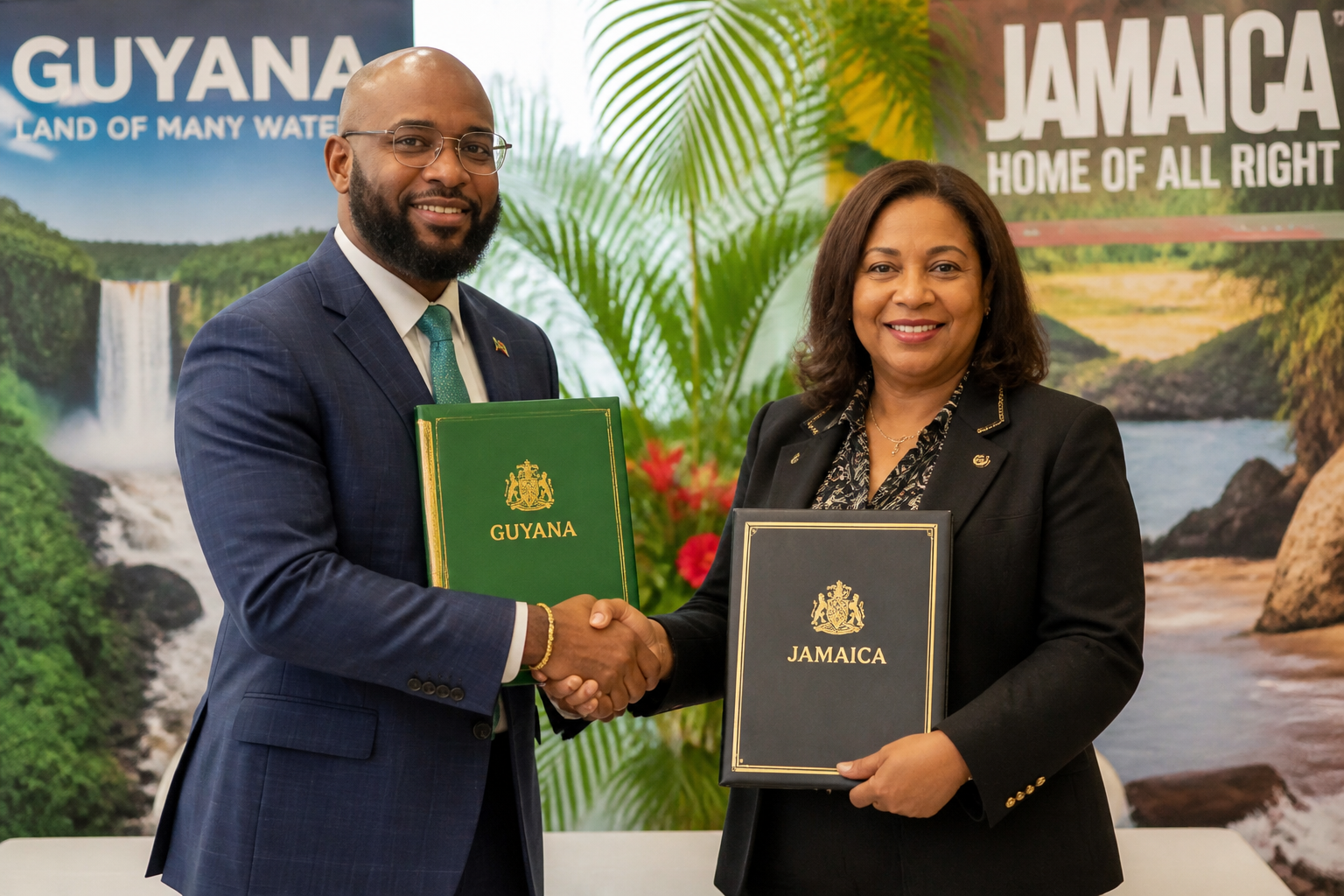
The tourism cooperation agreement signed by Jamaica and Guyana at SOTIC 2026 feels like a welcome invitation to look beyond the usual Caribbean holiday. Jamaica brings music, beaches, jerk smoke, and a wonderfully big personality. Guyana feels greener, wilder, and less polished for visitors, with rivers, markets, rainforest, and a strong Indo-Caribbean and Afro-Caribbean food culture.
I’ve found that the two countries work beautifully as a combined trip if you have enough time. Jamaica is easier for a first visit, while Guyana rewards travelers who enjoy a little more planning and patience.
## The Vibe & When to Go
Jamaica is lively and expressive. Music seems to come from every direction, conversations are warm and teasing, and even a quick stop for patties can turn into a long chat. Kingston feels creative and urban; Montego Bay is built around easy beach holidays; Portland is slower, greener, and more intimate.
Guyana has a different rhythm. Georgetown is busy but low-key, with wooden colonial-era buildings, crowded produce markets, minibuses, and canals running through the city. Outside the capital, the country quickly becomes more rural and adventurous. You may spend as much time watching birds, boats, and roadside life as you do visiting formal attractions.
The most comfortable travel periods are generally **December through April**, when both destinations are usually drier. Jamaica is warm year-round, with daytime temperatures commonly around 27–31°C. Guyana is also hot and humid, and rain can arrive suddenly, especially during its wetter seasons.
For travel connected to SOTIC 2026, I’d leave room for a few extra days rather than rushing between meetings or islands. The new cooperation agreement may lead to more shared promotion, better tourism links, and eventually more convenient regional connections, but schedules and routes can change quickly. Check current airline information before booking.
## Must-See Spots: My Top Picks
### 1. Kingston’s music and food scene
Kingston is where I’d start in Jamaica if I wanted to understand more than the beach-resort version of the country. Spend an afternoon around **Trench Town** with a reputable local guide, then visit the **Bob Marley Museum** in uptown Kingston.
For food, try a simple roadside jerk stand rather than only eating at hotel restaurants. Jerk chicken, festival, rice and peas, and a cold Red Stripe make an easy first meal. I also like wandering through the **Coronation Market** area early in the day, though you should keep valuables out of sight and go with someone familiar with the neighborhood.
Kingston is not especially walkable as a whole, so plan each outing by area. The **Devon House** grounds are a pleasant pause in the city, especially for ice cream.
### 2. Portland’s rivers, coves, and quiet roads
The Portland parish, around **Port Antonio**, is my favorite part of Jamaica for a slower trip. The roads wind through thick greenery, and the coast feels less built-up than Montego Bay or Ocho Rios.
Take a boat or swim at **Blue Lagoon**, but ask locally about conditions before jumping in. **Frenchman’s Cove** is beautiful and usually calmer early in the morning. I also enjoyed stopping at small roadside fruit stalls along the way—pineapple, mango, coconut, and roasted breadfruit can make a better lunch than an expensive restaurant.
A local driver is helpful here. Distances look short on a map, but mountain roads and traffic can make journeys much longer than expected.
### 3. Georgetown’s markets and wooden architecture
Guyana’s capital is best explored early, before the heat becomes heavy. Walk around **Stabroek Market**, where vendors sell fruit, spices, clothing, household goods, and almost anything else you can imagine. It is busy and crowded, so keep your phone and wallet secure.
I’d also visit **St. George’s Cathedral**, the **Walter Roth Museum**, and the old wooden buildings around central Georgetown. The city can look rough around the edges, but that is part of its character. Don’t expect a polished resort center; expect a working capital where daily life takes center stage.
For lunch, look for Guyanese staples such as pepperpot, cook-up rice, roti, curry, and fried rice. Portions are usually generous, and asking locals where they eat is often the fastest way to find a good, affordable meal.
### 4. The rainforest and Kaieteur Falls
If your budget allows, take a flight or organized trip to **Kaieteur Falls**. The waterfall is one of Guyana’s great experiences, and the journey itself gives you a sense of how much of the country remains wild and difficult to reach by road.
Bring water, insect repellent, sunscreen, and shoes that can handle wet ground. Flights and tours can be affected by weather, so avoid putting this excursion on the final day of your trip.
For a gentler nature experience, look into the **Iwokrama Forest** or nearby eco-lodges. These trips are more expensive than city sightseeing, but they offer guided wildlife viewing and a much deeper connection with Guyana’s landscapes.
## Practical Travel Advice
### Getting there and visa information
Jamaica has major international airports at **Kingston** and **Montego Bay**. Montego Bay is usually the easiest arrival point for beach areas, while Kingston makes more sense for the capital, cultural visits, and business events.
Guyana’s main international airport is **Cheddi Jagan International Airport**, outside Georgetown. Flights commonly connect through Miami, New York, Toronto, Panama City, or Trinidad, depending on your starting point. Travel between Jamaica and Guyana may require a connection, often through Trinidad, so check the full itinerary carefully rather than assuming there is a direct flight.
Visa rules depend on your passport. Many visitors from the United States, Canada, the United Kingdom, and several Caribbean and European countries can enter Jamaica or Guyana without a tourist visa for a limited stay, but the rules are not identical. You may need:
– A passport valid for the required period
– Proof of onward or return travel
– Accommodation details
– Evidence of sufficient funds
– Online arrival or immigration forms, depending on current rules
Check the official immigration websites or your nearest embassy before paying for a ticket. Visa policies can change, especially around major tourism events.
### Where to stay
**In Jamaica:**
– **Kingston:** New Kingston is convenient for business, restaurants, museums, and nightlife. The hills around Jack’s Hill offer views but require taxis or a driver.
– **Montego Bay:** Best for easy beach access, resorts, and airport convenience.
– **Negril:** A relaxed choice for sunsets, swimming, and a less formal atmosphere.
– **Port Antonio:** Ideal for small guesthouses, nature, and a quieter coastal stay.
**In Guyana:**
– **Georgetown city center:** Handy for markets, museums, restaurants, and historic buildings.
– **Queenstown or nearby residential areas:** A calmer base with guesthouses and local restaurants.
– **Near the airport:** Practical for an early departure, but not the most interesting place to spend your whole trip.
– **Eco-lodges outside Georgetown:** Best for travelers focused on forests, rivers, and wildlife rather than city sightseeing.
### Getting around
In Jamaica, taxis and private drivers are the most practical choices for longer distances. Use **red-plate licensed taxis**, agree on the fare before leaving, and ask your hotel to call a trusted driver. Uber is available in some Jamaican cities, but coverage and reliability can vary.
Rental cars are possible, though I would only recommend one if you are comfortable driving on the left, handling narrow roads, and navigating local traffic. Driving between Kingston and the north or east coast can take longer than expected.
Georgetown is manageable by taxi, but it is not a city where I would casually walk everywhere after dark. Minibuses are cheap but can be crowded and confusing for first-time visitors. Taxis are usually the simplest option. Ride-hailing coverage in Guyana is limited compared with larger international destinations, so ask your hotel or guesthouse about dependable local drivers instead of relying on an app.
## Real Costs and Local Tips
Prices change with the season, exchange rates, and whether you stay in a resort or locally owned guesthouse. These are comfortable estimates per person, excluding international flights.
### Jamaica
– **Budget:** US$55–90 per day
– **Mid-range:** US$140–250 per day
### Guyana
– **Budget:** US$45–80 per day
– **Mid-range:** US$110–200 per day
Nature trips, private drivers, and domestic flights in Guyana can push the daily total much higher.
Jamaica uses the **Jamaican dollar**, although US dollars are widely accepted in tourist areas. Guyana uses the **Guyanese dollar**. Carry smaller bills in both countries, especially for buses, market stalls, snacks, and short taxi rides.
A tip of around **10–15%** is appropriate in restaurants when service is not already included. You can also tip drivers, guides, and hotel staff for good service. At casual food stalls, tipping is not expected, though rounding up is appreciated.
### A few things that saved me money
– **Ask for the local price before ordering.** This matters at markets, beach vendors, and informal taxi stops.
– **Don’t exchange all your money at the airport.** Change a small amount first, then compare rates at reputable banks or exchange offices.
– **Book major nature excursions early.** Kaieteur Falls flights and popular Jamaican activities can fill up, particularly during holidays and event weeks.
– **Eat one local meal each day.** Roti, patties, curry, cook-up rice, and roadside jerk are usually far cheaper than hotel dining—and often more memorable.
– **Build in extra travel time.** Traffic in Jamaica and weather-related delays in Guyana can turn a simple journey into half a day. A flexible schedule will save you stress.
Jamaica and Guyana are not interchangeable destinations, and that is exactly why the tourism agreement is interesting. Jamaica offers an easier introduction, strong visitor infrastructure, and endless cultural energy. Guyana asks you to slow down, plan carefully, and accept a little uncertainty in exchange for forests, rivers, and a much less familiar side of the Caribbean.
If you combine them, I’d allow at least **ten days**: four or five in Jamaica, four in Guyana, and a spare day for connections. That gives you enough time to enjoy both without turning the trip into a race between airports.
KEYWORDS: Jamaica Guyana