
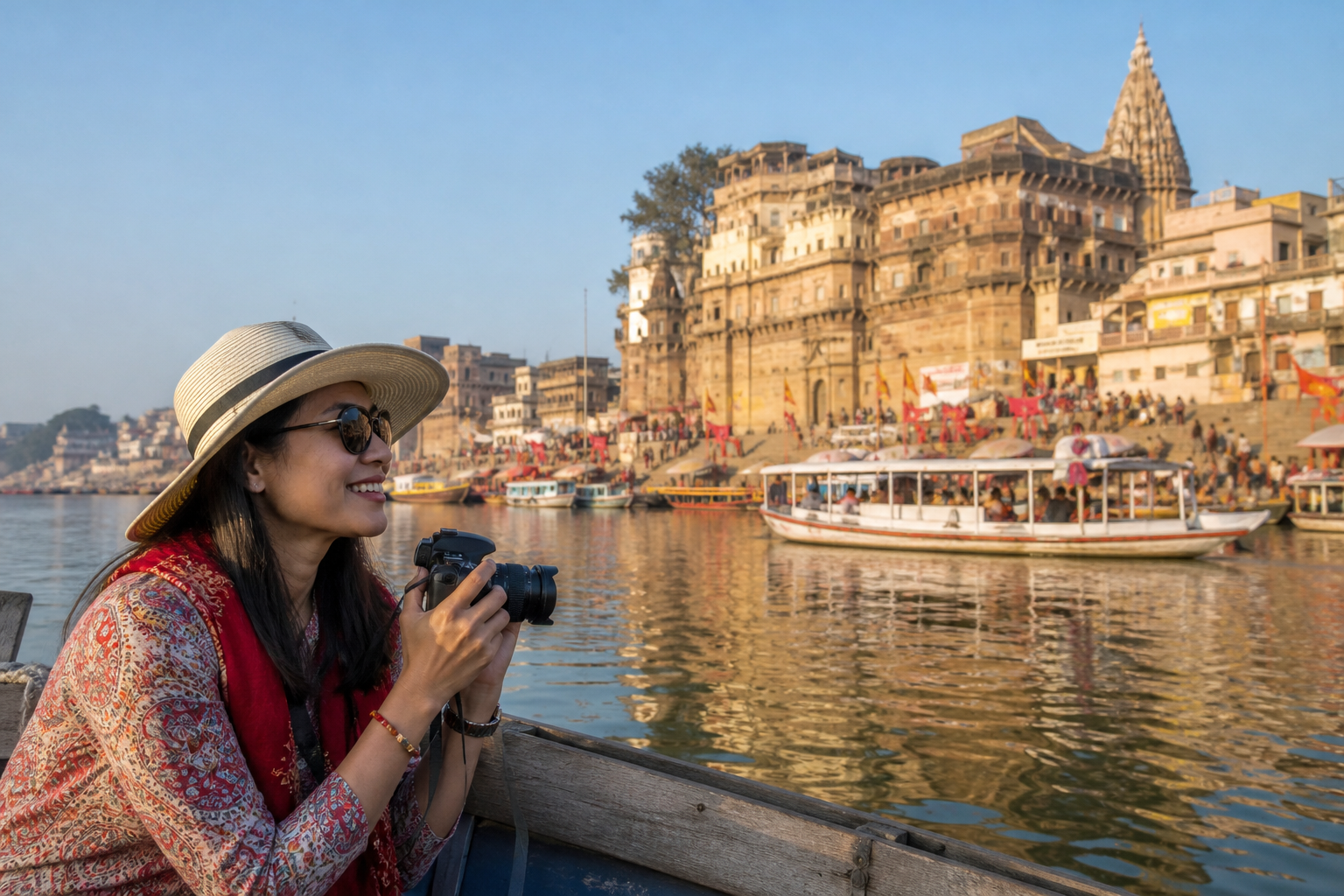
# India Beyond the Brochure: My Favorite Stops, Local Flavors, and Honest Travel Tips
India is having a big moment again. Tourism officials, including Tourism Minister Gajendra Singh Shekhawat, have been talking about the government working more closely with airlines, hotels, tour operators, and local businesses to promote **Incredible India**. From a traveler’s point of view, that cooperation matters when it means better connections, cleaner public spaces, easier bookings, and more support for local guides and family-run stays.
But the real reason to visit India is much simpler: every day feels different. One morning, I’ve been drinking sweet chai beside a railway platform; by evening, I’m watching the sun turn a palace wall pink or eating dosa from a busy roadside stall.
## The Vibe & When to Go
India is not one single climate. Delhi can be cool while Kerala is warm, and the Himalayas may be covered in snow when Goa is sunny and humid.
For a first trip covering the Golden Triangle—Delhi, Agra, and Jaipur—the most comfortable months are usually **October to March**. December and January can be chilly in northern India, especially early in the morning, while February and March are generally pleasant and colorful.
– **October to March:** Best for northern India, Rajasthan, Delhi, and sightseeing
– **April to June:** Very hot in much of the country, but good for mountain destinations
– **June to September:** Monsoon season; lush, dramatic, and sometimes wonderfully quiet, though heavy rain can affect travel
– **November to February:** Excellent for Kerala, Goa, Tamil Nadu, and much of southern India
I like traveling just after the monsoon or during the cooler winter months. The air often feels fresher, the countryside is green, and walking around old cities is far more enjoyable than it is under the fierce summer sun.
## Must-See Spots: My Top Picks
### 1. Delhi’s Old Streets and Quiet Courtyards
Delhi can feel intense at first—honking traffic, crowded markets, security checks, and people moving in every direction. Give it a day or two, though, and its layers start to make sense.
I always recommend starting with **Old Delhi**. Walk around Jama Masjid, browse the lanes near Chandni Chowk, and stop for paratha or jalebi somewhere busy and well-loved. A cycle rickshaw ride through the narrow lanes is chaotic in the best possible way.
For a calmer side of the city, visit **Humayun’s Tomb** early in the morning, then walk around nearby Nizamuddin. The Sufi quarter has a completely different mood, especially in the evening when qawwali music fills the air.
**My tip:** Don’t try to see every monument in one day. Delhi is more enjoyable when you leave room for a long lunch, a chai break, and a little wandering.
### 2. Agra Beyond the Taj Mahal
The **Taj Mahal** is every bit as beautiful as people say, especially at sunrise when the marble changes color and the crowds are still manageable. Book your ticket in advance and arrive early. Fridays are generally not suitable for regular tourist visits because the monument is closed to visitors.
I also loved **Agra Fort**, where you can look across the river toward the Taj. It gives you a better sense of the Mughal city that once surrounded the monument.
A quieter stop is **Mehtab Bagh**, across the Yamuna River. The view is especially pleasant near sunset, and it gives you a little breathing space after the busy Taj Mahal visit.
**My tip:** If you have time, add **Fatehpur Sikri** between Agra and Jaipur. The red sandstone buildings are impressive, but carry water and wear a hat—the open courtyards get hot.
### 3. Jaipur’s Palaces, Markets, and Evening Food
Jaipur is colorful without feeling artificial. The old city’s pink walls, jewelry shops, textile stalls, and painted doors make even an ordinary walk memorable.
Go early to **Amber Fort**, before the heat and crowds build. I prefer walking through the fort rather than taking an animal ride. Back in the city, visit the **City Palace** and pause at the small courtyards instead of rushing through every room.
At **Hawa Mahal**, the best photographs are often taken from the café terraces across the street. Later, wander through the markets around Johari Bazaar and Tripolia Bazaar. Bargaining is expected, but keep it friendly—smiling and walking away politely usually works better than arguing over a small amount.
For food, try a Rajasthani thali, pyaaz kachori, and lassi. Jaipur’s evening food scene is lively, but choose stalls with a steady stream of local customers.
### 4. Kerala’s Backwaters and Slow Evenings
If the northern cities feel energetic and packed, Kerala offers a gentler rhythm. I enjoyed spending time around **Alleppey, now commonly called Alappuzha**, where palm-lined waterways pass villages, rice fields, and small temples.
You don’t have to book an expensive private houseboat to enjoy the backwaters. A smaller day boat or local ferry can be more affordable and often feels less staged. **Kochi** is another favorite, with old trading quarters, colorful walls, seafood restaurants, and the famous Chinese fishing nets.
Kerala is also a good place to slow down. Have a banana leaf meal, try appam with stew, and leave a little space in your schedule for rain.
**My tip:** Houseboat prices vary wildly. Ask exactly what is included—meals, air-conditioning hours, crew, fuel, and pickup—before paying a deposit.
## Practical Travel Advice
### Getting There & Visa
Most international travelers need a visa for India. Many nationalities can apply online for an **e-Visa**, but eligibility, fees, allowed entry points, and permitted activities can change. Use the official Indian government visa website rather than a random third-party service.
Your passport should generally have:
– At least six months of validity remaining
– Two blank pages
– A return or onward ticket, if requested
– Accommodation details and a copy of your visa approval
Major entry points include Delhi, Mumbai, Bengaluru, Chennai, Hyderabad, Kochi, and Kolkata. Delhi and Mumbai usually have the widest choice of international flights. If you are visiting Rajasthan, flying into Delhi is convenient; for Kerala, compare flights into Kochi and Thiruvananthapuram.
I try to arrive during the day whenever possible, especially on a first visit. Airport transfers are easier to arrange, and you’ll have daylight to get your bearings.
### Where to Stay
India offers everything from simple guesthouses to polished heritage hotels.
– **Delhi:** Stay in Connaught Place for central access and easy metro connections. Choose South Delhi for a quieter, more residential feel.
– **Agra:** Near the Taj Mahal is practical for an early visit. The central area has more budget dining and transport options.
– **Jaipur:** The old city is convenient for markets and landmarks. C-Scheme is calmer, with better cafés and restaurants.
– **Kochi:** Fort Kochi is atmospheric and walkable, while Ernakulam is more practical for trains, shopping, and transport.
– **Goa:** North Goa is livelier and more developed; South Goa is generally quieter and better for a slower beach stay.
I like mixing accommodation styles: a reliable mid-range hotel in a big city, then a family-run guesthouse or heritage stay in smaller places.
### Getting Around
India is easier to navigate than it may first appear, but distances can be deceptive.
– **Trains:** Great for longer journeys. Book through the official railway system or a reputable booking partner, especially for popular routes.
– **Metro systems:** Delhi, Mumbai, Bengaluru, Jaipur, and other cities have useful metro networks. Delhi Metro is particularly helpful for avoiding traffic.
– **Domestic flights:** Useful when moving between distant regions, such as Delhi and Kochi.
– **Auto-rickshaws:** Convenient for short trips. Agree on the fare first or ask the driver to use the meter.
– **Ride-hailing apps:** Uber and Ola operate in many cities, though availability can vary. I usually check both before booking.
– **Walking:** Wonderful in old neighborhoods and market areas, but crossings can be stressful. Follow the locals and take your time.
For intercity taxis, use a reputable hotel, app, or established travel company. A very cheap quote often becomes less cheap once luggage, waiting time, tolls, and extra stops appear.
## Real Costs & Local Tips
India can suit almost any budget, though prices rise sharply in major tourist areas and during festivals.
### Daily Budget
**Budget traveler: ₹2,500–₹4,500 per day**
– Simple guesthouse or hostel
– Local meals and street food
– Public transport and shared rides
– A few paid attractions
**Mid-range traveler: ₹6,000–₹12,000 per day**
– Comfortable hotel or boutique guesthouse
– Restaurant meals mixed with local food
– Private auto rides or occasional taxis
– Several monuments, guides, or short tours
Luxury hotels, private drivers, and popular festivals can push spending much higher.
India uses the **Indian rupee (INR)**. Keep small notes for autos, snacks, temple donations, and public toilets. Digital payments are widely used through systems such as UPI, but visitors may not always be able to set them up easily, so I never travel without cash.
Tipping is appreciated but not compulsory. Around **5–10%** in a good restaurant is fine when service is not already included. For guides and drivers, a modest tip based on the quality and length of the service is perfectly acceptable.
### A Few Tricks That Saved Me Money
– **Compare taxi fares before accepting one.** Check Uber or Ola first so you know roughly what the ride should cost.
– **Eat where locals eat.** A busy stall with quick turnover is usually a better choice than an empty restaurant displaying a huge menu in six languages.
– **Buy train tickets early.** Popular routes sell out, especially around holidays and weekends.
– **Carry tissues and hand sanitizer.** Many public bathrooms are basic, and not every restaurant has paper napkins.
– **Dress with local expectations in mind.** Covering shoulders and knees is respectful at temples, mosques, and smaller towns. It also makes visits more comfortable.
– **Be careful with unofficial guides.** At monuments, use the official guide counter or arrange a guide through your hotel or a trusted company.
– **Don’t photograph people without asking.** A smile and a quick gesture usually make the difference.
India rewards patience. Trains may run late, traffic can turn a short journey into a long one, and plans sometimes change without warning. But those little interruptions often become the stories you remember: the roadside chai stop, the shared conversation with a fellow passenger, or the unexpected festival procession that blocks the street.
The government’s closer work with the travel industry may make India easier to reach and plan, but the heart of the experience still comes from ordinary moments. Leave space for them.
KEYWORDS: India travel, Rajasthan India