
# Vietnam Beyond the Brochure: Favorite Stops, Local Flavors, and Honest Travel Tips for 2027
As ITB Berlin 2027 prepares to bring the travel industry together, Vietnam has a lovely story to tell. It is a country of early-morning street food, misty mountains, long coastlines, fast-growing cities, and small family-run cafés where someone may remember your coffee order after one visit.
I have traveled through Vietnam in different seasons, and what stays with me is the variety. You can eat a bowl of noodles for a few dollars, spend the afternoon exploring an ancient town, and finish the day beside the sea or high in the hills. The country is busy and noisy in places, but it also offers plenty of quiet corners if you know where to look.
## The Vibe & When to Go
Vietnam does not have one single climate. The weather changes quite a bit from north to south, which makes planning important.
– **Hanoi and northern Vietnam:** Cool, misty, and sometimes damp from November to March. Spring can bring soft sunshine and light rain.
– **Central Vietnam:** Hoi An, Da Nang, and Hue are often warm, though the rainy season can affect the central coast from roughly September to January.
– **Southern Vietnam:** Ho Chi Minh City and the Mekong Delta are generally hot. December to April is usually the drier period.
If you are visiting around **ITB Berlin in March 2027**, Vietnam is especially appealing because the country offers a choice of climates. Hanoi may feel pleasantly cool, central Vietnam can be comfortable for sightseeing, and the south is usually warm and bright.
The best months for a longer trip are often **February to April** or **October to December**, although no season is perfect everywhere. I like traveling in the shoulder months, when hotels are a little calmer and popular streets do not feel quite so crowded.
## Must-See Spots: My Top Picks
### 1. Hanoi’s Old Quarter and quiet lakeside streets
Hanoi is wonderfully imperfect. Scooters flow around you, shopfronts spill onto the pavement, and the smell of grilled meat seems to appear from nowhere.
Start early around **Hoan Kiem Lake**, before the streets become busy. You may see older residents doing tai chi, children practicing badminton, and groups of friends drinking tiny cups of coffee. The Old Quarter is best explored on foot, though crossing the road takes a little courage. Walk slowly and predictably; the traffic will usually move around you.
For a calmer side of the city, head toward **Truc Bach Lake** or the narrow lanes around **Phan Dinh Phung Street**. I prefer these areas to spending the whole day on the busiest shopping streets. Try egg coffee in a small upstairs café, then order a bowl of **bun cha** from somewhere full of locals rather than choosing the most polished-looking restaurant.
**My tip:** Visit the Old Quarter before 9 a.m. or after 4 p.m. The light is nicer, the heat is gentler, and you will see more everyday life.
### 2. Ninh Binh for rivers, limestone cliffs, and rural roads
Ninh Binh is one of the easiest escapes from Hanoi, usually around two hours by train, bus, or private car. The scenery around **Trang An** and **Tam Coc** is spectacular, but the experience feels more personal when you slow down.
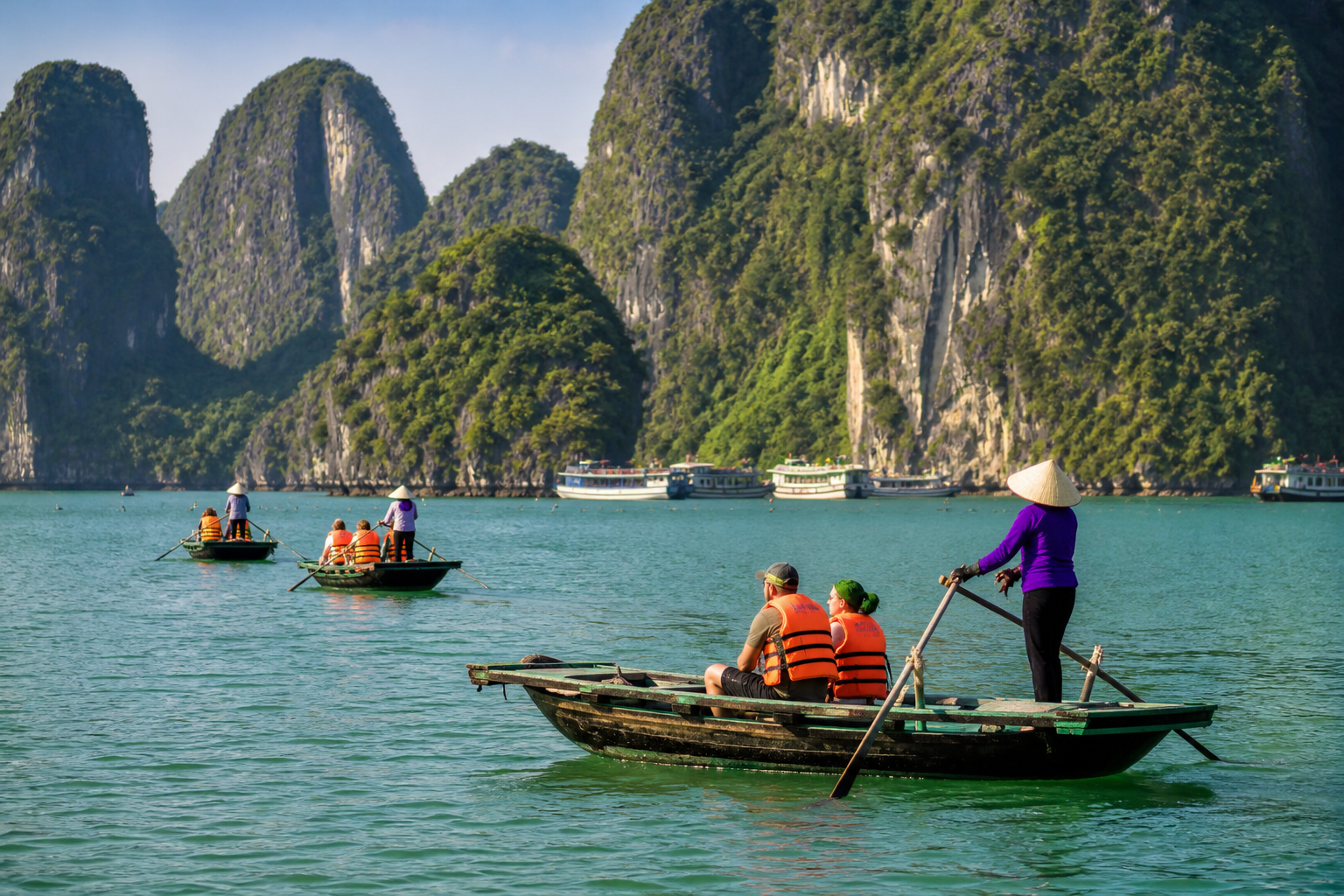
A small boat trip through Trang An takes you past limestone mountains, caves, and quiet waterways. Tam Coc is beautiful too, especially during the rice-growing season, when the fields turn vivid green. I also recommend cycling along the back roads between villages. You will pass vegetable gardens, temples, water buffalo, and roadside cafés selling cold drinks.
Climb to the viewpoint at **Mua Cave** if your knees are up for it. The stone steps are steep, but the view over the rice fields is one of the best I have seen in northern Vietnam. Go early, because the midday heat can make the climb much harder.
**My tip:** Stay one night in Ninh Binh rather than taking a rushed day trip. The countryside becomes much quieter after the tour buses leave.
### 3. Hoi An for lantern-lit evenings and excellent food
Hoi An is popular for good reason, but the old town can feel crowded at night. I enjoy it most in the late afternoon, when the golden light hits the yellow walls and the river begins to reflect the lanterns.
Walk beyond the central market toward the quieter lanes near **Cam Kim Island**, or rent a bicycle and ride through the rice fields. A short trip to **An Bang Beach** makes an easy change of scenery. The town is also a great place to eat: try **cao lau**, white rose dumplings, crispy banh xeo, and fresh herbs served with almost everything.
Tailors are part of the Hoi An experience, but choose carefully. If you want clothing made, ask to see fabric samples, agree on the price and delivery time in advance, and allow at least two fittings.
**My tip:** Visit the old town early in the morning, then return after dark. You get two very different impressions of the same place.
### 4. Ho Chi Minh City and the Mekong Delta
Ho Chi Minh City moves quickly. Cafés occupy old apartment buildings, food stalls appear beside office towers, and the streets stay lively long after dinner.
I like starting in **District 3**, where tree-lined streets and small restaurants make a gentler introduction than the busiest parts of District 1. The **War Remnants Museum** is difficult but important, while the **Central Post Office** and nearby book street are easy stops during a city walk.
For food, look beyond the famous restaurant names. Try broken rice with grilled pork, fresh spring rolls, southern-style pancakes, and a strong iced coffee with condensed milk. A late afternoon ride along the Saigon River can be a pleasant break from the traffic.
If you have two extra days, go to the **Mekong Delta**. I would choose a small-group trip or stay overnight rather than taking a quick boat tour from the city. The early morning markets and quiet canals feel much more genuine when you are not rushing back for dinner.
## Practical Travel Advice
### Getting There and Visa
Vietnam has major international airports in:
– **Hanoi** in the north
– **Da Nang** in central Vietnam
– **Ho Chi Minh City** in the south
From Europe, flights often connect through Doha, Dubai, Istanbul, Singapore, Bangkok, or Kuala Lumpur. If you are visiting several regions, compare an open-jaw ticket—flying into Hanoi and home from Ho Chi Minh City—against a return flight. It can save a long domestic journey.
Vietnam generally requires visitors to have:
– A passport valid for at least six months
– An approved visa or visa exemption
– Proof of onward travel in some cases
Vietnam offers **e-visas to citizens of many countries, generally for stays of up to 90 days and with single or multiple entry options**. Rules can change, so apply through the official Vietnamese immigration website and check the latest requirements before booking non-refundable travel. Avoid unofficial visa websites that charge large processing fees.
### Where to Stay
**Hanoi**
– **Old Quarter:** Best for first-time visitors, food, and nightlife; noisy and busy.
– **Hoan Kiem:** Convenient for sightseeing and early morning walks.
– **West Lake:** More relaxed, with cafés, restaurants, and longer-term apartments.
**Hoi An**
– **Old Town:** Beautiful and convenient, but busier and sometimes pricier.
– **Cam Chau:** Quieter, with rice-field views and easy bicycle access.
– **An Bang:** Good for a beach holiday with restaurants nearby.
**Ho Chi Minh City**
– **District 1:** Central and convenient, with plenty of hotels and nightlife.
– **District 3:** My favorite for a calmer atmosphere and local restaurants.
– **Thao Dien:** Popular with expatriates, with stylish cafés and international food.
### Getting Around
For cities, **Grab** is the most useful app for motorbike taxis and cars. **Be** is another local ride-hailing option in some areas. Always check that the vehicle and license plate match the app before getting in.
Walking works well in Hanoi’s Old Quarter, Hoi An, and parts of central Ho Chi Minh City, but sidewalks may be occupied by parked motorbikes or food stalls. Domestic flights save time between distant regions, while trains are comfortable for some north-south routes if you choose a soft seat or sleeper berth.
For short journeys, taxis from reputable companies such as **Mai Linh** or **Vinasun** are usually reliable. In smaller towns, ask your hotel to arrange a car or use a trusted local driver.
## Real Costs and Local Tips
Vietnam can suit both backpackers and travelers looking for more comfort.
### Daily budget
**Budget traveler: around US$25–40 per person**
– Hostel or simple guesthouse
– Local meals and street food
– Public transport and occasional Grab rides
– Free attractions and modest entrance fees
**Mid-range traveler: around US$60–120 per person**
– Comfortable hotel or boutique guesthouse
– Restaurant meals mixed with local food
– Domestic transport or private transfers
– A day tour, cooking class, or guided experience
Prices rise during major holidays, especially **Tet**, the Vietnamese Lunar New Year. Transport and accommodation can sell out, so book ahead if your trip falls around that period.
Vietnam’s currency is the **Vietnamese dong (VND)**. Card payments are common in hotels, modern cafés, and larger restaurants, but cash is still essential for markets, street food, small shops, and rural areas. Keep smaller notes because vendors may not have change.
Tipping is not compulsory. In restaurants, rounding up or leaving a small amount for especially good service is appreciated. Tour guides and drivers usually welcome a tip, but nobody should pressure you into giving one.
### A few things that save money and hassle
– **Eat where the seats are small and the menu is short.** Busy local stalls often serve fresher food at better prices than restaurants with glossy menus.
– **Agree on prices before taking a cyclo, boat, or informal taxi.** Better still, use Grab or ask your hotel to arrange transport.
– **Carry a photocopy or digital backup of your passport and visa.** Keep the original in a safe place when you do not need it.
– **Bring earplugs for city hotels.** Vietnam’s streets can be lively from early morning, and some accommodation has little soundproofing.
– **Drink bottled or filtered water.** Reusable bottles are easy to refill at many hotels and cafés.
– **Cross roads calmly.** Do not dart backward or forward. Walk at a steady pace and let motorbikes read your movement.
What I hope visitors take from Vietnam is not just a list of famous sights. It is the pleasure of sitting on a plastic stool with a bowl of steaming noodles, taking a slow train through green countryside, chatting with a hotel owner over coffee, or finding a nearly empty beach after a busy morning in town.
That is the side of Vietnam I would love to see represented at ITB Berlin 2027: welcoming, creative, richly varied, and still full of ordinary moments that stay with you long after the trip ends.
KEYWORDS: Vietnam travel
Hanoi Vietnam