
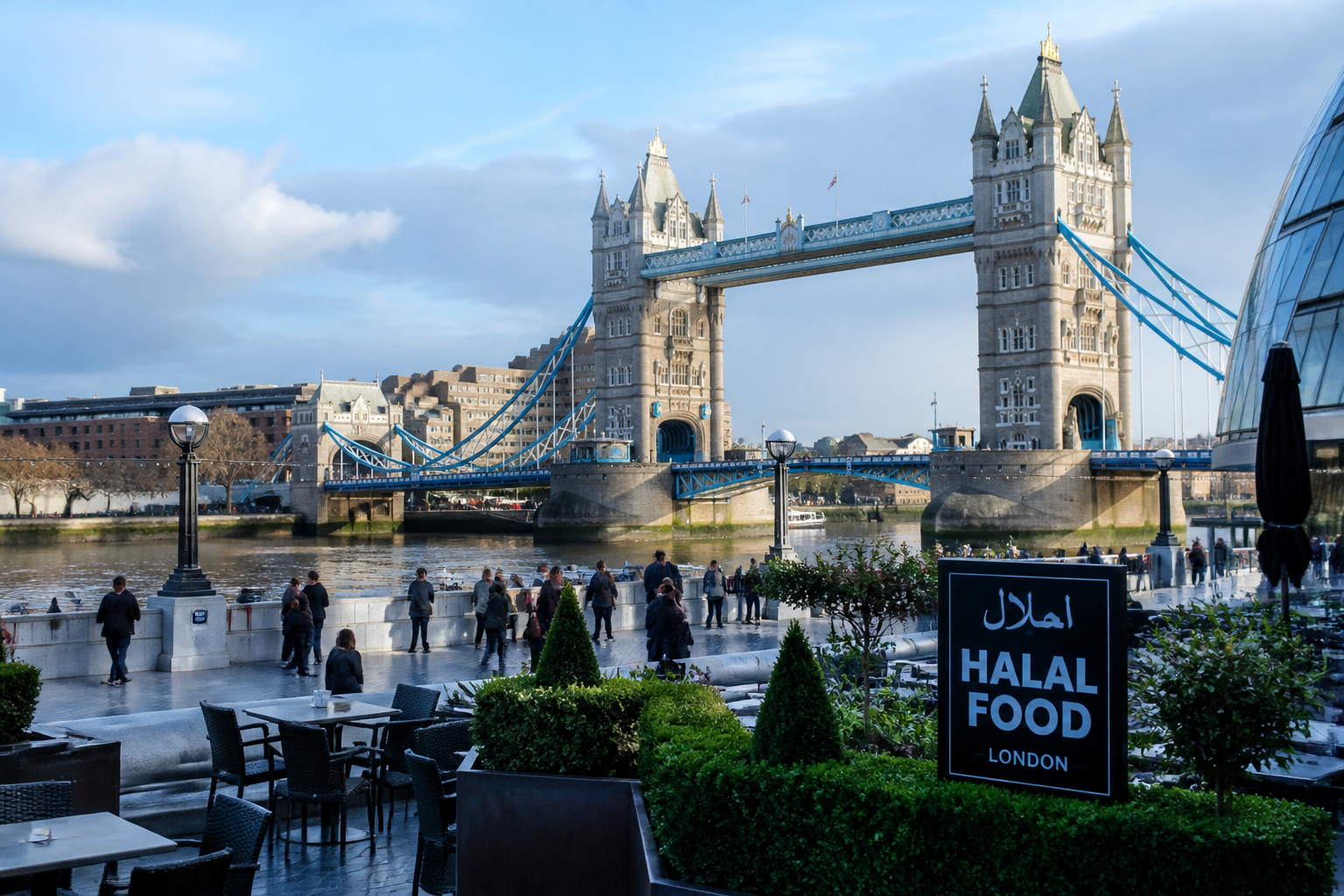
# London for Muslim Travelers: Halal Food, Prayer-Friendly Stops, and Honest Budget Tips
## The Vibe & When to Go
London is a city of contrasts: old brick pubs beside bright South Asian cafés, quiet leafy squares a few minutes from noisy Underground platforms, and grand museums sharing streets with tiny halal bakeries. For Muslim travelers, the city is especially easy to settle into once you know where to look. Halal food is widely available, prayer spaces are becoming easier to find, and many hotels and attractions are used to welcoming guests with different needs.
At this time of year, London is in its brighter spring-to-summer mood. Days are long, parks are lively, and temperatures are usually comfortable enough for walking, though a light rain jacket still belongs in your bag. The weather can change within an hour, so I never leave the hotel without an umbrella or waterproof layer.
What makes London interesting for halal tourism is not simply the number of halal restaurants. It is the growing focus on clear information and traveler trust. I appreciate restaurants that display reliable halal details, hotels that explain prayer facilities properly, and attractions that clearly identify quiet rooms or nearby mosques rather than making vague promises.
## Must-See Spots: My Top Picks
### 1. Whitechapel and Brick Lane
Whitechapel is one of the best places to begin a Muslim-friendly London visit. The East London Mosque is a major landmark for the local community, and the surrounding streets are packed with halal restaurants, cafés, bookshops, and grocery stores.
I like arriving around lunchtime, praying at the mosque, then wandering toward Brick Lane. The area can feel busy and rough around the edges, but that is part of its character. Look for Bengali sweets, biryani, grilled meats, and small cafés serving strong tea. I usually skip the flashiest restaurant signs and choose the place with a steady stream of local families.
Brick Lane itself is more famous for vintage shops and street art than halal food, but the lanes around Whitechapel are where the better everyday meals are often found. On Sundays, the markets can be crowded, so visit earlier if you want a calmer walk.
### 2. Southall Broadway
Southall feels like a different city from central London. The main street is filled with Punjabi restaurants, sweet shops, sari stores, spice merchants, and bakeries. It is one of my favorite places for an unhurried food afternoon.
Order a thali, share some chaats, and leave room for jalebi or a warm samosa. The portions are generous, and you can eat well without spending much. Southall Broadway is also a good place to buy snacks for the train or hotel room.
The neighborhood is about 25 minutes from central London by the Elizabeth line, depending on where you start. Wear comfortable shoes—the best discoveries are often a few blocks away from the station.
### 3. Regent’s Park and London Central Mosque
When I need a break from traffic and crowds, I head to Regent’s Park. The rose gardens are beautiful in warmer months, and the paths are wide enough for a relaxed walk. London Central Mosque sits on the park’s edge, making this a convenient stop for prayer during a sightseeing day.
Afterward, you can walk toward Baker Street or Marylebone for coffee and a quieter look at central London. This is also a useful area for families because the park gives children room to run around, while nearby museums and shops keep adults entertained.
Go in the morning if you want peaceful paths. By afternoon, especially on sunny weekends, the park becomes much busier.
### 4. South Bank, Westminster, and the City Center
For first-time visitors, I would still make time for the classic London sights: Westminster Abbey from the outside, Big Ben, the River Thames, St. Paul’s Cathedral, and the South Bank walk. These areas are not specifically halal districts, but they are easy to combine with Muslim-friendly stops.
The British Museum, National Gallery, and Victoria and Albert Museum generally have quiet areas or facilities where visitors can ask about prayer arrangements. Policies can change, so check with staff when you arrive rather than assuming.
For lunch, search ahead for a halal restaurant near your route. Central London has everything from halal burgers and Turkish grills to Indian food, but prices rise quickly near major attractions. I often eat a proper meal in Whitechapel or Edgware Road, then spend the afternoon sightseeing in the center.
## Practical Travel Advice
### Getting There and Visa
Most international visitors arrive through Heathrow, Gatwick, Stansted, Luton, or London City Airport.
– **Heathrow:** Usually the easiest for central London. The Elizabeth line is comfortable and reasonably priced; the Piccadilly line is cheaper but slower.
– **Gatwick:** The Gatwick Express is quick, but regular trains can cost less if you compare fares.
– **Stansted and Luton:** Coach services are often the cheapest option, though traffic can make the journey unpredictable.
– **London City Airport:** Convenient for central and east London, especially if you are staying near Canary Wharf or the City.
Visa rules depend on your passport. Travelers from many visa-exempt countries now need a **UK Electronic Travel Authorisation (ETA)** before flying, while travelers from countries that require a visa must apply for a UK Standard Visitor visa in advance. Irish citizens generally have different arrangements. Check the official UK government website before booking because requirements and fees can change.
Keep your passport, accommodation details, return plans, and proof of funds accessible. Border officers may ask simple questions about your visit.
### Where to Stay
– **Whitechapel or Aldgate:** Best for halal food, the East London Mosque, and easy access to central attractions. It can be lively and urban, especially at night.
– **Edgware Road or Marble Arch:** Convenient for Middle Eastern and South Asian restaurants, shopping, and central London sightseeing. Hotels here can be expensive.
– **Southall:** A strong choice for travelers who want plentiful halal food and good value, though it is farther from the main tourist sights.
– **Bayswater or Paddington:** Good for families and first-time visitors who want a central base with Underground and rail connections.
– **Stratford:** Modern hotels, shopping, and strong transport links. It is practical rather than charming, but often better value than the West End.
Before booking, ask the hotel specific questions: Is there a prayer room? Can they provide a room with a small fridge? Is breakfast halal, vegetarian, or simply pork-free? Clear questions usually get better answers than relying on a vague “Muslim-friendly” label.
### Getting Around
London is easiest with a contactless bank card or an Oyster card. Use the same card each day so the transport system can apply daily fare caps. Contactless cards from overseas may add currency-conversion fees, so check with your bank.
The Underground is fast but not always comfortable with luggage or a stroller. Buses give you a better view of the city, and walking is often quicker than expected in central areas. I frequently walk between Westminster, Covent Garden, the South Bank, and St Paul’s.
Uber and Bolt are useful late at night or when traveling with children, but traffic can be slow. Black cabs are reliable and accessible, though usually more expensive. For airport trips, compare the price of a ride-hailing car with the train before booking.
## Real Costs and Local Tips
London can be expensive, but halal eating does not have to be. These are realistic daily estimates per person, excluding flights:
### Budget: £70–£110 per day
– Hostel or basic room share: £30–£55
– Simple halal meals and snacks: £20–£30
– Public transport: £8–£15
– Free museums, parks, and walking routes: little or no admission cost
### Mid-range: £150–£250 per day
– Comfortable hotel room: £100–£170 when shared
– Restaurant meals and coffee: £35–£60
– Public transport and occasional ride-hailing: £15–£25
– One paid attraction: usually £20–£35
The local currency is the **British pound (£)**. Card payments are accepted almost everywhere, including small cafés, but keeping a little cash is useful for markets and small purchases.
Tipping is not compulsory, but 10–12.5% is normal in restaurants when service is not already included. You do not need to tip at fast-food counters or cafés for an ordinary takeaway. In taxis, rounding up is perfectly acceptable.
### A Few Tricks That Saved Me Money
– **Eat away from the big landmarks.** A meal near Westminster or Leicester Square can cost much more than the same quality food in Whitechapel, Southall, or Edgware Road.
– **Check halal details directly.** Ask whether every meat dish is halal or only selected items. Some restaurants use suppliers with different certifications, so a quick question avoids confusion.
– **Use supermarket meal deals.** Marks & Spencer, Tesco, Sainsbury’s, and Boots often have inexpensive lunch combinations. Vegetarian options are easy to find, and some branches carry halal sandwiches.
– **Book popular attractions early.** The Tower of London, London Eye, and West End shows can become costly at the last minute. Many excellent museums, including the British Museum and National Gallery, are free.
– **Carry a small prayer kit.** A foldable mat and a clean scarf make travel easier when a quiet prayer space is available but not fully equipped.
– **Avoid airport exchange desks.** Use a card with low foreign transaction fees or withdraw a small amount from a reputable bank-linked ATM.
London does not make every part of halal travel effortless, but it gives you plenty of choices. The best experience comes from checking details before you go, choosing neighborhoods that match your priorities, and leaving room in the day for the unexpected café, market stall, or quiet park that makes the city feel personal.
KEYWORDS: London skyline