
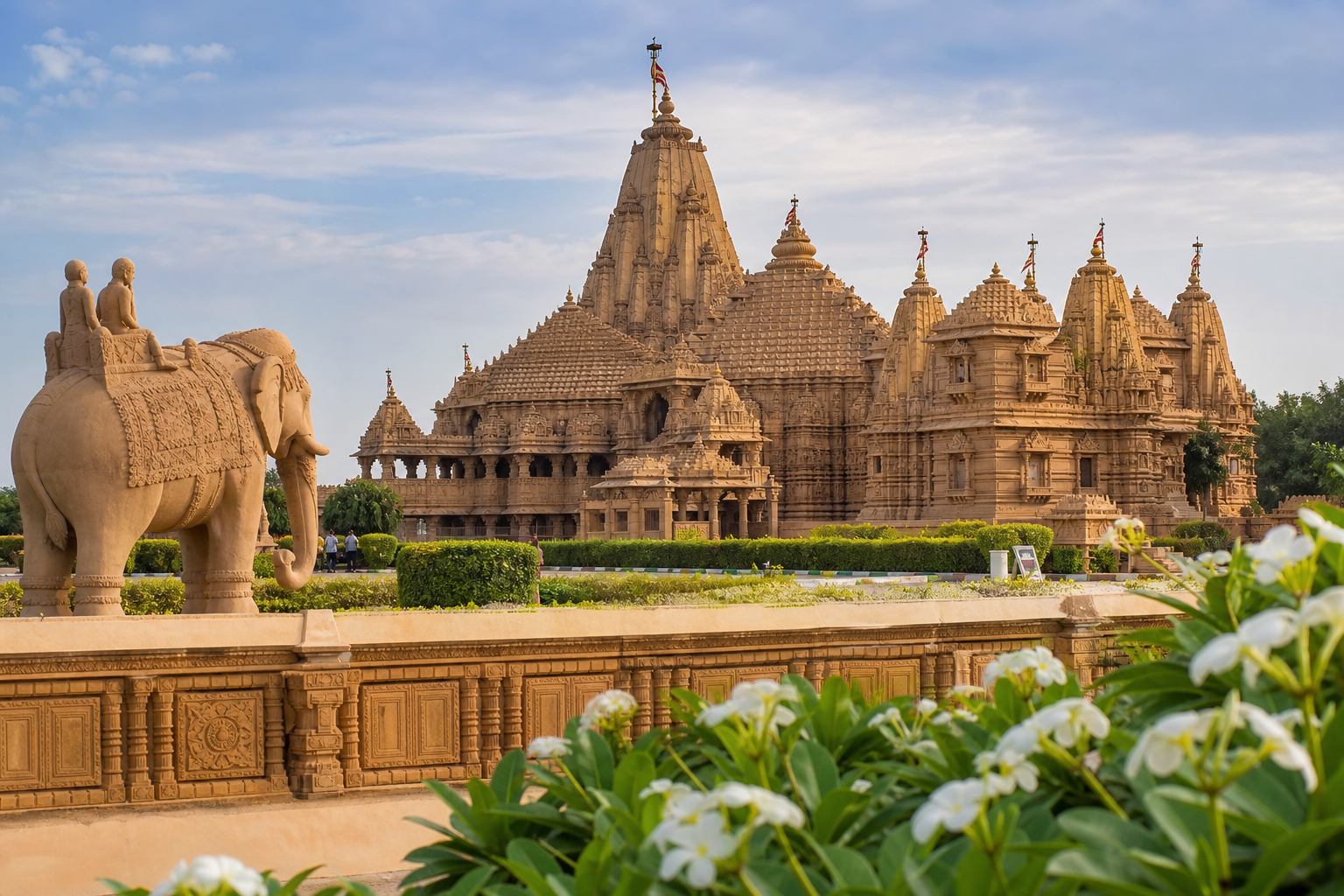
# Gujarat by Air and Road: My Favorite Stops, Honest Costs, and Easy Travel Tips
Gujarat has been quietly getting easier to explore. With a push to strengthen its network of **19 airports and airstrips**, the state is opening up more options for travelers who don’t want to spend every holiday on long highway journeys. Ahmedabad remains the main gateway, but flights to places such as Rajkot, Bhuj, Jamnagar, Surat, Vadodara, Porbandar, and Kandla can make a big difference when you’re planning a route.
I’ve always liked Gujarat for the way its landscapes keep changing. One day you’re eating fafda and jalebi in a busy old city; a few hours later, you’re looking at white salt stretching toward the horizon. There’s history, wildlife, craft villages, temples, coastline, and some wonderfully direct people along the way.
## The Vibe & When to Go
Gujarat feels energetic but not overly polished. Ahmedabad is lively and crowded, while the Kutch region is spacious and quiet. Coastal towns move at a slower pace, and rural Gujarat often feels more personal than the big tourist circuits.
The best time to visit is generally **October to March**, when the weather is more comfortable for sightseeing. The Rann of Kutch is especially appealing during the winter festival season, when craft stalls, folk performances, and temporary tent camps bring the desert to life.
From **March onward**, afternoons become hot, particularly in Ahmedabad, Vadodara, and the inland regions. April and May can be tiring for long sightseeing days, though early mornings are still pleasant. The monsoon, usually from June to September, brings greener scenery but also humidity and occasional travel delays.
Gujarat is worth visiting now partly because better regional air links can help you combine places that once felt too far apart. Still, check schedules carefully—some routes may operate only on selected days, and flight timings can change.
## Must-See Spots: My Top Picks
### 1. Ahmedabad’s Old City and Riverfront
I’d start in Ahmedabad, even if your final plan is focused on Kutch or Gir. The old city is best explored early, before the heat and traffic build up. Walk through the pols—historic residential lanes with carved wooden houses—and look up at the details on doorways and balconies.
The **Sidi Saiyyed Mosque**, **Bhadra Fort**, and the old markets are easy to combine in one morning. I also like visiting **Sabarmati Ashram** when I need a quieter hour. It isn’t a flashy attraction, but the calm atmosphere gives you space to think about the history of the place.
For food, try a traditional Gujarati thali at lunchtime rather than ordering several separate dishes. Start with farsan, leave room for the vegetables and dal, and don’t be surprised when someone keeps offering more rotli. Later, walk along the Sabarmati Riverfront around sunset, though the old city is where I’d spend more time.
### 2. The White Rann and Bhuj
The salt desert near **Dhordo** is Gujarat’s most photographed landscape, and the photos really don’t capture how wide and quiet it feels in person. Go close to sunset, when the salt takes on soft blue and gold tones. On a full-moon night, the ground can look almost silver.
Stay in or around **Bhuj** if you want more flexibility and better control over your budget. The tent city near the Rann is convenient during the festival but can be expensive. Bhuj also gives you access to traditional weaving and embroidery communities, where you can buy directly from artisans.
My advice: don’t rush through Kutch in one day. Visit **Aina Mahal** and **Prag Mahal** in Bhuj, then spend time in villages known for textiles, leatherwork, pottery, or embroidery. Ask your hotel to arrange a local guide who knows the artisan families personally. You’ll usually have a more genuine experience and a clearer idea of where your money is going.
### 3. Gir National Park
Gir is the place to go if seeing an Asiatic lion in the wild is high on your list. Safaris are never guaranteed, of course, but the dry forest, open grassland, and birdlife make the experience worthwhile even when the lions stay hidden.
Book your safari permit well ahead, especially from December to March. The usual safari zones around **Sasan Gir** are easier to reach by road than by air, but improved regional flights to nearby cities such as Rajkot or Diu may help with the longer parts of your journey.
The quieter parts of the day are best for wildlife. I prefer an early morning safari, followed by a slow breakfast and an afternoon spent at the hotel rather than trying to fill every hour. Carry binoculars, water, a hat, and neutral-colored clothing. Bright clothes won’t stop animals appearing, but they make the ride less comfortable.
### 4. Statue of Unity and Vadodara
The **Statue of Unity** is a large-scale attraction with museums, viewing areas, gardens, and several nearby sights. Some travelers love the scale of it; others find the surrounding development a little too managed. I’d still recommend it if you’re interested in modern Indian history or traveling with family.
Use Vadodara as a base if you want a more relaxed cultural stop. The city’s **Laxmi Vilas Palace** is impressive, and the nearby Champaner-Pavagadh area makes a rewarding day trip for history lovers. If you visit the palace, allow enough time rather than treating it as a quick photo stop—the grounds are part of the experience.
## Practical Travel Advice
### Getting There and Visa
For most international travelers, **Ahmedabad’s Sardar Vallabhbhai Patel International Airport** is the easiest entry point. It has the widest selection of domestic connections and is a practical starting place for a Gujarat itinerary.
Regional airports can save time, particularly if you’re connecting Ahmedabad with Bhuj, Rajkot, Surat, Vadodara, Jamnagar, or other cities. Before booking, check:
– Whether the route operates every day
– Baggage limits on smaller aircraft
– The airport’s distance from your hotel or final destination
– Whether a taxi will be available when you land
– Cancellation and rescheduling rules
Foreign visitors generally need a valid passport and an Indian visa. Many nationalities can apply online for an **Indian e-Visa**, but eligibility, passport validity, permitted entry points, and processing times vary. Apply through the official Indian government visa website, not a random agency site charging extra fees. Carry a digital and printed copy of your visa approval.
Indian citizens do not need a visa for domestic travel, but you’ll need a government-issued photo ID for flights.
### Where to Stay
**Ahmedabad:**
Stay in the old city or near Ellis Bridge if you want heritage walks, food, and central access. Navrangpura is a good choice for cafés, restaurants, and a more modern city feel. Airport-area hotels are useful for an early flight but less convenient for sightseeing.
**Bhuj:**
Choose a central guesthouse or small hotel for easy access to markets and local restaurants. If you want a rural craft experience, stay in an organized village homestay or a tent camp outside Bhuj.
**Sasan Gir:**
Most lodges are outside the national park gates. Pick one that clearly explains safari transport, permit assistance, and meal arrangements. The cheapest property isn’t always the best deal if it leaves you arranging every transfer yourself.
**Vadodara:**
Alkapuri is convenient for restaurants, shopping, and transport. Old-city areas are better for atmosphere, while the central hotel district is easier for first-time visitors.
**Diu:**
Stay near Nagoa Beach for a relaxed seaside break, or closer to Diu town if you prefer Portuguese-era streets and easier access to historical sites.
### Getting Around
Flights are useful for covering long distances, but Gujarat is still a road-trip destination. A private car with a driver is the most comfortable choice for Kutch, Gir, and multi-city routes. Ask for the total daily price, fuel policy, tolls, driver accommodation, and waiting charges before agreeing.
In Ahmedabad, Vadodara, Surat, and Rajkot, you can use **Uber, Ola, or Rapido**, depending on local availability. Auto-rickshaws are common, but drivers may quote a higher price to visitors. Ask your hotel for a rough fare before you leave, and confirm whether the meter will be used.
City buses and Ahmedabad’s **BRTS** can be useful, although they may feel crowded and less convenient with luggage. Trains are good for some longer routes, but don’t assume every city-to-city journey will be faster than a car once local transfers are included.
For short distances, walking works well in selected old-city areas, especially in the morning. Gujarat’s heat and traffic make long walks less pleasant later in the day.
## Real Costs and Local Tips
### Daily Budget
Approximate costs per person, excluding international flights:
**Budget travel: ₹1,800–₹3,500 per day**
– Basic guesthouse or hostel: ₹700–₹1,500
– Local meals and snacks: ₹400–₹800
– Buses, autos, and shared rides: ₹300–₹700
– Simple sightseeing and entry fees: ₹200–₹500
**Mid-range travel: ₹5,000–₹9,000 per day**
– Comfortable hotel: ₹2,500–₹5,000
– Restaurant meals: ₹1,000–₹2,000
– Private sightseeing transfers or shared tours: ₹1,000–₹2,500
– Attractions and guides: ₹500–₹1,000
Safari permits, private cars, luxury tent camps, and domestic flights can raise the budget quickly. A Gir safari and a Rann camp stay should be priced separately when planning your trip.
Gujarat uses the **Indian rupee (₹/INR)**. Digital payments are widely accepted in cities, but I always carry small notes for tea stalls, village purchases, parking, and auto-rickshaws. Tipping isn’t compulsory, but rounding up or leaving around 5–10% in a sit-down restaurant is appreciated when service is good. For drivers and local guides, a small daily tip is a friendly gesture rather than a fixed rule.
### A Few Tips That Saved Me Money
– **Book regional flights early, but don’t build a tight itinerary around them.** One delayed or rescheduled flight can disrupt a whole route, so leave a little breathing room.
– **Eat where office workers and families eat.** Busy Gujarati restaurants usually offer fresher food and better prices than restaurants aimed only at tourists.
– **Compare Rann packages carefully.** Check whether meals, transfers, cultural performances, taxes, and entry fees are included before judging the price.
– **Buy crafts directly, but don’t bargain aggressively.** Ask about the material, the maker, and the time involved. A small discount is fine; pushing the price down too far defeats the reason to buy handmade work.
– **Carry water and sun protection.** Even in the pleasant season, the glare around the salt desert can be intense.
– **Use a local guide for rural visits.** They can arrange introductions properly, translate when needed, and help prevent awkward or intrusive encounters.
– **Keep a little cash outside the main cities.** Card machines and mobile payment connections can be unreliable in remote areas.
Gujarat’s expanding airport network makes the state more accessible, but the best parts still reward patience. Take the short flight when it genuinely saves a day, then slow down once you arrive. Spend time over breakfast, stop at the roadside tea stall, and leave room for the unexpected detour—that’s often where Gujarat feels most memorable.
KEYWORDS: Gujarat travel; Rann of Kutch