
# Las Vegas Beyond the Casino: My Favorite Spots, Local Eats, and Honest Budget Tips
## The Vibe & When to Go
Las Vegas is loud, bright, and a little strange—in the best possible way. You can spend an afternoon watching fountains outside a casino, eat excellent food at midnight, then drive ten minutes into the desert and hear almost nothing at all.
With President Trump leaning on casinos to help grow tourism, Las Vegas is once again at the center of the conversation about America’s casino-driven travel economy. But the city is much more enjoyable when you treat gambling as just one part of the trip. Great restaurants, live shows, pool days, sports, art, and nearby desert landscapes give you plenty to do even if you never touch a slot machine.
**The best months are March to May and October to November.** Days are warm, evenings are comfortable, and walking the Strip is far easier than it is during the blazing summer. June through September can be brutally hot, with daytime temperatures often above 100°F (38°C). Winter is mild, though nights can feel surprisingly cold.
I like visiting in spring or fall, especially during the week. Hotel rates drop, restaurants are easier to book, and the sidewalks feel less packed.
## Must-See Spots: My Top Picks
### 1. The Strip—but Take Your Time
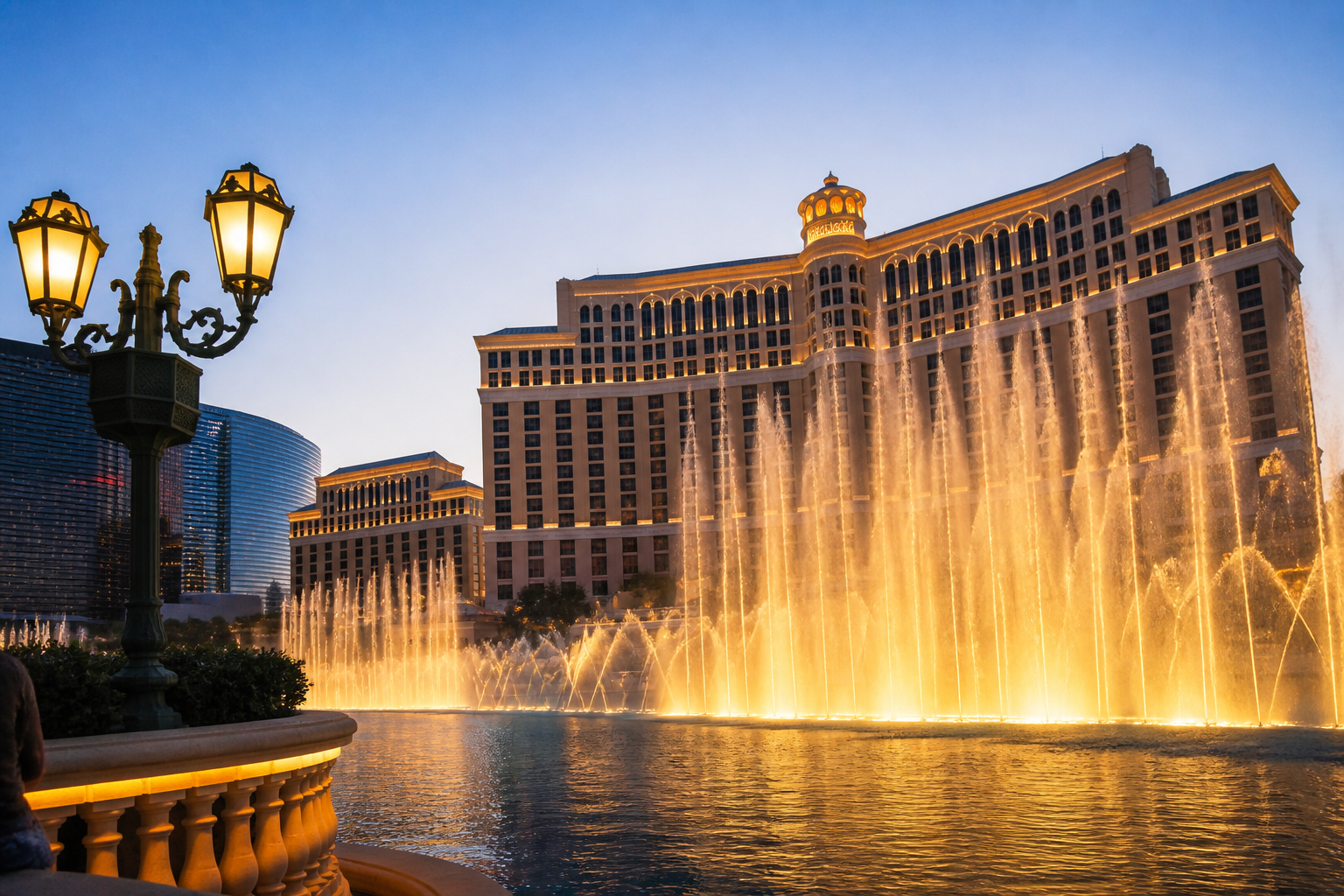
The Strip is touristy, of course, but seeing it once on foot is still part of the Las Vegas experience. I usually start near the Bellagio and walk south, stopping at the conservatory, the fountains, and the indoor canals at The Venetian.
My advice: don’t try to walk the whole Strip in one go. Distances look short on a map, but giant casino resorts make every crossing and entrance take longer than expected. Pick two or three resorts, enjoy the interiors, and use the monorail or a rideshare for the rest.
For a calmer view, visit the Bellagio fountains after dinner on a weekday. The crowds are still there, but the atmosphere is less frantic than on a Saturday night.
### 2. Fremont Street Experience
Downtown Las Vegas feels older, rougher, and more local than the Strip. Fremont Street has the famous overhead light show, street performers, cheap drinks, and plenty of people-watching.
I prefer going before the late-night party crowd arrives. Walk through the nearby casinos, then wander a few blocks to the **Arts District**, where you’ll find vintage shops, murals, small galleries, and relaxed bars. The downtown area is a better choice for travelers who want a bit more character and fewer polished resort corridors.
Keep your wallet and phone secure in busy areas, particularly late at night. Most of downtown is lively, but it isn’t uniformly quiet or family-friendly after dark.
### 3. Red Rock Canyon
Red Rock Canyon is where Las Vegas suddenly feels like a different trip. The red cliffs, open desert, and wide skies are about a 30-minute drive from the Strip, depending on traffic.
The scenic loop is beautiful even if you’re not a serious hiker. For a short walk, try the **Lost Creek–Children’s Discovery Trail**. If you want something more demanding, check trail conditions before attempting longer routes such as Calico Tanks.
You need a timed entry reservation during busy periods, and summer hiking can be dangerous. Go early, carry more water than you think you need, and don’t rely on your phone for shade, supplies, or directions.
### 4. The Neon Museum
The Neon Museum is one of my favorite places in the city because it tells Las Vegas history through its old signs rather than through glossy casino displays. The retired signs are colorful, slightly faded, and full of stories about hotels that disappeared decades ago.
Book a guided evening tour if you can. The signs look especially good after sunset, and the guide adds context that makes the collection feel more personal. It’s also a good stop when you need a break from gambling, shopping, and oversized resort lobbies.
## Practical Travel Advice
### Getting There and Visa Requirements
Harry Reid International Airport is the main airport for Las Vegas. It’s close to the Strip, usually around 15 to 25 minutes by car, though traffic can stretch that much longer.
From the airport, you can use:
– **Rideshare:** Uber and Lyft pickups are in designated airport areas.
– **Taxi:** Usually simple and convenient, with set airport fees added to the fare.
– **Hotel shuttle:** Available for some properties, but not all.
– **Public bus:** The cheapest option, though slower with luggage.
For entry, U.S. citizens need a valid passport when returning from international travel. Visitors from countries in the **Visa Waiver Program** generally need an approved ESTA before flying to the United States. Other travelers must apply for a U.S. visitor visa. Passport validity rules can vary by nationality, so check the U.S. State Department and your nearest U.S. embassy before booking.
Flight prices often rise around major conventions, sports events, holiday weekends, and big concerts. Tuesday and Wednesday arrivals are often cheaper, and booking a hotel-and-flight package can help—but always compare the final price after resort fees.
### Where to Stay
**The Strip:** Best for first-time visitors, shows, casinos, pools, and easy access to major attractions. Choose a central resort near Bellagio or Paris if you want to reduce walking time.
**Downtown/Fremont East:** Better for lower prices, live music, and a more energetic local feel. Rooms can be smaller and the street noise is stronger.
**Arts District:** A good fit for food, bars, coffee shops, and a less corporate atmosphere. You’ll probably use rideshares to reach the Strip.
**Summerlin:** Quieter and closer to Red Rock Canyon. It suits travelers with a rental car, families, golfers, or anyone who wants a slower base.
Always check the total hotel price. A room advertised at $50 may become $100 or more after resort fees, taxes, parking, and deposits.
### Getting Around
The Strip is walkable in sections, but it is not a compact neighborhood. Casino entrances can be far apart, and pedestrian bridges don’t always place you where you expect.
– Use the **Las Vegas Monorail** for parts of the east side of the Strip.
– The **Deuce bus** runs along Las Vegas Boulevard and is useful for budget travel, though it can be slow.
– Uber and Lyft are practical, especially in extreme heat.
– Taxis are easy to find at major resorts and sometimes move faster from hotel queues.
– Rent a car only if you plan to visit Red Rock Canyon, Hoover Dam, Valley of Fire, or other places outside the city.
I avoid renting a car just for the Strip. Parking fees and traffic usually cancel out the convenience.
## Real Costs and Local Tips
Las Vegas can be cheap, wildly expensive, or somewhere in between. Your gambling budget is separate from your travel budget, and I recommend treating it that way.
### Typical Daily Budgets
**Budget traveler: $90–$150 per person**
– Shared or basic hotel room: $45–$90
– Meals from food courts, casual restaurants, or supermarkets: $25–$45
– Public transportation: $5–$15
– Free attractions and low-cost entertainment
**Mid-range traveler: $200–$350 per person**
– Comfortable hotel: $120–$220
– Casual meals plus one nicer dinner: $60–$100
– Rideshares and occasional attractions: $25–$60
– A show, museum, or other paid activity
Prices jump during conventions, festival weekends, major boxing matches, and Formula 1 events. Check the city calendar before choosing your dates.
The currency is the **U.S. dollar**. Credit and debit cards are accepted almost everywhere, though small cash bills are useful for tips and quick purchases.
A standard tipping guide:
– Restaurants: **18–22%** for good service
– Bartenders: **$1–$2 per drink**
– Hotel housekeeping: **$3–$5 per night**
– Bell staff: **$2–$5 per bag**
– Rideshare drivers: Around **15–20%** if the service was good
### A Few Ways to Save Money
– **Don’t assume casino drinks are free.** Complimentary drinks are generally connected to gambling, and cocktail service can be slow. Set a gambling limit before you sit down.
– **Buy snacks and water away from the resort shops.** A convenience store or supermarket can save you a surprising amount.
– **Compare resort fees before booking.** The cheapest room rate is not always the cheapest final bill.
– **Book shows directly through the venue.** Resale sites may add large fees. Same-day ticket booths can offer discounts, but popular performances may sell out.
– **Eat one meal off the Strip.** Chinatown, the Arts District, and local neighborhoods have better-value restaurants than many resort dining rooms.
– **Avoid long outdoor walks in summer.** The heat is not just uncomfortable; it can become dangerous quickly. Use indoor casino walkways, buses, and rideshares when temperatures climb.
Las Vegas is at its best when you let the casinos provide the backdrop rather than the entire story. Spend a little time under the neon, then get out to the desert, eat somewhere locals actually go, and leave room in your schedule for the odd, unexpected corners that make the city memorable.
KEYWORDS: Las Vegas Strip, Red Rock Canyon