
# A Fresh Look at the Gulf: My Favorite Stops, Local Flavors, and Real GCC Travel Tips
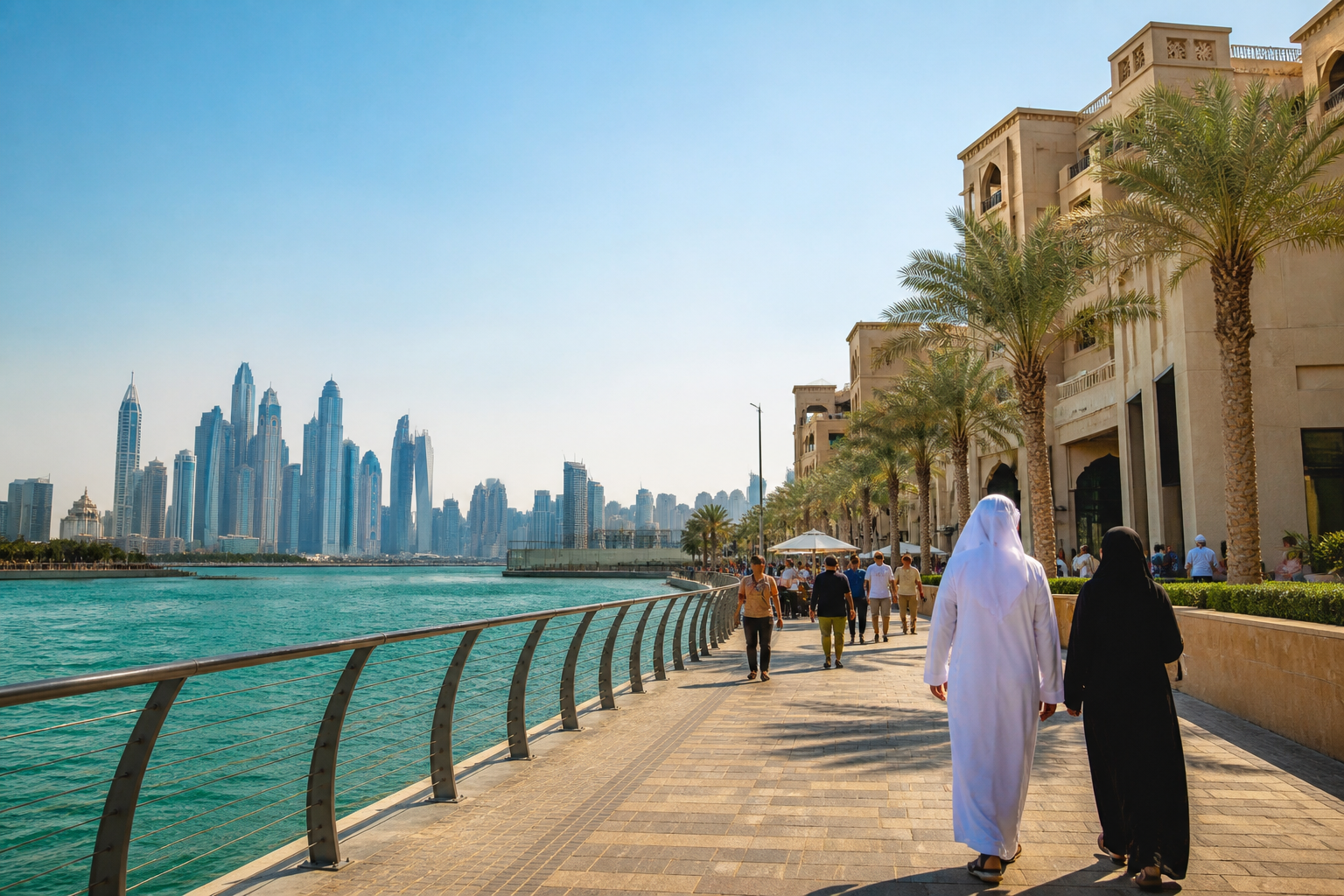
The Gulf is changing quickly. New museums, waterfront districts, cultural festivals, and restored old neighborhoods are appearing alongside the familiar glass towers and luxury hotels. After spending time moving between the UAE, Oman, Saudi Arabia, and Qatar, I found the region much more varied than the usual airport-and-shopping-mall image suggests.
There is plenty of polish, of course, but there are also quiet fishing villages, dusty mountain roads, generous home-style meals, and old markets where locals still shop for everyday things. As tourism confidence grows across the GCC, this feels like a good time to go—especially if you enjoy seeing places while they are still developing their own travel personality.
## The Vibe & When to Go
The Gulf feels modern, orderly, and highly connected, but each country has a different rhythm.
Dubai moves quickly and caters to almost every kind of traveler. Muscat is calmer, with low white buildings, rocky mountains, and a strong sense of place. Riyadh is energetic and ambitious, with restaurants, concerts, galleries, and heritage areas appearing at a remarkable pace. Doha feels spacious and polished, with excellent museums and a slower waterfront atmosphere.
The best months are generally **October through April**, when daytime temperatures are comfortable enough for walking, desert trips, and outdoor cafés. December to February brings the mildest weather, though it is also the busiest period.
From May to September, the heat can be intense. I would still visit in summer if indoor attractions, hotel pools, and evening activities appeal to you, but I would plan sightseeing before 10 a.m. or after sunset. Oman’s mountains and the southern Dhofar region can offer a different climate, while coastal areas are often humid.
## Must-See Spots: My Top Picks
### 1. Dubai Creek and Al Fahidi Historical Neighborhood
Dubai’s famous skyline is impressive, but I usually recommend starting at the Creek instead. Take a short abra boat ride across the water, wander through the textile and spice souks, and spend time around Al Fahidi’s narrow lanes and shaded courtyards.
The area is especially pleasant early in the morning, before the heat builds and tour groups arrive. I like stopping for karak tea and a simple breakfast rather than rushing through with a camera. The nearby museums and small galleries give you a better sense of Dubai before the skyscrapers took over the horizon.
**My tip:** Cross the Creek by abra instead of taking a taxi around it. It costs very little and gives you a lovely view of the old trading district.
### 2. Muscat’s Corniche, Mutrah, and the Mountain Roads
Muscat was the place where I slowed down most. The city has a relaxed, low-rise feel, and the mountains seem to appear around almost every corner.
Start at Mutrah Corniche near sunset, then browse Mutrah Souq for frankincense, woven items, silver jewelry, and small gifts. Some shopkeepers are persistent, so take your time and compare prices before buying. The nearby fish market is most lively early in the day.
For a quieter experience, drive toward the old villages and mountain roads outside the city. The landscape changes quickly from sea to bare rock, and even a short drive can feel like a proper escape.
**My tip:** Rent a car if you want to explore beyond Muscat. Public transport is improving, but Oman’s best viewpoints and villages are spread out.
### 3. Diriyah and Riyadh’s Old-and-New Mix
Riyadh surprised me. The city is busy and spread out, but its older corners give it character. Diriyah, with its restored mud-brick architecture and broad pedestrian areas, is a natural starting point. Go in the late afternoon, when the light softens and restaurants begin filling up.
Back in central Riyadh, the National Museum and Murabba area offer a quieter look at Saudi history. For a completely different evening, head to one of the city’s newer dining or entertainment districts. Riyadh’s restaurant scene is serious, and you can find everything from local Najdi dishes to excellent international food.
**My tip:** Leave extra time for traffic. A short distance on the map can take much longer than expected, particularly around dinner and event hours.
### 4. Doha’s Museums, Souq Waqif, and the Corniche
Doha is easy to enjoy at a slower pace. The Museum of Islamic Art is one of my favorite places in the region—not just for its collection, but for the views across the water toward West Bay. The building and surrounding park are beautiful in the late afternoon.
Later, walk through Souq Waqif for grilled meats, rice dishes, sweets, and cafés serving mint tea. It can feel touristy in places, but the side lanes are still good for people-watching and casual meals. The Corniche is pleasant after dark, especially when the city lights come on.
**My tip:** Visit the souq twice if you can—once in the morning for a quieter look and again at night when the restaurants and cafés are busiest.
## Practical Travel Advice
### Getting There and Visa Requirements
Major Gulf cities are well connected by airlines such as Emirates, Qatar Airways, Etihad, flydubai, Air Arabia, Saudia, Oman Air, and Gulf Air. Dubai, Doha, Abu Dhabi, Riyadh, and Muscat are useful entry points for a multi-country trip.
Visa rules depend heavily on your passport:
– **United Arab Emirates:** Many nationalities receive visa-free entry or a visa on arrival. Others need to arrange a tourist visa in advance.
– **Saudi Arabia:** Eligible travelers can usually apply for an eVisa, while some nationalities may need to use an embassy or an approved travel provider.
– **Qatar:** Many visitors receive visa-free entry or visa on arrival, but conditions vary.
– **Oman:** Tourist eVisas are available for many nationalities, with some travelers eligible for other entry arrangements.
– **Bahrain:** eVisas and visas on arrival are available to many travelers.
– **Kuwait:** Visa rules can be more restrictive and should be checked before booking.
Always use the official immigration or tourism website for the country you plan to visit. Passport validity, return tickets, hotel bookings, insurance, and proof of funds may be requested. Requirements can change without much warning.
For flights, I often save money by flying into one Gulf hub and out of another—for example, arriving in Dubai and leaving from Doha. Check whether a low-cost fare includes baggage, seat selection, and meals before comparing prices.
### Where to Stay
Each city has neighborhoods that suit different travel styles:
– **Dubai:** Stay in Deira or Bur Dubai for older streets and better value; Downtown or Marina for convenience and modern attractions.
– **Abu Dhabi:** Choose the Corniche for walkability and waterfront views, or Yas Island for theme parks and family entertainment.
– **Muscat:** Mutrah is good for atmosphere, while Al Khuwair and Qurum offer more restaurants and practical hotel choices.
– **Riyadh:** Olaya is central and convenient; Diplomatic Quarter is greener and quieter; Diriyah is best for heritage-focused stays.
– **Doha:** Souq Waqif is lively and central, West Bay is modern, and Msheireb is a stylish middle ground with cafés and easy access to attractions.
– **Manama:** Adliya is popular for restaurants, while the Diplomatic Area is convenient for business hotels.
Hotels can become expensive during major events, school holidays, and winter weekends. I check prices for weekdays first, then compare them with serviced apartments if I am staying more than three nights.
### Getting Around
The Gulf is not uniformly walkable. Downtown districts and souqs are enjoyable on foot, but the distances between attractions can be large.
– **Dubai:** The Metro is excellent for major areas, and taxis are easy to find. Use an NOL card for public transport.
– **Doha:** The Metro is clean, affordable, and useful around central attractions. Karwa taxis and ride-hailing apps fill the gaps.
– **Riyadh:** Taxis and ride-hailing services are the easiest choices. Walking is limited outside compact districts.
– **Muscat:** A rental car is the most practical option beyond the central neighborhoods. Otaxi is useful for local rides.
– **Bahrain and Kuwait:** Ride-hailing and taxis are generally more convenient than relying on public transport.
Careem and Uber operate in several GCC cities, while local services can be useful in places where coverage is patchier. Download the apps before leaving the airport and keep your hotel address saved in both English and Arabic.
## Real Costs and Local Tips
The Gulf is not usually a budget-backpacker destination, but you can travel comfortably without staying in luxury hotels.
### Typical Daily Budgets
These estimates are per person and exclude international flights:
**Budget travel: around $55–90 per day**
– Basic hotel room or shared accommodation
– Local restaurants and bakeries
– Public transport or occasional ride-hailing
– Free museums, markets, waterfronts, and walking areas
**Mid-range travel: around $130–220 per day**
– Comfortable three- or four-star hotel
– A mix of local restaurants and nicer meals
– Regular taxis or rental-car costs shared with another traveler
– Paid museums, guided trips, or a desert excursion
Dubai, Doha, and Riyadh can be more expensive than Muscat, especially for hotels and nightlife. Local eateries, cafeterias, and food courts can keep meal costs reasonable. A filling shawarma, rice dish, or grilled chicken meal may cost around **$4–10**, while a dinner in a popular restaurant can easily reach **$25–60 per person**.
Currencies vary by country:
– UAE: **UAE dirham**
– Saudi Arabia: **Saudi riyal**
– Qatar: **Qatari riyal**
– Oman: **Omani rial**
– Bahrain: **Bahraini dinar**
– Kuwait: **Kuwaiti dinar**
Cards are widely accepted, but I still carry a small amount of local cash for small cafés, markets, taxis, and tips. A service charge may appear on restaurant bills. Tipping is not always required, but rounding up or leaving around **5–10%** for good service is appreciated. Hotel porters and drivers usually welcome a small tip as well.
### A Few Things That Saved Me Money
– **Eat where office workers eat.** Local cafeterias and neighborhood restaurants are usually tastier and cheaper than hotel dining rooms.
– **Book desert trips carefully.** Compare what is included—transport, meals, dune driving, and entrance fees can vary widely.
– **Avoid peak event weekends.** Concerts, races, trade shows, and major festivals can send hotel prices sharply higher.
– **Dress comfortably but respectfully.** Light, loose clothing works well, and carrying a scarf or overshirt is useful for religious sites and conservative areas.
– **Check taxi fares before getting in.** In cities with metered taxis, make sure the meter is running. For app rides, compare the fare with a regular taxi when possible.
– **Plan outdoor activities around the heat.** A free walk at 7 a.m. can be far more enjoyable than the same walk at midday.
– **Ask before photographing people.** Especially in markets, villages, and family areas, a quick request is polite and usually appreciated.
The GCC is preparing for a stronger tourism chapter, but the appeal is already there: excellent airports, warm hospitality, dramatic landscapes, thoughtful museums, and cities that are still finding their voice. I would not try to see everything in one rushed trip. Pick two or three places, leave room for long meals and unexpected detours, and let the contrast between old neighborhoods and new cityscapes do the storytelling.
KEYWORDS: Gulf skyline, desert road