
# Taiwan Beyond Taipei: Favorite Streets, Night Markets, and Practical Tips for North American Travelers
Taiwan has been on my mind lately, partly because getting there from North America is becoming easier. Airlines such as EVA Air, China Airlines, and STARLUX continue to add or strengthen service from cities including Los Angeles, San Francisco, Seattle, New York, Vancouver, and Toronto. Taiwan’s tourism agencies are also building more partnerships with North American travel companies and working to bring in more visitors beyond the usual Taipei stopover.
That makes this a good time to go—but the best reason is still the experience itself. Taiwan is wonderfully easy to travel through, friendly without being pushy, and full of small surprises: a hot-spring town behind a city neighborhood, a breakfast shop serving scallion pancakes at 7 a.m., or a mountain road that suddenly opens onto the sea.
## The Vibe & When to Go
Taiwan feels energetic but not frantic. Taipei has the buzz of a major Asian capital, yet five minutes on the metro can take you from office towers to a quiet temple, riverside path, or traditional market. Outside the capital, the pace slows down quickly. In Tainan, meals stretch into long walks through old lanes. On the east coast, mountains and ocean seem to take over the entire view.
Spring, from March through May, is one of my favorite times to visit. Days are generally warm, with temperatures often around 20–28°C, although northern Taiwan can be gray and rainy. Summer is hot, humid, and more likely to bring typhoons. Autumn usually brings comfortable temperatures and clearer skies, while winter is mild in the south but damp and cool in Taipei.
If you dislike crowds and heavy heat, aim for late October through November or March and April. Pack a light rain jacket either way. Taiwan’s weather can change quickly, especially in the mountains.
## Must-See Spots: My Top Picks
### 1. Taipei’s Old Neighborhoods and Night Markets
Taipei 101 is impressive, but I usually remember the smaller moments more: incense drifting out of Longshan Temple, tea shops tucked along Dihua Street, and the sound of scooters moving through the lanes of Da’an and Wanhua.
I like starting in **Dihua Street**, especially in the morning when traditional shops are opening. You’ll find dried fruit, tea, fabric, herbal ingredients, and old buildings with beautifully restored facades. From there, walk toward the riverside or take the metro to **Longshan Temple**.
For dinner, try **Raohe Night Market** for pepper buns, grilled squid, and black pepper pork. **Ningxia Night Market** is smaller and easier to manage if you want to focus on food. Go hungry, but don’t buy the first thing you see. Walk the full length once, then return to the stalls that caught your attention.
### 2. Jiufen and the Northeast Coast
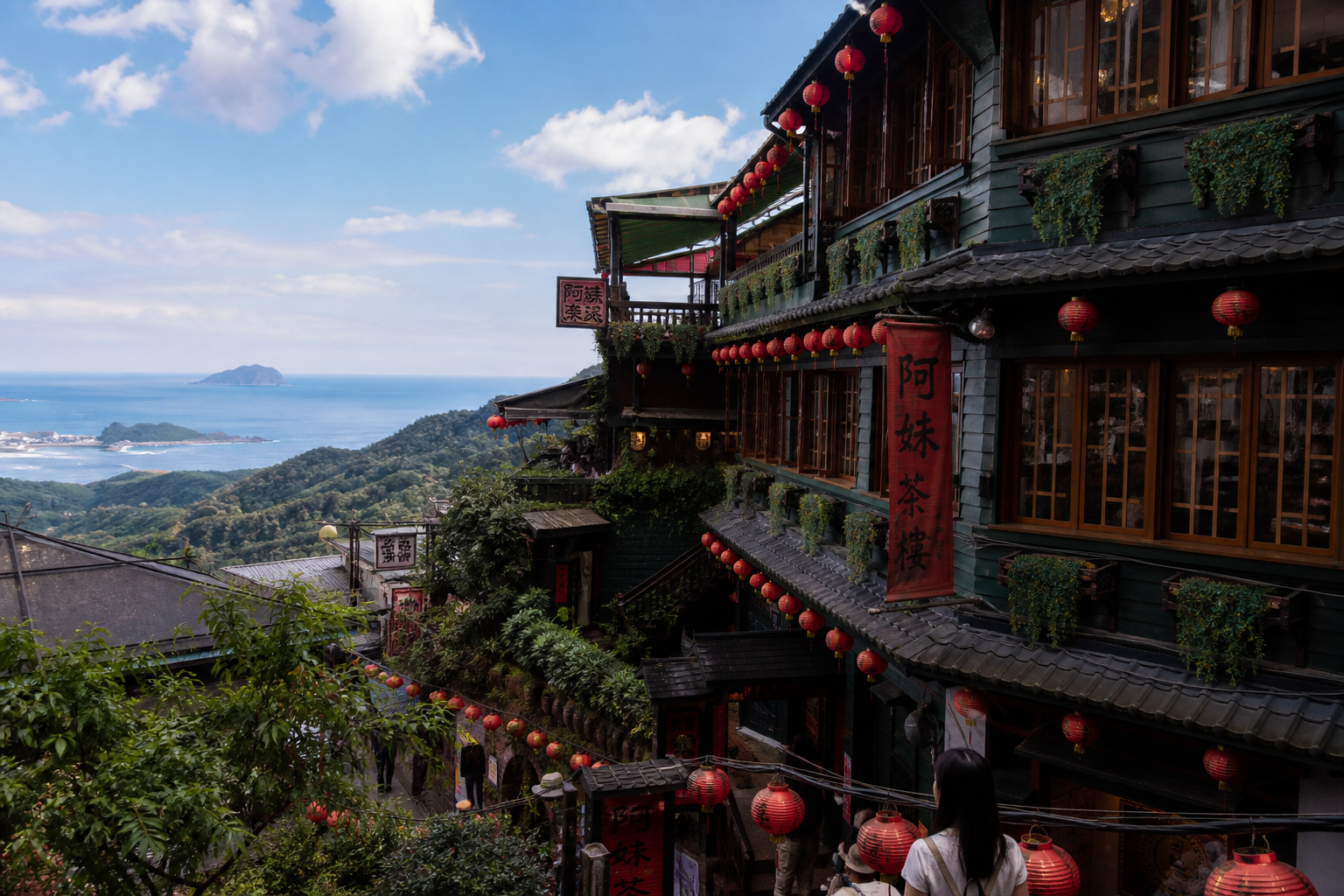
Jiufen is popular for a reason: steep lanes, glowing teahouses, mountain views, and the sea beyond the rooftops. It can also be packed, especially on weekends.
My favorite approach is to arrive before 10 a.m. or later in the afternoon, then stay into the evening after many day-trippers leave. The old street is fun, but I prefer wandering the side alleys, visiting a small teahouse, and walking a little beyond the main tourist area.
Pair Jiufen with **Shifen** or the **Northeast Coast** if you have a full day. The coast has dramatic rock formations and quieter views. Bring shoes with decent grip; Jiufen’s stone steps can be slippery in rain.
### 3. Tainan for Food and History
Tainan is where I send friends who want to understand Taiwan through food. It was the island’s former capital, and its streets are filled with temples, old merchant houses, and tiny restaurants that may serve only one or two dishes.
Try beef soup in the morning, danzai noodles, oyster omelets, and a bowl of shaved ice in the afternoon. **Anping** is a good area for historic sights, while the central neighborhoods are better for wandering and snacking.
Tainan is not as polished or instantly convenient as Taipei. That is part of its charm. Many restaurants open for short hours, and some have no English menu, but pointing at what the next table is eating usually works.
### 4. Taroko and Taiwan’s East Coast
The east coast is one of Taiwan’s great rewards, with forested mountains dropping toward the Pacific. **Taroko Gorge** has traditionally been the headline attraction, but conditions can change after earthquakes, landslides, and typhoons. Check the official park website before planning a visit, since trails and roads may close with little warning.
If Taroko access is limited, look at **Hualien**, the **Qixingtan coast**, or the quieter coastal roads farther south. A train ride down the east coast is beautiful, and even a simple afternoon near the water can feel like a complete change from Taipei.
## Practical Travel Advice
### Getting There and Visa Requirements
Direct flights from North America are becoming more frequent, so compare several departure cities before booking. Sometimes a flight from the West Coast is only modestly more expensive than a connection through another Asian hub, and the shorter journey makes a big difference.
For citizens of the **United States and Canada**, Taiwan generally allows visa-free stays of up to 90 days for tourism, provided you meet the entry requirements. Your passport should be valid for the required period, and you may be asked for an onward or return ticket and proof of accommodation or sufficient funds.
Entry rules can change, so check Taiwan’s official immigration and foreign ministry websites before departure. Many travelers also need to complete Taiwan’s online arrival card shortly before arrival. Don’t rely on an old blog post for this part.
### Where to Stay
– **Taipei Main Station:** Best for first-time visitors, train connections, and easy airport transfers. It is practical rather than charming.
– **Ximending:** Lively, youthful, and convenient for nightlife, shopping, and casual food.
– **Da’an:** A calmer choice with leafy streets, cafés, restaurants, and good metro access.
– **Songshan or Zhongshan:** Great for local markets, independent shops, and a less tourist-heavy feel.
– **Tainan’s Central West District:** The best base for historic lanes, temples, and food.
– **Hualien:** Useful for east-coast trips, though I would check transport and park conditions before booking several nights.
Hotels in Taipei range from simple, spotless business rooms to stylish boutique properties. A modest room near a metro station often gives you more value than a larger room in a famous tourist district.
### Getting Around
Taiwan’s public transportation is one of its biggest pleasures. Taipei’s MRT is clean, fast, and easy to understand. Buy an **EasyCard** at a metro station or convenience store and use it on trains, buses, and many local purchases.
For longer trips, Taiwan’s high-speed rail connects Taipei with Taichung, Chiayi, Tainan, and Kaohsiung. Regular trains are better for the east coast, where the scenery is part of the journey.
In cities, walking and the metro usually beat taxis. **Uber** works in Taipei and some other larger cities, while **LINE Taxi** is useful for local rides. In smaller towns, taxis may be easier than apps, so ask your hotel to help arrange one.
## Real Costs and Local Tips
Taiwan is still good value by North American standards, though Taipei hotels and specialty coffee can add up.
### Typical Daily Budgets
**Budget traveler: NT$1,500–2,500 per day**
– Hostel bed or simple guesthouse: NT$600–1,200
– Breakfast: NT$50–120
– Night-market or local meals: NT$100–250 each
– Metro and buses: NT$100–250
– Free temples, markets, parks, and walking neighborhoods
**Mid-range traveler: NT$3,500–6,000 per day**
– Comfortable hotel: NT$2,000–4,000
– Restaurant meals and cafés: NT$800–1,500
– Transport and occasional taxi: NT$300–700
– One paid attraction or day trip
The currency is the **New Taiwan dollar**, written as NT$ or TWD. Credit cards are common in hotels, department stores, and larger restaurants, but night markets and small eateries often prefer cash. Convenience stores have ATMs, though your bank may charge an international withdrawal fee.
Tipping is not generally expected. Some restaurants add a 10% service charge, and that is usually enough.
### A Few Local Tricks That Saved Me Money
– **Eat breakfast locally.** Soy milk, egg crepes, scallion pancakes, and rice rolls are inexpensive and often better than a hotel buffet.
– **Use convenience stores without embarrassment.** 7-Eleven and FamilyMart sell surprisingly decent meals, fruit, tea, coffee, and travel basics.
– **Avoid weekend day trips when possible.** Jiufen, Shifen, Sun Moon Lake, and popular hot-spring towns are much more pleasant on weekdays.
– **Carry a small amount of cash.** A fancy card-friendly restaurant may be only a few steps from a cash-only noodle stall you’ll remember for years.
– **Book trains early for holidays.** Lunar New Year and long weekends can fill seats quickly, especially on routes between Taipei and the south.
– **Don’t assume every famous food stall is the best one.** If a line looks enormous, walk a block or two and see where local families are eating. Taiwan has excellent food almost everywhere.
Taiwan’s stronger flight links and new North American tourism partnerships may bring more first-time visitors, but the island still rewards travelers who slow down. Leave room for an unplanned temple visit, a mountain train, or one more bowl of noodles than you thought you could manage.
KEYWORDS: Taiwan Taipei