
# Montenegro’s Adriatic Coast: Old Town Wanders, Clear Water, and Honest Summer Tips
## The Vibe & When to Go
Montenegro’s coast has a lovely contradiction: it can feel wonderfully relaxed in the morning, then suddenly very busy by lunchtime when the beach crowds and tour buses arrive. This year’s summer season has been showing strong results, and you can feel that energy in the packed waterfront cafés, busy marinas, and full seaside apartments.
I visited in the warmer part of the season, when the days were bright, dry, and properly hot—usually around 28–34°C along the coast. The sea was warm enough for long swims, while the mountains behind the towns offered a little shade and cooler evening air.
If you enjoy lively beaches, boat trips, and late dinners, July and August are the classic months. Personally, I prefer **late May, June, or September**. The water is still pleasant, prices are softer, and you can walk through the old towns without feeling as though you are part of a moving crowd.
## Must-See Spots: My Top Picks
### 1. Kotor Old Town and the Fortress View
Kotor is the place I return to when I want that “how is this real?” feeling. The old town is compact, atmospheric, and best explored early in the morning, before the cruise passengers arrive.
Give yourself time to wander beyond the main square. Look for quiet stone lanes, tiny bakeries, and courtyards where laundry hangs above your head. If you are reasonably fit, climb toward **San Giovanni Fortress**. It is a steep walk, especially in the heat, so take water and start early. The view over the bay is one of the best in Montenegro.
For a calmer experience, visit after 4 p.m. when much of the daytime rush begins to thin out.
### 2. Perast and a Short Boat Ride
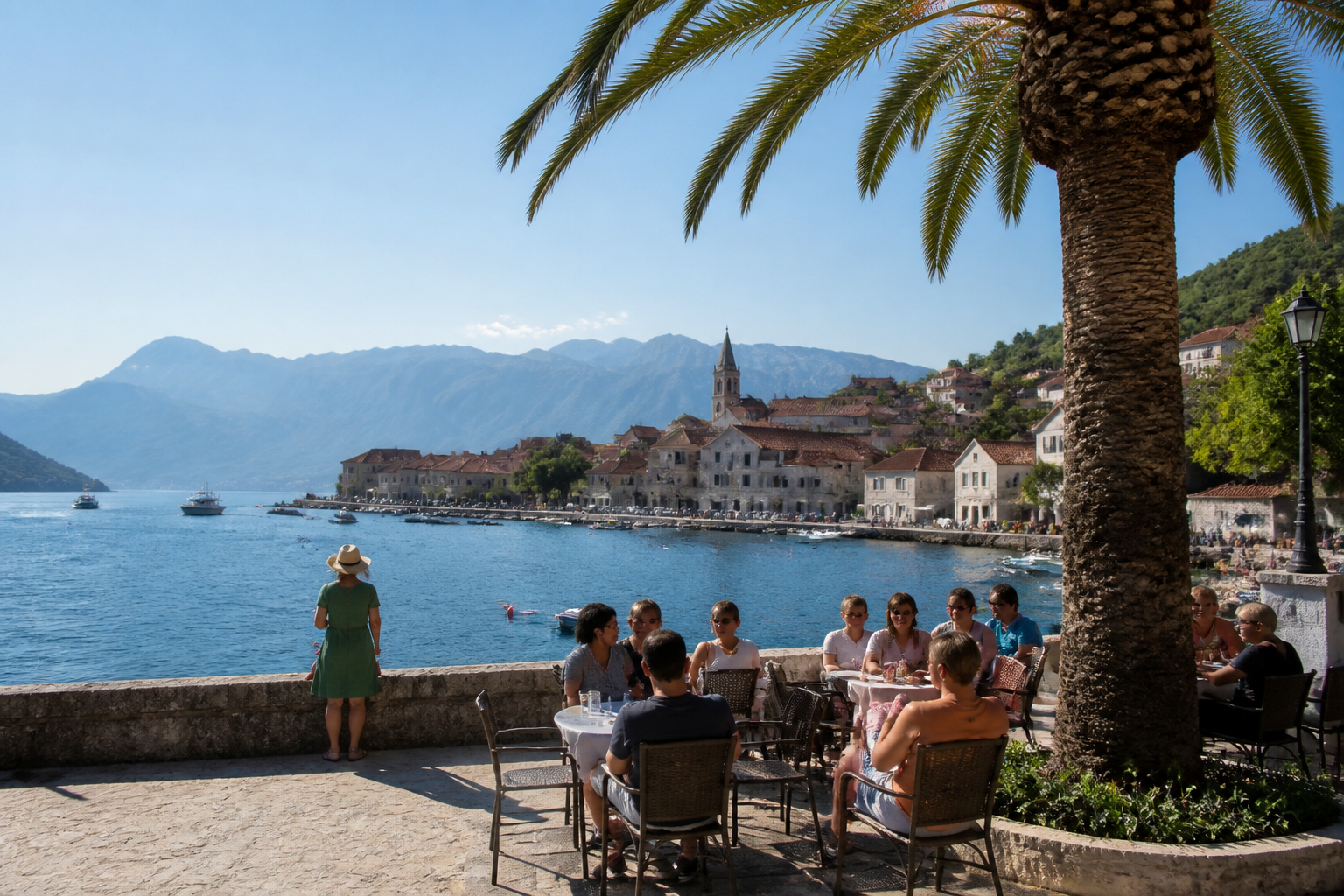
Perast is small enough to see in an hour or two, but I like slowing down there. The waterfront is lined with old stone houses, shady cafés, and beautiful views across the bay.
Small boats regularly take visitors to **Our Lady of the Rocks**, the little island church just offshore. It is a short ride, but go with a jacket or scarf if you are sensitive to wind on the water. I enjoyed sitting by the shore afterward with a cold drink more than rushing through several organized stops.
Try to visit before midday. By afternoon, the narrow waterfront can become crowded with day-trippers.
### 3. Budva’s Old Town and the Beaches Beyond It
Budva is livelier and more polished than Kotor, with plenty of restaurants, beach clubs, shops, and nightlife. Its old town is attractive at sunset, when the warm stone walls begin to glow and the restaurants fill up.
The main beaches can be busy and expensive in summer, so I usually walk a little farther from the center. **Mogren Beach** is close enough to reach on foot, while **Jaz Beach** is better if you want more space and do not mind taking a taxi or local bus.
Budva is a good base if you want a mixture of swimming, evening entertainment, and easy access to other coastal towns. It is not the quietest choice, though.
### 4. Stari Bar and the Olive-Growing Countryside
For something less glossy and more historic, take a trip to **Stari Bar**, above the modern town of Bar. The ruined fortress, old stone lanes, and mountain backdrop give the place a completely different character from the beach resorts.
I liked visiting in the late afternoon, when the heat eased and the light softened over the hills. Afterward, stop in the area for local olives, cheese, or a simple plate of grilled meat. Bar is also known for its old olive trees, and the countryside around it feels far less hurried than the main resort towns.
Wear proper shoes inside the old town—the stones are uneven and can be slippery.
## Practical Travel Advice
### Getting There and Visa
Most visitors arrive through:
– **Tivat Airport**, useful for Kotor, Budva, Perast, and the Bay of Kotor
– **Podgorica Airport**, convenient for Bar, Lake Skadar, and inland Montenegro
– **Dubrovnik Airport in Croatia**, sometimes useful for the coast, though you will cross an international border
Citizens of the European Union, the United Kingdom, the United States, Canada, Australia, and many other countries can generally enter Montenegro visa-free for up to 90 days, but rules depend on your passport. Your passport should usually be valid for at least three months after your planned departure.
Hotels normally register guests with the authorities. If you stay in a private apartment, ask the host about tourist registration, since visitors are expected to be registered soon after arrival. Check the latest rules with Montenegro’s official government or embassy before booking flights.
Flights to Tivat can be limited or expensive during July and August. I often find better fares by checking Podgorica as well and comparing both airports before committing.
### Where to Stay
– **Kotor:** Best for history, scenery, and an atmospheric evening atmosphere. Choose just outside the walls if you want easier parking and lower prices.
– **Budva:** Good for nightlife, beaches, and a busier resort feel.
– **Perast:** Beautiful and peaceful, especially at night, but accommodation is limited and usually pricier.
– **Bar:** A practical base with a more local feel, a railway connection, and generally better-value accommodation.
– **Herceg Novi:** Great for waterfront walks, swimming spots, and a slower pace. Expect plenty of steps.
I would avoid staying directly above a nightclub unless you plan to stay out late yourself. In many coastal towns, music continues well into the night during peak summer.
### Getting Around
The old towns and waterfronts are easy to explore on foot, but the roads between coastal towns can be slow in summer. A journey that looks short on the map may take much longer when traffic builds along the Bay of Kotor.
– **Buses** connect the main towns and are usually the cheapest option.
– **Taxis** are useful for beaches and short trips, but agree on the fare or ask for the meter first.
– **Rental cars** are helpful for Stari Bar, Lake Skadar, Durmitor, and smaller villages. Driving can be stressful on narrow mountain roads, so take your time.
– Montenegro does not have the same widespread rideshare coverage as larger European countries. Local taxi companies and hotel-arranged transfers are often more reliable.
If you rent a car, do not assume every beach has free parking. In July and August, parking charges add up quickly.
## Real Costs and Local Tips
Montenegro uses the **euro**, even though it is not part of the European Union.
### Approximate Daily Budgets
**Budget traveler: €45–70 per person**
– Hostel or simple room: €20–35
– Bakery breakfast or casual lunch: €4–8
– Simple dinner: €10–18
– Local bus and occasional short taxi ride: €5–12
– Free beaches, old towns, and walking tours
**Mid-range traveler: €100–180 per person**
– Comfortable hotel or apartment: €60–110
– Restaurant meals and drinks: €30–55
– Boat trip, museum visits, taxis, or a rental car: €20–50
Prices rise sharply in Budva, Kotor, and Perast during the middle of summer. A coffee may be €2–3 in a busy old town, while a basic meal can cost €12–20. Seafood and waterfront restaurants are often much more expensive than places one or two streets inland.
Tipping is appreciated but not compulsory. I usually leave around **5–10%** for good restaurant service and round up taxi fares or café bills.
### A Few Tips That Saved Me Money
– **Eat one street back from the waterfront.** The food is often better value, and you avoid paying extra for the view.
– **Buy breakfast at a bakery.** Fresh burek, yogurt, fruit, and coffee make an inexpensive start to the day.
– **Carry cash for smaller places.** Cards are common, but beach kiosks, parking areas, and family-run restaurants may still prefer cash.
– **Book accommodation early for July and August.** The best-value apartments disappear quickly, especially around Kotor and Budva.
– **Visit popular sights early or late.** You will avoid both the hottest part of the day and the worst crowds.
– **Ask about beach-chair prices before sitting down.** Some beaches charge separately for umbrellas, loungers, and even parking.
Montenegro’s coast is not a hidden secret anymore, and the strong summer season makes that clear. Still, the busy resorts are only part of the story. Leave room for a quiet bay, a mountain road, a plate of olives in a hillside village, or a late swim after the day-trippers have gone. Those slower moments were the ones I remembered most.
KEYWORDS: Montenegro coast