
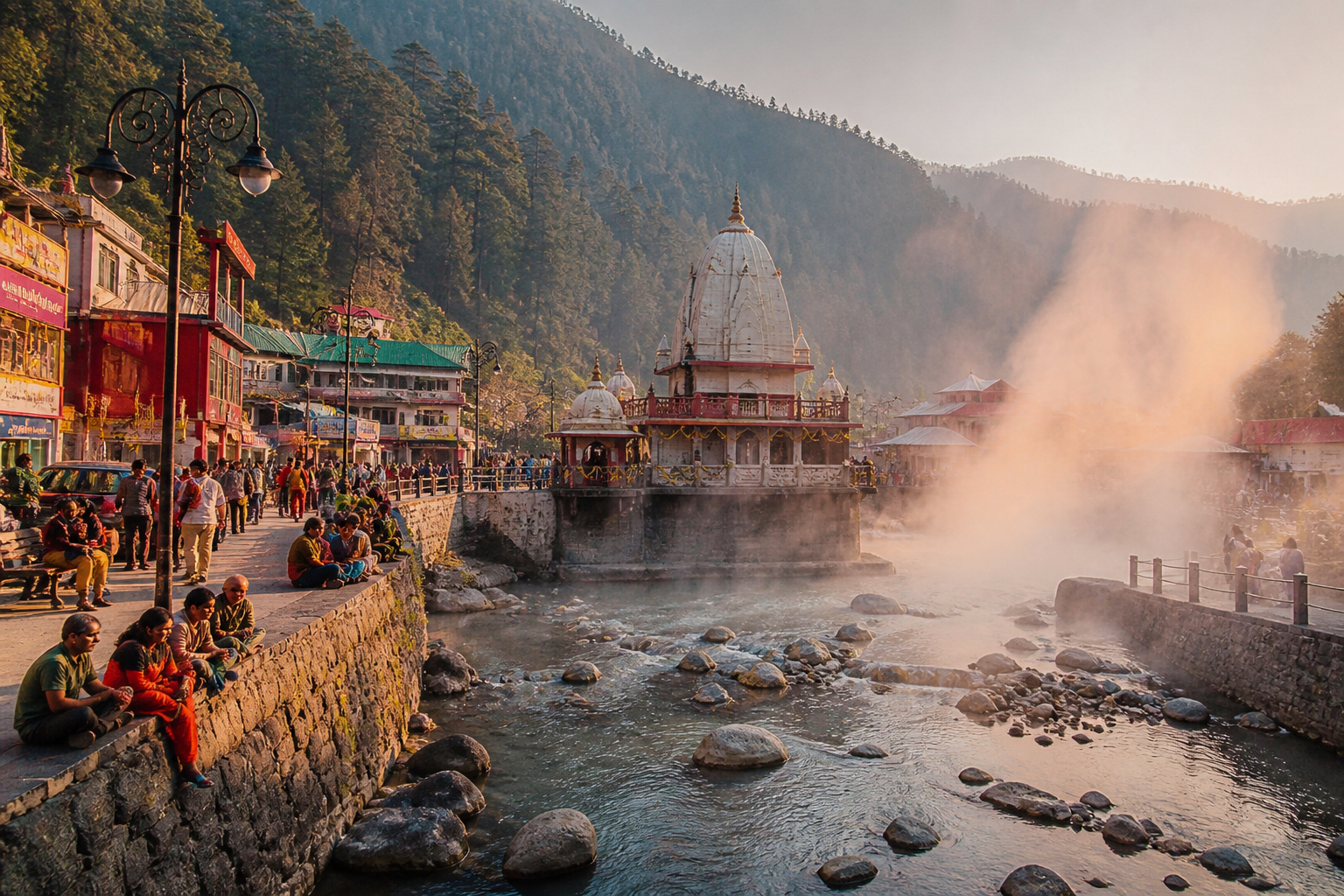
# Ayodhya Beyond the Headlines: Temples, River Light, and Practical Travel Tips
Ayodhya has changed quickly. New roads, hotels, cafés, and visitor facilities have appeared around one of India’s oldest sacred cities, especially since the opening of the Ram Mandir. Summit Hotels & Resorts’ renewed focus on spiritual tourism fits this moment well: travelers are no longer visiting only the usual big cities, but are also looking for places with faith, history, and a slower local rhythm.
I visited Ayodhya expecting crowds and ceremony, but what stayed with me were the quieter scenes—the evening lamps along the Saryu, families sharing tea after temple visits, and old lanes where life carries on beneath all the new construction.
## The Vibe & When to Go
Ayodhya feels devotional, busy, and still very much in transition. One street may have a polished new hotel or wide road, while the next leads into a much older neighborhood with small shrines, flower sellers, and cows wandering past shopfronts.
**October to March** is the most comfortable time to visit. Days are usually pleasant, with cooler mornings and evenings. December and January can be surprisingly chilly, particularly before sunrise.
Summers from April to June are hot, often brutally so in the afternoon. July to September brings humidity and monsoon rain, though the city can feel greener and less crowded between showers.
Try to avoid major festival dates unless the crowds are exactly what you want. Diwali, Ram Navami, and other important religious occasions can bring enormous visitor numbers, higher room rates, traffic restrictions, and long queues.
## Must-See Spots: My Top Picks
### 1. Ram Mandir
This is the city’s main draw, and even travelers who are not religious will feel the scale and emotion of the place. The approach roads are busy, and security is strict, so carry only essentials. Large bags, phones, cameras, and other items may need to be left in designated storage areas.
Go early in the morning if you want a more manageable visit. I found the atmosphere calmer before the day’s heat and crowds built up. Wear comfortable clothing that is respectful of the temple setting, and allow extra time for security checks.
The surrounding area is changing rapidly, so don’t expect a finished historic quarter. Construction, diversions, and temporary shops are still part of the experience.
### 2. Hanuman Garhi
Hanuman Garhi is reached by a flight of stairs and has a much more intimate feel than the larger temple complex. Pilgrims stop to buy flowers, sweets, and small offerings before climbing up.
I liked the lively street around the entrance, where vendors sell local snacks and religious items. Keep small notes handy for offerings and purchases, and be polite if someone offers to guide you. A guide can be useful, but agree on the price before starting.
### 3. Saryu River Ghats
The riverfront is where Ayodhya feels most peaceful. Visit around sunset for the evening aarti, when lamps, bells, chanting, and the river create a moving scene without needing much explanation.
The main ghats can be crowded, so walk a little farther and look for a quieter stretch. You can sit, watch families perform rituals, or take a short boat ride if river conditions allow. Confirm the price before boarding and avoid boats that look overcrowded or poorly maintained.
The riverfront is also beautiful early in the morning. The light is soft, the air is cooler, and you can see daily life before the evening crowds arrive.
### 4. Guptar Ghat and Old Faizabad
For a slower half-day, take a ride toward Guptar Ghat and the older Faizabad area. The riverfront here is less hectic, and the colonial-era buildings and broad roads offer a different view of the region.
This was one of my favorite parts of the trip because it gave me a break from the temple crowds. Stop for tea, take your time, and don’t plan too many sights into one afternoon. Ayodhya is better when you leave room for wandering.
## Practical Travel Advice
### Getting There and Visa
Ayodhya has its own airport, Maharishi Valmiki International Airport, with flights from selected Indian cities. Flight schedules can change, so check connections carefully before booking. Lucknow is still a useful alternative, especially if you find a better fare. From Lucknow, Ayodhya is roughly a three- to four-hour road journey depending on traffic.
Ayodhya Junction and Ayodhya Dham railway stations connect the city with major Indian destinations. Trains are often more convenient than flying if you are traveling from Delhi, Lucknow, Varanasi, or other northern cities.
International visitors generally need an Indian visa or e-visa before arrival. Eligibility depends on your passport, and the rules can change, so use the official Indian government visa website rather than relying on an agent’s message or an old blog post. Your passport should have sufficient validity and blank pages.
### Where to Stay
Ayodhya’s hotel supply is growing, but good rooms can sell out quickly around festival periods.
– **Near Ram Mandir:** Best for pilgrims who want short walks to the temple. Expect crowds, traffic diversions, and more street noise.
– **Near Ayodhya Dham station:** Convenient for train travelers and useful for short stays. Choose a hotel that offers reliable pickup, especially if you arrive late.
– **Faizabad:** A calmer option with a more established town atmosphere. It can be better for families and travelers who prefer restaurants and everyday services nearby.
– **New hotel areas along the main roads:** These often have larger rooms, parking, and newer facilities. They are practical, though you may need an auto-rickshaw for most sightseeing.
Summit’s portfolio shift toward spiritual and emerging destinations makes sense here. The best properties in Ayodhya are not necessarily the flashiest ones; they are the hotels that understand early temple departures, luggage storage, clean bathrooms, decent breakfast timing, and transport during crowded festival periods.
## Getting Around Ayodhya
The old areas are walkable in short sections, but heat, crowds, and uneven roads can make longer walks tiring.
– **Auto-rickshaws:** The most common option. Agree on the fare before leaving.
– **E-rickshaws:** Cheap and useful for short trips, although routes may change during busy periods.
– **Taxis:** Better for airport transfers, Guptar Ghat, and half-day trips outside the center.
– **Walking:** Excellent around the ghats and temple lanes early in the morning, but carry water and wear comfortable shoes.
– **Rideshare apps:** Availability can be inconsistent compared with Delhi or Mumbai. Ask your hotel to arrange a local taxi when you have a train or flight to catch.
Traffic controls can appear suddenly around major temples and festivals. Give yourself more time than Google Maps suggests.
## Real Costs and Local Tips
Prices vary sharply with demand, especially during religious festivals.
### Approximate daily budgets
**Budget traveler: ₹1,800–₹3,000 per person**
– Basic guesthouse or simple hotel: ₹900–₹1,600
– Local breakfast and meals: ₹400–₹700
– E-rickshaws and short auto rides: ₹200–₹500
– Tea, snacks, and small temple offerings: ₹200–₹400
**Mid-range traveler: ₹4,500–₹8,000 per person**
– Comfortable hotel: ₹2,500–₹5,000
– Restaurants and hotel meals: ₹900–₹1,500
– Local transport and occasional taxi: ₹700–₹1,200
– Boat ride, snacks, and entry-related expenses: ₹300–₹600
The local currency is the **Indian rupee (₹)**. Digital payments such as UPI are widely used, but visitors without an Indian bank account may not be able to use every QR code. Keep small cash notes for autos, offerings, lockers, tea stalls, and smaller shops.
Tipping is not compulsory, though rounding up a restaurant bill or giving ₹50–₹100 for helpful hotel service is appreciated. Always check whether a restaurant has already added a service charge.
### A few things that saved me money
– **Book rooms early for festival dates.** Prices can double, and some hotels require advance payment.
– **Eat away from the immediate temple entrances.** A few minutes’ walk can lead to cleaner, cheaper meals with less pressure from touts.
– **Use a hotel locker or official storage facility for temple visits.** Don’t pay random people to “watch” your belongings.
– **Carry a refillable water bottle.** Buy sealed water when needed, but avoid repeatedly paying inflated prices near the busiest gates.
– **Keep your itinerary light.** Security lines and road closures can turn a simple temple visit into a several-hour outing.
– **Ask for fares before getting into an auto-rickshaw.** If the price sounds high, check with two drivers or ask your hotel for a rough local rate.
Ayodhya is not yet a perfectly polished destination, and that is part of what makes the visit feel real. It is a city trying to welcome millions while holding on to its daily rituals and old neighborhoods. Come with patience, dress respectfully, and leave space in your plans for a quiet moment by the river. Those unplanned pauses may become the memories you carry home.
KEYWORDS: Ayodhya temple, Saryu River