
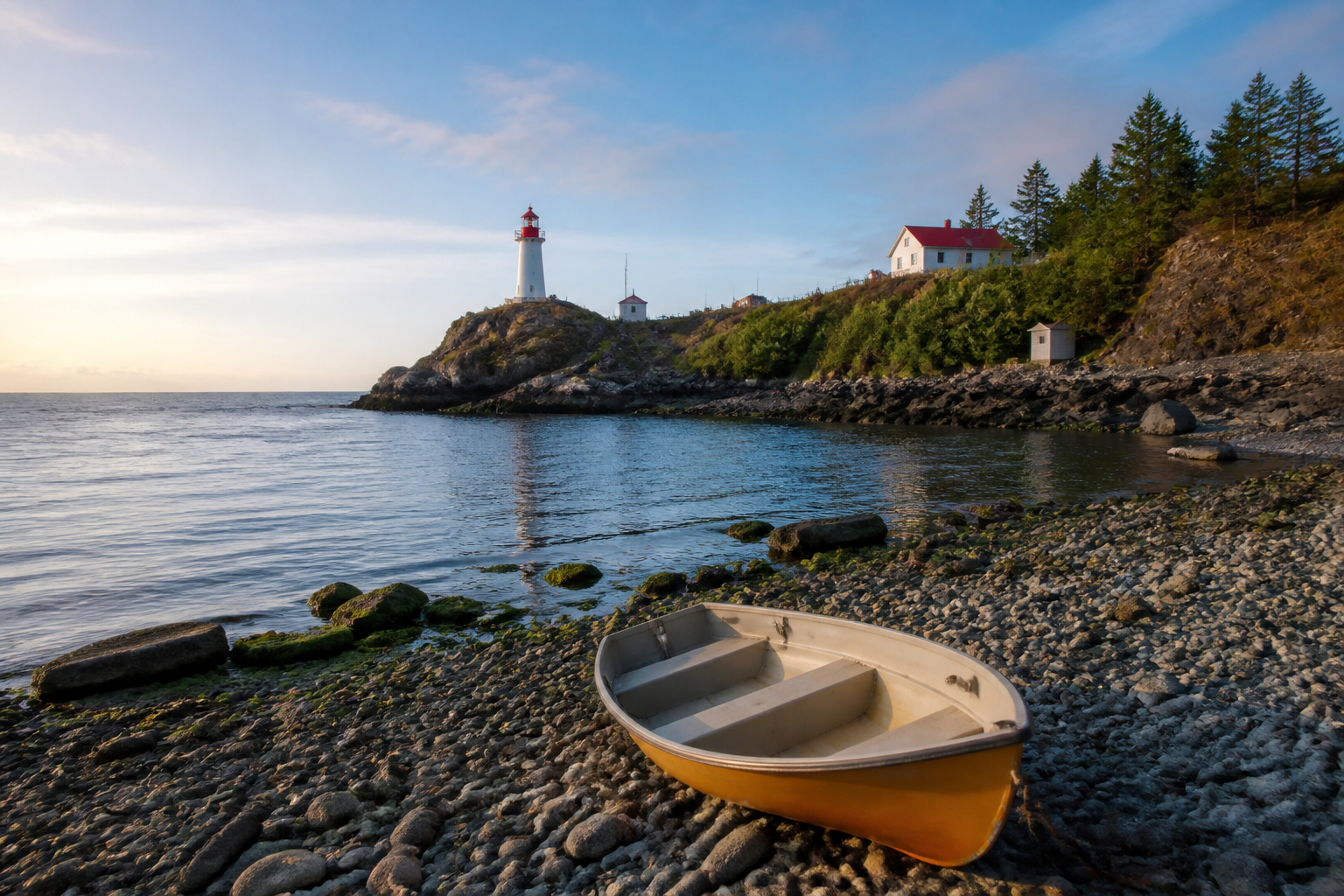
# Powell River, B.C.: 5 Reasons This Quiet Coastal Town Belongs on Your Bucket List
If you’ve done Vancouver, Whistler, and Victoria and still want a B.C. trip that feels a little more personal, put **Powell River** on your list.
It’s the sort of place where the ferry ride becomes part of the holiday, old-growth forest starts just beyond town, and you can spend an afternoon by the water without fighting for a patch of beach. Powell River sits on the upper Sunshine Coast, reached by ferry or a short flight, which helps keep it pleasantly overlooked.
## The Vibe & When to Go
Powell River feels relaxed, outdoorsy, and genuinely local. There’s no pressure to race between attractions. Most days revolve around coffee, forest walks, boats, beaches, and deciding where to watch the sunset.
**Late spring through early fall** is the easiest time to visit. Expect mild days, cool mornings, and a decent chance of rain—this is the coast, after all. July and August bring the warmest weather and the busiest ferry traffic. I personally like **May, June, September, and early October**, when the trails are quieter and accommodation can be a little easier to find.
Even on a cloudy day, the place has its charm. The mist hanging over the water and the dark green forest make Powell River feel far removed from city life.
## Five Reasons to Add Powell River to Your Bucket List
### 1. The Sunshine Coast Trail is right there
The **Sunshine Coast Trail** is one of Powell River’s biggest draws. It stretches for more than 180 kilometres between Sarah Point and Saltery Bay, with forest, lakes, rocky viewpoints, and free huts along the way.
You don’t need to hike the entire route to enjoy it. I’d suggest choosing a shorter section based on your fitness and time. The hike to **Tin Hat Mountain** is a tougher day, but the view is unforgettable on a clear afternoon. For something gentler, look for shorter forest walks around town and the inland lakes.
Bring proper shoes, water, and offline maps. Cell service can disappear quickly, and some trailheads are easier to reach with a high-clearance vehicle.
### 2. Historic Townsite feels like a living piece of B.C. history
**Powell River Townsite** is one of my favourite places to wander. Built in the early 1900s for mill workers, it has broad streets, old houses, tall trees, and a slower rhythm than the newer parts of town.
Take your time here rather than treating it as a quick photo stop. The **Townsite Public Market** is a good place to browse local food and crafts when it’s running, and the **Patricia Theatre** is a lovely stop for a film or a look inside one of Canada’s oldest continuously operating movie theatres.
For coffee or lunch, I’d walk around without too much of a plan. Powell River’s best moments often come from finding a small bakery, chatting with a shop owner, or sitting outside with a view of the water.
### 3. The beaches are quiet, not overproduced
Powell River has plenty of waterfront, but it doesn’t feel like a polished resort town. That’s part of the appeal.
**Willingdon Beach** is easy to reach and good for a relaxed picnic, while **Mowat Bay** is a better choice if you want a swim and a forested setting. The water can be very cold, even in summer, so I usually think of these beaches as places for walking, reading, and skipping stones rather than long swims.
If you have a car and more time, drive toward **Lund** at the northern end of the Sunshine Coast. The road itself is beautiful, with glimpses of islands and coves along the way. Lund is tiny, but it makes a good base for kayaking, boat tours, and exploring nearby islands.
### 4. Lund and the surrounding islands make a memorable day trip
Lund is one of those places that feels almost too small to be a destination, until you arrive and realize you could happily stay all day.
Walk along the waterfront, grab something to eat, and look into a boat trip around the **Desolation Sound** area or the Copeland Islands. The scenery is rugged and calm at the same time—dark forest, granite shoreline, clear water, and more bald eagles than I expected to see.
For a longer adventure, look into visiting **Savary Island**. Boat schedules and weather can change, so don’t build a tightly timed itinerary around it. Pack water and snacks, and check return transportation before leaving Powell River.
### 5. It still feels like a real community
This may sound simple, but it’s one of the best reasons to come. Powell River doesn’t feel built entirely around visitors.
You’ll see people picking up groceries, launching kayaks after work, meeting friends for breakfast, and heading into the forest with a dog. Local events, markets, small galleries, and community theatres give the town character without making it feel staged.
I found it easier to slow down here. Two or three nights is enough for a taste, but four or five days gives you time for a trail, a boat outing, Lund, and a rainy afternoon with no plans.
## Practical Travel Advice
### Getting there and visa requirements
Powell River is reached by:
– **Ferry from Comox to Powell River:** This is usually the most convenient option if you’re driving from Vancouver Island. The crossing takes roughly 90 minutes, though schedules can change.
– **Ferries from Vancouver through the Sunshine Coast:** You can travel via Horseshoe Bay to Langdale, drive north along Highway 101, and take another ferry from Earl’s Cove to Saltery Bay. It’s scenic but requires more time and planning.
– **Air travel:** Pacific Coastal Airlines operates flights between Vancouver and Powell River on select schedules. Flights are quick, but fares can rise around summer weekends, so book early.
If you’re visiting Canada from another country, you’ll need a valid passport and may need either a **visitor visa or an eTA**, depending on your nationality and whether you arrive by air. U.S. citizens generally don’t need a visitor visa for a normal tourist visit, but should still check current entry rules before travelling. Use the official Government of Canada website rather than relying on an old blog post.
For ferries, reserve a vehicle spot when reservations are available—especially on summer Fridays, Sundays, and holiday weekends.
### Where to stay
– **Westview:** The most practical area for restaurants, shops, groceries, and the waterfront. This is my choice for a first visit.
– **Townsite:** Best for historic surroundings, quiet streets, and a little more character. It’s a short drive from central Powell River.
– **Near Willingdon Beach:** Good for families, campers, and anyone who wants easy beach access.
– **Lund:** Choose this for a peaceful northern base, kayaking, and boat trips. It’s less convenient if you want to explore Powell River town every day.
There are hotels, vacation rentals, cabins, campgrounds, and a few smaller guesthouses. Summer weekends can fill earlier than you’d expect.
### Getting around
A car makes the trip much easier. It gives you access to trailheads, beaches, lakes, and Lund, and there isn’t always a taxi waiting when you need one.
Powell River has local bus service, but routes and schedules are limited compared with Vancouver or Victoria. Taxis are available, though I’d arrange a pickup in advance for early ferry departures or trips outside the central area. Don’t count on Uber or Lyft being available.
The central parts of town are walkable, but the whole area is spread out. Bring a bike if you have one, or ask your accommodation about rentals and local shuttle options.
## Real Costs and Local Tips
Prices vary a lot by season, but these are reasonable estimates in **Canadian dollars**.
### Budget traveller
Expect about **$90–$140 per person per day**, excluding transportation to Powell River.
– Camping or shared accommodation: $30–$70
– Groceries and casual meals: $25–$45
– Local transportation: $10–$25
– Free hikes, beaches, and self-guided exploring: $0–$10
### Mid-range traveller
Plan on roughly **$180–$300 per person per day**, assuming two people share a room or rental car.
– Hotel or private guesthouse: $150–$250 per room
– Meals and coffee: $55–$90 per person
– Car rental and fuel: $50–$90 per person when shared
– Boat trip or paid activity: $60–$150
Canada uses the **Canadian dollar**. Credit and debit cards are accepted in most places, but I’d carry some cash for smaller cafés, markets, campgrounds, and rural stops.
A tip of **15–20%** is normal at restaurants when service isn’t already included. You don’t need to tip for every quick counter purchase, despite what some payment screens may suggest.
A few things that helped me keep costs down:
– **Book ferries early**, especially if you’re taking a car. Last-minute travel can leave you waiting several sailing times.
– **Buy groceries in Powell River** before heading to Lund or the islands. Small communities have fewer choices and higher prices.
– **Pack a picnic for trail days.** There are beautiful viewpoints, but not many convenient food stops once you leave town.
– **Check ferry and boat schedules twice.** Weather, maintenance, and seasonal changes can affect service, and missing the last sailing can turn a simple day trip into a very expensive problem.
Powell River isn’t the place to visit if you want nightlife, luxury shopping, or a packed sightseeing schedule. Come for the quiet, the salt air, the forests, and the feeling that you’ve found a corner of B.C. before everyone else does.
KEYWORDS: Powell River, British Columbia coastline