
# Dubai Beyond the Skyline: A Responsible Travel Guide for Arabian Travel Market 2026
## The Vibe & When to Go
Dubai in May is bright, busy, and already starting to feel properly hot. Mornings can be pleasant, but by midday the heat usually pushes everyone indoors—into shopping malls, museums, cafés, and air-conditioned metro stations. Around the time of **Arabian Travel Market 2026**, expected at Dubai World Trade Centre in early May, temperatures may sit roughly between **24°C and 36°C**, with strong sunshine and very little rain.
The city can feel polished and fast-moving, but I always find its quieter moments more memorable: tea in an old Deira café, the call to prayer drifting across the Creek, or a late walk along Jumeirah Beach when the heat finally eases.
The 2026 ATM is especially interesting because **Aleksandra Gardasevic-Slavuljica is bringing a strong responsible tourism message to the event**. Her focus is a useful reminder that travel should not only be about visitor numbers and new hotel openings. It should also ask how tourism affects local communities, workers, culture, water use, and the environment.
That conversation feels important in Dubai, a city built on ambition and constant change. Come for the trade show, but leave some room to see the city at human speed.
## Must-See Spots: My Top Picks
### 1. Dubai Creek and Al Fahidi Historical Neighbourhood
Start early around **Al Fahidi**, where narrow lanes, wind towers, galleries, and shaded courtyards offer a completely different mood from Downtown Dubai. I like wandering without a strict plan here, stopping for Arabic coffee or a small breakfast.
From the Creek, take the traditional **abra boat** across to Deira. The ride is short, inexpensive, and far more atmospheric than viewing the water from a modern bridge. On the Deira side, explore the spice and gold souks, but take your time before buying. Prices are often negotiable, and the first offer is rarely the final one.
For a more responsible visit, support small cafés, independent galleries, and local cultural projects rather than treating the area as a quick photo stop.
### 2. Downtown Dubai After Dark
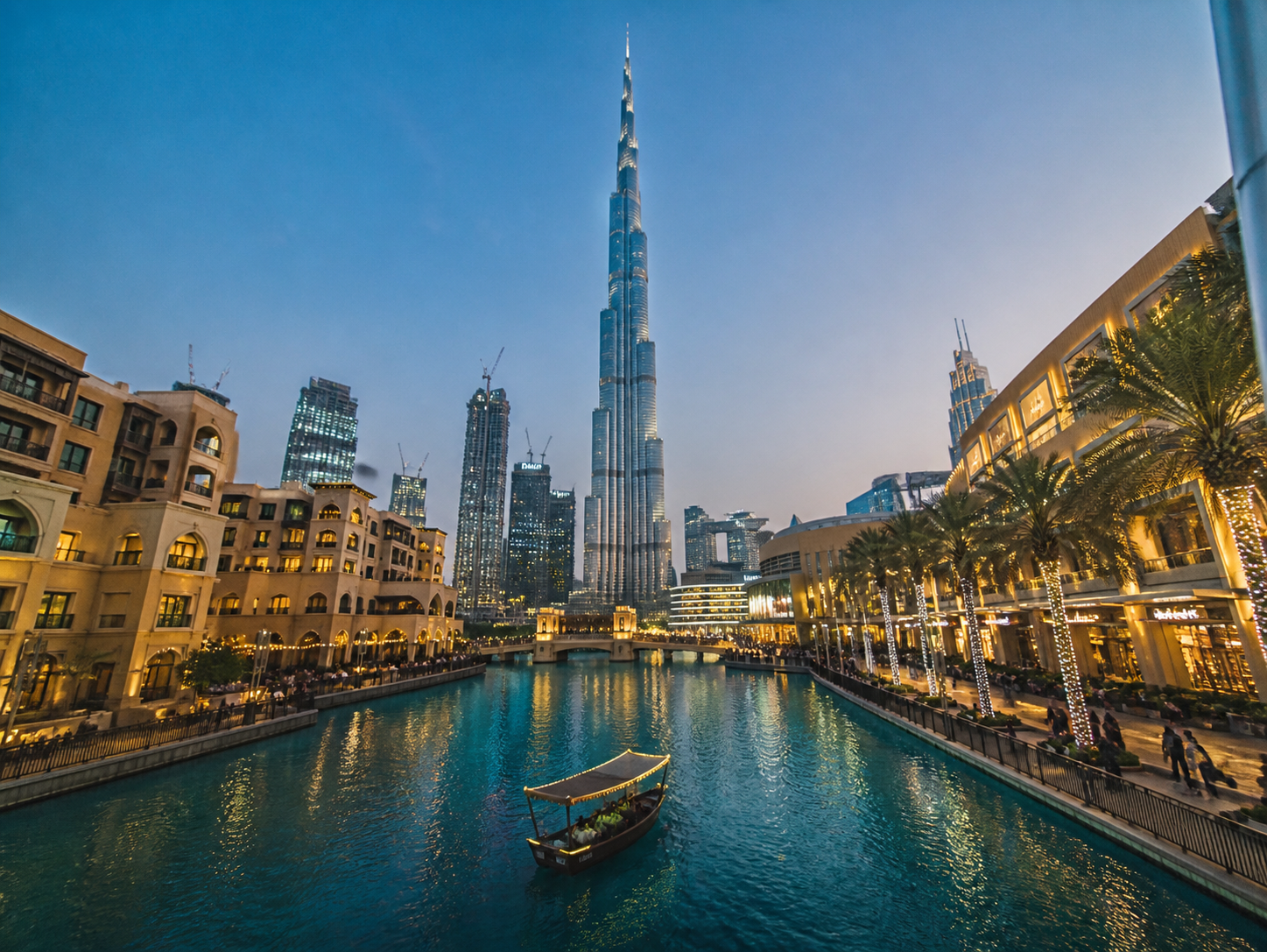
The Burj Khalifa and Dubai Mall are obvious choices, but I prefer visiting Downtown later in the day. The heat is softer, the fountains and lights come alive, and you can enjoy the view without rushing.
If you want to go up the Burj Khalifa, book online ahead of time and compare the different viewing packages. The basic observation deck is usually enough for most visitors. For a calmer evening, walk around **Dubai Opera** and the pedestrian areas near the lake, then choose a restaurant away from the busiest mall entrances.
This is also a good place to think about Dubai’s relationship with resources. The city’s grand attractions are impressive, but simple choices—using public transport, carrying a refillable bottle, and avoiding unnecessary daily linen changes—make your own visit a little lighter.
### 3. Jumeirah Mosque and the Beach
The **Jumeirah Mosque** offers guided visits that explain Islamic traditions, local customs, and everyday life in the UAE. Dress modestly, arrive with an open mind, and allow time for questions. It is one of the better places in Dubai to move beyond the usual shopping-and-skyscrapers version of the city.
Afterward, head toward **Jumeirah Beach** around sunset. Bring water, a light cover-up, and something to sit on. The beach is free in many sections, though some areas have facilities or paid access. Early morning is best for a quiet walk; sunset is better for atmosphere.
### 4. The Desert, Done Thoughtfully
A desert excursion can be a memorable part of a Dubai trip, but choose the operator carefully. Ask whether the camp is permanent, how wildlife is treated, whether the company limits off-road driving, and how it handles waste and water.
I would avoid tours that promise aggressive dune bashing, captive wildlife photo opportunities, or oversized entertainment setups with little connection to the desert itself. A smaller group, a local guide, and a quieter conservation-focused experience usually feel more respectful—and often more enjoyable.
## Practical Travel Advice
### Getting There and Visa
Dubai International Airport is served by airlines from across Europe, Asia, Africa, the Middle East, and North America. **Dubai World Central** also handles some flights, though DXB is generally more convenient for central Dubai and the World Trade Centre.
Visa rules depend on your passport:
– Citizens of many countries, including several European nations, the United Kingdom, the United States, Canada, Australia, and New Zealand, may receive a visa on arrival.
– Other travelers need to arrange a tourist visa before flying, usually through an airline, hotel, or licensed travel agency.
– Your passport commonly needs at least **six months’ validity** from the date of arrival.
– Check the UAE government or your airline’s current guidance before booking, since entry rules can change.
If you are attending ATM 2026, register early and keep your event confirmation, hotel booking, and return-flight details easy to access at immigration.
### Where to Stay
– **Near Dubai World Trade Centre:** Best for ATM attendees who want a short commute. Trade Centre, DIFC, and Bur Dubai all have practical hotel choices.
– **Downtown Dubai:** Convenient for first-time visitors who want the Burj Khalifa, Dubai Mall, and plenty of dining nearby. It is lively but rarely cheap.
– **Deira and Bur Dubai:** Better for travelers who enjoy older neighborhoods, local restaurants, and more affordable rooms. These areas also connect well to the Metro.
– **Jumeirah or Dubai Marina:** Good for beach time, restaurants, and a resort feel. Expect higher prices and longer travel times to the trade centre.
– **Al Barsha:** A useful middle ground, especially if you want larger rooms, shopping access, and Metro connections without paying Downtown prices.
During ATM, hotel rates can climb quickly. Booking well ahead matters more than finding a last-minute bargain.
### Getting Around
Dubai is easier to navigate than its size suggests, but walking between districts is often uncomfortable in May.
– Use the **Dubai Metro** for the airport, World Trade Centre, Downtown, and Dubai Marina. It is clean, reliable, and usually the best-value option.
– Buy a **Nol card** for Metro, tram, and public buses. Keep it topped up.
– **Careem** and **Uber** are widely used. Metered taxis are also plentiful and often competitive for short trips.
– The Dubai Tram is handy around Dubai Marina and Jumeirah Beach Residence.
– For the Creek, take an abra rather than booking a car around the water.
– Leave extra time for road traffic, especially around business districts and major events.
## Real Costs and Local Tips
Dubai can be expensive, but it does not have to be. Your biggest costs will usually be accommodation, taxis, attractions, and alcohol.
### Rough Daily Budgets
**Budget traveler: AED 180–300 per day**
– Shared room or simple budget hotel
– Metro and occasional short taxi rides
– Local breakfasts, shawarma, Indian or Pakistani meals
– Free beaches, souks, Creek walks, and public areas
**Mid-range traveler: AED 450–800 per day**
– Comfortable three- or four-star hotel
– Mix of Metro, taxis, and Careem
– Restaurant meals and coffee
– One paid attraction or organized experience
These figures do not include international flights, major shopping, nightlife, or luxury dining. Hotel prices can also rise sharply during ATM and other major events.
The local currency is the **UAE dirham (AED)**. Cards are accepted almost everywhere, but small notes are useful for cafés, abra rides, small shops, and tips.
Tipping is not compulsory, though it is appreciated. A small amount for hotel staff, taxi drivers, and delivery workers is polite. In restaurants, check whether a service charge has already been added before leaving extra.
### A Few Things That Save Money and Stress
– **Eat away from hotel restaurants.** Small eateries in Deira, Bur Dubai, and Al Karama often serve excellent food for a fraction of resort prices.
– **Use the Metro whenever practical.** A short taxi ride is convenient, but several journeys each day can quietly consume your budget.
– **Carry water and refill where possible.** Dubai’s heat makes bottled water expensive when bought repeatedly, and reducing plastic waste is an easy responsible choice.
– **Dress for the setting.** Swimwear belongs at the beach or pool; shoulders and knees should generally be covered in older neighborhoods, mosques, and government buildings.
– **Book popular attractions online.** Burj Khalifa tickets, desert trips, and some cultural tours can cost more at the last minute.
– **Do not photograph people without permission.** This is especially important in traditional neighborhoods, markets, and family spaces.
– **Choose tourism businesses that explain their local impact.** The message coming from ATM 2026—particularly through Aleksandra Gardasevic-Slavuljica—is a good one to carry with you: ask who benefits from your visit and how the destination is being cared for.
Dubai is a city of contrasts: old wooden boats beneath glass towers, quiet courtyards beside giant malls, and ambitious tourism plans facing very real environmental pressures. Visiting responsibly here does not require perfection. It means making thoughtful choices, respecting local customs, and remembering that a destination is more than the attractions built for visitors.
KEYWORDS: Dubai skyline, Dubai Creek