
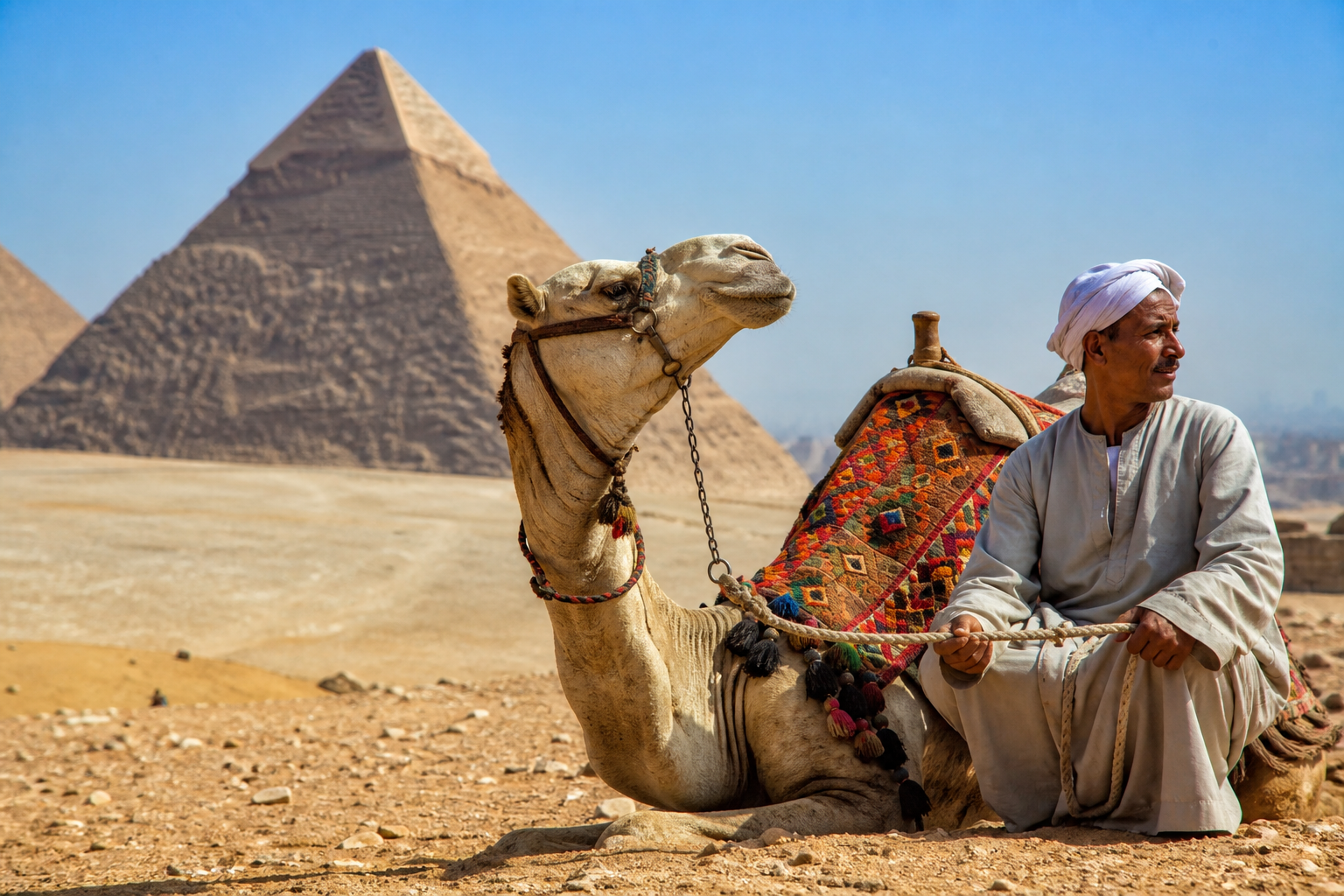
# Egypt in 2026: Pyramids, Quiet Corners, and the Travel Tips I’d Share with a Friend
Egypt has been getting plenty of attention lately after winning SETO’s **2026 Award for Best Partnership with a Tourism Destination**. Awards are nice, but what I liked more was seeing how much easier the country can feel when the tourism experience is handled thoughtfully—from better visitor information to smoother cooperation between local guides, hotels, and international travel partners.
Egypt still has its rough edges, of course. Traffic can be wild, bargaining takes patience, and the big sights are rarely quiet. But that is part of the character. Between the ancient temples, smoky coffeehouses, felucca rides, and plates of koshari, Egypt gives you far more than a quick photo beside the pyramids.
## The Vibe & When to Go
Egypt feels intense, generous, noisy, and deeply alive. Cairo has car horns, street vendors, grand mosques, dusty sidewalks, and some of the best casual food I’ve eaten on a trip. Luxor moves at a slower pace, with the Nile dividing green farmland from the dry hills of the West Bank. Alexandria feels breezier and more Mediterranean, with seafood restaurants and a slightly calmer rhythm.
**The most comfortable months are generally October through April.** During winter, Cairo is often pleasantly mild, with daytime temperatures around 18–24°C, while Luxor and Aswan are warmer. Nights can feel surprisingly cool, especially near the river or in the desert.
Summer is much hotter, particularly in Upper Egypt. Sightseeing around Luxor in July or August can become exhausting by late morning.
If you are traveling in early 2026, check whether your dates overlap with **Ramadan**, expected around February and March, depending on moon sightings. It can be a special time to visit, with lively evening meals and beautifully lit streets, but opening hours may change and many people fast during daylight.
## Must-See Spots: My Top Picks
### 1. The Giza Pyramids—Then Go Beyond the Main Viewpoint
The pyramids are famous for good reason. Standing close to the Great Pyramid is one of those moments when photographs don’t quite explain the scale. Go early, before the worst heat and the largest tour groups arrive.
I’d also spend time at the **Valley Temple** and the Sphinx rather than rushing through the complex. A local guide can help explain the layout, but agree on the price and schedule before starting.
For a less crowded view, ask your driver to take you to a café or viewpoint on the edge of the plateau. You’ll still see the pyramids, but with a little space to enjoy them. Be cautious with anyone offering an unofficial “special entrance,” camel ride, or shortcut. Ask the official ticket office first.
### 2. Islamic Cairo and Al-Muizz Street
This was one of my favorite areas to wander. The buildings along **Al-Muizz Street** are richly detailed, with carved stone doorways, old schools, mosques, and small workshops tucked between busy shops.
Visit the **Khan el-Khalili** market, but don’t feel you need to buy the first souvenir you see. I preferred the side streets and the quiet courtyards around the historic mosques. The **Bayt Al-Suhaymi** historic house is a good place to pause and see how an old Cairo home was arranged.
Wear clothing that covers shoulders and knees when visiting religious sites. Some mosques provide coverings, but carrying a light scarf is easier.
### 3. A Felucca Ride in Aswan
Aswan has a gentler atmosphere than Cairo, and a late-afternoon ride on a traditional felucca is one of the simplest pleasures in Egypt. The Nile looks especially beautiful as the sun drops behind the desert hills.
Before boarding, confirm whether you are paying for the whole boat or per person, and agree on the duration. A one- or two-hour ride is usually enough. If the wind is weak, the boat may drift more than sail, but that is not a bad thing—it gives you time to watch village life and birds along the river.
If you have an extra day, visit **Philae Temple**, reached by boat on an island. Go early or late in the day for softer light and fewer people.
### 4. The Temples of Luxor
Luxor is the place that stayed with me longest. The **Karnak Temple complex** is enormous, and I found it better to take my time in the hypostyle hall instead of trying to race through every section.
Across the river, visit the **Valley of the Kings** early. Your ticket usually covers a limited number of tombs, with extra charges for the most famous ones. The paintings inside can be astonishingly well preserved, but the passages are narrow and warm.
I also liked **Medinet Habu**, which receives fewer visitors than the Valley of the Kings and has striking reliefs. A private car or prearranged taxi for the West Bank makes the day much easier than trying to negotiate every ride separately.
## Practical Travel Advice
### Getting There and Visa
Most international visitors arrive through **Cairo International Airport**, though Luxor, Hurghada, Sharm El Sheikh, and Marsa Alam also receive direct flights from various countries.
For entry, many nationalities can use:
– An online **Egypt e-Visa**
– A visa on arrival at selected airports
– A visa arranged through an Egyptian consulate before departure
Rules depend on your passport, and some nationalities have different arrangements for resort-only visits. Check the official Egyptian e-Visa website or your nearest Egyptian consulate before booking nonrefundable plans. Your passport should generally have at least six months of validity remaining.
Flight prices often drop if you compare Cairo with nearby gateways such as Istanbul, Doha, or Athens. If your itinerary includes Luxor or Aswan, compare the price of a domestic flight with an overnight train. Flights save time, while trains can be part of the experience, though comfort and punctuality vary.
### Where to Stay
**Cairo**
– **Downtown:** Convenient for museums, restaurants, and a more local city feel.
– **Zamalek:** Quieter, greener, and filled with cafés, galleries, and international restaurants.
– **Garden City:** A calmer central option with embassies and older residential streets.
– **Giza:** Best if seeing the pyramids is your main priority, though traffic makes getting elsewhere slower.
**Luxor**
– **East Bank:** Best for first-time visitors who want easy access to Karnak, restaurants, and train connections.
– **West Bank:** More peaceful, with guesthouses, farmland views, and a slower pace.
**Aswan**
– Stay near the **Corniche** for restaurants, boat trips, and easy evening walks. Island guesthouses offer more quiet but may require extra boat transfers.
### Getting Around
Cairo is not especially walkable over long distances. The **Metro** is cheap and useful on a few major routes, though it can be crowded. For everyday rides, **Uber and Careem** are generally easier than hailing a taxi, particularly if you don’t speak Arabic.
In Luxor and Aswan, taxis and private drivers are the practical choices. Ask your hotel to help arrange a car for a full sightseeing day, and confirm whether fuel, waiting time, and entrance fees are included.
Walking works well in central areas, along the Aswan Corniche, and around parts of Luxor, but busy roads require patience. Crossing the street can feel like a group sport at first—watch how locals do it and follow their pace.
## Real Costs and Local Tips
Prices change quickly with exchange rates, but these are useful rough figures per person:
### Budget travel: around **$30–55 per day**
– Hostel or simple guesthouse: $8–20
– Local meals: $2–6
– Metro, short rides, and shared transport: $3–10
– A few entrance fees and inexpensive activities
### Mid-range travel: around **$75–140 per day**
– Comfortable hotel: $35–80
– Restaurant meals and cafés: $15–35
– Ride-hailing, private day transport, and sightseeing: $20–45
– Major attraction tickets
Egypt uses the **Egyptian pound (EGP)**. Carry small notes for bottled water, bathrooms, short taxi rides, and tips. Card payment is common in larger hotels and restaurants, but smaller businesses and market stalls may only accept cash.
Tipping, or **baksheesh**, is part of daily life. Small tips are normal for hotel staff, luggage help, restroom attendants, and guides. In restaurants, check whether a service charge is already included, then leave a little extra for good service.
### A Few Tricks That Saved Me Money
– **Buy attraction tickets from official counters.** If someone approaches you outside claiming the price has changed, check for yourself before paying.
– **Agree on fares before getting into a taxi.** With Uber or Careem, the price is shown in advance, which avoids most arguments.
– **Carry small bills.** Breaking a large note for a short ride or a bathroom tip can turn into an unnecessary negotiation.
– **Eat where office workers and students eat.** Koshari, falafel, grilled chicken, foul, and local bakeries are usually tastier and cheaper than restaurants aimed only at visitors.
– **Bring a scarf, water, and comfortable shoes.** The sun is stronger than it may feel at first, and temple floors, uneven streets, and sandy paths add up over a long day.
Egypt’s new recognition from SETO is a pleasant sign that international tourism partnerships are paying more attention to the visitor experience. Still, the best parts of a trip here are often the unplanned ones: tea with a shopkeeper, a quiet view of the Nile, or a plate of hot koshari eaten beside a busy Cairo street. Give yourself enough time to slow down between the famous sights, and Egypt becomes much more than a checklist of ancient monuments.
KEYWORDS: Egypt pyramids, Nile River