
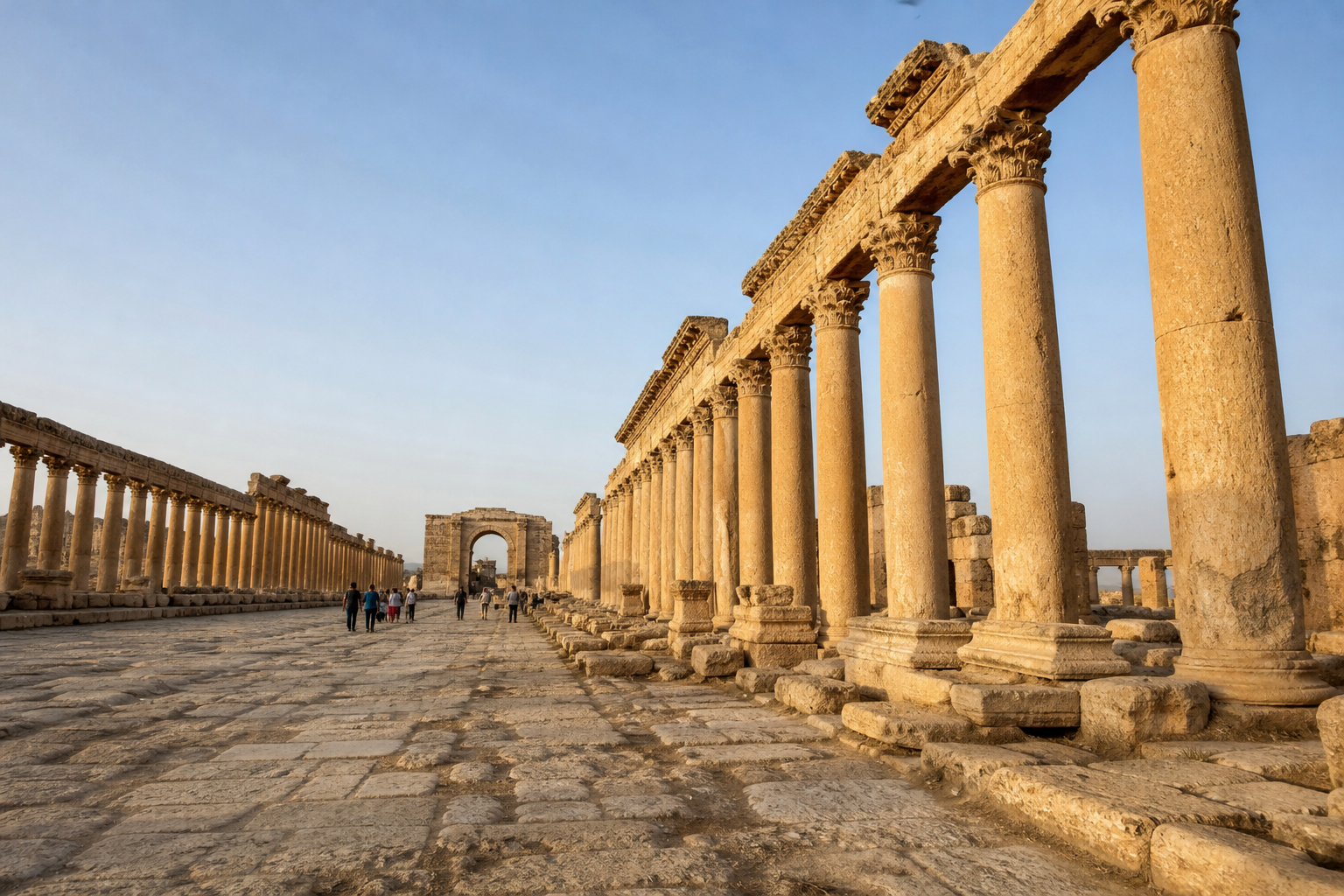
# Syria Beyond the Headlines: Damascus, the Coast, and What Travelers Need to Know
Syria’s appearance at WTM London brought a big ambition into the spotlight: presenting the country as a future Mediterranean holiday destination. The appeal is easy to understand. Syria has an extraordinary coastline, old cities, Roman ruins, mountain villages, generous food culture, and some of the oldest continuously inhabited places on earth.
But this is not a normal beach-break destination yet. Large parts of the country remain affected by conflict, travel advisories are severe, and tourist services can change quickly. I would treat Syria as a destination for experienced travelers who have strong local contacts and are prepared to follow official advice—not as an easy last-minute holiday.
## The Vibe & When to Go
Syria feels layered in a way few places do. In Damascus, morning traffic, cardamom coffee, church bells, calls to prayer, spice shops, and children heading to school all share the same narrow streets. Along the coast, the mood becomes slower: fishing boats, hillside villages, pine-covered roads, and long lunches built around grilled fish.
The weather depends greatly on where you go:
– **Damascus and inland cities:** Pleasant in spring and autumn, hot and dry in summer, and chilly at night in winter.
– **The Mediterranean coast:** Warm, humid summers and mild winters, with much more rain than the interior.
– **Mountain areas:** Cooler evenings, even during summer.
For a future leisure trip, **April to May** and **September to October** would be my first choices. The light is soft, daytime temperatures are manageable, and outdoor sightseeing is far more comfortable than in the height of summer.
At present, the bigger question is not the weather but whether a particular area is safe and accessible. Check your government’s latest travel advisory before making any plans. Conditions can change without much warning, and consular help may be limited.
## Must-See Spots: My Top Picks
### 1. Damascus Old City
The Old City is the place I would start. Enter through one of the historic gates and allow yourself to wander without trying to see everything in a hurry. The lanes lead past timber-fronted houses, tiny workshops, courtyards, bakeries, and old cafés where coffee is served thick and sweet.
The **Umayyad Mosque** is the grand centerpiece, but some of my favorite moments would be in the quieter corners around **Bab Touma** and **Bab Sharqi**. Look for traditional houses turned into restaurants or cultural spaces, and pause for a plate of hummus, muhammara, or fatteh.
Go early if you want photographs without crowds. In the afternoon, the old streets become livelier, but they can also feel crowded and confusing. A local guide is useful, especially for understanding which buildings are open and how to move respectfully through religious sites.
### 2. The Mediterranean Coast: Latakia and Tartus
Syria’s coastal ambitions make sense when you see the landscape. The shoreline has a different character from the polished resort strips elsewhere in the Mediterranean. You find working ports, simple seaside cafés, rocky coves, and green hills rising behind the water.
**Latakia** is the larger coastal base, while **Tartus** has a more relaxed feel and an appealing old harbor area. I would come for seafood, sunset walks, and day trips into the surrounding countryside rather than expecting a fully developed resort scene.
The coast is also a good place to try local dishes that feel lighter than inland fare: grilled fish, prawns when available, salads with lemon and herbs, and flatbread still warm from the oven. Ask about the daily catch rather than ordering from a large fixed menu.
### 3. Krak des Chevaliers
The hilltop fortress of **Krak des Chevaliers** is one of Syria’s most memorable sights. Even before you reach the entrance, the approach gives you a sense of why the castle was built where it was. The views stretch across green valleys and villages, and the stone walls are enormous without feeling overly restored.
Wear sturdy shoes. The floors can be uneven, and some stairways are dark or slippery. I would also bring water and arrange transport in advance; public transport options around the fortress are limited and unreliable for a tight schedule.
Because the surrounding region has experienced instability, visits should only happen with current local advice and a reputable guide or organized operator.
### 4. Aleppo’s Old City and Souqs
Aleppo has endured devastating damage, but its historic heart still carries a powerful sense of place. The **Citadel**, old markets, stone houses, and surviving workshops show how much cultural life has been tied to this city for centuries.
The souqs are especially atmospheric when craftsmen are working: soap makers, metalworkers, textile sellers, and food vendors. Aleppo is also famous for its cuisine, particularly **kebab halabi**, stuffed vegetables, kibbeh, and rich pistachio sweets.
Restoration is ongoing, so do not expect a polished heritage district. That unfinished quality is part of the reality of visiting. Go with patience, listen to local guidance, and ask before photographing people or damaged buildings.
## Practical Travel Advice
### Getting There & Visa
International access is limited compared with other Mediterranean destinations. Flights and border arrangements can change, and many travelers reach Syria through regional hubs such as **Beirut, Amman, Cairo, or the Gulf**, depending on current airline schedules and entry rules.
Do not assume that holding a passport from a country that normally allows easy regional travel means you can simply arrive at the airport. Visitors commonly need:
– A Syrian visa arranged before travel
– Passport validity of at least six months
– Possible security clearance or prior approval
– Proof of accommodation or an invitation
– A registered local guide or tour operator, depending on nationality and route
Requirements vary by passport and can change quickly. Contact a Syrian embassy or consulate and a reputable Syria-based travel company before paying for flights. Also check whether your travel insurance covers Syria; many policies exclude countries under a high-level travel warning.
Some nationalities may face additional restrictions or difficulty obtaining approval. Keep printed copies of your passport, visa, insurance details, and local contacts.
### Where to Stay
Accommodation standards vary widely, so I would choose a hotel based on location and current operating conditions rather than online photographs alone.
– **Damascus Old City:** Best for atmosphere, historic architecture, cafés, and evening walks. Guesthouses here can be beautiful but may have small rooms and limited heating.
– **Abu Rummaneh and Shaalan:** More practical for business travelers and visitors who want modern hotels, restaurants, and easier vehicle access.
– **Latakia:** Choose the central area for restaurants and transport, or stay farther out for a quieter coastal setting.
– **Tartus:** Good for a slower seaside stay, though the choice of international-standard hotels is limited.
– **Aleppo:** Stay near the main central districts with a trusted recommendation rather than booking solely through a global platform.
Ask directly about electricity, hot water, heating, Wi-Fi, airport transfers, and payment methods. These basics can vary from one property to the next.
### Getting Around
Damascus is enjoyable on foot in selected central areas, especially around the Old City. Outside those zones, traffic, road conditions, and security considerations make a local driver helpful.
Expect to use:
– **Taxis:** Common, but agree on the price before setting off.
– **Service taxis:** Shared cars that follow fixed routes; cheap, but less comfortable and not always easy for visitors to understand.
– **Private drivers:** The most practical option for day trips and intercity travel.
– **Buses:** Available in cities, though routes and schedules may be difficult to navigate without local help.
Do not rely on international rideshare apps being available. Local taxi apps and booking services may operate in some cities, but coverage changes. Your hotel or guide can usually arrange a car more reliably than an app.
Road travel between cities may involve checkpoints, detours, or sudden closures. Leave plenty of extra time and avoid traveling at night.
## Real Costs & Local Tips
The Syrian pound fluctuates heavily, and official and street exchange rates may differ. For that reason, prices can change quickly and online cost estimates become outdated fast. Bring a small amount of widely accepted foreign currency only where legal and appropriate, and exchange money through authorized channels. Confirm current rules before arrival.
As a rough guide, based on local conditions rather than luxury tourism:
### Budget travel
Around **US$30–60 per person per day** may cover a simple guesthouse, inexpensive meals, local taxis, and modest sightseeing—if you are traveling independently and staying in places with low accommodation costs.
### Mid-range travel
Around **US$80–150 per person per day** is more realistic for a comfortable hotel, private transfers, restaurant meals, entrance fees, and occasional guided visits. Organized trips can cost considerably more because of permits, security arrangements, and private transport.
### Currency and tipping
– Carry small notes for taxis, cafés, and small shops.
– Ask whether a restaurant includes a service charge.
– A modest tip is appreciated for good service; around **5–10 percent** is reasonable when no service charge has been added.
– Tip guides and drivers separately if they have made a long day easier.
– Confirm the exchange rate before agreeing to a price, especially for transport and tours.
### A few practical ways to avoid trouble and overspending
1. **Book transport through your hotel or guide.** Random taxi fares can become confusing, particularly when prices are changing quickly.
2. **Eat where locals are eating.** Busy family-run restaurants are usually better value than places aimed at foreign visitors.
3. **Carry snacks and water on day trips.** Shops may be sparse outside major towns, and roadside prices are not always consistent.
4. **Ask before photographing.** This is respectful, but it also prevents awkward situations around checkpoints, government buildings, military sites, and damaged areas.
5. **Keep your itinerary flexible.** A road closure or local security issue can change the day’s plan, so avoid booking tight connections.
Syria has the ingredients of a remarkable Mediterranean destination: a long coastline, deep history, memorable food, and cities with an unmistakable personality. The vision presented at WTM London is understandable, but the country still needs stability, reliable infrastructure, and a much safer environment before it can welcome ordinary holiday crowds.
For now, I would approach Syria with curiosity, humility, and serious preparation. The country is not a carefree resort break yet—but for travelers who eventually visit at the right time and under the right conditions, it may offer one of the most culturally rich journeys in the region.
KEYWORDS: Syria Damascus