
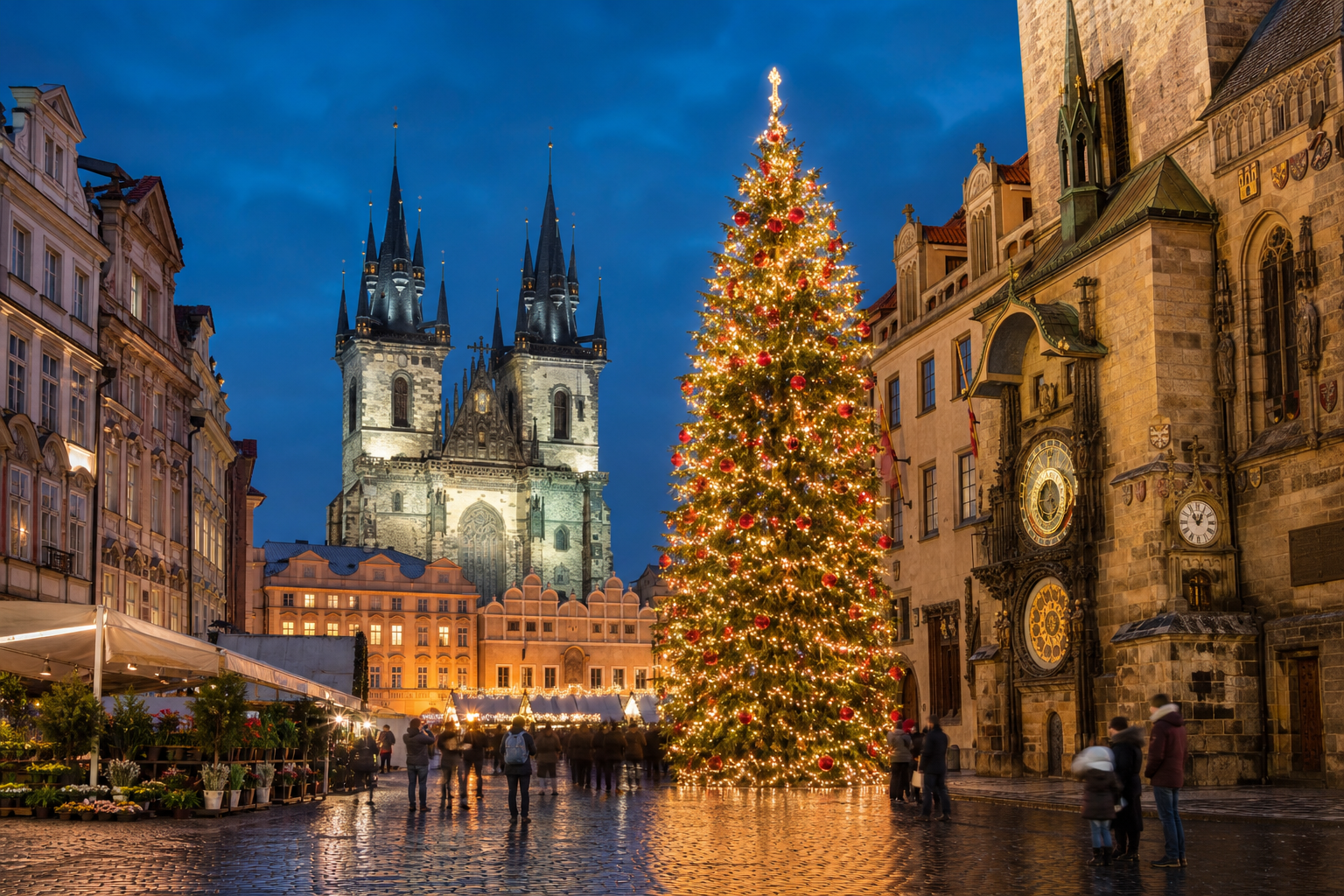
# Vienna at Christmas 2026: My Favorite Markets, Cozy Corners, and Honest Travel Tips
Travel And Tour World’s **Top 50 Christmas Holiday Destinations for 2026** is a useful reminder that festive travel can mean many different things: snowy mountain towns, warm beach escapes, glowing European markets, and lively city breaks. Of all the classic Christmas choices, Vienna remains one of my favorites.
I love Vienna because Christmas feels present without taking over the whole city. You can spend the morning admiring imperial buildings, warm up with a bowl of goulash in a quiet café, then wander through a market beneath strings of golden lights. It feels elegant, but it is also easy to enjoy at your own pace.
## The Vibe & When to Go
Vienna in December is cold, often damp, and occasionally dusted with snow. Daytime temperatures usually sit around **2–6°C**, while evenings can drop below freezing. The early sunsets make the lights feel extra special, though you will want a warm coat, waterproof shoes, gloves, and something to cover your ears.
The main Christmas markets generally begin in mid-November and continue through December, with some staying open into early January. For the best balance of atmosphere and breathing room, I would choose:
– **Late November:** festive decorations are in place, and crowds are usually lighter.
– **The first two weeks of December:** the full Christmas mood without the busiest travel days.
– **Early January:** quieter streets and winter charm, although some stalls may have closed.
Christmas Eve through New Year’s is beautiful but busy and more expensive. If you travel then, book your room and restaurant reservations well ahead.
## Must-See Spots: My Top Picks
### 1. Rathausplatz Christmas Market
This is Vienna’s best-known market, set in front of the grand City Hall. The building glows at night, and the park fills with decorated trees, food stalls, craft stands, and an ice-skating area.
I like arriving in the late afternoon, before the biggest crowds arrive. Have a look around while there is still daylight, then stay until the lights come on. Try **kaiserschmarrn**, a fluffy shredded pancake served with fruit compote, or a hot mug of punch.
A small warning: the central paths become very crowded after 6 p.m. Walk around the outer edge first, then move toward the main stalls once you have seen the busiest section.
### 2. Schönbrunn Palace
Schönbrunn’s market has a more relaxed feel than Rathausplatz. The palace gives it a grand backdrop, but the square itself is compact enough to explore without feeling overwhelmed.
I usually combine this visit with a walk through the palace grounds. In December, the gardens can be chilly and quiet, and the view from the higher paths is lovely when the palace lights begin to glow.
The easiest way to get there is by **U-Bahn line U4 to Schönbrunn**. Go in the afternoon rather than late at night, as the area becomes quieter once the market closes.
### 3. Spittelberg
Spittelberg is my favorite place for a less polished, more local-feeling evening. The Christmas stalls spread through narrow cobbled streets lined with small bars, independent shops, and restaurants.
This is where I go when I want to escape the huge crowds. The market is smaller, but there is plenty of good food, including Austrian sausages, baked potatoes, pastries, and vegetarian dishes. Afterward, find a warm table in one of the neighborhood wine bars.
The streets can be uneven and slippery in wet weather, so comfortable shoes matter more here than fashionable ones.
### 4. The Belvedere Palace
The market in front of the Belvedere is not the largest, but the setting is beautiful. The palace reflects in the pond, and the lights look especially good after dark.
I would not make this your only Christmas market stop, but it is an easy addition to a sightseeing day. Visit the palace museum earlier, then return outside for the market in the evening. Tram lines and trains make the journey simple, although the paths around the palace can be crowded at peak times.
## Practical Travel Advice
### Getting There & Visa
Vienna International Airport has direct flights from many European, Middle Eastern, and North American cities. From the airport, you can reach the center by:
– **City Airport Train:** fast but relatively expensive.
– **S-Bahn train:** slower and cheaper.
– **Airport bus:** useful if your hotel is near a major central stop.
– **Taxi or rideshare:** convenient for families or heavy luggage.
Austria is part of the **Schengen Area**. Citizens of the European Union, United States, Canada, the United Kingdom, Australia, and several other countries can usually visit for up to 90 days without a visa, but exact rules depend on your passport and travel purpose.
Check Austria’s official immigration guidance before booking. Passport validity, travel insurance, proof of accommodation, and the new European travel authorization system may affect some visitors in 2026.
### Where to Stay
Vienna’s public transport is good, so you do not have to stay directly beside a Christmas market.
– **Innere Stadt:** best for first-time visitors who want to walk to major sights. It is beautiful but usually the most expensive.
– **Neubau and Mariahilf:** good for cafés, restaurants, small shops, and a livelier evening atmosphere.
– **Leopoldstadt:** often better value, with easy access to the center and Prater.
– **Wieden:** a comfortable choice with restaurants and a more residential feel.
– **Near Schönbrunn:** practical for longer stays or families, though farther from the historic center.
I usually prefer Neubau or Wieden. They give you more choice at dinner and make it easier to avoid paying central prices every night.
### Getting Around
Vienna is one of Europe’s easiest cities to navigate without a car.
– Walk around the central districts whenever possible.
– Use the **U-Bahn, trams, and buses** for longer trips.
– Buy a transport pass if you plan several journeys each day.
– Download the **WienMobil** app for routes, tickets, and real-time information.
– Taxis are available, but public transport is normally cheaper and reliable.
Most markets are reachable by tram or U-Bahn. At night, check the last connection, especially if you are staying outside the center.
## Real Costs & Local Tips
Vienna is not a bargain Christmas destination, but you can keep costs under control.
### Approximate daily budget per person
**Budget: €65–€100**
– Hostel or simple room: €30–€55
– Breakfast from a bakery: €5–€8
– Casual lunch: €10–€15
– Market food or inexpensive dinner: €12–€20
– Public transport and small treats: €8–€15
**Mid-range: €150–€240**
– Comfortable hotel: €100–€170
– Café breakfast: €10–€18
– Restaurant lunch: €18–€30
– Dinner with a drink: €30–€55
– Museums, transport, and snacks: €20–€35
Prices rise sharply around Christmas Eve, New Year’s Eve, and weekends in December. Hotel rates may be much higher than these daily estimates during peak dates.
Austria uses the **euro**. Card payments are common, but I still carry some cash for market stalls and smaller cafés. Tipping is customary but modest. Rounding up or leaving around **5–10%** for good service is normal; large American-style tips are not expected.
### A Few Tricks That Saved Me Money
– **Buy lunch away from the markets.** Market food is fun, but a bakery, supermarket, or simple neighborhood restaurant usually costs less.
– **Carry a reusable cup.** Some stalls charge a deposit for mugs, which you can reclaim when returning them. Keeping the mug is possible too, but it may cost extra.
– **Visit major markets on weekday afternoons.** You will have more room to browse and may avoid the evening rush.
– **Reserve popular restaurants.** Even casual-looking places can fill quickly in December, especially on Friday and Saturday nights.
– **Check your hotel’s distance from a U-Bahn station.** A slightly cheaper room near good transport can be more convenient than an expensive room in the old center.
– **Do not assume every stall accepts cards.** A small amount of cash makes market visits much easier.
Vienna is not the sort of place where I try to see everything in one weekend. The best moments often come between the famous stops: sitting in a warm coffeehouse after the rain, hearing a brass band near a market, or watching the city lights reflect on a tram window.
That is why it remains a strong choice from the wider 2026 Christmas travel list. You get the grand festive scenery, but you also get a real city with ordinary neighborhoods, excellent public transport, and plenty of quiet corners once you step a few streets away from the crowds.
KEYWORDS: Vienna Christmas, Vienna market