
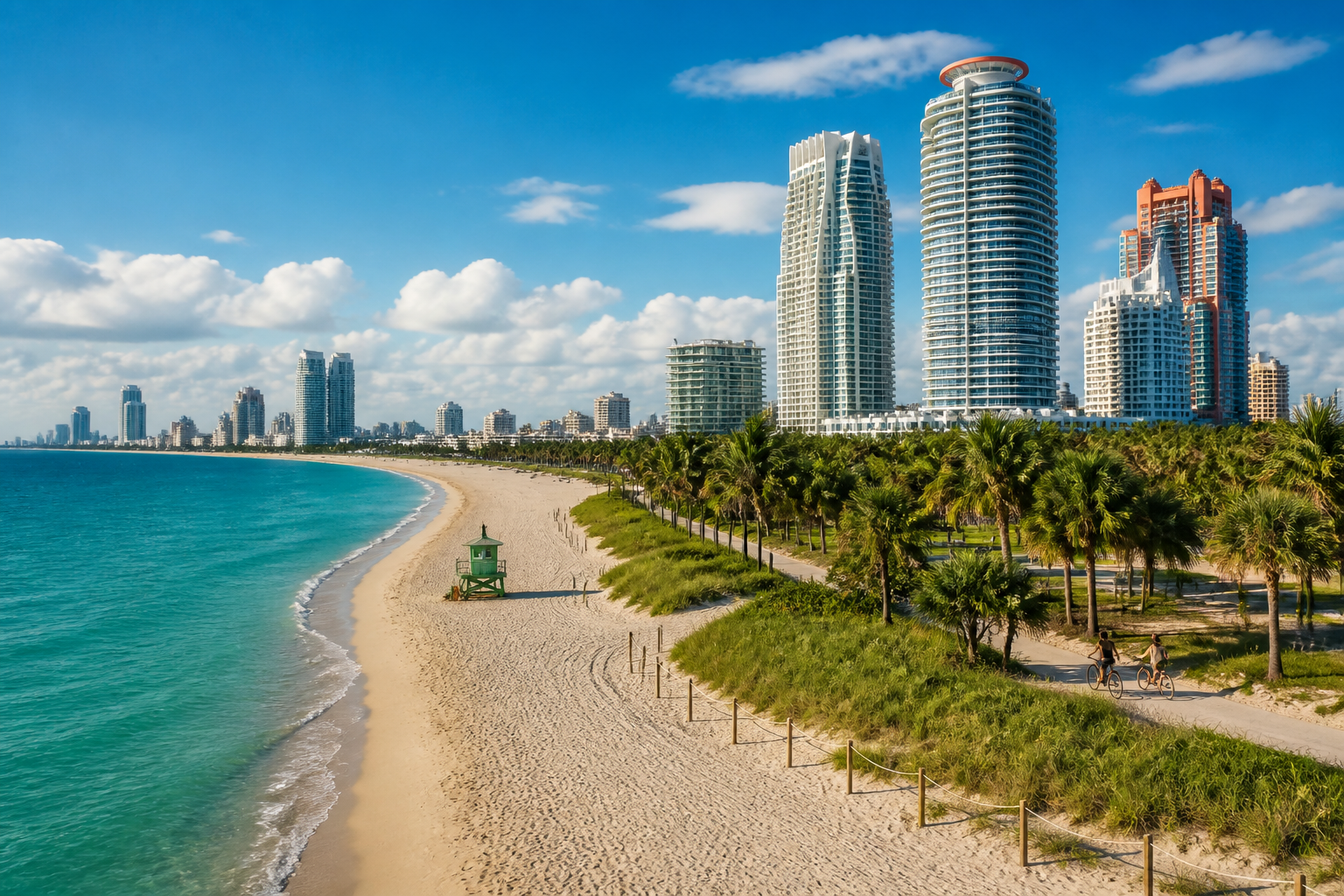
# WTE Miami and the New Face of Travel: A Friendly Guide to Miami, Meetings, and Local Life
## The Vibe & When to Go
Miami has a way of making even a quick business trip feel like a holiday. The air smells faintly of salt, sunscreen, and strong Cuban coffee, while pastel buildings, palm trees, and open-air cafés keep the city feeling relaxed—even when everyone is rushing to meetings.
That mix is part of what makes **WTE Miami, or World Travel Expo Miami**, so interesting. It brings travel advisers together with airlines, hotels, destinations, tourism boards, technology companies, and other people shaping the next chapter of travel. You might spend the morning discussing new booking tools and the afternoon eating a pressed Cuban sandwich in Little Havana.
Miami is warm for much of the year. **December through April** usually brings the most comfortable weather, with lower humidity and plenty of sunshine. Summer is hotter, wetter, and more humid, with short but dramatic rain showers. Hurricane season runs from June through November, so keep an eye on forecasts if you are planning an outdoor-heavy trip.
If you are attending WTE Miami, check the official event page for the latest dates and venue details. The expo has been associated with the Miami Airport Convention Center, but event arrangements can change.
## Must-See Spots: My Top Picks
### 1. South Beach Early in the Morning
South Beach is loud, colorful, and busy later in the day, but I like it best before breakfast. The Art Deco buildings along Ocean Drive catch the soft morning light, and the beach is still calm enough for a quiet walk.
Walk south toward South Pointe Park for a less hectic view of the water and cruise ships moving out of the port. If you are staying near the convention center, this is not a quick walk, so use a rideshare or public transport.
**My tip:** Avoid paying premium prices for every meal on Ocean Drive. Walk a few blocks west for better-value cafés and casual restaurants.
### 2. Little Havana and Calle Ocho
Little Havana is one of the easiest places in Miami to enjoy without a strict itinerary. On Calle Ocho, you can watch domino players at Máximo Gómez Park, listen to music drifting from shopfronts, and stop for a tiny cup of sweet Cuban coffee.
I usually plan a slow afternoon here rather than trying to squeeze it between meetings. Order a pastelito, share a Cuban sandwich, and visit a small art gallery or cigar shop. The neighborhood feels most genuine when you take your time instead of treating it like a checklist.
**My tip:** Cuban coffee is powerful and sweet. Start with a cortadito unless you are prepared for a very strong espresso-sized jolt.
### 3. Wynwood Walls and the Surrounding Streets
Wynwood is famous for its large-scale murals, but the best part is often outside the main ticketed attraction. Wander around the side streets, where new murals appear beside independent galleries, record shops, bakeries, and bars.
The area changes quickly, so some businesses may have moved since your last visit. Go in the late afternoon when the heat is easing, then stay for dinner.
**My tip:** Wear comfortable shoes and bring water. The neighborhood looks compact on a map, but you will probably walk farther than expected.
### 4. Vizcaya Museum and Gardens
When the city starts feeling busy, Vizcaya gives you a quieter change of pace. The former estate has grand rooms, beautiful gardens, and views across Biscayne Bay. It is a good choice for a free morning before WTE Miami begins or for an afternoon away from hotel lobbies and networking events.
The gardens are especially pleasant when the weather is mild. Check opening days before you go, as schedules and access can vary.
**My tip:** Combine Vizcaya with Coconut Grove, but leave enough time for both. Trying to rush through the museum and gardens takes away much of the charm.
## Practical Travel Advice
### Getting There and Visa
Miami International Airport is the main gateway, with direct flights from across the United States, Latin America, Europe, and the Caribbean. For WTE Miami, flying into MIA is usually more convenient than using Fort Lauderdale-Hollywood International Airport, especially if you are staying near the airport or downtown.
If you are visiting from a country in the **Visa Waiver Program**, you may be able to enter the United States for up to 90 days with an approved ESTA. Other travelers generally need the appropriate U.S. visitor visa. For a trade show, business visitors should check whether a B-1 business visitor visa or another category applies to their situation.
Visa rules can change, so use the official U.S. government website and allow plenty of time for applications. Carry your event registration, hotel details, return flight information, and proof of funds in case immigration officers ask about your trip.
### Where to Stay
– **Near Miami International Airport:** Best for early flights, short conference stays, and keeping transport simple. It is practical rather than scenic.
– **Brickell:** A good choice for business travelers who want restaurants, bars, modern hotels, and a more urban feel.
– **Downtown Miami:** Convenient for museums, sports venues, the Metromover, and access to Brickell.
– **South Beach:** Best if you want the classic Miami atmosphere, beach access, and nightlife. Allow extra travel time to the expo.
– **Coconut Grove or Coral Gables:** Quieter, greener, and more residential, with attractive restaurants and a slower pace.
If you are attending WTE Miami, compare the cost of a beach hotel with the daily rideshare fares. A cheaper room in South Beach can become expensive once transport and travel time are added.
### Getting Around
Miami is not one of those cities where you can comfortably walk everywhere. Some neighborhoods are very walkable, but distances between them are larger than they look.
– **Metrorail:** Useful for connecting the airport with downtown, Brickell, and other parts of the city.
– **Metromover:** Free and handy for short trips around downtown and Brickell.
– **MIA Mover:** Connects Miami International Airport with the rental car center and public transport network.
– **Free trolleys:** Available in several neighborhoods, though routes and schedules differ.
– **Uber and Lyft:** Often the easiest choice at night or when carrying conference bags.
– **Car rental:** Usually more trouble than it is worth in central Miami because of parking costs and traffic.
For WTE Miami, check the venue’s exact location before booking accommodation. Miami traffic can turn a short-looking journey into a long one during morning and evening rush hours.
## Real Costs and Local Tips
Prices change with hotel demand, events, and the season, but these are reasonable planning figures for one person.
### Budget Travel
Expect around **$90–$150 per day**, excluding flights:
– Hostel or basic room: $45–$90
– Casual meals: $25–$40
– Public transport: $5–$10
– One inexpensive attraction or coffee stop: $10–$25
### Mid-Range Travel
Plan for roughly **$220–$400 per day**, excluding flights:
– Comfortable hotel: $150–$280
– Meals and drinks: $55–$90
– Rideshares and attractions: $30–$60
Miami uses the **U.S. dollar**. Restaurants commonly add sales tax and expect a tip of around **18–20%** for good table service. Check your bill before tipping because some restaurants add a service charge, particularly for larger groups or busy tourist areas. Bartenders usually receive $1–$2 per drink, while hotel staff and drivers appreciate small tips for helpful service.
### A Few Tricks That Save Money
– **Use lunch specials.** Many restaurants offer better-value menus at midday, especially in Brickell and downtown.
– **Buy water before heading out.** Convenience stores near the beach charge noticeably more than supermarkets or pharmacies.
– **Book airport transfers carefully.** Compare a rideshare with the Metrorail fare before accepting an expensive fixed-price transfer.
– **Look beyond Ocean Drive.** Prices usually improve once you walk west from the busiest beachfront blocks.
– **Leave space between WTE meetings.** Miami traffic is unpredictable, and a relaxed schedule is far better than arriving sweaty and late to your next appointment.
What I like about WTE Miami is that the event feels connected to the city around it. Travel advisers come to talk about the future—new destinations, smarter technology, changing traveler habits—but the most useful conversations often continue over coffee, a plate of arroz con pollo, or a walk along the bay. Miami gives those conversations plenty of room to breathe.
KEYWORDS: Miami skyline, Miami Beach