
# Saudi Arabia Beyond the Headlines: Desert Landscapes, Old Towns, and Practical Travel Tips
Saudi Arabia is having a big moment in travel, but the country feels much more personal once you leave the glossy development headlines behind. What stayed with me was the contrast: polished cafés and modern art spaces in Riyadh, quiet mud-brick villages in the mountains, Red Sea sunsets, and roadside tea served in tiny glass cups.
The tourism sector is expanding quickly through projects such as AlUla, the Red Sea resorts, Diriyah, and new cultural events. Still, Saudi Arabia is not a destination I would rush through. Distances are huge, some places are easiest with a car, and the best experiences often happen when you slow down and accept an invitation for coffee.
## The Vibe & When to Go
Saudi Arabia feels spacious, proud, and more varied than many first-time visitors expect. Riyadh is energetic and businesslike, Jeddah is more relaxed and coastal, and AlUla has a quiet, almost cinematic quality that is hard to describe until you are standing among its sandstone cliffs.
The most comfortable travel season is generally **October through April**. Days are pleasantly warm in many regions, while evenings can become surprisingly cool, especially in the desert and around AlUla. December to February is usually the nicest period for walking outdoors, although winter nights may require a jacket.
From **May to September**, much of the country becomes very hot. Jeddah can feel humid, while Riyadh and the inland desert often have intense daytime heat. Summer can still work if you focus on museums, malls, evening restaurants, and the cooler highlands around Abha, but I would not plan a desert-heavy itinerary then.
Saudi Arabia is especially interesting to visit now because the country is building out its tourism scene in real time. Some attractions are beautifully finished; others still have a little dust, construction, or changing opening hours. I found that flexibility made the trip easier and more enjoyable.
## Must-See Spots: My Top Picks
### 1. AlUla and Hegra
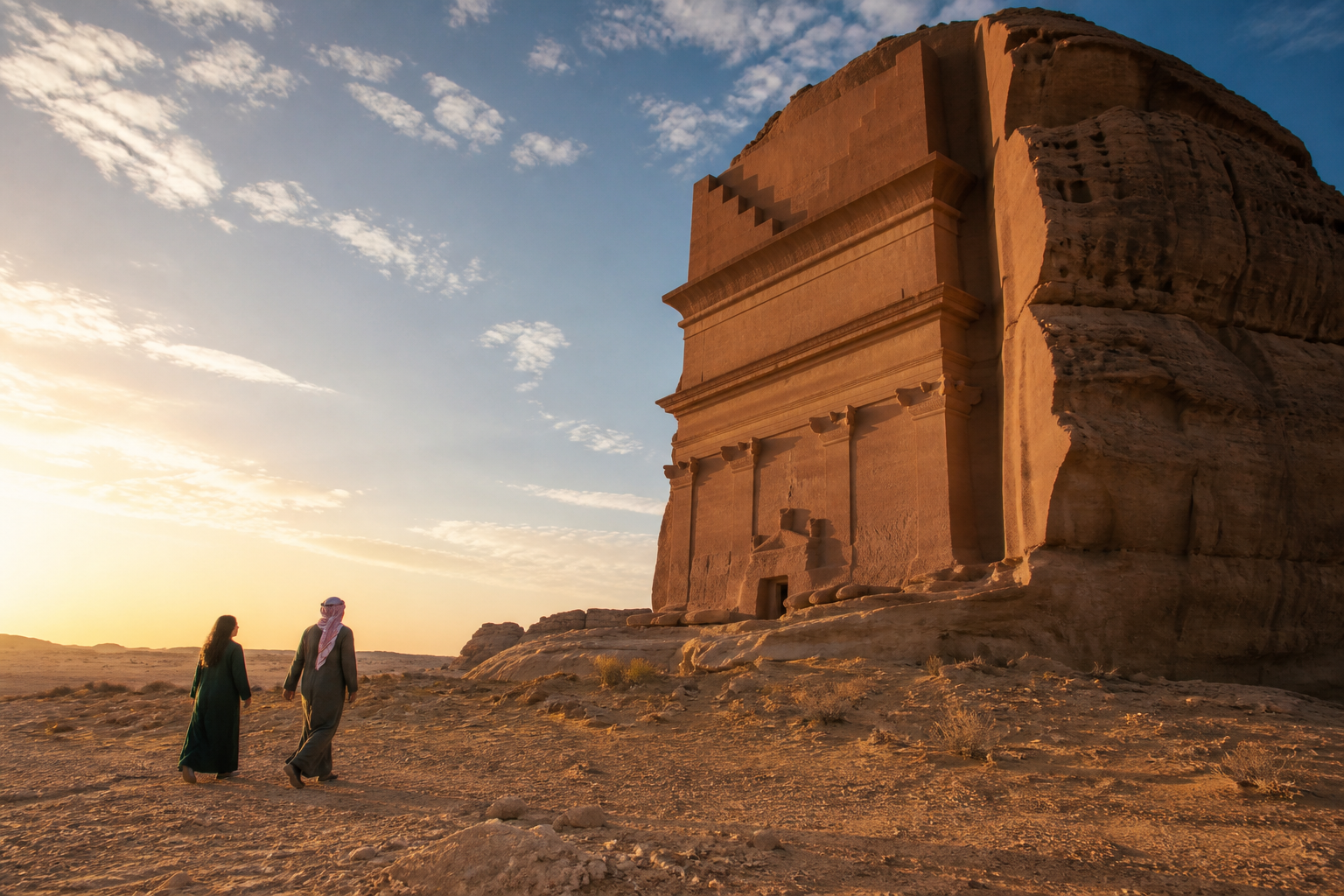
AlUla was the place I kept thinking about after leaving. The landscape is enormous and quiet, with golden rock formations, palm groves, and ancient sites spread across a wide valley.
**Hegra**, Saudi Arabia’s first UNESCO World Heritage Site, is the headline attraction. Its carved Nabataean tombs resemble Petra’s famous monuments, but the setting feels much less crowded. Most visits are organized through timed tours, and access rules can change, so reserve ahead during the busy winter months.
I also loved wandering through **AlUla Old Town** and spending time around the oasis. The best light comes late in the afternoon, when the cliffs turn orange and the shadows stretch across the valley. If your budget allows, look at a guided stargazing or canyon experience, but you can also enjoy the scenery without booking the most expensive package.
**Practical tip:** Stay at least two nights. AlUla is too spread out for a comfortable day trip from another city.
### 2. Riyadh: Diriyah, the Edge of the World, and Al Balad
Riyadh can seem intimidating at first because it is so large and car-oriented, but it has a lively side that appears after sunset.
**At-Turaif in Diriyah** is the place to see the traditional Najdi mud-brick style, with restored lanes, museums, restaurants, and evening lights. It is polished and carefully presented, but I still enjoyed looking closely at the old building details rather than treating it as just a photo stop.
For a completely different view, take a trip to the **Edge of the World**, a dramatic escarpment outside the city. Go with an experienced driver or tour operator, especially if you are unfamiliar with desert tracks. The cliffs are beautiful at sunset, but the roads can be rough and phone coverage is not always reliable.
Back in the city, explore **Al Murabba**, the **National Museum**, and **Kingdom Centre Sky Bridge**. For a more local evening, try a traditional Saudi restaurant rather than eating every meal in a mall.
**Practical tip:** Riyadh traffic can turn a short journey into a long one. Group nearby sights together and avoid the busiest commuting hours.
### 3. Jeddah’s Historic Al Balad
Jeddah has a softer, more relaxed rhythm than Riyadh. The old district of **Al Balad** is the heart of the city, filled with coral-stone buildings, carved wooden balconies, small shops, and food stalls.
I liked visiting in the late afternoon, when the heat eased and the streets began to fill. Look above shop level for the old **rawasheen** window screens, many of which have delicate patterns and faded colors. Some buildings are beautifully restored, while others show their age in a way that makes the area feel lived-in rather than staged.
Try local favorites such as **mutabbaq**, **foul**, grilled meats, and sweet tea. Jeddah is also a good place to sample seafood from the Red Sea. After Al Balad, walk along the **Jeddah Corniche** for sea views and a breeze, particularly around sunset.
**Practical tip:** Wear comfortable shoes with good grip. Al Balad’s streets are uneven, and you will probably spend longer wandering than planned.
### 4. Abha and the Asir Mountains
If you want cooler weather and a greener landscape, head south to **Abha**. The Asir region has mountain roads, juniper-covered slopes, colorful village architecture, and a distinct local culture that feels different from central Saudi Arabia.
The **Rijal Almaa Heritage Village** is one of the most memorable stops. Its tall stone buildings and mountain setting make it a rewarding day trip from Abha, although the drive takes time. The region is also known for traditional foods, honey, and the colorful woven belts and clothing associated with Asiri culture.
Clouds and mist can roll across the mountains, especially in the summer months. Weather changes quickly, so bring a light layer even if Abha feels warm when you leave the hotel.
**Practical tip:** A rental car or private driver makes the Asir region much easier. Public transport will not get you to the smaller villages and viewpoints comfortably.
## Practical Travel Advice
### Getting There and Visa
Most international visitors arrive through **Riyadh, Jeddah, or Dammam**. Direct flights are available from many cities in the Gulf, Europe, Asia, and parts of Africa. Riyadh is convenient for central Saudi Arabia, while Jeddah is better for the Red Sea coast, AlUla connections, and visitors combining tourism with Umrah.
Citizens of eligible countries can apply for a Saudi **tourist eVisa online**. The usual tourist eVisa is multiple-entry and commonly allows stays of up to 90 days, but conditions depend on your passport and the latest Saudi regulations. Some nationalities may qualify for a visa on arrival, and GCC residents may have separate options.
Before booking, check the official Saudi visa portal or your nearest Saudi embassy. Your passport generally needs at least six months of validity, and you should have proof of onward travel and accommodation available. Visa rules can change, particularly around religious travel and major events.
Tourist visas allow visits to many parts of the country, but **Mecca and Medina have specific access rules**. Non-Muslims cannot enter Mecca, and access to parts of Medina may also be restricted. Dress modestly, avoid photographing people without permission, and remember that alcohol is illegal.
### Where to Stay
– **Riyadh:** Olaya and the Kingdom Centre area are convenient for restaurants, business districts, and first-time visitors. Diriyah is more atmospheric but can be farther from other parts of the city.
– **Jeddah:** Al Hamra and the Corniche suit visitors who want restaurants and waterfront walks. Stay near Al Balad if historic architecture is your priority, though the area is quieter at night.
– **AlUla:** The Old Town area is convenient for restaurants and tours. Desert resorts offer a memorable setting but can be very expensive. Check exactly what transport is included before paying.
– **Abha:** The city center is practical, while hillside hotels offer better views. For mountain villages, expect fewer hotel choices and book ahead during school holidays.
– **Dammam and Al Khobar:** Al Khobar is a comfortable base for the Eastern Province, with a pleasant waterfront, cafés, and easy access to nearby cities.
Hotels range from simple furnished apartments to high-end resorts. In smaller destinations, online listings do not always tell the full story, so read recent reviews and confirm check-in times directly.
### Getting Around
Saudi Arabia is not broadly walkable outside historic districts and selected waterfront areas. Riyadh and Jeddah are large, spread-out cities, and the summer heat makes walking between attractions unpleasant.
– **Rideshares:** Uber and Careem are widely used in major cities. Confirm the license plate before getting in and allow extra time during traffic.
– **Public transport:** Riyadh’s metro has begun changing how visitors move around the capital, but routes and operating details may vary. Check the latest schedule and use rideshare for the final stretch.
– **Car rental:** This is the best option for AlUla, the Asir Mountains, and the Eastern Province. Driving can be fast and assertive, so take your time and avoid long desert drives after dark.
– **Domestic flights:** For long distances, flying is often much easier than driving. Saudi Arabia is enormous, and a road trip from Riyadh to Jeddah takes far longer than it looks on a map.
– **Intercity trains:** The Haramain High-Speed Railway connects Jeddah, Mecca, Medina, and nearby stations. It is comfortable and useful for eligible travelers visiting those cities.
## Real Costs and Local Tips
Saudi Arabia can be affordable or extremely expensive, depending on how much you spend on accommodation and organized experiences.
### Rough daily budgets
**Budget traveler: SAR 180–300 per day**
– Simple hotel or shared accommodation
– Local breakfasts and casual restaurants
– Rideshares and occasional buses
– A small number of paid attractions
**Mid-range traveler: SAR 450–850 per day**
– Comfortable hotel
– Mix of local restaurants and cafés
– Rideshares or a rental car shared between two people
– One or two paid tours or heritage-site visits
AlUla is the exception. Accommodation, tours, and transport there can push a mid-range day well above **SAR 1,000**, particularly during major events or the cooler winter season.
The local currency is the **Saudi riyal (SAR)**. Cards are accepted almost everywhere in cities, but keep some cash for small cafés, market stalls, taxis in rural areas, and roadside stops. Tipping is not compulsory, but rounding up or leaving around 5–10% for good restaurant service is appreciated. Check whether a service charge has already been added.
### A few money-saving tricks
– **Eat where office workers and families eat.** Local restaurants serving rice, grilled chicken, foul, or shawarma are usually far cheaper than hotel dining rooms.
– **Book AlUla early.** Last-minute rooms and tours can become surprisingly expensive, especially during festivals and winter weekends.
– **Share long-distance transfers.** A private driver to Hegra or the Edge of the World costs much less per person when shared with other travelers.
– **Use supermarkets for road trips.** Water, fruit, dates, yogurt, and sandwiches are inexpensive and useful between remote stops.
– **Ask about event pricing.** Restaurants and attractions near major entertainment zones sometimes raise prices or add booking fees during busy periods.
– **Carry a scarf or light outer layer.** It helps with sun, air conditioning, and visits to religious or conservative areas where extra coverage is appropriate.
My biggest piece of advice is to leave room for unplanned conversations. A shopkeeper recommending a nearby breakfast place, a family offering Arabic coffee, or a driver pointing out a viewpoint can become the part of the trip you remember longest. Saudi Arabia’s tourism infrastructure is developing fast, but its warmth is still found in ordinary moments.
KEYWORDS: Saudi Arabia, AlUla desert