
# Africa Beyond the Checklist: My Favorite Experiences, Local Tips, and Realistic Costs
Africa is not one type of trip. It can be a dawn safari in Kenya, a long lunch in Morocco, a fishing village in Senegal, a desert road in Namibia, or an evening of music in Accra when nobody seems in a hurry.
That variety is exactly what makes Africa such a rewarding destination for experiential travel. You don’t simply look at places here—you listen, taste, walk, share meals, learn, and sometimes let the day unfold without trying to control every minute.
## The Vibe & When to Go
The feeling changes dramatically from country to country, but one thing stayed with me: Africa encourages you to slow down and pay attention. A market stall, a roadside tea stop, or a conversation with a guide can become the part of the journey you remember most.
Because the continent crosses the equator, there is no single “best season” everywhere.
– **June to October:** A popular period for safaris in East and Southern Africa, with generally drier weather and better wildlife viewing. It is also a busy and expensive season.
– **November to March:** Many areas become greener, quieter, and less costly. Short rains can bring dramatic skies and young animals, although some roads may be muddy.
– **December to February:** A good time for Cape Town, parts of Namibia, and Southern African beaches, while East Africa may have mixed weather.
– **March to May:** Morocco and parts of North Africa can be pleasant, but heavy rain may affect some safari and mountain areas.
If you are traveling soon, I’d choose your country first and then check its local weather rather than planning around “Africa” as a whole. The dry season is convenient, but the green season can feel more intimate and beautifully raw.
## Must-See Experiences: My Top Picks
### 1. A Walking Safari or Small-Group Game Drive in Kenya or Tanzania
The first time I saw elephants moving across the horizon, I expected the moment to feel loud and dramatic. Instead, it was incredibly quiet. Our guide switched off the vehicle, and all we could hear was dust shifting beneath the animals’ feet.
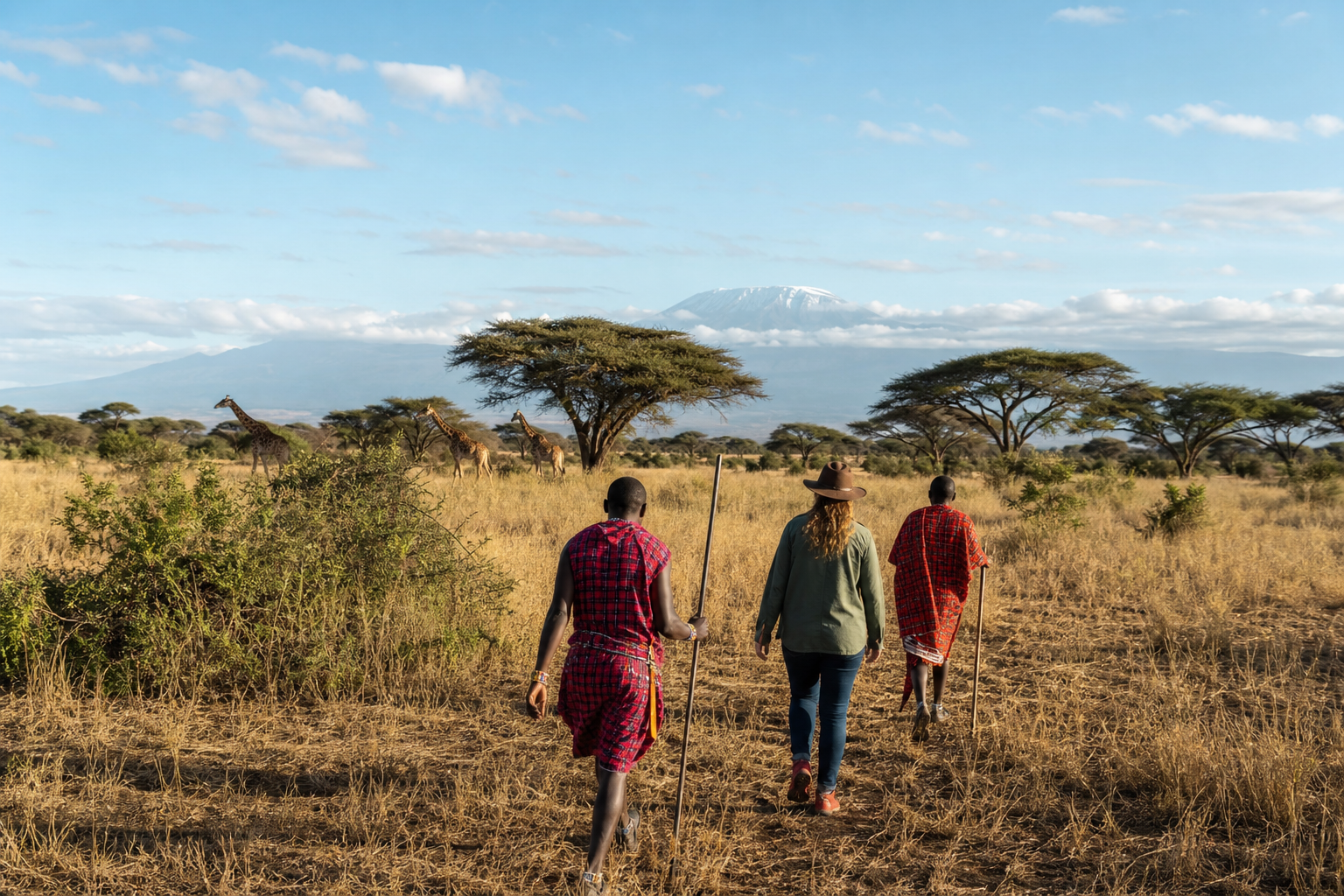
The famous parks—Serengeti, Maasai Mara, Ngorongoro, and Amboseli—are unforgettable, but your choice of guide matters as much as the park itself. A small-group operator usually gives you more flexibility than a large bus-style tour. Ask whether the company employs local guides, supports nearby communities, and limits the number of vehicles around sightings.
A **walking safari**, where permitted, gives you a completely different understanding of the bush. You notice tracks, insects, birds, and tiny signs of movement that disappear from a vehicle window.
**My practical advice:** Don’t pack every day with game drives. Leave room for a village visit, a conservation project, or a quiet afternoon at camp. Wildlife is not a stage show, and the best sightings often happen when you stop chasing them.
### 2. Marrakech and the Smaller Towns of Morocco
Marrakech can be intense—the scooters, the sales pitches, the maze of souks—but it rewards patience. I preferred wandering early in the morning, before the main square became crowded, then taking a break over mint tea while the city woke up.
The medina is worth exploring beyond the popular shopping streets. Look for neighborhood bakeries, small workshops, old riads, and quiet courtyards. If you enjoy cooking, take a class that includes a market visit. Buying vegetables and spices with a local cook taught me more about Moroccan food than any restaurant menu could.
If you have extra time, combine Marrakech with **Essaouira**, the Atlas Mountains, or smaller villages in the High Atlas. Essaouira has a cooler, windier feel and makes a welcome contrast to Marrakech’s heat and noise.
**My practical advice:** Hire a licensed local guide for your first half-day in the medina, then explore independently. Agree on prices before accepting help with directions or luggage, and keep a map pin for your riad because the lanes can become confusing after dark.
### 3. The Coast, Music, and Food of Ghana or Senegal
West Africa is where I felt the strongest pull to stay longer. In Accra, the best moments came from ordinary experiences: grilled fish by the coast, live music in a small venue, and long conversations that stretched well past the time I thought dinner would end.
In Ghana, you can combine Accra with Cape Coast, Kakum National Park, or a quieter beach town. Senegal offers Dakar’s art and music scene, the island of Gorée, and the wide beaches around the Petite Côte.
These trips are less about ticking off landmarks and more about being present. Take a food tour, visit a craft studio, or book a community-led walking tour instead of only visiting major museums. If you photograph people, ask first. A small gesture of respect changes the entire interaction.
**My practical advice:** Build in extra time. Traffic can be slow, meals may take longer than expected, and shared taxis do not always run on a neat timetable. That relaxed pace is part of the experience, not a problem to solve.
### 4. Namibia’s Open Roads and Desert Landscapes
Namibia feels almost cinematic, but it never felt artificial to me. The landscape is enormous—red dunes, dry riverbeds, rocky plains, and skies that seem to go on forever.
A road trip between **Windhoek, Sossusvlei, Swakopmund, and Etosha National Park** is one of the most memorable journeys I’ve taken. The distances are long, so don’t underestimate driving times. Stop for fuel whenever you can, carry water, and avoid driving after dark because livestock and wildlife may wander onto the road.
Sossusvlei is busiest around sunrise. Arriving early helps with the heat and gives you a better chance of enjoying the dunes without a crowd. In Etosha, I preferred sitting quietly at a waterhole rather than moving constantly from one sighting to another.
**My practical advice:** A self-drive trip gives you freedom, but a local guide adds a lot in the desert and on safari. If you are not used to gravel roads, choose a guided or partly guided itinerary.
## Practical Travel Advice
### Getting There and Visa Requirements
Most international travelers enter through major hubs such as:
– **Johannesburg or Cape Town** for Southern Africa
– **Nairobi or Addis Ababa** for East Africa
– **Casablanca or Cairo** for North Africa
– **Accra, Dakar, or Lagos** for West Africa
Flight prices can vary wildly. I usually compare nearby departure airports, check one-stop routes, and avoid booking separate tickets with tight connections. If you are traveling between African countries, regional flights can be surprisingly expensive, so price internal routes before finalizing your itinerary.
Visa rules depend on your passport and the exact country. Some destinations offer visa-free entry, visas on arrival, or online e-visas; others require an application before departure. Check the destination’s official immigration website or embassy shortly before traveling. Your passport generally needs several months of validity and spare blank pages, and some countries ask for proof of onward travel, accommodation, or yellow fever vaccination.
Carry digital and printed copies of:
– Passport identification page
– Visa or e-visa approval
– Travel insurance
– Vaccination records
– Hotel and flight details
### Where to Stay
Your preferred neighborhood can change the whole mood of a trip.
– **Marrakech:** Stay in a riad inside the medina for atmosphere, or in Gueliz for easier taxis, modern restaurants, and less nighttime noise.
– **Nairobi:** Westlands and Karen are popular for restaurants and hotels; the city center is convenient during the day but may feel less comfortable at night.
– **Accra:** Osu is lively and walkable in short stretches, while Labone and Cantonments are calmer and often better for longer stays.
– **Cape Town:** City Bowl is convenient for first-time visitors, De Waterkant is good for restaurants and nightlife, and Sea Point works well if you like morning walks by the water.
– **Safari areas:** Staying just outside a national park can save money, but staying inside or near the gate gives you more time in the reserve and less daily driving.
I often choose a simple locally owned guesthouse over a large international hotel. You get better neighborhood advice, and your money is more likely to stay in the local economy.
### Getting Around
Walking works well in parts of Marrakech, Stone Town, Cape Town, and central Accra, but many places are not designed for long, casual walks. Heat, traffic, uneven pavements, and safety concerns can make short distances feel different from what they look like on a map.
For city rides:
– **Uber** operates in several major cities.
– **Bolt** is common in many African capitals and can be cheaper.
– **Yango** is used in parts of North and West Africa.
– Local taxis remain important, especially where app coverage is limited.
Use official airport taxi desks or a prearranged hotel transfer when arriving late at night. For longer distances, shared minibuses are cheap and authentic but can be crowded and confusing. Trains are useful on certain routes, including parts of Morocco and South Africa, but they are not a continent-wide solution.
## Real Costs and Local Tips
Prices depend heavily on the country and the type of safari or transport you choose. These are rough **per-person daily estimates**, excluding international flights and major safari packages.
### Budget Travel
**US$35–70 per day**
This usually covers a hostel or simple guesthouse, local meals, public transport, occasional taxis, and low-cost activities. Morocco, Ghana, Senegal, and parts of East Africa can fit this range if you travel slowly and avoid expensive excursions.
### Mid-Range Travel
**US$90–180 per day**
Expect a comfortable guesthouse or small hotel, a few restaurant meals, private or app-based rides, guided activities, and better intercity transport. Safari days can push the budget much higher, often **US$200–600 or more per person per day**, depending on the park, season, camp, and group size.
### Money, Currency, and Tipping
Currencies vary by country, so don’t rely on US dollars everywhere. Cards are accepted in many hotels and urban restaurants, but cash is still essential for markets, taxis, small cafés, and rural areas.
Bring a backup card and withdraw money in moderate amounts. Keep some cash in separate places rather than carrying everything in one wallet.
Tipping is appreciated but not always handled the same way:
– Restaurants: around **5–10%** when service is not already included
– Guides and drivers: tip according to the length and quality of the experience
– Hotel staff: small tips are welcome
– Safari guides: often receive a larger shared tip at the end of a multi-day trip
Ask your hotel or tour operator about local expectations before tipping, especially on an organized safari.
### A Few Tricks That Saved Me Money
– **Travel in the shoulder or green season.** Accommodation and safari prices can drop, and popular sites feel less crowded.
– **Eat where office workers and families eat.** Busy local restaurants usually offer fresher food and more sensible prices than empty places beside major attractions.
– **Use a local SIM or eSIM.** Reliable data makes ride apps, maps, and mobile payments much easier.
– **Agree on taxi fares before getting in.** If using an app is not possible, ask your hotel what a normal fare should be.
– **Book activities with small local operators.** Compare what is included—park fees, meals, transfers, and guide costs—rather than choosing by headline price alone.
– **Don’t change countries every few days.** Africa’s distances are larger than they appear, and slow travel often costs less while giving you a far richer experience.
Africa stayed with me not because every day was easy, but because the experiences felt real. The best memories were rarely the polished ones. They were the dusty roadside stops, the guide pointing out a bird I would have missed, the shared plate of food, and the unexpected invitation to sit for tea.
Go with curiosity, patience, and enough time to let the plan loosen a little. That is when Africa begins to feel less like a destination and more like a collection of human stories you have been lucky enough to enter.
KEYWORDS: African safari, Africa travel