
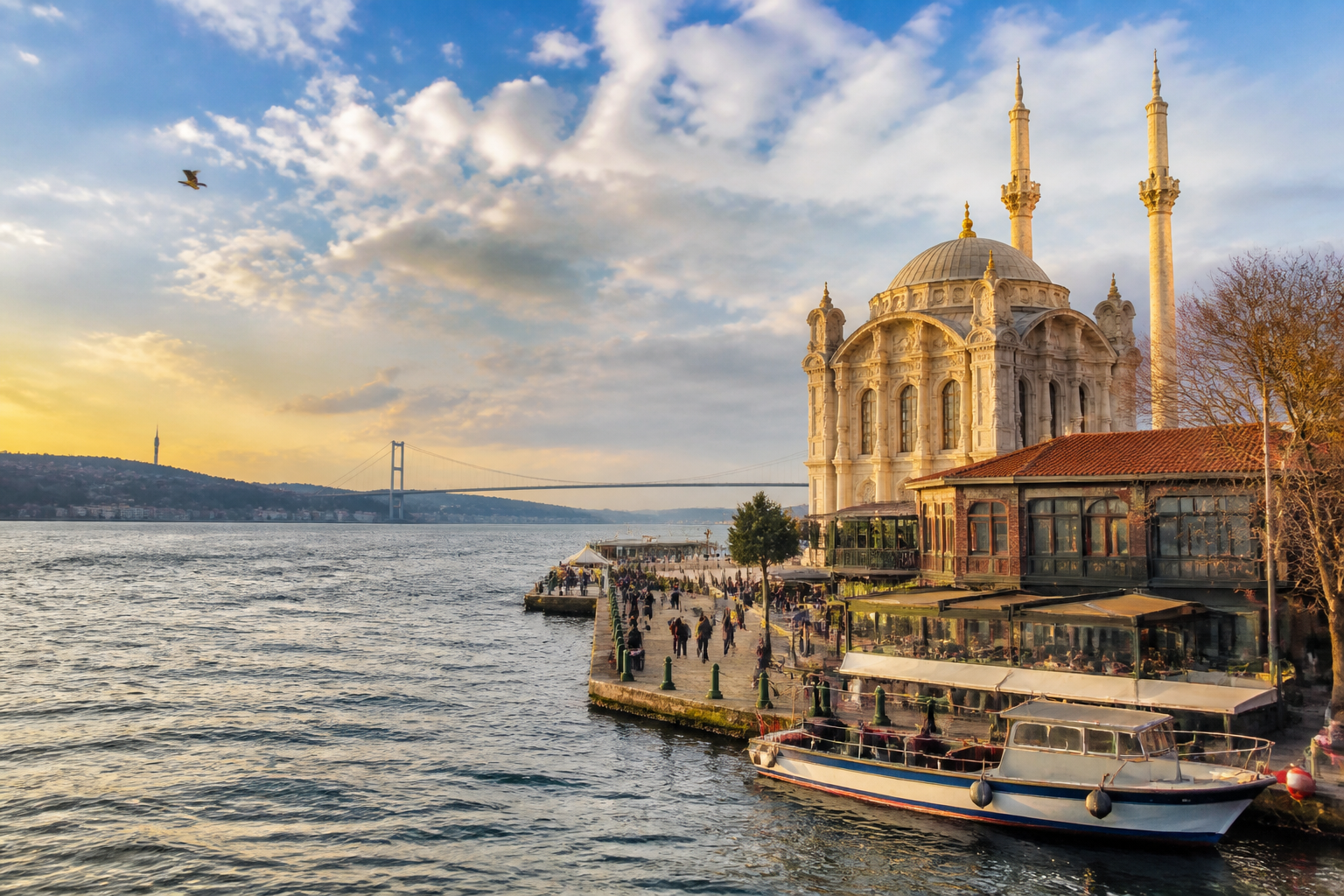
# Turkey on a Realistic Budget: Istanbul, Street Food, and What Travel Costs Now
Turkey still gives you grand mosques, ferry rides across the Bosphorus, smoky tea glasses, and some of the best food I’ve ever eaten. But the old idea that you can travel here almost for free is no longer quite true.
Prices have climbed sharply, especially for hotels, museum tickets, domestic flights, and anything aimed at visitors. The good news is that Turkey can still be good value if you travel thoughtfully. I found the biggest savings came from eating where local workers eat, using public transport, and resisting the temptation to book every famous attraction through a tour company.
I’ll use Istanbul as the main base here, since it’s where most visitors begin. The same advice also helps if you continue to Cappadocia, the Aegean coast, or Antalya.
## The Vibe & When to Go
Istanbul feels wonderfully untidy in the best possible way. Ferries groan across the water, cats nap outside bakeries, calls to prayer drift over busy streets, and one minute you’re in a polished shopping district and the next you’re squeezing past a tiny hardware shop.
The city is energetic rather than relaxing. Hills are everywhere, traffic can test your patience, and the crowds around Sultanahmet get intense during the middle of the day. Still, I never grew tired of crossing the Bosphorus with a paper cup of tea in hand.
**Spring and autumn are my favorite seasons.** April to May and September to October usually bring comfortable walking weather, with cooler mornings and fewer oppressive afternoons. Summer can be hot and crowded, particularly in Istanbul and along the Mediterranean coast. Winter is wetter and quieter, though hotel prices often soften and the city has a lovely, moody atmosphere.
If you’re visiting soon, check the forecast for each region rather than assuming Turkey has one climate. Istanbul can be cool and rainy while Antalya is sunny, and Cappadocia often has much colder nights.
## Must-See Spots: My Top Picks
### 1. The Bosphorus by public ferry
You don’t need an expensive sightseeing cruise to enjoy Istanbul from the water. A regular Şehir Hatları ferry gives you the same breeze, skyline, and gulls for a fraction of the price.
I like taking the ferry from Eminönü to Kadıköy, then wandering through Kadıköy Market. Grab a simit, a few olives, and a cup of tea before finding a seat near the rail. The crossing is short, but it gives you a completely different sense of the city.
For a longer ride, take a ferry toward Ortaköy or one of the Princes’ Islands. Go earlier in the day if you want a seat outside.
### 2. Sultanahmet early in the morning
The Blue Mosque, Hagia Sophia, Basilica Cistern, and Topkapı Palace are famous for good reason, but the crowds can make the area feel exhausting.
My advice is to arrive early, before tour groups begin filling the square. The Blue Mosque is still an active place of worship, so dress respectfully and check prayer times. Hagia Sophia now has different visitor arrangements and ticket rules from the mosque areas, so check the official website before going rather than relying on an old blog post.
The Basilica Cistern was one of my favorite stops. It’s cool, dim, and wonderfully strange beneath the city. Book only through the official ticket channel if possible; unofficial sellers often add unnecessary fees.
### 3. Balat and Fener, with realistic expectations
The colorful streets of Balat and Fener are fun for a slow wander, especially if you enjoy old buildings, small cafés, and antique shops. I liked walking without a fixed route and stopping whenever I heard the clatter of dishes from a neighborhood restaurant.
Some streets are much more polished than they used to be, and several “hidden” corners are now firmly on the tourist map. Don’t treat the area like a photo set. People live here, laundry hangs from balconies, and narrow residential lanes aren’t always suitable for large groups or loud photography.
Walk uphill slowly, wear comfortable shoes, and take a bus or taxi back if your legs have had enough.
### 4. Kadıköy and Moda at sunset
For food and an evening that feels less staged, I’d choose the Asian side. Kadıköy has fish shops, bakeries, meze counters, bookstores, bars, and plenty of places where locals meet after work.
From there, walk toward Moda along the waterfront. I’ve spent lovely evenings sitting on the grass with takeaway dürüm and watching ferries move through the sunset. Prices vary, but you can eat well here without paying Sultanahmet restaurant rates.
Try **lahmacun**, **midye dolma**, **köfte**, fresh **balık ekmek**, and a proper Turkish breakfast if you have time. Ask to see the menu before sitting down, especially near major sights.
## Practical Travel Advice
### Getting there and visa requirements
Istanbul has two major airports:
– **Istanbul Airport (IST):** The main international airport, on the European side.
– **Sabiha Gökçen Airport (SAW):** On the Asian side and often useful for budget airlines and domestic routes.
Compare the full journey, not only the airfare. A cheaper ticket to an airport far from your hotel may cost more once you add airport transport and time.
Visa rules depend entirely on your passport. Some nationalities can enter visa-free, while others need an **e-Visa** or a consular visa. Use Turkey’s official e-Visa website and the Turkish Ministry of Foreign Affairs before booking. Your passport should generally have sufficient validity beyond your arrival date, and airlines may check this before boarding.
Don’t assume that a visa for the European Union, the United Kingdom, or the United States automatically gives you entry to Turkey. It may affect eligibility for an e-Visa for some nationalities, but the conditions vary.
### Where to stay
**Sultanahmet:** Best for first-time visitors who want to walk to the major historic sights. It’s convenient, but many restaurants and hotels charge tourist-area prices.
**Karaköy and Galata:** Good for cafés, nightlife, stylish guesthouses, and a central location. The hills are real, and rooms can be expensive.
**Kadıköy:** My favorite choice for food, a more local evening atmosphere, and good ferry connections. It’s especially pleasant if you’ve already seen the main sights.
**Beşiktaş:** Lively, well connected, and packed with casual restaurants. It works well for travelers who want city life without staying directly beside the monuments.
**Beyoğlu:** Useful for nightlife and transport, though some streets are noisy late at night. Read recent reviews carefully before booking.
The recent rise in accommodation prices is one reason Turkey no longer feels universally cheap. Booking a private room in a popular neighborhood at the last minute can be surprisingly costly.
### Getting around
Istanbul is walkable in sections, but not as one giant walking city. Sultanahmet, Eminönü, Galata, and Karaköy can be combined on foot, while longer journeys are easier by tram, metro, ferry, or bus.
Buy and load an **Istanbulkart** for public transport. It works on most buses, trams, ferries, and metro lines. Prices and card rules change, so buy from official machines or staffed transport points rather than an opportunistic street seller.
For taxis, use **BiTaksi** where available, or ask your hotel to call one. Uber operates in a limited way in Istanbul and often connects you with licensed taxis rather than functioning like a separate private-car service. Make sure the meter is running, keep the route visible on your phone, and don’t accept a “special fixed price” without checking the normal fare first.
Google Maps is useful, though local transport apps can sometimes show more accurate departures. Allow extra time during rush hour; Istanbul traffic can turn a short journey into a long one.
## Real Costs in Turkey
The Turkish lira changes quickly, so treat these as rough planning figures rather than fixed prices. Exchange rates and ticket prices can move within a few weeks.
### Budget traveler: around **₺1,500–₺2,500 per day**
This assumes:
– Hostel dorm or simple guesthouse
– Bakeries, lokantas, döner, and street food
– Public transport
– One modest paid attraction or occasional café
– Little or no alcohol
A hostel bed in Istanbul may cost roughly **₺700–₺1,500**, depending on the neighborhood, season, and booking date. A filling local meal can be around **₺150–₺350**, while tea, simit, and small snacks remain among the easiest ways to keep costs down.
### Mid-range traveler: around **₺4,000–₺7,000 per day**
This usually covers:
– A comfortable hotel or private room
– Two or three sit-down meals
– Public transport plus the occasional taxi
– A few major sights
– Coffee, dessert, or a drink
Hotels in central Istanbul can push this higher, particularly on weekends and during school holidays. Cappadocia, beach resorts, and famous coastal towns may also cost more than Istanbul during peak season.
### Tipping and payment
Tipping is appreciated but not compulsory in the American sense. For restaurants, **5–10%** is reasonable when service is good. At cafés, rounding up or leaving a small amount is fine. Taxi drivers usually appreciate rounding to a convenient number.
Cards are widely accepted in Istanbul, but keep some lira for small bakeries, public toilets, markets, ferries, and neighborhood cafés. I’d avoid exchanging a large amount at the airport unless you need emergency cash.
## A Few Ways to Spend Less
– **Eat one main meal away from the monuments.** Restaurants around Sultanahmet and the Galata Tower often charge more for the same dishes served elsewhere.
– **Use ferries and public transport instead of sightseeing tours.** You’ll see more of everyday Istanbul and save a surprising amount.
– **Check museum prices before setting your itinerary.** Major attraction tickets have become expensive, and some combination passes are only good value if you plan to visit several included sites.
– **Choose lunch over dinner for a restaurant meal.** Many local places offer more generous portions or set menus during the day.
– **Ignore anyone who approaches you with a restaurant invitation.** I’ve had better meals by choosing busy places with menus displayed outside.
– **Book domestic flights and intercity buses early.** Last-minute tickets to Cappadocia, İzmir, or Antalya can be far more expensive than expected.
Turkey is no longer the effortless bargain it was a few years ago, but it hasn’t lost its ability to reward curious, flexible travelers. Come for the history, stay for the food, and leave room in your budget for the small pleasures: a ferry ride, a warm loaf of bread, a second glass of tea, and an unplanned walk down a street you hadn’t seen on your map.
KEYWORDS: Istanbul Turkey