
# Morocco, More Thoughtfully: Souks, Mountains, and a New Push for Sustainable Travel
Morocco has always been a country that rewards slow travel. A train window fills with olive groves, a medina alley opens onto a quiet riad courtyard, and a five-minute mint tea can easily become an hour of conversation.
Now there is another reason to pay attention to how you travel here. Morocco has launched its first **sustainable tourism certification programme**, designed to recognize hotels, guesthouses, tour operators, and other tourism businesses that meet environmental and social standards. The idea is simple: use less water and energy, reduce waste, support local jobs, and make tourism more respectful of the communities receiving visitors.
The programme is still new, so I would not treat a certificate as an automatic guarantee of perfection. But it gives travelers a useful question to ask: *Where does my money go, and how is this place trying to reduce its footprint?*
## The Vibe & When to Go
Morocco feels wonderfully varied. Marrakech is energetic and dusty around the edges, with orange trees, rooftop cafés, and scooters squeezing through the medina. Fes is more inward-looking and historic, while Essaouira carries the cool Atlantic breeze like a permanent companion. In the mountains, life slows down dramatically.
If you are visiting in **spring or autumn**, you will usually find the most comfortable conditions: warm days, cooler evenings, and good weather for walking. Summer can be very hot in Marrakech and the interior, although the coast remains much more pleasant. Winter is mild in the cities but can be cold at night, especially in old riads and mountain villages.
The new sustainability programme makes this a particularly interesting moment to visit. Morocco is trying to grow tourism without allowing every destination to become a copy of the next one. Choosing locally owned stays, trains over short flights, and certified businesses can help keep your trip connected to that effort.
## Must-See Spots: My Top Picks
### 1. Marrakech Beyond the Main Square
Jemaa el-Fnaa is famous for a reason, but I enjoy Marrakech most when I step away from the crowds. Start early around the spice stalls and food vendors before the heat and noise build. Then wander toward the **Mouassine neighborhood**, where small galleries, workshops, and quiet riad courtyards sit just a few turns from the busiest lanes.
The **Bahia Palace** is best visited early. Its painted ceilings and tiled rooms are beautiful, but the real pleasure is taking your time in the shaded courtyards rather than rushing through with a camera raised.
For food, I prefer a small place serving tanjia, harira, or vegetable tagine over a restaurant with a large multilingual menu. Ask your accommodation for a recommendation, and agree on taxi prices before getting in if the meter is not being used.
### 2. Fes, Where the Medina Feels Like a Living City
Fes el-Bali can be confusing, noisy, and completely absorbing. Donkeys still carry goods through narrow lanes, brassworkers hammer away in tiny workshops, and you may pass three generations of one family working in the same shop.
The famous tanneries are worth seeing, though the sales pressure afterward can be tiring. I found the quieter pleasure in the residential lanes near **Al Quaraouiyine** and in stopping for tea on a rooftop where the rooftops stretch toward the hills.
Wear comfortable shoes with a good grip. The stone lanes can be slippery, and some streets are steep. A local guide is useful for a first visit, especially if you want historical context rather than simply being led from shop to shop. Look for guides who are officially licensed and transparent about the itinerary.
### 3. Essaouira for Sea Air and a Slower Pace
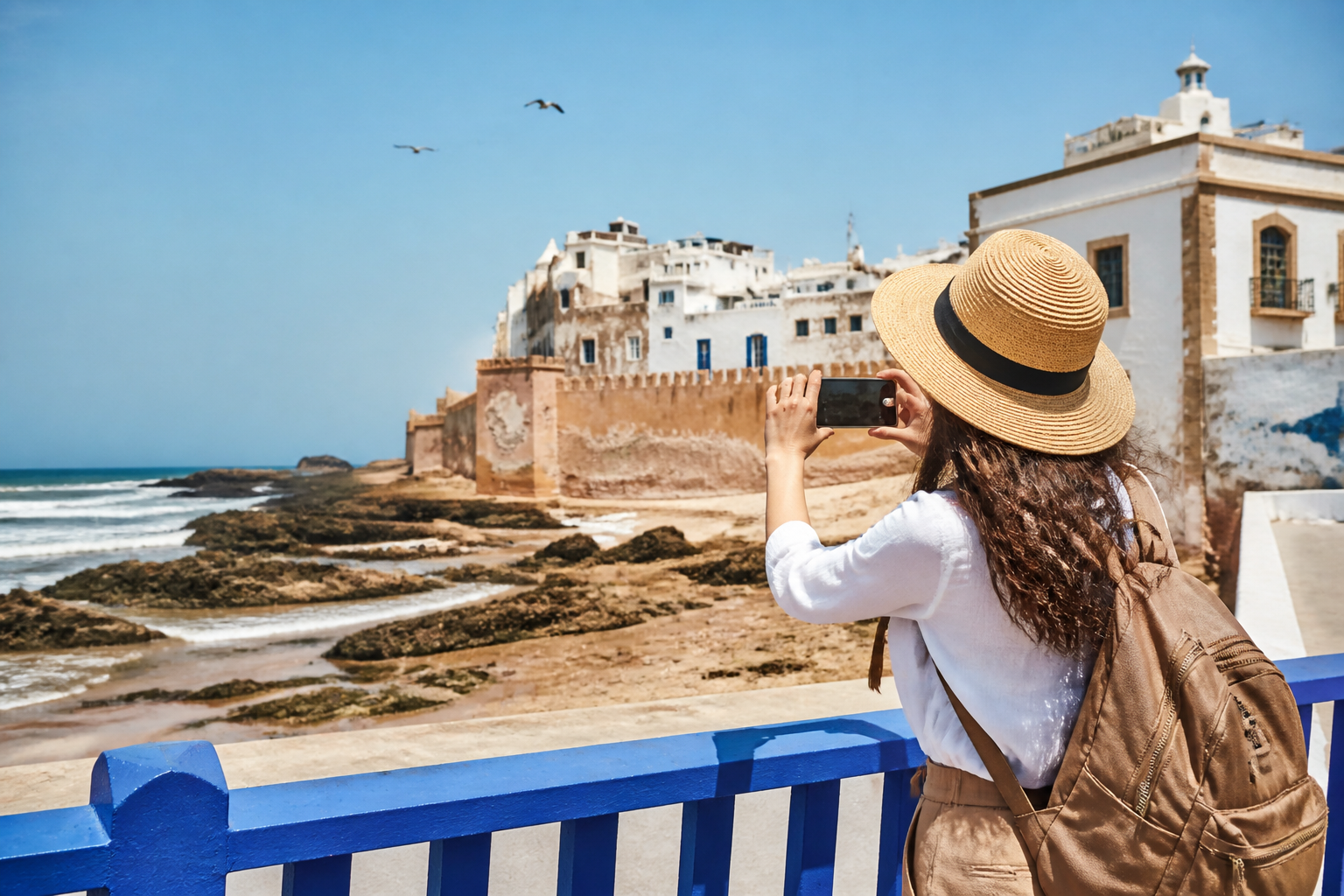
Essaouira is the place I recommend when Marrakech starts to feel like too much. The medina is compact, the Atlantic is always nearby, and the wind keeps the temperature comfortable even when inland cities are sweltering.
Walk the ramparts in the late afternoon, then explore the fishing harbor before finding grilled sardines or a simple seafood plate. The beach is great for a long walk, though the wind can make swimming less appealing than it looks from the shore.
Essaouira also has a strong community of small artists, musicians, and independent food businesses. Staying a few extra nights gives you time to spend money locally instead of treating the town as a quick day trip.
### 4. The Atlas Mountains and Village Homestays
The mountains offer a very different Morocco: cooler air, terraced hillsides, walnut trees, and villages where the rhythm of the day follows the light.
From Marrakech, many travelers visit the **Imlil area**, but there are plenty of walking routes beyond the most popular paths. A local mountain guide can make the difference between a rushed outing and a genuinely memorable day. You will also learn which trails are suitable for your fitness level and the current weather.
I like staying in a small guesthouse or village homestay rather than returning to the city the same evening. Ask whether staff are local, where food is sourced, and how the property handles water and waste. These are the kinds of details that matter more than polished photographs.
## Practical Travel Advice
### Getting There & Visa
Casablanca is Morocco’s main international gateway, with good onward connections by train and domestic flight. Marrakech, Agadir, Fes, Tangier, and Essaouira also receive international flights, especially during the busier travel seasons.
Citizens of many countries, including the United States, Canada, the United Kingdom, Australia, and much of the European Union, can generally enter Morocco without a tourist visa for stays of up to **90 days**. Rules depend on your passport, so check the Moroccan consulate or official government travel site before booking. Your passport should have sufficient validity beyond your arrival date, and airlines can be strict about documentation.
For flight planning:
– Compare flights into Casablanca and Marrakech rather than assuming one will be cheaper.
– Check whether a low-cost fare lands at a distant airport with expensive transfers.
– If you are visiting several Moroccan cities, use Casablanca or Marrakech as your arrival point and travel overland between destinations.
– Book trains in advance for popular routes, especially around holidays.
### Where to Stay
**Marrakech:** Choose the medina for atmosphere and traditional riads. Stay in Gueliz or Hivernage if you prefer wider streets, modern cafés, and easier taxi access.
**Fes:** The medina is best for history and character. The Ville Nouvelle is more practical if you want larger hotels, restaurants, and easier car access.
**Essaouira:** Stay inside or just outside the medina for walkability. The beachfront area is quieter but can feel removed from everyday town life.
**Casablanca:** The city center, Maarif, and the Corniche suit different styles. Casablanca is more urban and businesslike than Marrakech, so choose it for architecture, food, and city energy rather than a classic medina experience.
**Atlas Mountains:** Look for locally run guesthouses with clear information about heating, hot water, meals, and walking guides. Mountain accommodation can be simple, but a welcoming host and a good dinner often matter more than luxury fittings.
When looking for a sustainable stay, check whether the property displays Morocco’s new certification and ask what that certification covers. You can also ask whether the property employs local staff, avoids single-use plastic, uses solar power, or works with nearby farmers and artisans.
### Getting Around
Morocco is quite manageable without renting a car.
– **Trains:** ONCF trains connect Casablanca, Rabat, Fes, Meknes, Tangier, and Marrakech. The high-speed Al Boraq service links Tangier with Casablanca.
– **Buses:** CTM and Supratours are reliable options for places not served by rail.
– **Petit taxis:** These operate within cities and are usually inexpensive. They may be shared, and the meter should be used where available.
– **Grand taxis:** These cover longer routes but can be crowded. Ask about the price before leaving.
– **Walking:** Medinas are made for walking, though luggage with small wheels can become an enemy on uneven stone streets.
– **Ride-hailing:** App availability changes by city. inDrive or Careem may work in some areas, but do not depend on them everywhere. Your hotel or riad can usually arrange a trusted taxi.
For environmental reasons, trains are my first choice whenever the route allows. They are also more comfortable than spending hours in traffic.
## Real Costs & Local Tips
Moroccan prices vary by city and season, but these are realistic daily figures for one person, excluding international flights.
### Budget travel: 350–600 MAD per day
This covers:
– A hostel bed or simple guesthouse
– Local breakfasts and casual meals
– Trains or buses between nearby destinations
– A few inexpensive attractions
### Mid-range travel: 900–1,600 MAD per day
This usually allows for:
– A comfortable riad or small hotel
– Several restaurant meals
– Private transfers now and then
– Guided walks, museum visits, or a day trip
The local currency is the **Moroccan dirham (MAD)**. Credit cards are accepted in larger hotels, supermarkets, and many restaurants, but cash is essential in medinas, taxis, small cafés, and rural areas. Keep smaller notes for taxis, snacks, and tips.
Tipping is customary but should not feel like a performance. Around **10% in restaurants** is reasonable when service is not already included. A few dirhams for porters, café staff, drivers, or cleaners is appreciated. For a private guide, tip according to the quality and length of the experience.
### A few tricks that made my trips easier
– **Eat where local workers eat.** A busy counter serving one or two dishes is often cheaper and fresher than a quiet restaurant covered in tourist signs.
– **Ask for the taxi meter before the ride begins.** If the driver refuses, agree on a price first or try another taxi.
– **Carry a refillable bottle.** Some riads, hotels, and responsible tour companies provide filtered water, which saves money and cuts down on plastic.
– **Do not feel obliged to buy after entering a shop.** Browsing is fine. If you are not interested, a friendly but firm “la shukran” is enough.
– **Book local guides directly when possible.** Use licensed guides and ask what is included, especially if a shopping stop is part of the route.
– **Travel with a reusable bag and modest clothing.** It is practical, respectful, and useful for market purchases.
– **Look beyond the certification label.** Ask businesses what they actually do with water, waste, energy, and local hiring. A simple conversation can reveal more than a glossy promise.
Morocco is not a place to rush through with a checklist. Give yourself time for the extra glass of tea, the wrong turn through the medina, and the long train ride beside fields and villages. The new sustainable tourism certification programme is a welcome sign that the country is thinking seriously about its future. As travelers, we can support that direction through small choices that also tend to make the trip more personal.
KEYWORDS: Morocco medina, Marrakech sunset