
# Vietnam Right Now: Favorite Places, Honest Costs, and Tips for Traveling Well
Vietnam is having a real moment. More travelers are arriving from Europe, North America, India, Australia, and across Asia, and it’s easy to see why: the country offers extraordinary food, dramatic scenery, lively cities, and some of the best travel value in Southeast Asia.
What I like most is that Vietnam still feels wonderfully local once you move beyond the busiest streets. You can drink excellent coffee for a couple of dollars, eat a memorable bowl of noodles from a tiny sidewalk stall, and spend the afternoon watching fishing boats drift past limestone cliffs.
## The Vibe & When to Go
Vietnam feels energetic, noisy, generous, and wonderfully imperfect. Scooters flow through intersections like schools of fish, markets start early, and every city has its own food personality.
The weather changes a lot from north to south:
– **Northern Vietnam:** Hanoi, Ha Long Bay, and Sapa are usually best from **October to April**, when the weather is cooler and less humid. December and January can feel surprisingly chilly.
– **Central Vietnam:** Hoi An, Da Nang, and Hue are generally pleasant from **February to August**. Rain and occasional storms are more common from September through January.
– **Southern Vietnam:** Ho Chi Minh City and the Mekong Delta are often warm year-round. The drier months, roughly **December to April**, are especially comfortable.
If you’re planning a trip soon, check the weather for each region rather than relying on one national forecast. Vietnam is long and narrow, so Hanoi can be cool and misty while Ho Chi Minh City is hot and sunny on the same day.
Tourism growth has brought more flights, better hotel choices, and easier connections between major cities. It also means popular places such as Hoi An, Ha Long Bay, and the Golden Bridge can get crowded. I’ve found the best experiences usually happen early in the morning or just outside the main tourist center.
## Must-See Spots: My Top Picks
### 1. Hanoi and the Quiet Corners Around the Old Quarter
Hanoi is the city I recommend for a first taste of Vietnam. The Old Quarter is busy and crowded, but it becomes much more enjoyable when you wander without a checklist.
I like starting near **Hoan Kiem Lake** before breakfast, when locals are doing tai chi and exercising around the water. From there, walk through the older streets for coffee, fresh fruit, and small shops selling everything from silk to kitchen tools.
Don’t stop at the famous egg coffee. Try **bun cha**, grilled pork served with noodles and herbs, or a bowl of **pho bo** at a modest local restaurant. For a quieter afternoon, visit the **Temple of Literature** or walk around the leafy streets near the French Quarter.
**My advice:** Stay near the Old Quarter for convenience, but choose a hotel on a side street. The main roads can be loud late into the night.
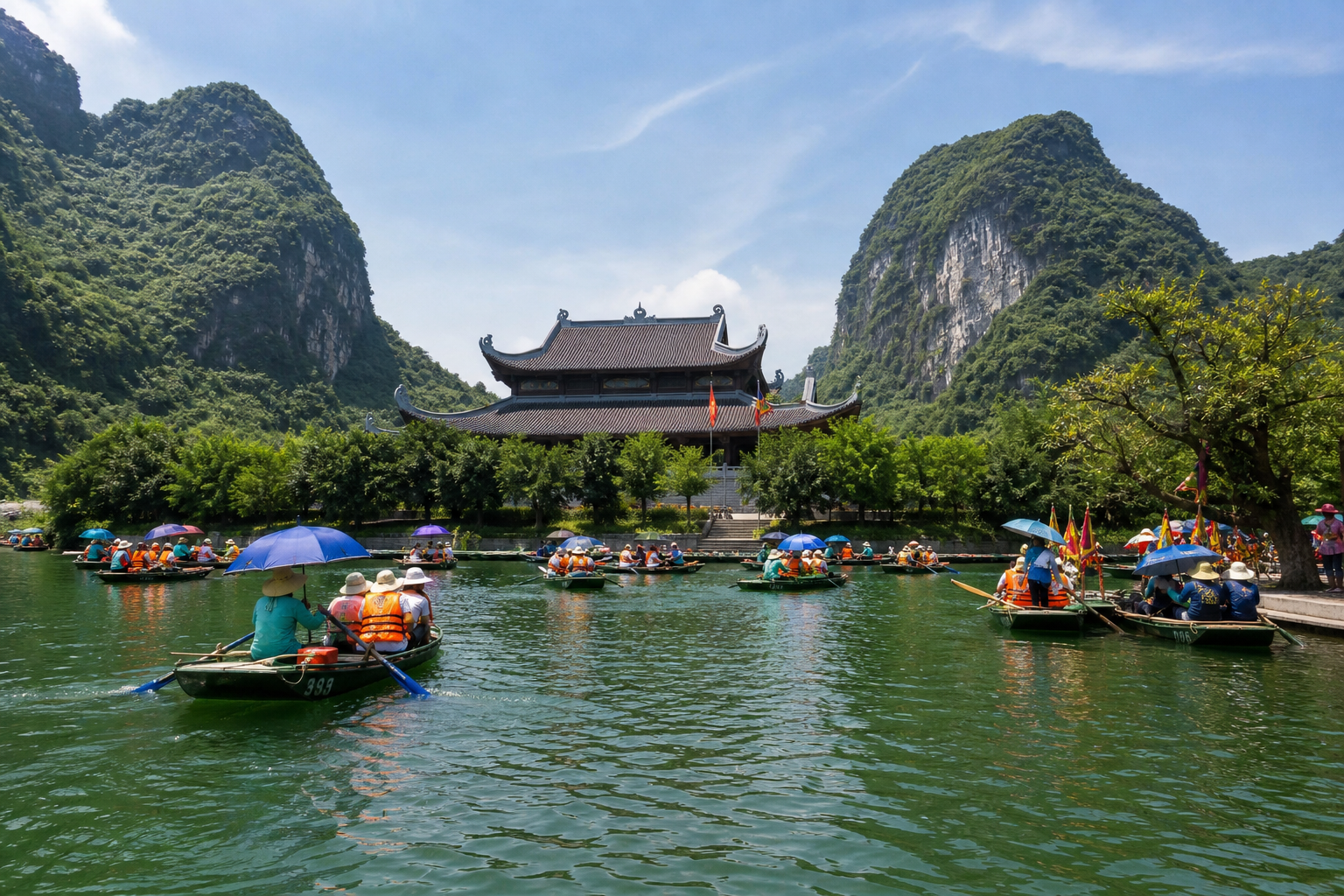
### 2. Ninh Binh: Limestone Mountains and River Journeys
Ninh Binh is one of my favorite escapes from Hanoi. The scenery is grand without requiring a difficult hike, and the countryside feels calmer than the capital.
Take a boat trip in **Trang An** or **Tam Coc**, where rowers guide you between towering limestone cliffs, rice fields, and small caves. Trang An is more polished and scenic; Tam Coc has a more open countryside feel, especially during rice-growing season.
I also recommend climbing the steps to **Hang Mua viewpoint**. It can be hot and crowded, so go early. The view over the karst landscape and rice fields is one of those moments when I was glad I had made the effort.
Renting a bicycle is a lovely way to explore, but ask your accommodation about road conditions and traffic. A two-day stay is much better than rushing through Ninh Binh as a day trip.
### 3. Hoi An and the Coast Near Da Nang
Hoi An’s lantern-lit streets are undeniably popular, but the town still has plenty of charm if you visit at the right time of day. I prefer the early morning, before the shops open fully and the tour groups arrive.
Walk along the river, browse the market, and take a bicycle through the rice fields toward **An Bang Beach**. The countryside just outside town gives you a more relaxed view of daily life than the old center alone.
Hoi An is also a good place to have clothes made, though I’d allow at least two fittings and avoid ordering something complicated the day before leaving. For food, try **cao lau**, white rose dumplings, and banh mi from one of the local stalls.
Da Nang is only a short drive away and makes a practical base if you prefer a modern beach city, larger hotels, and easier transport. I often split the stay: a few nights in Hoi An for atmosphere, then a couple in Da Nang for the coast.
### 4. Ho Chi Minh City and the Mekong Delta
Ho Chi Minh City is fast, warm, and full of contrasts. One street might have glass office towers, while the next has a family-run noodle shop that has been serving the same dish for decades.
I enjoy exploring **District 1** on foot, visiting the **War Remnants Museum**, and stopping for iced coffee when the heat becomes too much. For a more local evening, head to **District 3**, where there are plenty of casual restaurants and cafés without the same concentration of tourist bars.
The Mekong Delta is best visited with enough time to avoid the rushed day-trip feeling. **Ben Tre** is a good option for quieter canals and coconut-growing villages. If you do take a tour, ask whether it includes small boats, local meals, and time away from large souvenir stops.
## Practical Travel Advice
### Getting There and Visa Requirements
Vietnam’s main international gateways are:
– **Hanoi:** Noi Bai International Airport
– **Ho Chi Minh City:** Tan Son Nhat International Airport
– **Da Nang:** Da Nang International Airport
For many travelers, the easiest route is to fly into Hanoi and leave from Ho Chi Minh City, or do the journey in reverse. This saves time and avoids repeating a long train or bus ride.
Vietnam generally offers **e-visas valid for up to 90 days, with single-entry and multiple-entry options, for citizens of many countries**. Some nationalities also receive visa-free entry for limited stays. Passport validity and entry rules can change, so apply through Vietnam’s official immigration website and check the requirements for your nationality before booking non-refundable flights.
Make sure the details on your visa match your passport exactly. Even a small spelling mistake or incorrect passport number can cause problems at the airport.
For flights, compare nearby hubs such as Bangkok, Singapore, Kuala Lumpur, Seoul, and Hong Kong. It can sometimes be cheaper to fly to one of these cities and connect to Vietnam, but leave enough time between separate tickets.
### Where to Stay
**Hanoi**
– **Old Quarter:** Best for first-time visitors, street food, and nightlife.
– **French Quarter:** Quieter, more spacious, and close to museums and elegant cafés.
– **West Lake:** Good for longer stays, cafés, and a slower pace.
**Hoi An and Da Nang**
– **Hoi An Ancient Town:** Atmospheric and convenient, though busier.
– **Cam Chau:** A calmer area between the old town and the beach, with bicycles and small guesthouses.
– **Da Nang beachfront:** Best for wide beaches, modern hotels, and easy airport access.
**Ho Chi Minh City**
– **District 1:** Convenient for major sights and nightlife.
– **District 3:** More relaxed, leafy, and excellent for local food.
– **Thao Dien:** Popular with long-stay visitors, families, and café lovers.
### Getting Around
In cities, **Grab** is the most useful app for motorbike taxis and cars. **Be** is another local ride-hailing option. I usually check the plate number before getting into a car and avoid accepting rides from unofficial drivers outside airports.
Walking works well in smaller central areas, but crossing the road can be intimidating at first. Walk at a steady pace and avoid sudden stops; motorbike traffic will usually move around you.
For longer journeys:
– **Overnight trains** are useful between Hanoi, Hue, Da Nang, and Ho Chi Minh City, though a private cabin costs more.
– **Domestic flights** save time on long north-south routes.
– **Sleeper buses** are inexpensive, but comfort and safety vary. I prefer trains or reputable bus companies for overnight travel.
– **Taxis and private transfers** are practical for airports, especially when traveling with luggage or arriving late.
## Real Costs and Local Tips
Vietnam remains affordable, but prices rise in beach towns, popular islands, and during major holidays such as **Tet**, the Vietnamese Lunar New Year.
### Typical daily budgets
**Budget traveler: around $25–40 per person**
– Simple guesthouse or hostel: $8–20
– Local meals: $1.50–4 each
– Coffee and drinks: $1–3
– Short Grab rides and buses: $3–8 per day
– Free or low-cost sightseeing
**Mid-range traveler: around $60–110 per person**
– Comfortable hotel: $35–75
– Restaurant meals and cafés: $15–30
– Taxis, tours, and entrance fees: $10–25
– Occasional nicer experiences, such as a cooking class or guided day trip
The local currency is the **Vietnamese dong (VND)**. Notes can be confusing because of the large numbers, so check carefully before paying. A price of 100,000 VND is roughly a few US dollars, not one hundred dollars.
Tipping is not required in most places, but small tips are appreciated for excellent service. I might round up at a café, leave 20,000–50,000 VND for a helpful guide, or tip hotel staff after particularly good service. Restaurants may add a service charge, so check the bill first.
### A few tricks that saved me money
– **Eat where office workers eat.** Busy lunch places with plastic stools often serve fresher, cheaper food than restaurants aimed at tour groups.
– **Carry small notes.** Vendors and small cafés may not have change for large bills.
– **Use Grab for price clarity.** It reduces haggling and makes airport rides easier, though you may need to walk a short distance to the pickup point.
– **Book tours carefully.** Ask what is included, how many people are going, and whether there are compulsory shopping stops. The cheapest tour is often the longest and most crowded.
– **Visit famous sights early.** This helps with heat, crowds, and photographs, and you’ll usually enjoy the place more.
– **Be careful with street prices.** If there is no menu, ask the price before ordering. This is especially important for seafood, taxis, and market goods.
Vietnam’s growing popularity has changed some corners of the country, but it hasn’t taken away the moments I remember most: a grandmother adding herbs to my bowl of noodles, the sound of rain on a hotel balcony in Hue, and a quiet bicycle ride through the rice fields outside Hoi An. Plan a little, stay flexible, and leave room for the unplanned stops. Those are often the best part of the trip.
KEYWORDS: Vietnam travel