
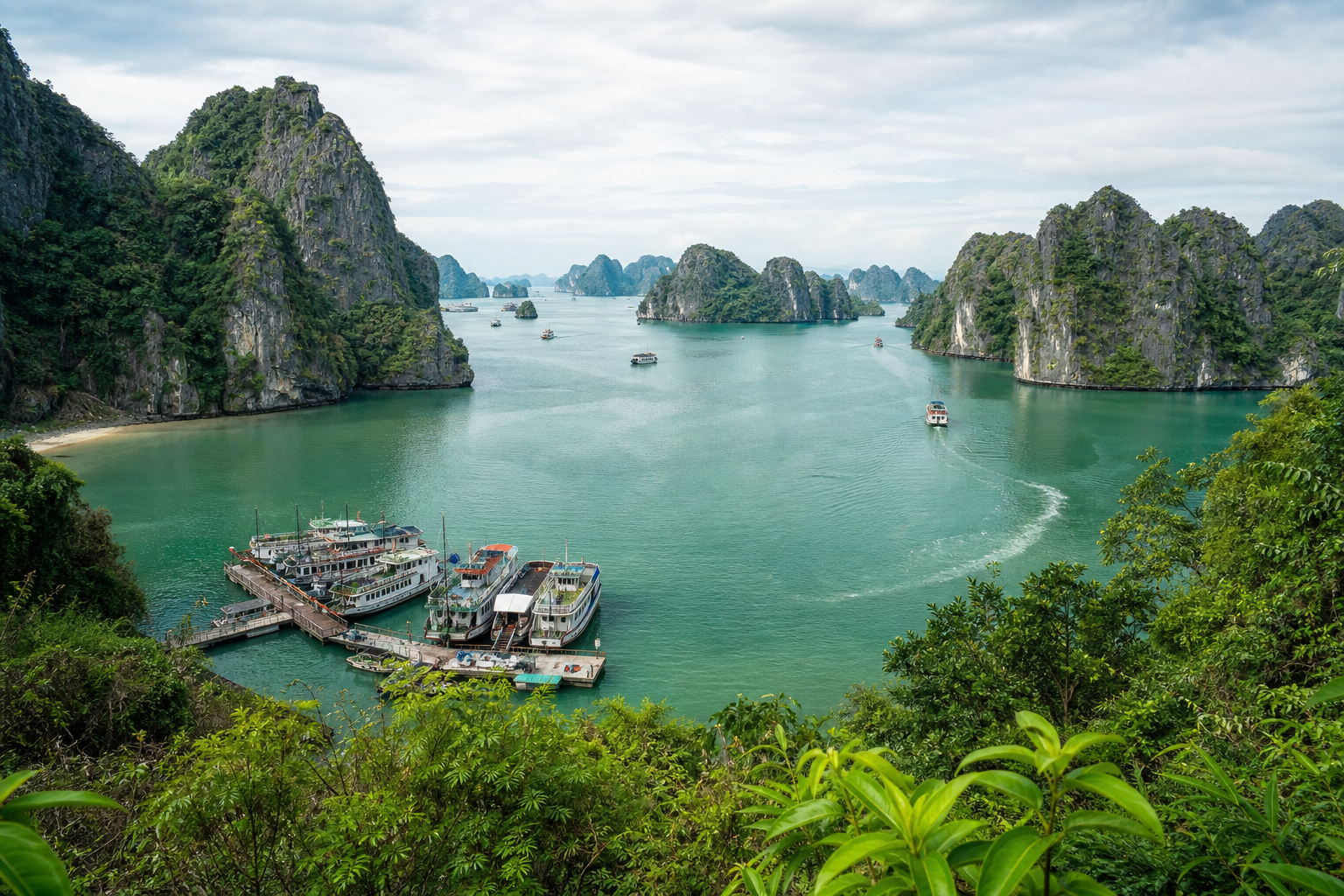
# Vietnam in 2026: Street Food, Slow Mornings, and the Places I’d Visit Again
Vietnam has been getting serious attention after reports that it could be named **Asia’s leading destination for 2026**, ahead of popular favorites such as Thailand and Singapore. Awards are nice, but what stayed with me was much simpler: Vietnam is a country that rewards curiosity.
One day, you can be eating bánh mì on a busy Hanoi sidewalk. The next, you’re drifting past rice fields in Ninh Binh or watching lanterns glow along the river in Hoi An. It feels lively without being polished smooth, and even the big cities still leave room for small discoveries.
## The Vibe & When to Go
Vietnam is long and narrow, so the weather changes a lot from north to south.
– **Northern Vietnam**—Hanoi, Ha Long Bay, and Sapa—is generally coolest from November to March. December and January can feel surprisingly chilly, especially in the mountains.
– **Central Vietnam**—Hue, Da Nang, and Hoi An—is often best from February to May. Rain can be heavy around late summer and autumn.
– **Southern Vietnam**—Ho Chi Minh City and the Mekong Delta—is warm year-round, with a drier stretch usually from December to April.
If I were planning a first trip now, I’d choose **March to May** or **October to early December**, depending on which regions mattered most. The temperatures are usually manageable, and you have a better chance of enjoying clear days without the thickest summer humidity.
Vietnam feels energetic, affordable, and wonderfully imperfect. Traffic is loud, sidewalks can disappear without warning, and plans sometimes change because of weather or a delayed bus. I found that part of the charm. The best moments often happened when we stopped trying to control every hour.
## Must-See Spots: My Top Picks
### 1. Hanoi’s Old Quarter and quieter café corners
Hanoi is the kind of city where I could spend an entire morning walking with no real plan. The Old Quarter is busy, crowded, and full of tiny shops, but it becomes much more enjoyable when you wander a few streets away from the busiest lanes.
Start around **Hoan Kiem Lake** early in the morning, when locals are exercising and practicing tai chi. Later, try egg coffee at a small upstairs café. It sounds unusual, but the sweet, creamy topping works surprisingly well with strong Vietnamese coffee.
For food, I’d look for:
– **Bún chả** with grilled pork and noodles
– **Phở** served early in the day
– **Bánh cuốn**, thin rice rolls filled with pork and mushrooms
– Fresh fruit bought from a market stall
My small Hanoi tip: don’t judge a restaurant by its size. Some of the best meals I had came from plastic stools, handwritten menus, and kitchens that looked too small to feed anyone.
### 2. Ninh Binh: rivers, limestone cliffs, and a slower pace
Ninh Binh is an easy escape from Hanoi and one of my favorite places in Vietnam. The boat ride through **Trang An** or **Tam Coc** takes you between towering limestone formations, rice fields, and cave passages. The water is usually quiet enough that you hear the oars dipping in and out.
I preferred staying overnight rather than visiting on a rushed day trip. Early mornings were peaceful, and renting a bicycle gave us more freedom to reach small roads and temples away from the main tour groups.
The climb to **Mua Cave Viewpoint** is steep, but the view from the top makes the sweaty walk worthwhile. Go early or near sunset, and bring water. The steps become uncomfortable in the midday heat.
### 3. Hoi An after dark
Hoi An can feel busy during the afternoon, but once the lanterns come on, it has a softer atmosphere. I loved walking along the old streets near the river, browsing fabric shops, and sitting with a cold drink while boats passed below.
The old town is beautiful, although some parts are clearly arranged for visitors. I found more character by cycling beyond the center toward **Tra Que Vegetable Village** and the rice fields. You can also take a short ride to **An Bang Beach** for a quieter afternoon.
A tailor-made outfit can be fun, but choose carefully. Check the fabric, agree on the price before ordering, and leave enough time for at least two fittings. The cheapest option is not always the best value.
### 4. Ho Chi Minh City’s food and neighborhood life
Ho Chi Minh City is faster and more modern than Hanoi, with taller buildings, packed cafés, and a nightlife scene that can carry on late into the night. Still, I found plenty of older corners among the noise.
Spend time around:
– **District 1** for major sights and easy access
– **District 3** for local restaurants and tree-lined streets
– **Thao Dien** for cafés, international food, and a more relaxed feel
– **Cholon**, the city’s Chinese quarter, for markets, temples, and excellent food
The **War Remnants Museum** is difficult but important, while the Central Post Office and Independence Palace are easy additions nearby. In the evening, skip an expensive rooftop for at least one night and join locals at a street food stall. Grilled seafood, broken rice, and fresh sugarcane juice make a much better memory.
## Practical Travel Advice
### Getting There and Visa
Vietnam has major international airports in:
– Hanoi
– Ho Chi Minh City
– Da Nang
– Phu Quoc
For many travelers, the easiest plan is to fly into Hanoi and leave from Ho Chi Minh City, or reverse the route. This saves you from doubling back across the country.
Visa rules depend on your passport and can change, so check Vietnam’s official immigration website before booking. Many nationalities can apply online for an **e-visa**, commonly allowing stays of up to 90 days with single or multiple entry options. Make sure your passport has enough validity and that the name on the application matches your passport exactly.
I’d avoid booking a tight connection after an international arrival. Immigration lines can take longer than expected, particularly at busy times.
### Where to Stay
– **Hanoi Old Quarter:** Best for first-time visitors, food, nightlife, and walkable sightseeing. It can be noisy.
– **Ba Dinh or the French Quarter:** Better if you want wider streets, museums, and a calmer atmosphere.
– **Hoi An Ancient Town:** Convenient and atmospheric, though prices rise near the river.
– **An Bang Beach:** A relaxed choice with cafés, beach bars, and a slower pace.
– **Ho Chi Minh City District 1:** Handy for major attractions and nightlife.
– **District 3:** My preference for a more local feel while staying close to the center.
– **Thao Dien:** Comfortable, leafy, and popular with longer-stay travelers.
In smaller towns, I often chose a family-run guesthouse over a large hotel. Hosts were usually happy to arrange taxis, bicycles, laundry, and local meals.
### Getting Around
Vietnam is not always easy to walk around, especially in larger cities. Sidewalks may be blocked by scooters, parked cars, or food stalls, and crossing the road takes patience.
For short rides, use **Grab** for cars and motorbikes. The price appears in the app, which helps avoid awkward bargaining. **Be** is another local ride-hailing option in some cities.
For longer distances:
– Overnight trains are useful between Hanoi, Hue, Da Nang, and Ho Chi Minh City.
– Sleeper buses can be cheap, though comfort varies.
– Domestic flights save time on a north-to-south route.
– In Hoi An and Ninh Binh, bicycles or scooters are ideal for exploring beyond the center.
If you rent a scooter, check the local license requirements and insurance rules first. Traffic is not a good place to learn from scratch.
## Real Costs and Local Tips
Vietnam remains good value, though popular areas and stylish cafés have become noticeably more expensive.
### Approximate daily budgets
**Budget traveler: $25–40 per person**
– Simple guesthouse or dorm bed
– Street food and local cafés
– Buses, trains, and occasional Grab rides
– Free sights and low-cost museums
**Mid-range traveler: $60–110 per person**
– Comfortable private room or boutique hotel
– Restaurant meals mixed with street food
– Domestic transport or occasional private transfers
– Tours such as Ninh Binh, Ha Long Bay, or a cooking class
Prices rise in Hoi An, Ha Long Bay, and beach resorts, especially during holidays.
Vietnam uses the **Vietnamese dong (VND)**. Cash is still useful for markets, small restaurants, taxis, and rural areas. Cards are accepted in many hotels and modern restaurants, but don’t rely on them everywhere.
Tipping is not compulsory. At casual food stalls, I usually didn’t tip. In restaurants, I might leave a little extra for friendly service, and tour guides and drivers appreciate a modest tip. Some upscale places add a service charge, so check the bill first.
### A few tricks that saved me money
– **Eat where office workers eat.** Busy local lunch spots usually offer better food and prices than restaurants aimed only at tourists.
– **Use Grab instead of negotiating every taxi ride.** It makes short trips simpler and gives you a price before you leave.
– **Carry smaller notes.** Vendors may not have change for large bills, especially early in the morning.
– **Book tours after arriving when possible.** Compare two or three agencies and ask what is included—transport, entrance fees, meals, and drinks can vary a lot.
– **Avoid exchanging all your money at the airport.** Change a small amount there, then compare rates in the city.
– **Be cautious with “free” extras.** A friendly invitation to sit for a photo, taste fruit, or take a cyclo ride can sometimes become an unexpected charge.
Vietnam may be competing with Thailand and Singapore for Asia’s travel spotlight, but its real appeal is more personal. It gives you busy streets and quiet countryside, polished hotels and family kitchens, famous landmarks and ordinary moments that stay with you longer than expected.
I came for the landscapes and food, but I remember the small things most: the morning coffee beside Hoan Kiem Lake, the sound of bicycle bells in Hoi An, and a bowl of noodles eaten on a plastic stool while the city rushed past.
KEYWORDS: Vietnam landscape