
# Turkey on a Realistic Budget: What Istanbul Costs Now, Where to Go, and How to Spend Less
Turkey used to be the place friends recommended when you wanted grand mosques, long ferry rides, excellent food, and a comfortable hotel without spending much. I still found all of those things—but the bargain feeling has changed.
On my latest trip, Istanbul was full of energy and wonderfully affordable in small ways, yet accommodation, restaurant meals, taxis, and popular attractions added up quickly. The Turkish lira has lost value, but prices have risen sharply too, especially in tourist-heavy areas. Turkey can still be a good-value destination, but you need to plan with today’s prices rather than memories of five or ten years ago.
## The Vibe & When to Go
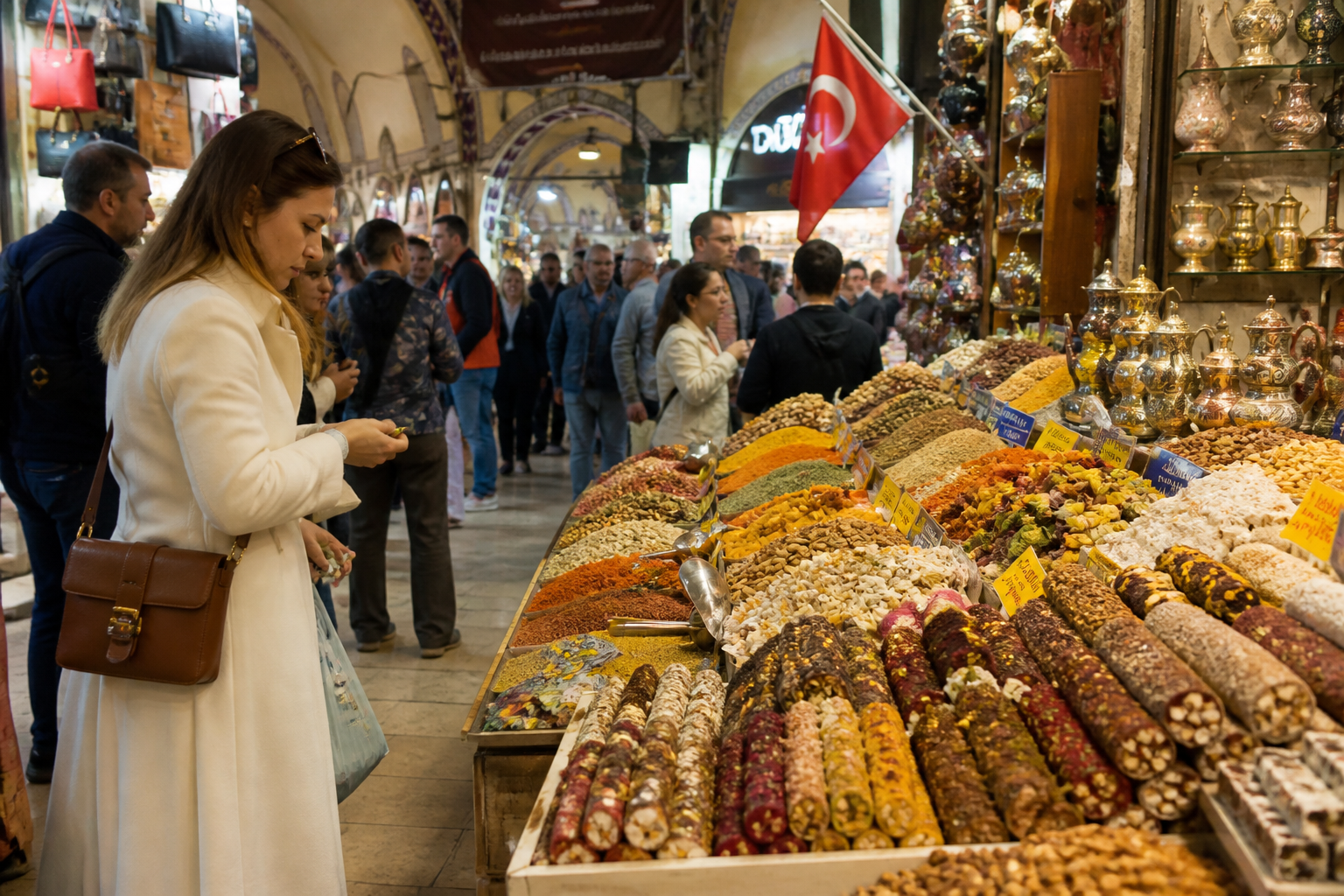
Istanbul feels wonderfully untidy in the best possible way. Ferries cut across the Bosphorus, cats rule the pavements, bakers pull sesame-covered simits from ovens, and the call to prayer drifts over rooftops while traffic rumbles below. One minute you are admiring Ottoman architecture; the next, you are squeezing through a crowded street lined with phone shops and kebab counters.
**Spring and autumn are my favorite seasons.** April to May and September to October usually bring comfortable walking weather, with cooler mornings and fewer sweaty crowds than midsummer. Summer is lively but hot, humid, and expensive in the most popular places. Winter can be wet and grey, though hotel prices often soften, and Istanbul’s museums are far more pleasant without long queues.
If you are visiting now, come for the food, neighborhoods, history, and atmosphere—but set aside a sensible amount for accommodation and entrance fees. The city is no longer the effortless ultra-cheap escape it once was.
## Must-See Spots: My Top Picks
### 1. Sultanahmet, Early in the Morning
The Blue Mosque, Hagia Sophia, Basilica Cistern, and Topkapi Palace are Istanbul’s famous sights for good reason. They can also be exhausting when visited all at once in the middle of the day.
I like arriving in Sultanahmet early, before the tour groups gather. The Blue Mosque is free to enter, although visitors need to dress respectfully and avoid prayer times. Hagia Sophia has introduced visitor charges and changing access arrangements, so check the current official information before going. Topkapi Palace takes several hours if you want to see the courtyards, treasury, and harem properly.
The Basilica Cistern was one of my favorite stops. Its dim lighting, underground columns, and cool air make it a welcome break from the heat outside. Buy tickets from the official site or ticket desk rather than accepting help from anyone offering a “special entrance” nearby.
### 2. A Ferry Across the Bosphorus
A Bosphorus cruise can be lovely, but you do not always need an expensive private boat tour. I usually take a regular public ferry from Eminönü or Karaköy toward Üsküdar or Kadıköy. The ride is shorter than a full sightseeing cruise, but the views are excellent: domes behind you, palaces along the shoreline, and seagulls following the boat in hope of a snack.
Üsküdar is a good place to wander along the waterfront and watch the sunset facing the European side. Kadıköy has a younger, more relaxed feel, with produce markets, small restaurants, record shops, and lively streets around Moda. I found meals here generally more comfortable on the wallet than in Sultanahmet.
### 3. Balat and Fener, With a Little Patience
The colorful houses of Balat appear in almost every Istanbul photo guide, but the real pleasure is wandering beyond the famous staircase streets. Some lanes are polished for visitors, while others are ordinary residential streets where people are going about their day.
Come in the morning, take your time, and avoid treating the neighborhood like a film set. Stop for Turkish coffee or a simple breakfast, but check prices before sitting down at one of the photogenic cafés. A short walk uphill leads toward the impressive Ecumenical Patriarchate and quieter views over the Golden Horn.
The area is hilly and the pavement can be uneven, so comfortable shoes matter more than fashionable ones.
### 4. Kadıköy Market and Moda
When Istanbul begins to feel too crowded, I cross to the Asian side. Kadıköy Market is one of the best places to eat casually: grilled fish, stuffed mussels, lahmacun, pickles, cheese, olives, and trays of baklava all compete for attention.
I like buying a few things from the market and walking toward Moda, where the waterfront is popular with locals. Grab a tea, sit by the sea, and watch ferries move across the water. It is one of the simplest—and least expensive—ways to have a memorable Istanbul afternoon.
## Practical Travel Advice
### Getting There and Visa
Istanbul has two major airports:
– **Istanbul Airport (IST):** The main international airport on the European side, quite far from the center.
– **Sabiha Gökçen Airport (SAW):** On the Asian side, often useful for budget airlines and domestic flights.
Compare both airports when booking. A cheaper flight to one side of the city can lose its advantage if you arrive late and need an expensive taxi across town.
Visa rules depend on your passport. Some travelers can enter visa-free, while others need an e-Visa before arrival. Use Turkey’s official e-Visa website or your government’s travel advice page rather than a third-party visa company. Your passport should also have sufficient validity and blank pages, so check the requirements well before departure.
For flights, I often find better prices by searching flexible dates and checking one-way combinations. Turkish Airlines has an extensive network, while Pegasus can be useful for lower-cost regional flights, though baggage and seat fees can change the final price.
### Where to Stay
**Sultanahmet:** Best for first-time visitors who want to walk to the major historic sights. It becomes quiet in the evening, and some hotels charge heavily for the location.
**Karaköy and Galata:** Good for cafés, restaurants, nightlife, and easy access to both the old city and the Bosphorus. It can be noisy and hilly.
**Beyoğlu and Cihangir:** A better choice if you enjoy independent shops, bars, galleries, and a more local evening scene. Streets around Istiklal can be very crowded.
**Kadıköy:** My favorite area for a longer stay. It has excellent food, a lively market, ferries, and a less tour-focused atmosphere. You will spend more time crossing the water, but the neighborhood itself is easier on the nerves.
**Beşiktaş:** A practical base for ferry connections, restaurants, and access toward the Bosphorus. It feels busy and local rather than postcard-perfect.
A private room or modest hotel in a central neighborhood can cost roughly **€40–€90 per night**, depending on the season and exchange rate. Prices rise quickly during summer, holidays, and major events.
### Getting Around
Istanbul is walkable in sections, not as one giant city. Sultanahmet, Eminönü, Galata, and Karaköy can be combined on foot, though the hills will test you. For longer journeys, public transport is usually the best value.
Buy an **Istanbulkart** for the metro, tram, buses, and ferries. You can load it at stations and use it across much of the city’s transport network. The tram is convenient for the historic center, while ferries are both practical and enjoyable.
Taxis can be frustrating. Drivers may refuse short trips, use the meter incorrectly, or quote an inflated price. Use the **BiTaksi** or **Uber** app where available, confirm the route, and keep a map open. The app does not remove every problem, but it gives you a clearer record of the journey.
From the airports, airport buses are often much cheaper than a taxi. Allow plenty of time, especially during rush hour.
## Real Costs: What I Would Budget
Prices change quickly in Turkey, so treat these as working estimates rather than fixed promises. I use euros below because exchange rates can move noticeably, but you will pay in Turkish lira.
### Budget traveler: about **€35–€55 per day**
This assumes:
– Dorm bed or very simple room
– Bakeries, lokantas, döner, simit, and market food
– Public transport and lots of walking
– One or two low-cost sights, with some free attractions
A filling meal at a simple local restaurant might cost around **€5–€10**, while a tourist-area restaurant can easily charge double or more. A simit and tea breakfast may cost only a few euros, making it an easy way to start the day cheaply.
### Mid-range traveler: about **€80–€140 per day**
This usually covers:
– A comfortable double room shared by two people
– Several restaurant meals
– Public transport, occasional app-booked rides, and paid attractions
– Coffee, dessert, and a little shopping
A decent sit-down meal for two with drinks can quickly reach **€30–€60** in central neighborhoods. Rooftop restaurants and Bosphorus-view venues often charge for the scenery as much as the food.
Entrance fees are another part of the new Turkey budget. Major museums and historic sites can be surprisingly expensive, especially when ticket prices are adjusted for foreign visitors. Check current prices before building your itinerary around several paid attractions.
### Money and tipping
The currency is the **Turkish lira (TRY)**. Card payment is common in hotels, modern restaurants, supermarkets, and shops, but keep cash for small cafés, market stalls, public toilets, and some taxis.
I usually carry small notes and avoid exchanging money at the airport unless I need a small amount immediately. ATMs can add fees, and some offer poor conversion rates. If your bank allows it, choose to be charged in Turkish lira rather than your home currency.
Tipping is appreciated but not compulsory. Around **5–10%** in restaurants is reasonable when service is good. A small tip for hotel staff, guides, or delivery workers is also welcome.
## Ways to Spend Less Without Making the Trip Miserable
– **Eat away from the main sight lines.** Walk two or three streets away from Hagia Sophia, the Galata Tower, or the waterfront before choosing a restaurant. Prices often fall quickly.
– **Ask for the menu before sitting down.** Look for clearly displayed prices and check whether bread, service, or cover charges are added.
– **Use public ferries instead of private cruises.** You still get beautiful Bosphorus views for a fraction of the cost.
– **Buy breakfast from bakeries and neighborhood shops.** Simit, börek, cheese, fruit, and yogurt make a much cheaper breakfast than a hotel buffet.
– **Do not accept unsolicited “help.”** This applies to taxis, restaurant recommendations, and guided entrances around the big attractions. A friendly conversation can sometimes turn into a sales pitch.
– **Book accommodation with a small kitchen or breakfast included.** Even preparing one meal a day helps when restaurant prices start to pile up.
– **Leave room in the budget for transport and attractions.** The cheap kebab is still cheap; it is the hotel, taxi, cocktails, and entrance tickets that can quietly change the total.
Turkey remains a rewarding place to travel, but I would no longer describe it as universally cheap. Istanbul gives you plenty of ways to spend very little—ferry rides, neighborhood walks, bakery breakfasts, public parks, and market meals—but the city also makes it easy to overspend without realizing it.
My best advice is simple: choose your neighborhood carefully, eat where locals eat, use public transport, and check prices before committing. With that approach, Turkey still feels generous, fascinating, and full of small pleasures that cost far less than the headline attractions.
KEYWORDS: Istanbul Bosphorus